

Introduction
Materials and Methods
Plant materials and GB and Pro applications
Fruit cracking assessment
Microscopic observations of pericarp tissue
Fruit characteristics
Determination of GB content
Determination of Pro content
Statistical analysis
Results
Fruit cracking incidence
Pericarp tissue structure
Fruit characteristics
GB content
Pro content
Discussion
Introduction
Fruit cracking is a physiological disorder that occurs when the pericarp absorbs excessive water and the resulting turgor pressure exceeds the mechanical strength of the cell wall. As reported in various fruit trees such as cherry, peach, and pomegranate, a rapid influx of water weakens the structural integrity of the cuticle and cell wall (Sekse 1995; Yu et al. 2020). When water penetrates through microcracks or stomata in the cuticle, degradation of cell wall polysaccharides and separation of the middle lamella are induced, leading to reduced cell adhesion and decreased tensile strength of the pericarp (Schumann et al. 2019; Chang and Keller 2021). Rainfall, high humidity, and excessive irrigation accelerate this process by disrupting the osmotic balance and increasing the internal turgor pressure, promoting the expansion of cracks (Gibert et al. 2007; Maryomana and Beevy 2023). Once small fissures form in weakened regions, additional water enters through these sites, further accelerating pericarp rupture. Fruit cracking not only causes surface damage but also facilitates pathogen infection and quality deterioration (Gibert et al. 2007), thereby reducing storability and market value.
Cracking in peach and nectarine has been consistently reported in commercial production, from early studies of cuticular cracking in relation to irrigation and fruit thinning (Gibert et al. 2007) to recent attempts at chemical mitigation in nectarines, which are regarded as more susceptible to cracking than peaches (Zhu et al. 2023). In hairless fruit, the absence of trichomes means that the cuticle serves as the sole hydrophobic barrier on the fruit surface (Carrasco-Cuello et al. 2024), and the cuticular wax content is lower than that reported for hairy peach fruit (Oliveira Lino et al. 2020). Both features are expected to facilitate water penetration into the exocarp during surface wetting. In addition, nectarines typically accumulate lower calcium levels in the exocarp compared to that in peaches (Carrasco-Cuello et al. 2024), which further decreases the cell-wall stability and increases vulnerability to cuticular microcracking under rapid hydration events.
Planar-type canopy systems have gained attention given their improving light distribution and management efficiency in orchards. This structure features a simplified canopy and uniform branch distribution, which improves pruning, thinning, and pesticide application efficiency (Scalisi et al. 2024). Planar canopies are also suitable for high-density planting and are considered promising for future orchard systems because their flat structure facilitates the implementation of mechanization and automation technologies. In planar canopy systems, fruits are exposed to sunlight and rainfall, making cracking a relevant concern under such growing conditions. Previous studies have mainly focused on the growth and productivity of planar systems (Anthony and Minas 2021; Iglesias and Echeverria 2022), whereas physiological responses such as fruit cracking have rarely been investigated.
Previous studies focusing on the mitigation of fruit cracking have mainly focused on physical and chemical approaches. Physical methods such as rain shelters, fruit bagging, and mulching have been used to reduce rain exposure and sudden changes in fruit water status (Balbontín et al. 2013; de Palma et al. 2019; Wang et al. 2022). However, rain shelters incur high installation and maintenance costs and may cause secondary stress due to increased internal temperatures and humidity levels. Bagging and mulching also reduce cracking but are limited due to their high labor requirements.
Chemical approaches have mainly aimed to enhance the cell wall strength and restrict water permeability using compounds such as calcium, silicate, and gibberellin A3 (GA3) (Yu et al. 2020; Drogoudi and Pantelidis 2022; Zhu et al. 2023). For example, in ‘Benica’ sweet cherry, pre-harvest application of chitosan combined with calcium chloride reduced cracking incidence after 6 and 12 h of water immersion (Lee et al. 2020). However, their effects are often short-lived and vary depending on the cultivar and environmental conditions. In addition, these treatments primarily reinforce the outer skin layer and do not fully address physiological factors such as cellular osmotic regulation.
Recently, physiological approaches focusing on cellular osmotic adjustments and metabolic regulation have been proposed as alternative strategies. Among them, glycine betaine (GB) and proline (Pro) are well-known osmolytes that alleviate cellular damage by maintaining the osmotic potential, stabilizing the protein structure, and scavenging reactive oxygen species (ROS) (Dutta et al. 2019; Zulfiqar et al. 2022). GB contributes to membrane stabilization and ion homeostasis, and its positive effects on fruit quality have been reported in grapes (Monteiro et al. 2023). Pro functions to mitigate oxidative stress by sustaining antioxidant enzyme activity and eliminating ROS (Shehata and Farag 2024; Shehata 2025). These functions are considered physiological mechanisms that enhance the intrinsic resistance of pericarp tissues by promoting a proper water balance and maintaining cellular homeostasis.
Therefore, we aimed to evaluate the effects of GB and Pro sprays on fruit cracking in multi-leader trained ‘Yellow Dream’ nectarines (Prunus persica). The comparison focused on GB and Pro treatments within a single planar canopy system. In addition, the physiological responses associated with these treatments were analyzed to propose management strategies for mitigating fruit cracking during nectarine production.
Materials and Methods
Plant materials and GB and Pro applications
The experiment was conducted using ‘Yellow Dream’ nectarine trees grown at the experimental orchard of the National Institute of Horticultural and Herbal Science, Korea (35°50'2.6" N, 127°1'55.1" E). ‘Yellow Dream’ is an early-season, yellow-fleshed cultivar developed in Korea (Nam et al. 2018). Two-year-old trees grafted onto wild peach seedling rootstocks (P. persica) were planted in March of 2021 and trained to six-leader systems as a planar canopy from planting. The spacing was 4.0 m within trees and 3.5 m between rows. Cultural practices, including fertilization, irrigation, and pest management, were performed uniformly according to the Peach Cultivation Manual published by the Rural Development Administration (RDA 2020). During fruit development in 2025, the mean air temperature was 19.8°C and total rainfall was 330.5 mm (Supplementary Table S1). Rainfall totaled 145.0 mm at 66–67 days after full bloom (DAFB), whereas no rainfall was recorded from 80 DAFB until harvest at 90 DAFB.
The experiment was conducted in the fifth year after planting. The control group was sprayed with distilled water, whereas the other two groups received 400 mg·L-1 GB and 400 mg·L-1 Pro (Shehata and Farag 2024). GB (≥98%) and Pro (≥99%) from Sigma-Aldrich (USA) were used. Each treatment was applied to three trees, with one tree per treatment in each of three planting rows (nine trees in total). Each solution was applied evenly to the entire canopy using approximately 1.5 L per tree at 45, 60, and 75 DAFB. Fruits were harvested at 90 DAFB. No wetting agents or surfactants were added. All applications were completed on clear, windless mornings. To ensure uniformity among the treatments, the number of fruits per tree was adjusted to a similar level before spraying.
Fruit cracking assessment
Fruit cracking resistance was evaluated through a water-immersion test. At 80 DAFB, ten fruits were randomly collected from each of three trees per treatment (30 fruits per treatment). The fruits were fully immersed in distilled water maintained at 25°C, and cracking incidence was recorded after 1, 2, 4, 8, 12, and 24 hours after immersion (hai). Fruits that exhibited cracking at each observation time were immediately removed, and only the remaining intact fruits were used for the subsequent evaluations. Based on these data, the cumulative cracking percentage was calculated for each tree over time.
Microscopic observations of pericarp tissue
To compare the structural characteristics of the pericarp, five fruits per treatment were collected at 45, 60, 75, and 90 DAFB for a microscopic analysis. Pericarp cells were observed using light microscopy (LM), and the fruit surface was examined using scanning electron microscopy (SEM). Only normal fruits without visible defects were selected for observation.
Pericarp sections were prepared according to the method of Clément et al. (1996) with slight modifications. Samples measuring 3 × 2 mm were excised from the equatorial region of each fruit and fixed in 2.5% glutaraldehyde (0.1 M phosphate buffer, pH 7.2, containing 4% sucrose) for 24 h. The samples were rinsed three times for 30 min each in the same buffer, dehydrated through a graded ethanol series (30, 50, 70, 80, 90, and 100%), and embedded in Historesin. Sections 2.5 µm thick were prepared using an ultra-microtome and stained by the Periodic Acid-Schiff (PAS) reaction: 1% periodic acid for 30 min, Schiff’s reagent for 40 min, and 5% sodium bisulfite for 35 min. After staining, the sections were rinsed with distilled water, air-dried, mounted in Histomount, and observed under LM (Axioscop 2, Carl Zeiss, Germany).
Samples that underwent the same fixation and dehydration process were dried using a critical point dryer (Autosamdri-981, Tousimis, USA). The dried samples were then coated with a 100 Å gold-palladium alloy layer for 1.5 min using an ion sputter coater (MC 1000, Hitachi, Japan). The coated specimens were observed under SEM (SU-3500, Hitachi, Japan) at an accelerating voltage of 30 kV.
Fruit characteristics
At 90 DAFB, ten fruits were randomly collected from each of three trees per treatment (30 fruits per treatment) for analysis. Fruit weight was measured using an electronic balance and is expressed in grams. The soluble solids content (SSC) and titratable acidity (TA) were determined using juice extracted from the fruit side located 90° from the suture. SSC was measured with a digital refractometer (PAL-1, Atago, Japan), and TA was determined by titrating 5 mL of juice diluted with 20 mL of distilled water with 0.1 N NaOH to an endpoint of pH 8.1. The NaOH volume consumed was converted to malic acid equivalents to calculate acidity.
Fruit firmness was measured at the same position (90° from the suture) on the intact fruit surface using a penetrometer (STENTOR II, Andilog Technologies, France) equipped with an 8 mm diameter probe. The results were expressed in newtons (N). Fruit skin color was measured at three points on the same region using a colorimeter (CR-400, Minolta, Japan), and the mean L*, a*, and b* values were calculated for each fruit.
Determination of GB content
A total of five fruits per treatment were collected from the three trees at 45, 60, 75, and 90 DAFB. Samples at 45, 60, and 75 DAFB were taken immediately before each application to prevent contamination from solution remaining on the fruit surface, and those at 90 DAFB were taken at harvest. The collected fruits were washed with distilled water, and the flesh and peel were separated and freeze-dried using a freeze dryer (FDCF-12012, Operon, Korea). For each treatment and time point, the five fruits were pooled into a composite sample, from which three analytical replicates were taken.
The GB content was determined according to the periodide method described by Valadez-Bustos et al. (2016) with slight modifications. Freeze-dried samples (50 mg) were mixed with 1.5 mL of 2 N H2SO4 and heated at 60°C for 10 min, after which they were cooled on ice for 5 min. The mixture was centrifuged at 14,000 × g for 25 min at 4°C, and the supernatant was collected. An aliquot (125 µL) of the supernatant was combined with 50 µL of KI-I2 reagent, prepared by dissolving 15.7 g of I2 and 20 g of KI in 100 mL of distilled water. The mixture was gently shaken under dark conditions, avoiding contact with the tube cap, and stored at 4°C for approximately 16 h. After centrifugation at 14,000 × g for 30 min, the supernatant was discarded, and the remaining crystals were dissolved in 3.0 mL of 1,2-dichloroethane. The dissolved samples were kept in the dark for 2 h, and absorbance was measured at 290 nm using a spectrophotometer (BioSpectrometer, Eppendorf, Germany) with 1,2-dichloroethane as a blank.
Determination of Pro content
The Pro content was determined according to the ninhydrin acid method described by Patton et al. (2007). Sample pretreatment was performed in the same manner used for the GB analysis. Freeze-dried samples (50 mg) were mixed with 1 mL of 3% sulfosalicylic acid, stirred for 15 s, and incubated in a water bath at 80°C for 15 min. The mixtures were shaken for an additional 15 min and centrifuged at 16,000 × g for 10 min. An aliquot of 100 µL of the supernatant was diluted with 900 µL of distilled water, followed by the addition of 1 mL of a ninhydrin acid solution and 1 mL of glacial acetic acid under a fume hood. After gentle mixing for 15 s, the samples were incubated at 100°C for 1 h and then cooled completely on ice. Following the reaction, 4 mL of toluene was added, mixed for 20 s under a fume hood, and allowed to stand for 5 min to separate the layers. The upper toluene layer (1 mL) was used to measure the absorbance at 520 nm using a spectrophotometer (BioSpectrometer, Eppendorf, Germany), with toluene as the blank.
Statistical analysis
All data were expressed as the means ± standard deviation. Cracking incidence was analyzed at the tree level (n = 3 per treatment), whereas fruit characteristics were analyzed at the individual fruit level (n = 30 per treatment). The latter analysis did not account for the grouping of fruits within trees. The GB and Pro contents were analyzed using three analytical replicates from one pooled sample per tissue, treatment, and sampling time. These were analytical rather than independent biological replicates. Differences among treatments were evaluated at each sampling time by means of a one-way analysis of variance (ANOVA), followed by Tukey’s honestly significant difference (HSD) test at p < 0.05. Statistical analyses were performed using R software (version 4.5.0; R Core Team 2025).
Results
Fruit cracking incidence
The cumulative fruit cracking rate increased with the immersion time (Fig. 1). No significant differences among the treatments were observed up to 4 hai. However, clear differences appeared after 8 hai. At 8 hai, the cracking incidence rates were 43.3 ± 5.8% in the control, 23.3 ± 5.8% in GB, and 30.0 ± 10.0% in the Pro treatments, with GB showing a significantly lower cracking rate than the control. In contrast, Pro did not differ significantly from either treatment. At 12 hai, cracking rates increased to 86.7 ± 5.8% in the control, 50.0 ± 20.0% in GB, and 53.3 ± 11.5% in Pro, with GB exhibiting a significantly lower cracking rate than the control and with Pro showing an intermediate response.
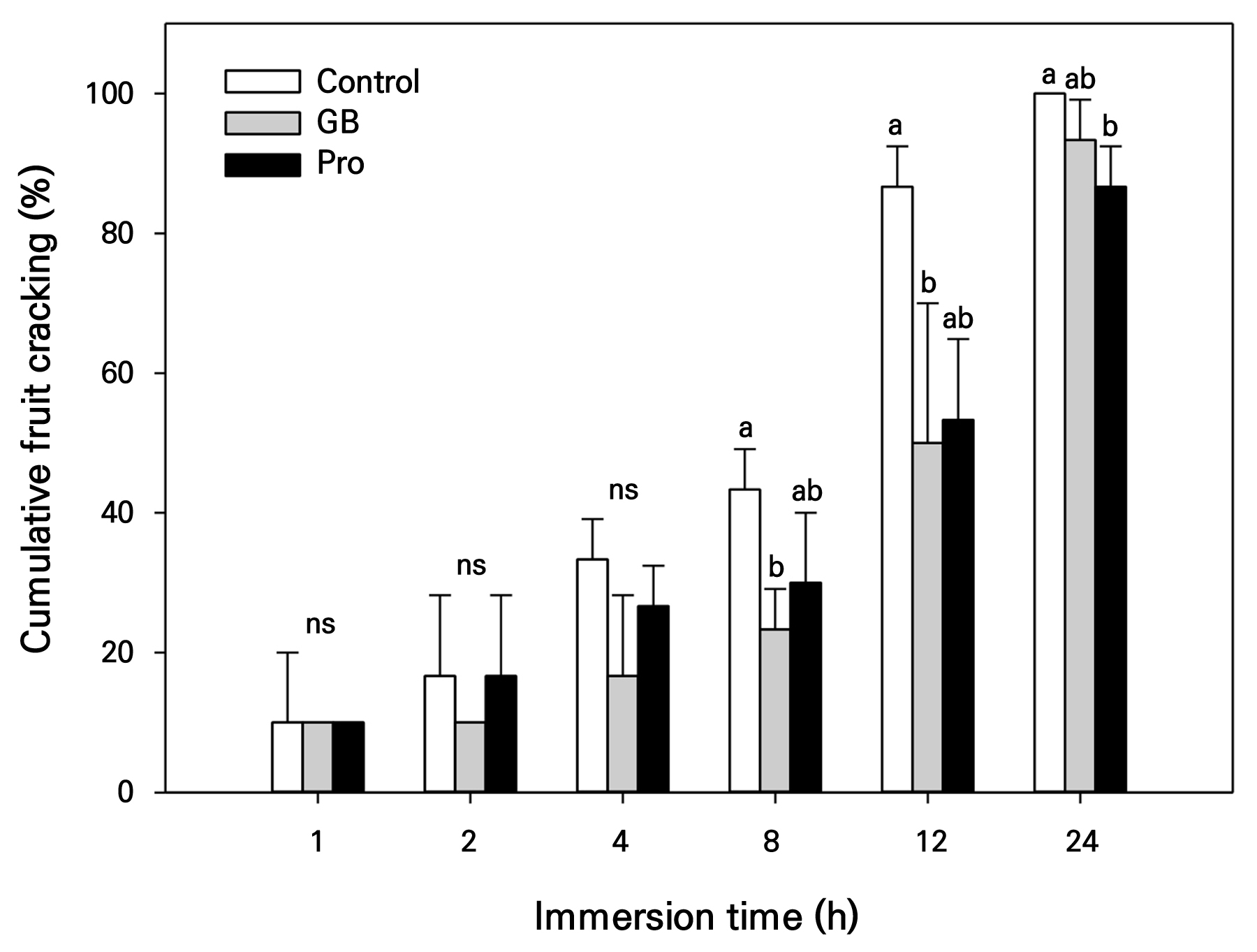
Fig. 1.
Cumulative fruit cracking of ‘Yellow Dream’ nectarines under different treatments after immersion. Bars represent the means ± standard deviation of tree-level cumulative cracking percentages (n = 3 trees per treatment; 10 fruits per tree). Treatments were control (distilled water), 400 mg·L-1 glycine betaine (GB), and 400 mg·L-1 proline (Pro). Letters above the bars indicate significant differences among treatments at each immersion time (p < 0.05, Tukey’s HSD test).
Pericarp tissue structure
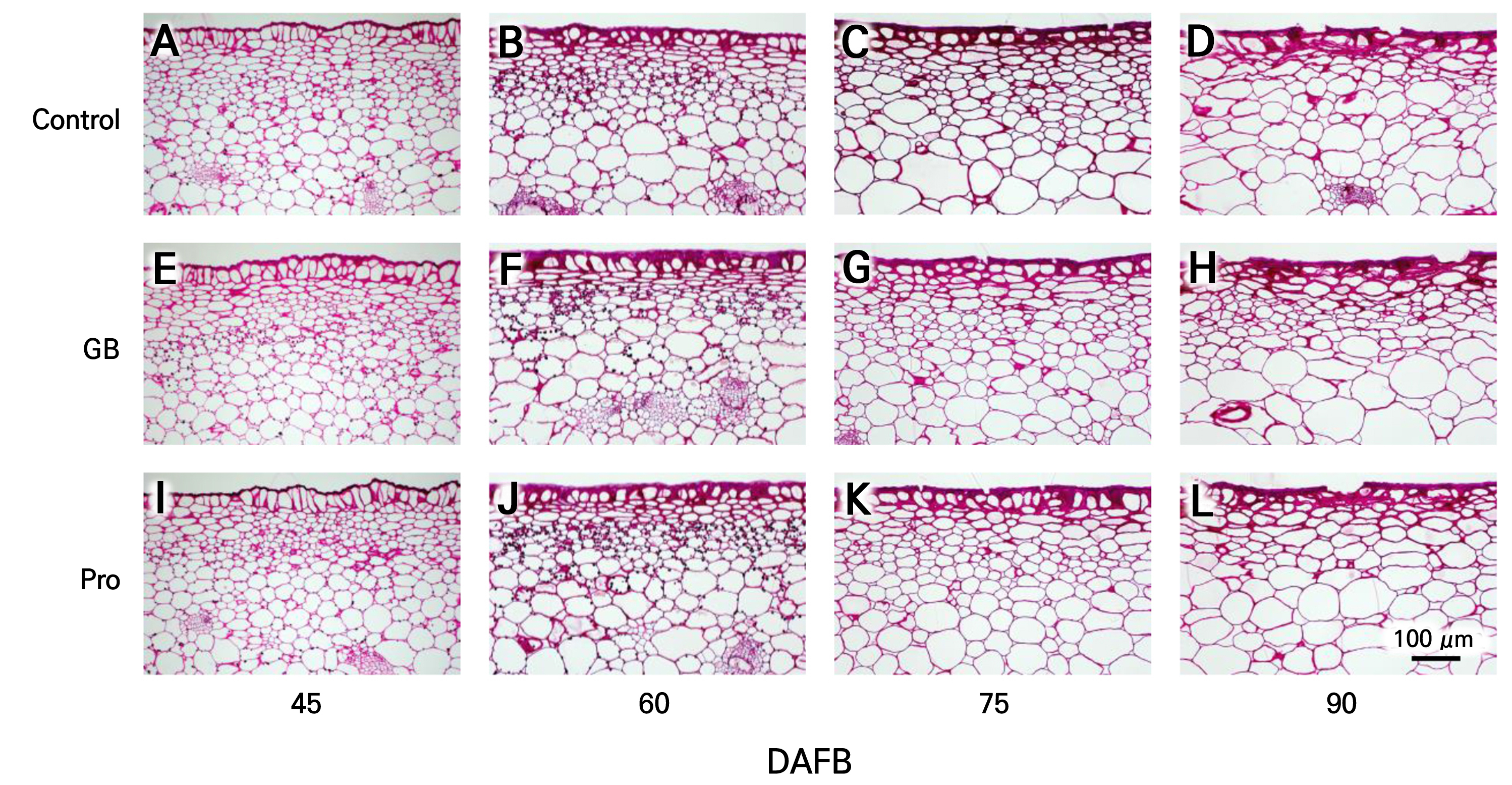
According to the LM observation, the outer pericarp at 45 DAFB consisted of small, densely packed cells arranged in a slightly irregular pattern (Fig. 2). At 60 DAFB, cell boundaries became more distinct and cell shapes appeared relatively uniform. By 75 DAFB, some cells were deformed and intercellular spaces had enlarged, while at 90 DAFB, epidermal cells were compressed or ruptured, and the continuity of the outer pericarp layer was partially disrupted.
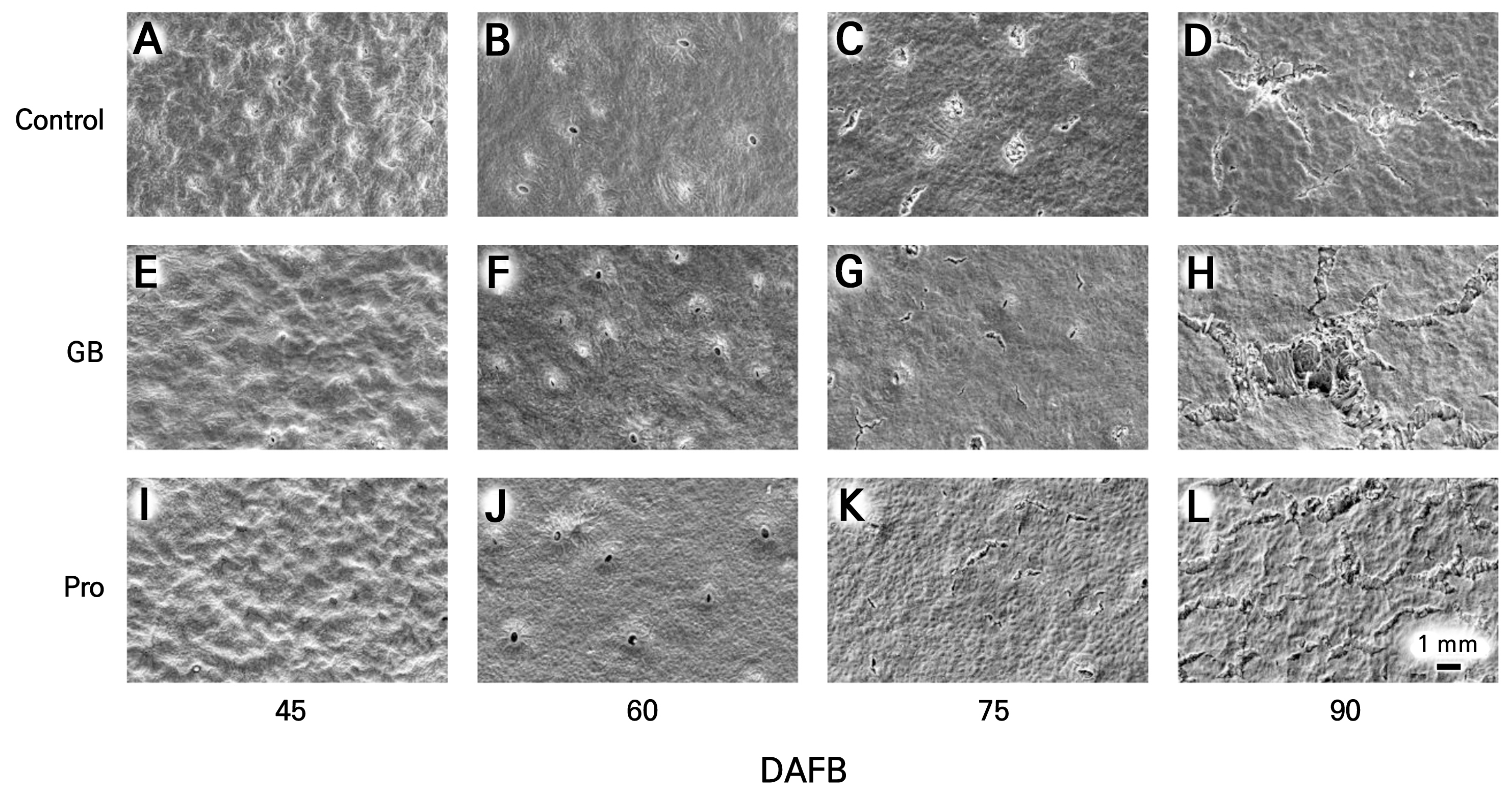
Under SEM observation, fruits in the control at 75 DAFB showed larger and deeper surface cracks compared with those in the GB and Pro treatments (Fig. 3). At 90 DAFB, cracks were expanded in all treatments, and distinct fissures were also visible on the fruit surfaces of several GB- and Pro-treated fruits.
Fruit characteristics
The GB treatment resulted in a significant increase in fruit firmness (Table 1). The firmness of fruits treated with GB was 49.2 ± 16.7 N, which was higher than that of the control (38.6 ± 14.2 N) and Pro treatments (38.0 ± 15.5 N). Fruit weight was highest in Pro, followed by GB, and lowest in the control. SSC was lower in the GB and Pro treatments than in the control. Fruit skin a* was lower in the GB treatment than in the control.
Table 1.
Fruit characteristics of ‘Yellow Dream’ nectarines affected by glycine betaine (GB) and proline (Pro) treatments. Data are presented as the means ± standard deviation (n = 30 fruits per treatment; 10 fruits from each of three trees). Different letters within a column indicate significant differences at p
5 according to Tukey’s HSD test
GB content
The GB content in the flesh varied with the treatment and the sampling time (Fig. 4A). In the control and Pro treatments, the GB content decreased gradually over time, whereas the GB treatment maintained relatively stable levels until 75 DAFB. At 90 DAFB, both the GB and Pro treatments showed significantly lower GB contents than the control.
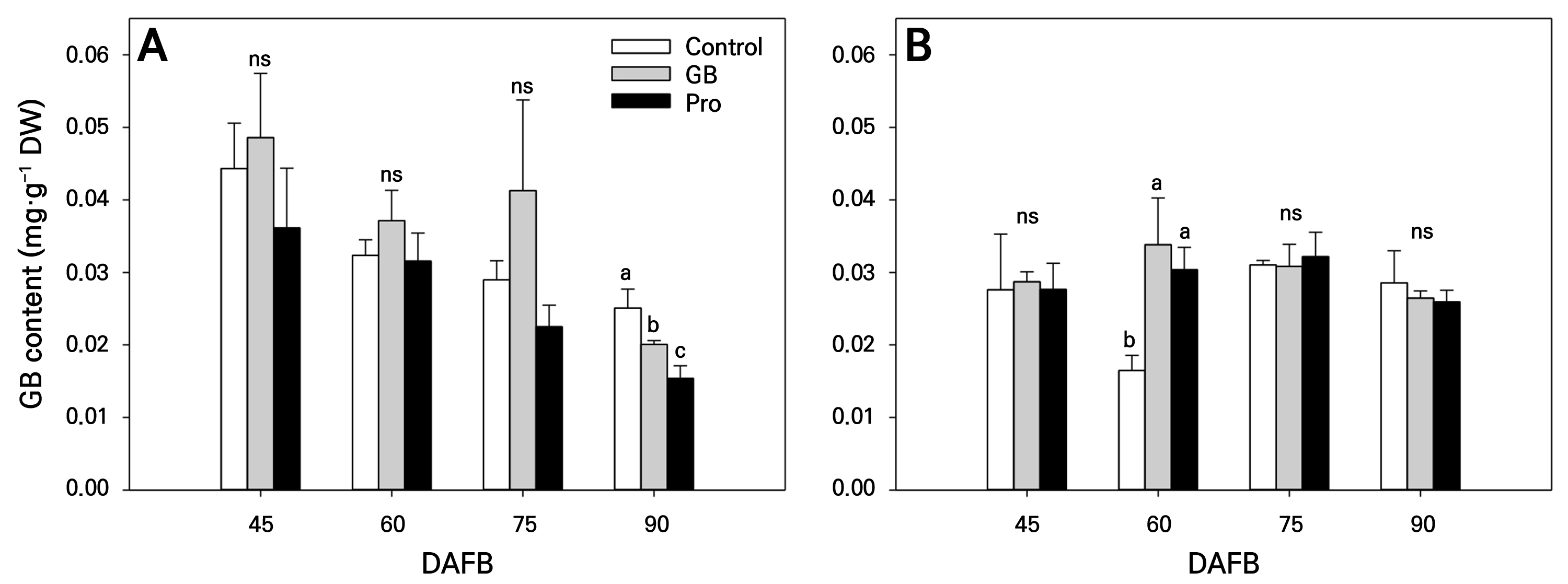
Fig. 4.
Glycine betaine (GB) content in the flesh (A) and peel (B) of ‘Yellow Dream’ nectarines during fruit development. Bars represent the means ± standard deviation of analytical replicates from one pooled sample of five fruits for each tissue, treatment, and sampling time (n = 3). Treatments were control (distilled water), 400 mg·L-1 GB, and 400 mg·L-1 proline (Pro). Letters above the bars indicate significant differences among the treatments at each sampling time (p < 0.05, Tukey’s HSD test). DAFB, days after full bloom; DW, dry weight.
In the peel, the GB content showed little difference among the treatments and only minor variations over time (Fig. 4B). At 60 DAFB, the control exhibited a lower GB content than the GB and Pro treatments, but no consistent trend was observed. No significant differences were detected among the three treatments at later stages.
Pro content
The Pro content in the flesh was affected by both the treatment and the sampling time (Fig. 5A). The control treatment generally exhibited lower Pro levels than the GB and Pro treatments during mid-fruit development, whereas GB showed a pronounced increase, reaching the highest values at 75 DAFB. The Pro content in both the GB and Pro treatments declined at 90 DAFB, resulting in no clear separation among the treatments at the final sampling.
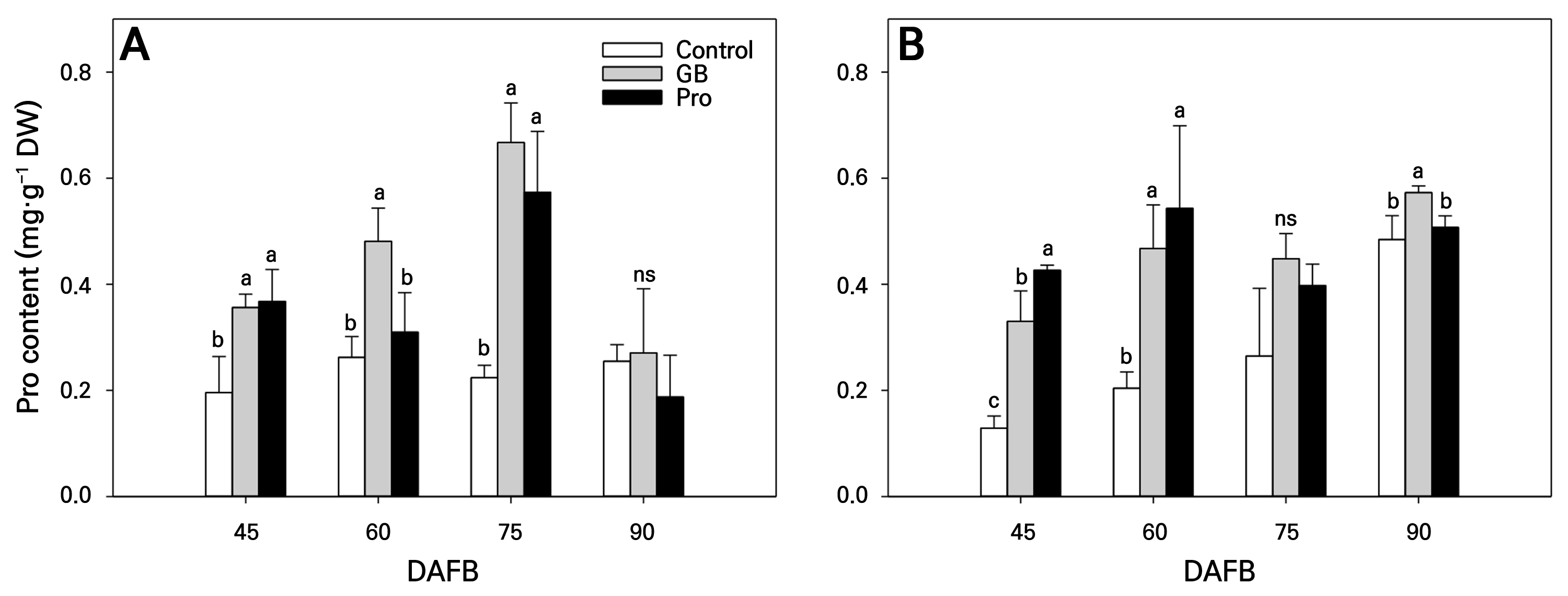
Fig. 5.
Proline (Pro) content in the flesh (A) and peel (B) of ‘Yellow Dream’ nectarines during fruit development. Bars represent the means ± standard deviation of analytical replicates from one pooled sample of five fruits for each tissue, treatment, and sampling time (n = 3). Treatments were control (distilled water), 400 mg·L-1 glycine betaine (GB), and 400 mg·L-1 Pro. Letters above the bars indicate significant differences among the treatments at each sampling time (p < 0.05, Tukey’s HSD test). DAFB, days after full bloom; DW, dry weight.
In the peel, the Pro content increased with fruit development in all treatments, although the temporal patterns differed among them (Fig. 5B). The GB and Pro treatments showed higher Pro levels than the control at most sampling times, with significant differences detected at earlier stages. At later stages, the Pro content converged among the treatments, and differences between GB and Pro were not consistently significant.
Discussion
Fruit cracking occurs when the pericarp absorbs an excessive amount of water, causing the resulting turgor pressure to exceed the mechanical resistance of the cell wall (Sekse 1995; Yu et al. 2020). Weakening of intercellular adhesion and the expansion of microcracks are recognized as the main factors contributing to this disorder. In the present study, GB and Pro treatments delayed the progression of fruit cracking (Fig. 1), likely by moderating rapid changes in the cellular water potential and reducing deformation of the cell wall. Osmolytes are known to stabilize membrane integrity and regulate water movement within cells, thereby buffering external water stress (Dutta et al. 2019; Zulfiqar et al. 2022). The reduction in cracking observed in ‘Yellow Dream’ supports the role of GB and Pro as compatible solutes that help maintain osmotic homeostasis and protect cellular integrity under fluctuating water conditions. This aspect is particularly relevant to nectarine, in which the glabrous surface and the low cuticular wax content leave the exocarp directly exposed to liquid water during wetting events.
In water-immersion assays, the temporal pattern of cracking also reflects physiologically meaningful phases of rain-induced cracking. Previous studies of sweet cherry reported a lag period of approximately 2 h before visible cracking occurs, followed by a rapid increase in the crack number and length as microcracks propagate into the epidermis (Schumann et al. 2019). In the present study, no differences among the treatments were detected up to 4 hai, a pattern consistent with this lag phase. Distinct differences then emerged between 8 and 12 hai, marking the transition to the propagation phase in which sustained surface wetness accelerates cuticular breakdown.
The microstructure of the pericarp is closely associated with susceptibility to fruit cracking (Knoche and Peschel 2006; Chang and Keller 2021). Epidermal fissures became apparent from 75 DAFB in all treatments (Fig. 2). Under SEM, the fissures were larger and deeper in the control than in the GB- and Pro-treated fruits (Fig. 3). This difference is consistent with reduced intercellular water movement and a smaller water stress gradient across the epidermal layer. Jin et al. (2015) reported that low-temperature conditioning in loquat increased the endogenous GB content together with the activities of H+-ATPase, Ca2+-ATPase, succinic dehydrogenase, and cytochrome c oxidase, thereby sustaining energy metabolism and protecting the membrane function. Sustained metabolic activity may therefore support pericarp structural integrity indirectly. However, cell wall deformation was observed in all treatments by 90 DAFB, meaning that the protective effect of GB and Pro appears to weaken as softening advances and cell-to-cell cohesion declines.
The higher fruit firmness at harvest in the GB-treated fruits (Table 1) may be associated with metabolic stability at the cellular level. GB has been shown to protect photosystem II by sustaining psbA transcription and stomatal conductance in wheat leaves under heat and high light stress (Wang et al. 2014). Similar beneficial effects on firmness retention and quality maintenance during storage have been reported in citrus fruits (Habibi et al. 2022). These findings suggest that GB delays the physical softening process by maintaining metabolic homeostasis and stabilizing the cellular function. Differences in ripening at harvest may also contribute to the firmness response to GB. In contrast, the Pro treatment did not show a significant difference in firmness from the control; however, previous studies involving other crops reported that Pro contributes to the stabilization of proteins and enzymes and promotes the scavenging of ROS (Zouari et al. 2018; Alam and Hasanuzzaman 2023). These reported functions provide possible explanations for the treatment responses, but their roles in nectarine remain to be confirmed. Given the structural vulnerability of nectarine skin, such effects may help maintain pericarp integrity during surface wetting.
The GB and Pro contents exhibited distinct tissue-dependent variations (Figs. 4 and 5). GB remained relatively stable in the flesh until 75 DAFB, but this pattern was reversed at harvest, when both the GB and Pro treatments showed lower GB contents than the control. This late-stage decline may reflect the metabolic turnover of GB during ripening, although the underlying process was not identified. In contrast, Pro levels were generally higher in the GB and Pro treatments than in the control. Notably, the GB treatment showed the highest Pro content in the flesh at 75 DAFB, exceeding that of the Pro treatment. Exogenous GB may therefore have an indirect effect on endogenous Pro accumulation, a possibility that warrants direct examination. These differences likely result from variations in compound mobility, the metabolic utilization efficiency, and the tissue-specific physiological demand. The stable GB concentration during fruit development would help maintain osmotic equilibrium and prevent abrupt changes in the cell water potential, whereas Pro accumulation during later stages has been linked to ROS scavenging and metabolic regulation (Zouari et al. 2018; Alam and Hasanuzzaman 2023). The effectiveness of GB and Pro therefore varied with the tissue and developmental stage rather than remaining constant through fruit development.
In summary, GB and Pro delayed the progression of fruit cracking in ‘Yellow Dream’, with the clearer response in the GB treatment. This delaying effect was observed during the initial stages of surface wetting. Differences in the pericarp structure were observed up to 75 DAFB, whereas deformation increased in all treatments by 90 DAFB. These findings are based on one cultivar, one concentration of each osmolyte, and three trees per treatment at one orchard in one season. Further studies across concentrations, cultivars, and seasons under natural rainfall are needed to assess field performance outcomes and to clarify the underlying physiological responses. The present results support GB and Pro as potential complementary treatments for delaying cracking under the conditions tested here.
Supplementary Material
Supplementary materials are available at Horticultural Science and Technology website (https://www.hst-j.org).
- HORT_20260047_Table_S1.pdf
Supplementary Table S1. Weather conditions at the experimental orchard in 2025 and corresponding 2011-2020 averages
