

Introduction
Materials and Methods
Plant materials
Cultivation conditions
Sample collection and preservation
Chlorophyll and total carotenoid analysis
Total phenolic contents (TPC)
TFC
DPPH radical scavenging activity
Quantitative and qualitative analyses of cannabinoid contents
Estimating total CBD and THC
Statistical analysis
Results
Morphogenesis and growth parameters
Chlorophylls and total carotenoids
TPC, TFC, and DPPH radical scavenging activity
Analysis of cannabinoids
Discussion
Morphological and physiological characteristics among domestic and foreign cultivars
Accumulation of secondary metabolites and total productivity
Flowering physiology and optimization of harvest timing
Antioxidant activity and the role of phenolic compounds
Conclusion
Introduction
Hemp (Cannabis sativa L.) is an annual herbaceous plant belonging to the Cannabaceae family, which is widely recognized for its adaptability and economic importance. It is cultivated globally for its strong fibers, nutrient-rich seeds, and diverse secondary metabolites with industrial and pharmacological relevance (Rupasinghe et al. 2020; Gomez et al. 2021; Hourfane et al. 2023). This species exhibits dioecious or monoecious forms, with notable variations in morphology depending on genetic and environmental factors (Punja and Holmes 2020; Hesami et al. 2023; Baek and Vergara 2025). Its resilience to various climatic and soil conditions supports its utilization across multiple sectors, including textiles, food, and pharmaceuticals (Blandinières and Amaducci 2022; Gill et al. 2023; Visković et al. 2023). Among its bioactive constituents, cannabinoids are of particular interest because of their documented physiological and pharmacological effects in humans (Ashton 2001; Duczmal et al. 2024).
Over the past decade, interest in medical hemp has expanded globally with increasing recognition of the therapeutic properties of cannabinoids. Cannabidiol (CBD), the principal non-psychoactive cannabinoid, is effective in alleviating chronic pain, anxiety, and seizure disorders (Devinsky et al. 2017; Shannon et al. 2019). In contrast, Δ9-tetrahydrocannabinol (THC), a psychoactive component, remains tightly regulated due to its potential for abuse (Hall and Degenhardt 2009). Consequently, many countries have implemented legal frameworks to promote the medical use of low-THC, high-CBD hemp varieties, and the European Parliament has recognized the therapeutic potential of cannabinoids and supports the regulated development of medical hemp use. South Korea was the first East Asian nation to legalize medical hemp through an amendment to the Narcotics Control Act of 2018. However, the use of medical hemp is still strictly controlled by the Ministry of Food and Drug Safety, and only limited cannabinoid-based pharmaceuticals, such as Epidiolex, Marinol, and Sativex, are currently authorized. This restrictive regulatory environment, particularly the 0.3% THC threshold, necessitates the development of standardized cultivation systems and the selection of locally optimized and compliant genetic resources.
The pharmacological potential of hemp is largely attributed to its diverse spectrum of cannabinoids, terpenoids, and phenolic compounds (Andre et al. 2016). Cannabinoids, including CBD, THC, cannabigerol (CBG), and cannabichromene (CBC), are synthesized mainly in the glandular trichomes of flowers and leaves (Livingston et al. 2020). The ratios and concentrations of these compounds vary considerably among cultivars, reflecting both genotypic stability and phenotypic plasticity in response to environmental conditions (Pant et al. 2021; Venkatasai et al. 2025). In addition to cannabinoids, hemp contains substantial amounts of flavonoids and phenolic acids that contribute to its antioxidant and anti-inflammatory properties (Izzo et al. 2020). These bioactive substances enhance the medical and industrial value of hemp, particularly in the development of cultivars with high biomass productivity and desirable phytochemical profiles.
Although hemp is increasingly cultivated for medical and industrial purposes worldwide, few comparative studies have investigated the growth performance and biochemical characteristics of domestic versus foreign cultivars within a standardized Korean closed-type production system (Sohn et al. 2021, Koo et al. 2023). Understanding the variations in biomass accumulation, cannabinoid biosynthesis, and antioxidant capacity among cultivars is crucial to ensure both chemical consistency and legal compliance (Adesina et al. 2020). Therefore, the present study aimed to compare the morphological traits, biochemical compositions, and cannabinoid content of five C. sativa cultivars, two domestic and three foreign, cultivated in a controlled environment in South Korea. This study provides foundational data to select suitable cultivars for large-scale, medically compliant hemp production and contributes to the development of locally adapted, high-yield, low-THC genetic resources.
Materials and Methods
Plant materials
Five hemp cultivars comprising two domestic and three foreign genotypes were used in this study. The domestic cultivars included the high-CBD line IT342820 (V1) and low-THC line IT342821 (V4), both developed by the Korean Rural Development Administration (RDA) in 2022 and registered at the Korean National Agrobiodiversity Center. Three foreign cultivars—‘Cherry Blossom’ (CB), ‘Hot Blonde’ (HB), and ‘Queen Dream’ (QD)—were obtained from the commercial market (Blue Forest Farms, Colorado, USA). These cultivars were selected because they represent a wide range of cannabinoid profiles and morphological diversity.
Cultivation conditions
All plants were grown in 1L plastic pot filled with a commercial potting mix (Hanareum, Shinsung Mineral, Goesan, Korea) consisting of cocopeat (51.5%), perlite (15%), vermiculite (13%), and peat moss (10%), and cultivated in a controlled, closed-type growth chamber located at Chungnam National University (Daejeon, Korea). The environment was maintained at a constant temperature of 24°C, 60% relative humidity, and a CO2 concentration of 400 µmol·mol‒1 throughout the day. Illumination throughout the experiment was provided by full-spectrum white LEDs (H22P, APACK, INC, Daejeon, Korea) with peak wavelengths at 450 nm and 660 nm. The cultivation period lasted 15 weeks, consisting of a 2-week rooting phase, a 4-week vegetative phase under a 16 h light/8 h dark photoperiod with 200 µmol·m‒2·s‒1 photosynthetic photon flux density (PPFD), followed by an 11-week flowering phase under a 12 h light/12 h dark photoperiod with 600 µmol·m‒2·s‒1 PPFD. Plants were irrigated once daily for 30 minutes using a sub-irrigation system, allowing the roots to absorb the solution via capillary action. The nutrient solution containing a 1:1 mixture of Yara Ferticare (N ‒ P2O5 ‒ K2O = 20 ‒ 20 ‒ 20 + 2MgO + 6 type trace elements; Yara International, Oslo, Norway) and Yara Ferticare Calcimag (N ‒ P2O5 ‒ K2O = 13 ‒ 0 ‒ 1 + 16(CaO) + 6(MgO). The solution was maintained at an electrical conductivity (EC) of 2.0 dS·m‒1 and a pH of 5.8.
Sample collection and preservation
At the end of the 11-week flowering period, destructive sampling was performed to measure plant height, canopy width, and dry weight of stems, leaves, and flowers. For biochemical analyses, leaves and flowers were consistently sampled from the 5th node from the apical meristem bi-weekly in triplicates (n = 3) at the 3rd, 5th, 7th, 9th, and 11th week of flowering. The collected samples were immediately frozen in liquid nitrogen, stored at ‒70°C for 48 h, and then freeze-dried. The dried material was ground to a fine powder and stored in an airtight container for subsequent assays.
Chlorophyll and total carotenoid analysis
Chlorophyll and carotenoid contents were determined as previously described (Lichtenthaler and Buschmann 2001). Freeze-dried samples were extracted with 90% methanol, and the absorbance was measured at 665 nm (A665), 652 nm (A652), and 470 nm (A470) using a UV-Vis spectrophotometer. The concentrations of chlorophyll a (Ca), chlorophyll b (Cb), and total carotenoids (C(x+c)) were calculated using the following equations:
Ca = 16.82 A665–9.28 A652
Cb = 36.92 A652–16.54 A665
C(x+c) = (1000 A470–1.91 Ca–95.15 Cb)/225
Total phenolic contents (TPC)
For the analysis of TPC, total flavonoid content (TFC), and DPPH radical scavenging activity, 20 mg of the freeze-dried sample was extracted with 2 mL of 90% methanol using sonication for 30 min, followed by centrifugation at 21,000×g for 10 min. The TPC was determined using the Folin–Ciocalteu method (Singleton and Rossi 1965). The reaction mixture consisted of 20 µL of extract, 10 µL of Folin–Ciocalteu reagent, 150 µL of distilled water, and 30 µL of 7.5% Na2CO3. After incubation for 30 min, absorbance was measured at 765 nm, and results are expressed as gallic acid equivalents (GAE, mg·g-1 DW).
TFC
The TFC was analyzed following the method described by Nurlinda et al. (2021). A reaction mixture containing 20 µL extract, 10 µL 10% AlCl₃, and 10 µL potassium acetate was incubated, and absorbance was measured at 431 nm. Results are expressed as quercetin equivalents (QE, mg·g-1 DW).
DPPH radical scavenging activity
The antioxidant activity of hemp extracts was evaluated using the DPPH free radical scavenging assay, following the method described by Braca et al. (2003). A 200 µL reaction mixture containing 10 µL DPPH solution (0.4 mg·mL‒1 in 90% methanol), 20 µL extract, and 170 µL methanol was incubated in the dark for 60 min. The absorbance was measured at 517 nm, and the scavenging activity was calculated as follows:
DPPH scavenging = [(blank absorbance – sample absorbance) / blank absorbance] × 100
Quantitative and qualitative analyses of cannabinoid contents
Cannabinoid profiles were analyzed using high-performance liquid chromatography (HPLC; Agilent 1260, Agilent Technologies, Santa Clara, CA, USA) as described by Hahm et al. (2023) with slight modifications. Freeze-dried samples (100 mg) were extracted with 2 mL of methanol/hexane (9:1, v/v) using sonication for 30 min, then centrifuged at 21,000×g for 10 min. The supernatant was filtered through a 0.45 µm syringe filter before injection. Separation was performed on a Poroshell 120 EC-C18 column under gradient elution using 0.1% formic acid in water and acetonitrile as the mobile phases. The flow rate was 1.0 mL·min-1 at 25°C, and detection was carried out at 210 nm.
Estimating total CBD and THC
Total CBD and THC contents were calculated by considering the conversion of acidic to neutral cannabinoids using the following standard formula:
Total CBD = CBDA * 0.877 + CBD
Total THC = THCA * 0.877 + THC
Statistical analysis
For each cultivar, nine individual plants were cultivated. Among them, three plants were used for destructive analysis, and from the remaining plants, equal amounts of flowers and leaves were sampled bi-weekly in triplicates (n = 3) for biochemical assays. Data were analyzed by one-way ANOVA followed by Tukey’s multiple comparison test at a significance level of p < 0.05, using the SPSS software (ver. 22.0; IBM, Armonk, NY, USA). Graphs were prepared using SigmaPlot 15 (Inpixon, Palo Alto, CA, USA) and OriginPro 2023 (OriginLab, Northampton, MA, USA).
Results
Morphogenesis and growth parameters
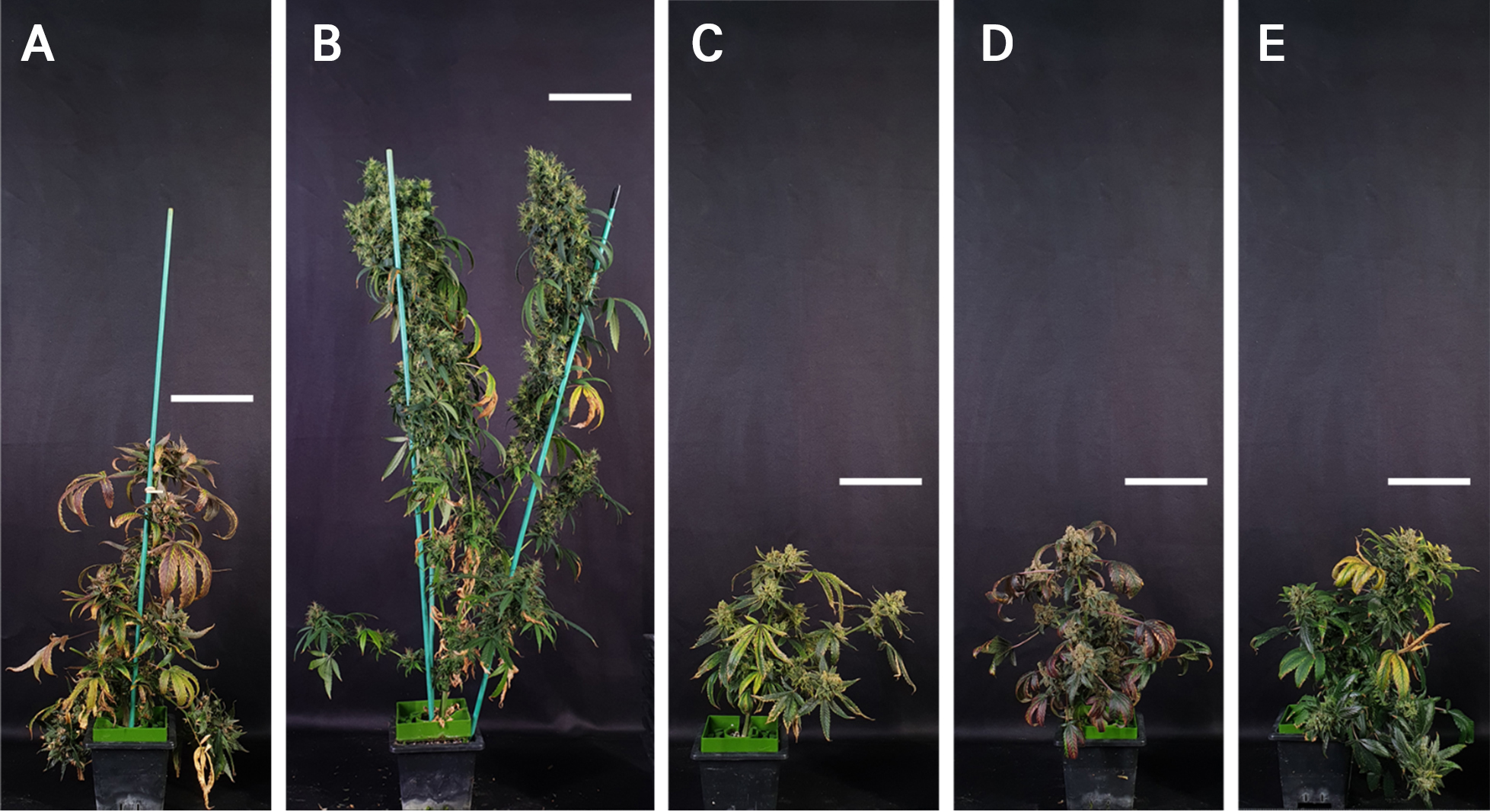
After 11 weeks of flowering, distinct morphological variations were evident in all five hemp cultivars (Fig. 1). The domestic cultivar V4 exhibited the highest aboveground biomass and canopy volume, followed by V1. Among the foreign cultivars, QD showed the most robust vegetative growth, whereas CB displayed the least robust plant architecture. Although most cultivars exhibited signs of leaf senescence during the late reproductive stage, V4 maintained green foliage for longer and produced elongated inflorescences with densely clustered apical leaves.
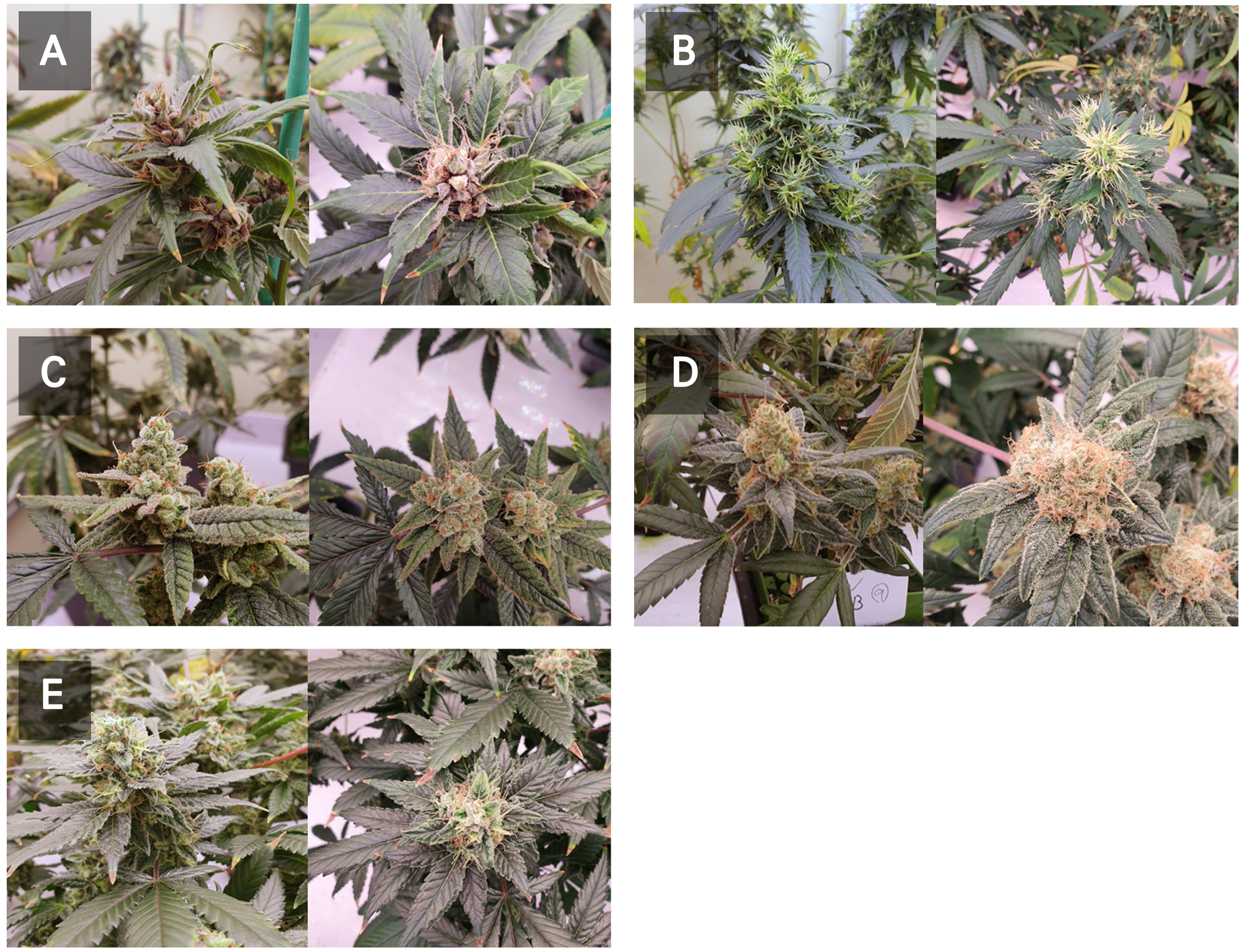
The floral morphology at week 7 (Fig. 2) revealed that V1, CB, HB, and QD had a high density of glandular trichomes, whereas V4 had fewer trichomes but larger floral structures. Overall, foreign cultivars demonstrated superior trichome formation, whereas domestic cultivars accumulated more floral biomass.
Regarding plant dimensions, V4 had the greatest shoot height (78.0 cm), followed by V1 and QD (Fig. 3A). QD exhibited the greatest canopy width (35.2 cm), with V4 being slightly lower at 33.6 cm (Fig. 3B). However, no statistically significant differences in shoot width were observed between the domestic and foreign cultivars (p < 0.05).
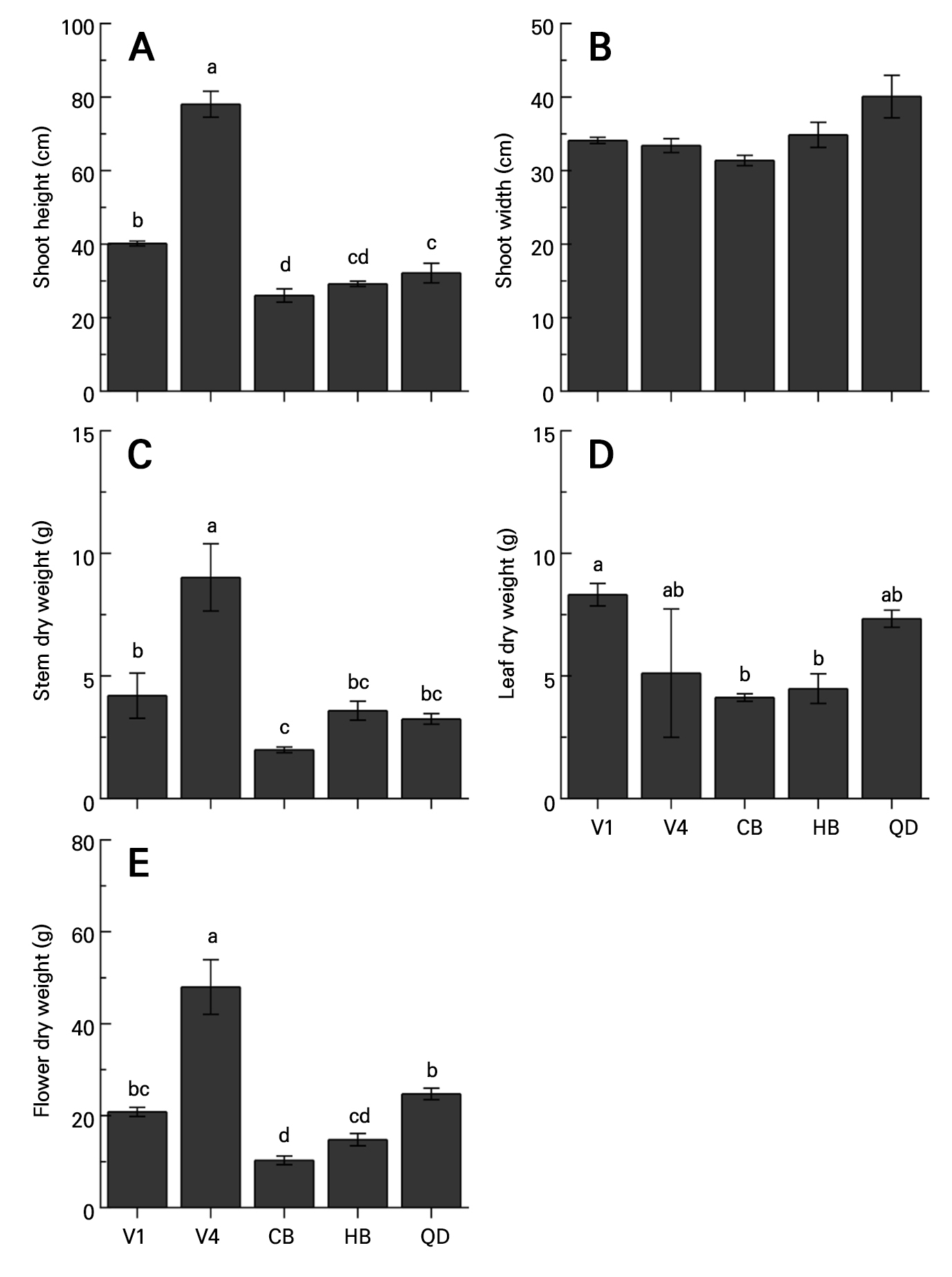
Fig. 3.
Growth parameters of five hemp (Cannabis sativa L.) cultivars at the 11th week after flowering under controlled environmental conditions. Measured parameters include shoot height (A), shoot width (B), stem dry weight (C), leaf dry weight (D), and flower dry weight (E). Domestic cultivars include V1 and V4, and foreign cultivars include Cherry Blossom (CB), Hot Blonde (HB), and Queen Dream (QD). Bars represent mean values ± standard error (n = 3). Different letters above the bars indicate significant differences among cultivars as determined by one-way ANOVA followed by Tukey’s post-hoc test (p < 0.05). Fallen leaves were excluded from the leaf dry weight analysis.
Dry weight analysis indicated that V4 produced the highest stem and flower biomass, followed by V1 and QD (Fig. 3C and 3E). Due to natural leaf abscission during the flowering stage, the leaf dry weight comparison was less consistent (Fig. 3D). These results indicate that the domestic cultivars achieved greater vegetative growth and biomass accumulation under controlled conditions, with V4 having the highest overall biomass.
Chlorophylls and total carotenoids
The contents of chlorophyll a (Ca), chlorophyll b (Cb), and total carotenoids (Cx+c) were analyzed in both the leaves and flowers from 3 to 11 weeks after flowering (WAF) (Fig. 4). In the leaves, the total chlorophyll content (Ca + Cb) remained relatively stable until 7 WAF, followed by a gradual decline after 9 WAF across all cultivars (Fig. 4A). In contrast, the chlorophyll levels in floral tissues exhibited a continuous downward trend after 3 WAF, reflecting a progressive shift toward reproductive metabolism (Fig. 4B). Notably, the domestic cultivar, V4, maintained significantly higher chlorophyll concentrations in its flowers, which may be attributed to the presence of more photosynthetically active bracts and apical leaves in the upper canopy.
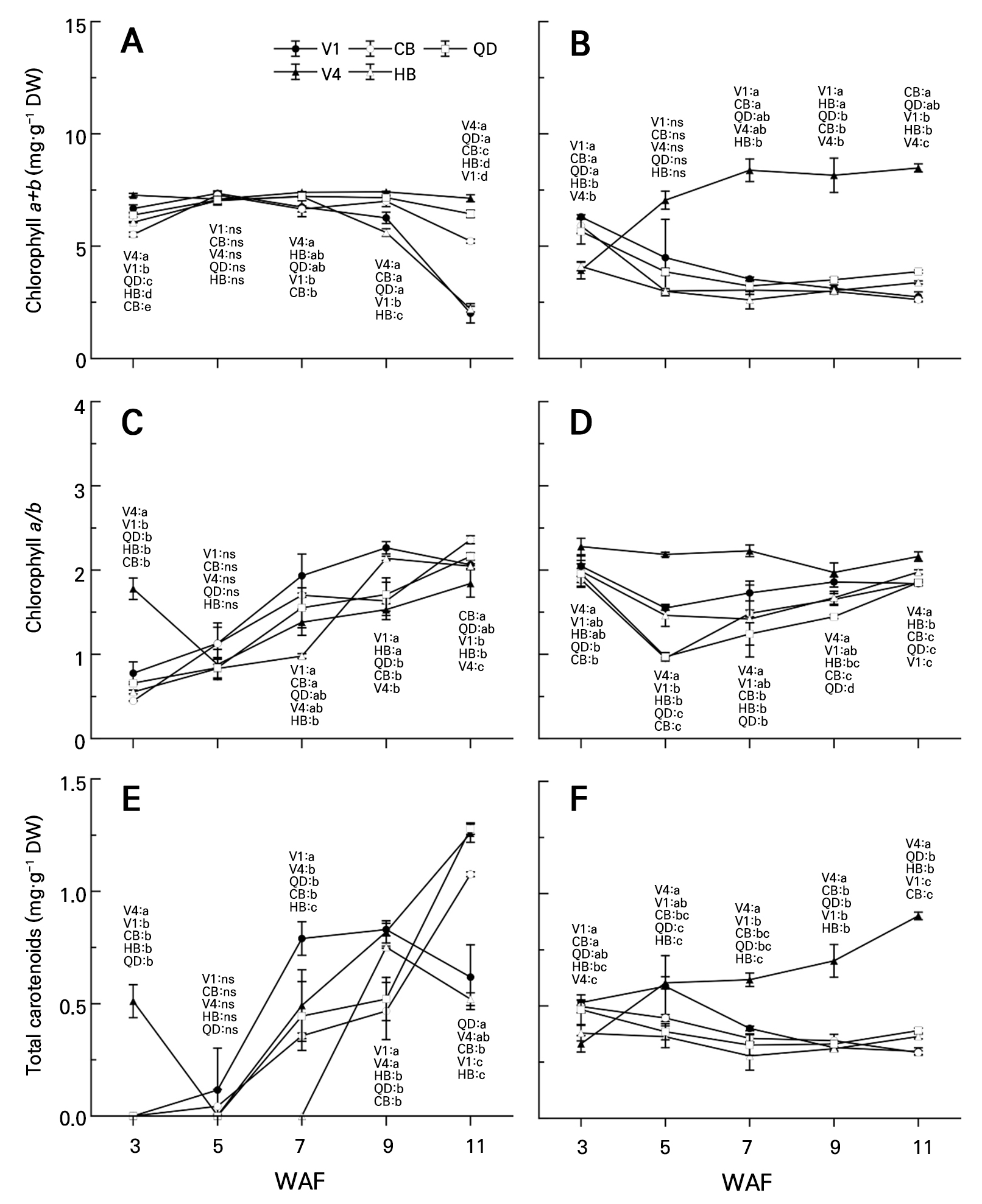
Fig. 4.
Temporal changes in chlorophyll and total carotenoid contents in leaves (A, C, E) and flowers (B, D, F) of five hemp (Cannabis sativa L.) cultivars across different flowering stages (3–11 weeks after flowering, WAF) under controlled environmental conditions. Domestic cultivars include V1 and V4, and foreign cultivars include Cherry Blossom (CB), Hot Blonde (HB), and Queen Dream (QD). Data are shown as mean ± standard deviation (n = 3). Different lowercase letters indicate significant differences among cultivars according to Tukey’s HSD test at p < 0.05. NS: not significant.
The Ca/Cb ratio showed similar temporal patterns among all cultivars (Fig. 4C); however, V4 displayed a slightly higher proportion of Ca in the floral tissues during the later stages (Fig. 4D). The total carotenoid content in the leaves increased gradually until the final stages of flowering (Fig. 4E), whereas it declined steadily in the floral tissues (Fig. 4F). These distinct pigment dynamics indicate cultivar-specific variations in the photosynthetic capacity and senescence-related responses during the reproductive phase.
TPC, TFC, and DPPH radical scavenging activity
Variations in TPC, TFC, and DPPH radical scavenging activity among the five cultivars during flowering are shown in Fig. 5. In the leaves, TPC levels remained relatively constant across all cultivars, indicating limited genotypic influence during vegetative development (Fig. 5A). However, significant temporal and cultivar-specific differences were detected in the flowers (Fig. 5B) (p < 0.05). CB and QD exhibited the highest TPC values at week 5, V1 and HB peaked at week 7, and V4 reached its maximum at week 9 before declining toward the final stage.
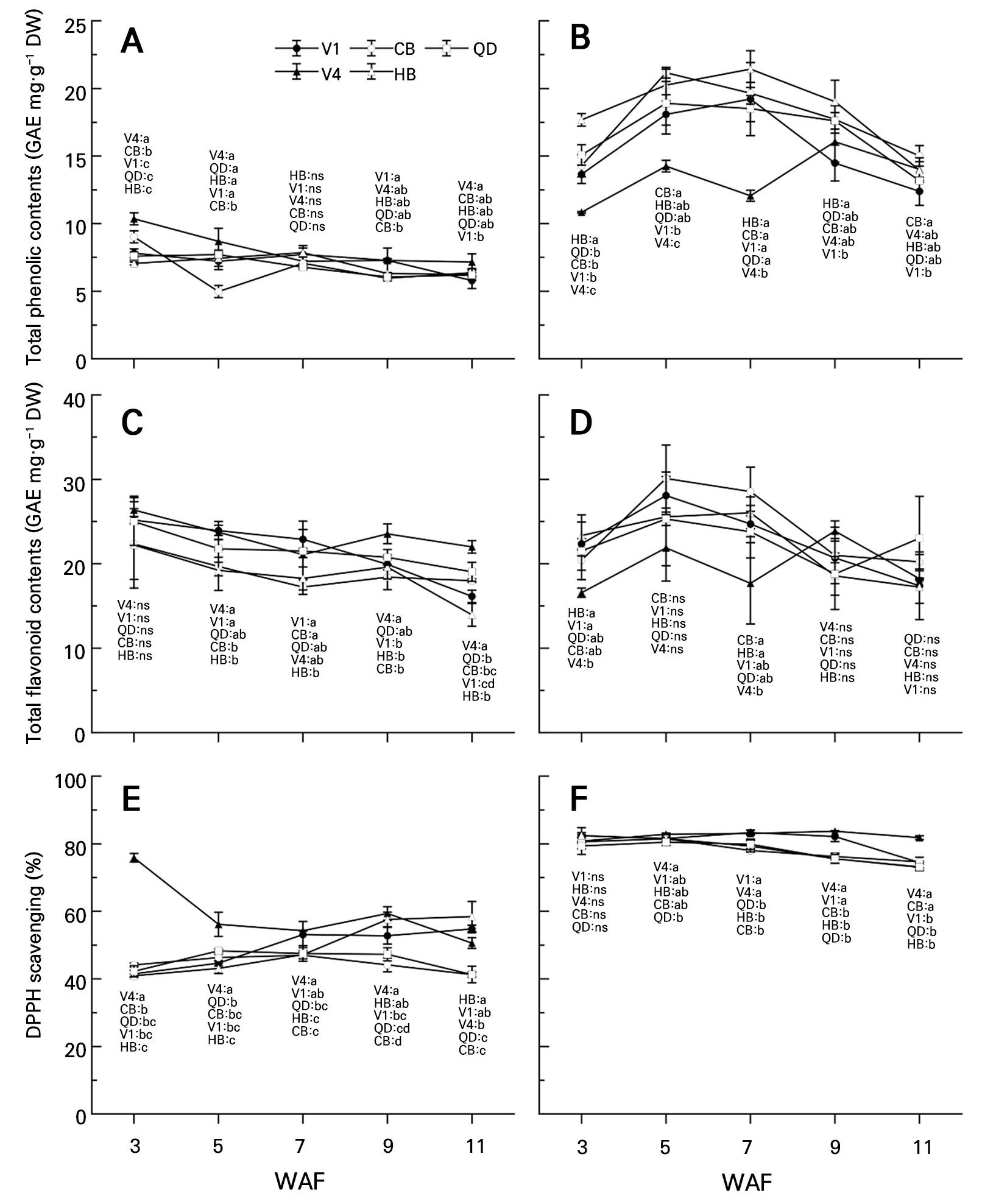
Fig. 5.
Temporal changes in total phenolic contents, total flavonoid contents, and DPPH radical scavenging activity in leaves (A, C, E) and flowers (B, D, F) of five hemp (Cannabis sativa L.) cultivars across different flowering stages (3–11 weeks after flowering, WAF) under controlled environmental conditions. Domestic cultivars include V1 and V4, and foreign cultivars include Cherry Blossom (CB), Hot Blonde (HB), and Queen Dream (QD). Data are shown as mean ± standard deviation (n = 3). Different lowercase letters indicate significant differences among cultivars according to Tukey’s HSD test at p < 0.05. NS: not significant.
The TFC pattern closely paralleled that of TPC, showing consistent trends across both organs and flowering stages (Fig. 5C and 5D). The TFC values ranged from 12.5–28.1 mg·g‒1 DW in leaves and 12.2–32.8 mg·g‒1 DW in flowers, expressed as QE.
The DPPH radical scavenging activity was generally 1.5–2 times higher in flowers than in leaves (Fig. 5E and 5F). In the leaves, no significant differences in antioxidant activity were observed among the cultivars after week 5. Flowers consistently maintained high antioxidant capacity throughout the flowering period, with only minor fluctuations. These results suggest that floral tissues had greater antioxidant potential than leaves, regardless of cultivar origin.
Analysis of cannabinoids
The quantitative and qualitative profiles of the 13 cannabinoids in the leaves and flowers across the 11-week flowering period are summarized in Supplementary Tables S1 and S2. In the leaves, the domestic cultivars (V1 and V4) contained lower levels of major cannabinoids than the foreign cultivars (CB, HB, and QD). Cannabinoids such as CBE and Δ8-THC were not detected in any cultivar. The concentrations of key compounds—including CBDA, CBGA, CBG, CBD, Δ9-THC, CBC, THCA, and CBCA—showed a general decreasing trend over time, reflecting cannabinoid degradation or conversion with plant maturity.
In flowers, CBE was absent, and Δ8-THC appeared only in trace amounts after week 7 in some foreign cultivars. The overall cannabinoid concentration varied significantly among the cultivars and growth stages. CB, HB, and QD exhibited relatively higher contents of CBDA, CBCA, and THCA, peaking at approximately weeks 5–7, whereas V1 and V4 showed lower but more stable accumulation patterns. Interestingly, V4 displayed a gradual increase in cannabinoid content, even in the late reproductive stage, suggesting a delayed biosynthetic peak compared to the other cultivars.
As shown in Fig. 6A, the total CBD concentration in the leaves decreased steadily with time, whereas flower tissues contained substantially higher levels (Fig. 6B). CB and HB reached maximum CBD levels at week 5, whereas V1 and QD peaked at week 7. V4 consistently maintained the lowest CBD concentration but showed a modest increase during the final observation week.
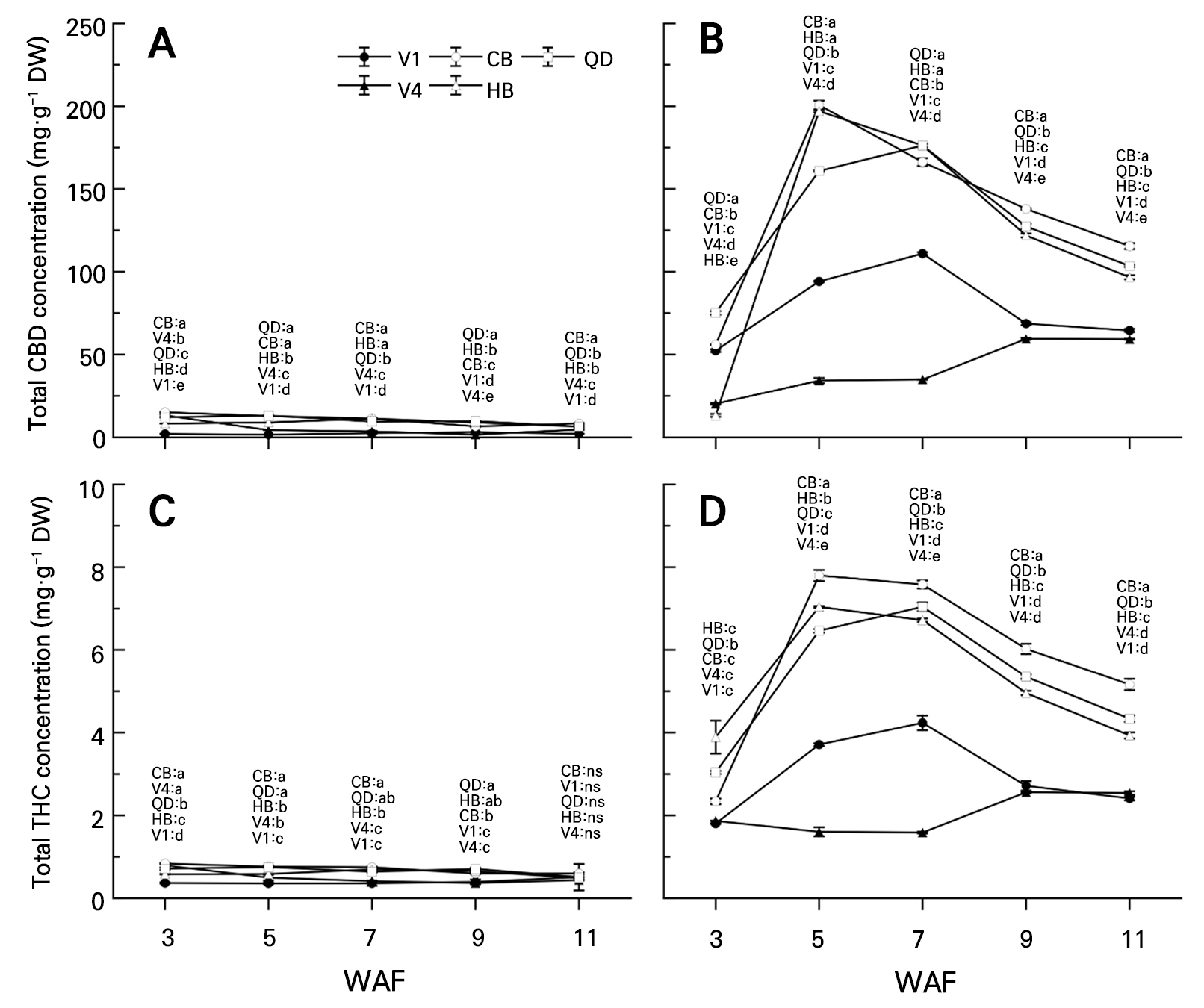
Fig. 6.
Temporal changes in total cannabidiol (CBD) and tetrahydrocannabinol (THC) concentrations in leaves (A, C) and flowers (B, D) of five hemp (Cannabis sativa L.) cultivars across different flowering stages (3–11 weeks after flowering, WAF) under controlled environmental conditions. Domestic cultivars include V1 and V4, and foreign cultivars include Cherry Blossom (CB), Hot Blonde (HB), and Queen Dream (QD). Data are shown as mean ± standard deviation (n = 3). Different lowercase letters indicate significant differences among cultivars according to Tukey’s HSD test at p < 0.05. NS: not significant.
Total THC concentrations followed a temporal pattern similar to that of CBD, but at lower magnitudes (Fig. 6C and 6D). Flowers had higher THC levels than leaves across all cultivars, with CB, HB, and QD showing clear peaks between weeks 5 and 7. After week 9, most cultivars exhibited a decline in THC content, except for V4, which maintained higher values until week 9. This suggests a delayed biosynthetic peak in V4 compared with the other cultivars studied.
Crucially, both domestic cultivars (V1 and V4) maintained total THC levels below the international regulatory threshold of 0.3% (3.0 mg·g-1 DW) throughout the entire cultivation period, satisfying the legal requirements for medical hemp. Overall, although the foreign cultivars exhibited superior secondary metabolite potency, the domestic cultivars demonstrated stable cannabinoid ratios and consistent accumulation profiles, which are highly desirable for standardized pharmaceutical production.
Discussion
Morphological and physiological characteristics among domestic and foreign cultivars
C. sativa genotypes can be broadly categorized into drug and fiber types, which exhibit fundamental differences in their dry matter partitioning strategies (Rupasinghe et al. 2020). Drug-type cultivars prioritize energy allocation toward inflorescence expansion and glandular trichome formation during the reproductive stage, whereas fiber-type cultivars emphasize stem elongation and the synthesis of structural cell wall components, such as cellulose and lignin. The superior biomass and shoot height observed in V1 and V4 imply close genetic proximity to domestic fiber-type resources, such as ‘Cheungsam’. This observation is consistent with previous reports highlighting Cheungsam’s low THC content and high fiber productivity (Mun et al. 2002).
In contrast, the foreign cultivars (CB, HB, and QD) exhibited a relatively low biomass and compact plant architecture. This reflects North American breeding trends in medical hemp, which favor reduced plant height and increased floral density to optimize indoor high-density cultivation systems. In particular, the minimal architecture of CB represents a breeding outcome tailored for modern intensive agriculture, maximizing total yield per unit area by increasing planting density (Alden and Faust 2024).
From a physiological perspective, the lower biomass of the introduced cultivars does not necessarily indicate reduced photosynthetic efficiency. Rather, it suggests a higher ‘Harvest Index’. In this state, photosynthates are partitioned toward metabolic tissues (inflorescences and resins) rather than structural tissues (Carlson et al. 2021). This supports the premise that the correlation between basal stem diameter and floral biomass varies significantly by cultivar intended use (fiber vs. medical).
The delayed senescence observed in V4, characterized by the maintenance of green foliage until the late-flowering stage, implied an extended photosynthetic period. However, this may also suggest a delay in cannabinoid maturation as the transition to reproductive growth is prolonged. This is consistent with the findings of Tang et al. (2018) and Wei et al. (2023), who noted that fiber-type hemp tends to maintain vegetative growth longer than drug-type hemp owing to its superior nitrogen use efficiency (NUE). Consequently, for the indoor cultivation of domestic cultivars, it is essential to use lower nitrogen fertilization levels than for foreign cultivars, or to implement pruning techniques to control plant height without excessive use of growth regulators (Crispim Massuela et al. 2022).
Accumulation of secondary metabolites and total productivity
Consistent with the findings of Bernstein et al. (2019) and Saloner and Bernstein (2021), increasing nutrient supply (e.g., nitrogen and phosphorus) to enhance plant size often leads to a linear decrease in THC and CBD concentrations in inflorescences (Simonutti et al. 2025). It is likely that domestic cultivars V1 and V4 possess enhanced nutrient absorption capacity. Consequently, these cultivars likely prioritize allocating absorbed resources to the synthesis of primary metabolites, such as carbohydrates and proteins, rather than secondary metabolites. This physiological prioritization reduces the number of carbon skeletons available for cannabinoid biosynthesis, resulting in lower concentrations.
However, low cannabinoid concentrations do not necessarily reduce the industrial value of the domestic cultivars. In commercial extraction processes, the ‘Total Cannabinoid Yield per Area’ serves as a more critical economic indicator than concentration (Alden and Faust 2024). Given that the biomass of V1 and V4 significantly outperformed that of the foreign cultivars, it is possible that their total CBD production per unit area could exceed that of the high-concentration cultivars. For instance, Caplan et al. (2017) reported cases in which increased fertilization led to a slight decrease in concentration, yet a substantial gain in biomass resulted in an overall higher total extraction yield. However, it should be noted that this is an estimation based on individual plant biomass; since specific planting densities and actual yield per unit area were not evaluated in this study, further field or commercial-scale trials are required to confirm this potential.
Therefore, domestic cultivars V1 and V4 have high potential as raw material crops for the production of CBD isolates or distillates, where large-scale biomass processing is required, rather than for the boutique dry flower market. Nevertheless, because lower concentrations require greater solvent and energy consumption during the extraction process (Wongumpornpinit et al. 2025), further research with a comprehensive cost-benefit analysis is required to validate their economic viability across various industrial applications.
Flowering physiology and optimization of harvest timing
Cannabinoid accumulation patterns can be broadly categorized into ‘early finishers’ and ‘late finishers’ depending on the genotype (Aizpurua-Olaizola et al. 2016; Yang et al. 2020; Stack et al. 2021). The foreign cultivars CB and HB exhibited early-finisher characteristics, reaching their biosynthetic peaks relatively quickly. However, if the optimal harvest window is missed, these genotypes carry a high risk of rapid cannabinoid degradation or oxidation. The observed stagnation or decline in the concentration of these cultivars after week 7 suggests that delayed harvesting could lead to significant quality deterioration. Specifically, the degradation of Δ9-THC into cannabinol (CBN) past the peak maturity stage can result in a phytochemical profile that fails to meet stringent medical-grade standards (Alden and Faust 2025).
In contrast, the domestic cultivars V1 and V4 maintained or showed a modest increase in cannabinoid concentrations during the late-flowering stage (weeks 9–11). This profile characterizes V4 as a typical late-finishing cultivar, indicating that extending the cultivation period may be advantageous for maximizing secondary metabolite yield. Although late-finishing cultivars may reduce the annual turnover rate of cultivation facilities because of their longer growth cycles, they offer a distinct strategic advantage in terms of regulatory safety.
In South Korea, where the 0.3% THC threshold is strictly enforced by the Ministry of Food and Drug Safety, cultivars such as V4—which exhibit gradual accumulation without sudden ‘THC spikes’—represent a lower-risk option for local farmers. Although foreign cultivars offer higher potency, they require precise chemical monitoring within a narrow window (weeks 5 to 7) to determine the exact harvest time. Failure to do so could result in THC concentrations exceeding the legal limit, potentially leading to mandatory destruction of the entire crop. Thus, a stable accumulation profile of domestic cultivars provides a crucial buffer for ensuring legal compliance in industrial-scale production.
Antioxidant activity and the role of phenolic compounds
Cannabinoids, particularly CBD and THC, are potent antioxidants (Bartoszek et al. 2025). Consequently, it can be hypothesized that foreign cultivars with higher cannabinoid concentrations would exhibit superior antioxidant activity. However, this study found no significant differences in TPC, TFC, or DPPH radical scavenging activity among the five cultivars.
This finding indicates that the antioxidant capacity of hemp does not depend solely on the cannabinoid concentration. Non-cannabinoid polyphenolic compounds present in hemp leaves and inflorescences, such as cannflavin A/B, luteolin, apigenin, and chlorogenic acid, exert a profound influence on the total antioxidant capacity (Cantele et al. 2020).
In this context, the high leaf biomass produced by the domestic cultivars V1 and V4 represents a rich source of bioactive substances. Although the antioxidant activity of leaf tissues was lower than that of floral tissues, the absolute volume of biomass available from domestic cultivars suggests that the total yield of extractable antioxidants could be substantial (Stasiłowicz-Krzemień et al. 2023a).
Hemp leaf extracts possess neuroprotective and anti-inflammatory properties, effects primarily attributed to their flavonoid content rather than cannabinoids (Saxena and Puranik 2023; Stasiłowicz-Krzemień et al. 2023b). Domestic cultivars are uniquely positioned to develop antioxidant and anti-aging raw materials for the cosmetic and functional food industries. This is particularly advantageous because leaf-derived materials are less subject to the strict regulations governing THC-rich flowers. This shift in focus provides an ecological and economic strategy to diversify an industrial structure currently centered on CBD extraction, facilitating the “upcycling” of agricultural by-products into high-value-added resources (Wozniczka et al. 2025).
Conclusion
This study is one of the first comprehensive comparative analyses of the growth and biochemical characteristics of domestic Korean hemp cultivars (V1 and V4) and foreign cultivars (CB, HB, and QD) under controlled conditions. Distinct production strategies were observed: domestic cultivars exhibited a ‘Low Concentration - High Biomass’ strategy, whereas introduced cultivars followed a ‘High Concentration - Low Biomass’ strategy. The lower cannabinoid concentrations observed in domestic cultivars appeared to be driven by a “dilution effect” resulting from vigorous vegetative growth and resource allocation toward primary structural tissues. However, in terms of total biomass production and stability of THC regulatory compliance, domestic cultivars have a decisive advantage. Furthermore, the lack of significant differences in antioxidant activity per unit weight suggests that the abundant leaf and stem biomass of domestic cultivars is not merely waste, but a valuable repository of functional materials. Future development of the Korean medical hemp industry should leverage the safety and productivity of these domestic cultivars as a platform. Strategies should focus on genetic improvements to enhance unit-area content and establish use-specific cultivation protocols, such as optimized harvest windows and nutrient management, to secure global competitiveness. The findings of this study provide essential baseline data to establish these developmental directions.
Supplementary Material
Supplementary materials are available at Horticultural Science and Technology website (https://www.hst-j.org).
- HORT_20260026_Table_S1.docx
Supplementary Table S1. Quantitative and qualitative analysis of 13 cannabinoids in hemp (Cannabis sativa L.) leaves from five cultivars over an 11-week flowering period. Values are presented as mean ± standard deviation (mg·g⁻¹ dry weight, DW). Abbreviations: V1, V4 — domestic cultivars developed by the Rural Development Administration, Republic of Korea; CB — Cherry Blossom; HB — Hot Blonde; QD — Queen Dream (foreign cultivars); CBE — cannabielsoin; CBDA — cannabidiolic acid; CBGA — cannabigerolic acid; CBG — cannabigerol; CBD — cannabidiol; CBN — cannabinol; Δ⁹-THC — delta-9-tetrahydrocannabinol; Δ⁸-THC — delta-8-tetrahydrocannabinol; CBL — cannabicyclol; CBC — cannabichromene; THCA — tetrahydrocannabinolic acid; CBCA — cannabichromenic acid; CBT — cannabitriol; N.D. — not detected..
- HORT_20260026_Table_S2.docx
Supplementary Table S2. Quantitative and qualitative analysis of 13 cannabinoids in hemp (Cannabis sativa L.) flowers from five cultivars over an 11-week flowering period. Values are presented as mean ± standard deviation (mg·g⁻¹ dry weight, DW). Abbreviations: V1, V4 — domestic cultivars developed by the Rural Development Administration, Republic of Korea; CB — Cherry Blossom; HB — Hot Blonde; QD — Queen Dream (foreign cultivars); CBE — cannabielsoin; CBDA — cannabidiolic acid; CBGA — cannabigerolic acid; CBG — cannabigerol; CBD — cannabidiol; CBN — cannabinol; Δ⁹-THC — delta-9-tetrahydrocannabinol; Δ⁸-THC — delta-8-tetrahydrocannabinol; CBL — cannabicyclol; CBC — cannabichromene; THCA — tetrahydrocannabinolic acid; CBCA — cannabichromenic acid; CBT — cannabitriol; N.D. — not detected.
