

Introduction
Materials and Methods
Plant material and storage treatments
Microenvironment monitoring and derived indices
Bulb sampling
Clove damage and internal sprouting
Physicochemical quality measurements
Pallet-level marketable yield and weight loss
Statistical analyses
Results
Storage microenvironment
Clove damage and internal sprouting
Physicochemical quality
Marketable yield and pallet weight loss
Discussion
Introduction
Garlic (Allium sativum L.) is a major condiment crop in the Korean vegetable industry. Its harvest is concentrated in early summer (June), whereas its consumption continues throughout the year; therefore, a considerable portion of the crop is stored for extended periods before distribution (Madhu et al. 2019). However, Allium bulb crops remain physiologically active during storage, and garlic loses quality through weight loss, sprouting, and decay, which reduces the marketable proportion as the storage period increases (Purwanto et al. 2019; Kaur et al. 2021; Kiran et al. 2024; Suravi et al. 2024; Gasser et al. 2025). Therefore, whole garlic is commonly distributed after long-term cold storage, and the temperature during storage has been reported to exert strong effects on clove quality and storability (Bae et al. 2008; Purwanto et al. 2019; Pusik and Pusik 2023; Park et al. 2025).
Conventional postharvest storage of garlic relies on small mesh bag units that require labor-intensive logistic operations involving repeated loading, transport, and unloading (Park et al. 2013). With the decline in rural labor and rising labor costs, efforts to mechanize harvesting and post-harvest handling have continued, and bulk handling systems based on ton bags or steel-mesh pallets suitable for mechanical unloading have been examined (Kwon 2017; Zhang et al. 2023). However, in bulk loads, the airflow is not uniformly distributed and air tends to pass preferentially through loose pathways within the load or gaps along the walls, resulting in uneven ventilation (Alvarez and Flick 1999). Uneven ventilation restricts air exchange between the storage room and the load interior, meaning that the internal air conditions can differ from those of the room (Lamberty and Kreyenschmidt 2022). Moreover, large and continuous masses of produce respond slowly to external temperature changes owing to their heat capacity and airflow resistance, and fluctuations in the storage room can be delayed or damped as they are transmitted to the load (Lindsay et al. 1975; Moureh et al. 2022).
Whole garlic, like other Allium bulbs, also continues to respire during storage and releases heat and moisture (Islam et al. 2019; Latt et al. 2024). When ventilation is restricted, heat and moisture can accumulate within the load, increasing the mean temperature and humidity above those of the storage room (Kate et al. 2019; Chen et al. 2024). The resulting warmer and more humid conditions can accelerate sprouting, which increases with the storage temperature in garlic (Bae et al. 2008); such conditions also favor mold decay, which adequate ventilation suppresses (Shagun et al. 2024). To reduce these differences in the internal environment, studies have examined the use of forced-air ventilation using blowers and ducts (Dehghannya et al. 2011); adjustments to the arrangement and spacing of pallets and boxes within storage rooms (Alexander et al. 2024); and modifications to the loading density, stack height, and packing method (Lee et al. 2017; Shagun et al. 2024). These studies indicate that airflow pathways within the load are important for the storage environment and quality maintenance; however, most involve changes in storage room ventilation conditions, packaging structures, or the overall loading configuration. In contrast, adjusting the ventilation pathway within the bulk loading unit without changing the operating conditions of the storage room or packaging structure may require less additional equipment and fewer process changes. However, whether such an adjustment of the ventilation pathway inside the loading unit produces substantial differences in the in-pallet microenvironment and garlic quality during long-term storage has yet to be clearly elucidated.
This study evaluated the effects of incorporating an air channel inside a steel-mesh pallet on the in-pallet microenvironment, clove quality during storage, and final marketable yield of garlic under commercial long-term cold storage conditions. For this purpose, conventional small-mesh-bag loading and steel-mesh pallet bulk loading were compared, and differences in the storage environment and quality characteristics were analyzed according to the presence or absence of an air channel inside the steel-mesh pallet. In doing so, we examined whether a simple structural adjustment at the loading unit scale could contribute to the maintenance of garlic quality during long-term storage.
Materials and Methods
Plant material and storage treatments
Softneck garlic (Allium sativum L. cv. ‘Daeseo’) grown in Muan, Jeollanam-do, Korea (35.0333° N, 126.3954° E) was used. The garlic was machine-harvested in the field without additional sorting, loaded into 500-kg steel-mesh pallets, and transported on the day of harvest to the packing house of Jeonnam Southwest Vegetable Nonghyup (Muan-gun, Jeollanam-do, Korea), a regional agricultural cooperative facility where the garlic was also cured, stored, weighed, graded, and shipped.
Three pallet packing configurations were compared (Fig. 1A). Each steel-mesh pallet measured 1000 × 1000 × 950 mm (length × width × height) with a 50 × 50 mm mesh aperture. The 500P treatment consisted of bulk bulbs loaded onto a steel-mesh pallet with a nominal capacity of 500 kg. In the 500PW case, a 100-mm-wide vertical air channel ran through the center of the load over the full length and height of the pallet, bounded by steel mesh of the same aperture (Fig. 1B). The channel was built as a module from a modified side panel of a steel-mesh pallet, and its volume, 10% of that of 500P, was the smallest at which the module could be installed stably; accordingly, this pallet had a nominal capacity of 450 kg. CON, the conventional bagged reference, reproduced mesh-bag loading in the same pallet unit, with garlic packed in 20-kg mesh bags stacked inside the pallet. After accounting for the bulbs withdrawn for destructive sampling, the 500P, 500PW, and CON pallets contained approximately 366, 355, and 388 kg of garlic, respectively. Thus, the two bulk treatments filled similar fractions of their nominal capacity and were comparable in terms of the bulk density. The 500P and 500PW treatments were each replicated with three pallets (n = 3), whereas CON consisted of a single pallet (n = 1).
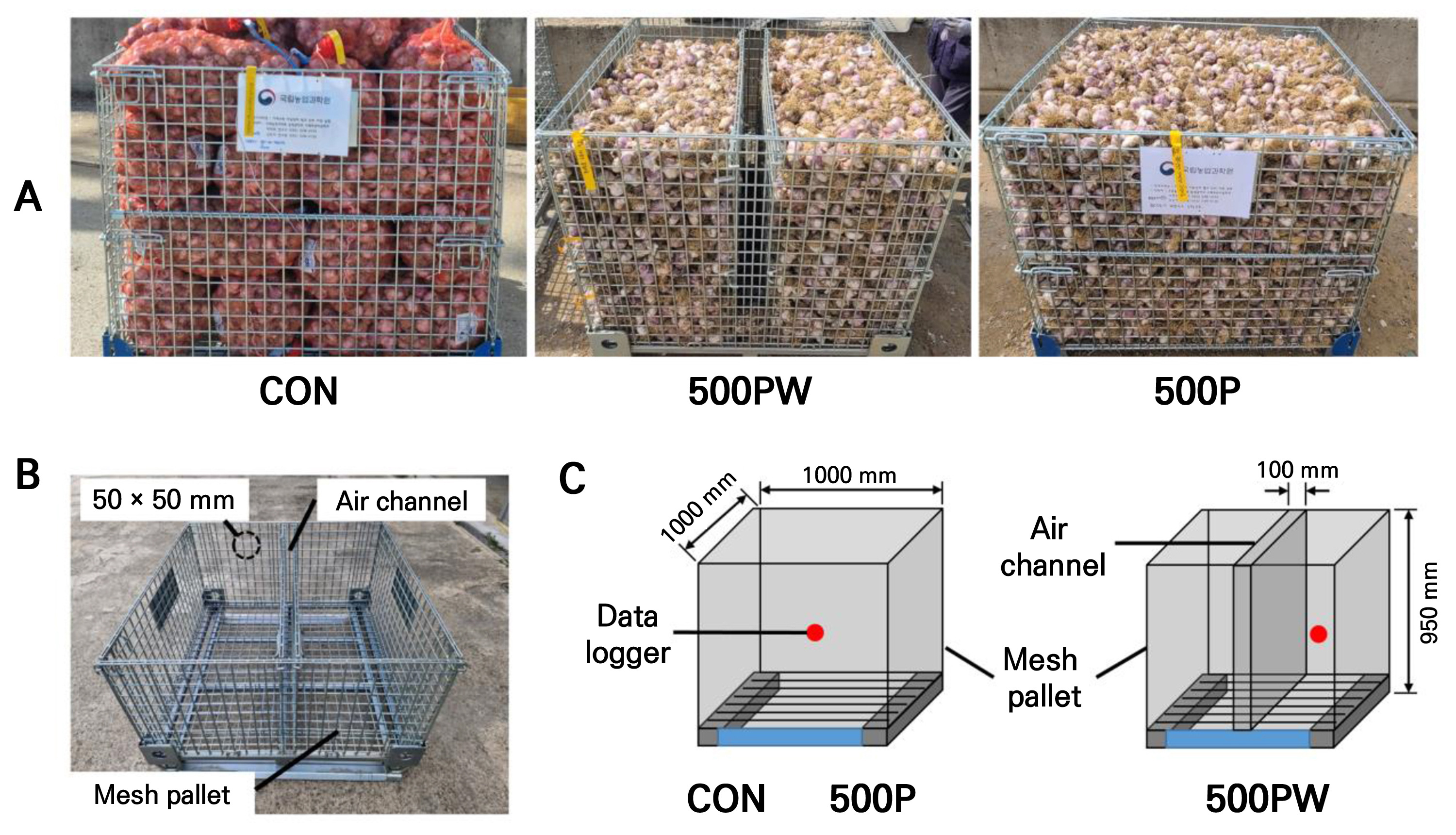
Fig. 1.
Pallet-scale packing configurations: (A) images of the three loaded pallets (CON, 500PW, 500P). (B) The empty steel-mesh pallet showing the internal air channel; the dashed circle marks one mesh aperture (50 × 50 mm). (C) Schematic of logger placement and the air channel, with the pallet and air-channel dimensions.
After loading, the bulbs of all three configurations, including the mesh bags of CON, were cured together in the pallets in the curing facility of the packing house with differential-pressure forced heated air at 35°C for approximately ten days. Temperature–humidity sensors (SHA-3151, T&D Corp., Matsumoto, Japan) were then inserted (Fig. 1C), and the pallets were moved into cold storage directly after curing in June of 2025, which was designated as storage day 0. The pallets were held in an approximately 100 m² cold store within the packing house, together with garlic intended for sale. Pallets from all three treatments were positioned adjacent to one another near the store entrance. The store was pre-cooled to about ‒1°C before the pallets were placed (Fig. 3A). The room temperature as recorded by a data logger then decreased gradually to about ‒3°C (means of ‒1.8°C for days 0–70 and ‒2.9°C for days 71–285), with the relative humidity set to 80%. The storage period was 285 days (June 2025 to March 2026). Around storage day 70, the original cold store had to be vacated in line with the packing-house storage schedule, and the pallets from all three treatments were relocated together to a second, lightly used cold storage facility for the remainder of the storage period, thus separating the short-term (days 0–70) and long-term (days 71–285) storage phases. The relocation took about 1 h, during which the room logger temporarily recorded temperatures up to approximately +2°C, with the room temperature returning to below ‒1°C within about 15 h.
Microenvironment monitoring and derived indices
The air temperature and relative humidity inside the treatment pallets and in the cold store were recorded at 10-min intervals throughout storage using data loggers (T&D TR72A, T&D Corp., Matsumoto, Japan) connected to the temperature–humidity sensors described above. Deviations among the temperature–humidity sensors were corrected using readings taken with the sensors placed together at the center of a ‒5.0°C freezer for one day. From the 10-min temperature (T) records, the daily mean, minimum, maximum, and range () were obtained for each sensor.
The following pallet microenvironment indices were then derived, with pallet values averaged over the loggers of each treatment, to characterize how the packing configurations altered the in-pallet microenvironment relative to the room in two aspects: the short-term thermal response to changes (initial cooling, relocation transient) and the long-term mean state (baseline temperature offset and in-pallet absolute humidity). The initial cooling response characterizes how quickly a freshly loaded pallet sheds its residual heat toward the cold room, which was the time for the in-pallet temperature to reach 0°C, as read from the logged 10-min records over the initial cooling period (day 0–15).
The transient relocation response in equation (Eq. (1) is the rise in the pallet daily mean temperature after the day-70 relocation relative to a pre-move baseline (the mean over days 64–68), summarized according to its peak magnitude and the day of the peak.
The baseline offset in Eq. (2) is the difference in the pallet and room daily mean temperature over the long-term stable phase.
This was also calculated for relative humidity. The in-pallet absolute humidity was expressed as the water vapor pressure , computed from the temperature and relative humidity for each 10-min reading, as shown in Eqs. (3) and (4), where is the saturation vapor pressure over water in kPa and RH is relative humidity expressed as a percentage. Its daily mean was used for long-term comparisons.
Bulb sampling
To characterize the quality changes in the bulbs during long-term storage, samples were collected at approximately 45-day intervals. At each of the eight time points (storage days 0, 47, 96, 135, 180, 230, 265, and 285), the cold store was opened and ten whole bulbs were sampled per treatment for the destructive measurements described below. For 500P and 500PW, three or four bulbs were taken from random positions from each of the three replicate pallets (ten in total) and pooled. As the measurements were destructive, a separate set of bulbs was sampled at each time point.
Clove damage and internal sprouting
All cloves of each sampled bulb were separated and visually classified as sound or defective, with the defect type recorded. Defects were grouped based on the presence of microbial decay (dry rot, purple spot, soft rot, and blue, gray, and black molds), physiological disorders (high-temperature damage and waxy breakdown), and insect damage (thrips). The clove damage rate per bulb was computed as the percentage of defective cloves (Eq. (5)) and was reported as the treatment mean ± standard deviation (SD) across the sampled bulbs.
At each time point, two cloves from each of the ten bulbs (20 cloves per treatment) were cut longitudinally, and the cut surface was photographed in a photo box illuminated with LED lighting using a Canon EOS M50 camera (Canon Inc., Tokyo, Japan) at a fixed camera-to-sample distance of 600 mm under illuminance of 280 lx (measured with a Testo 540 illuminance meter; Testo SE & Co. KGaA, Titisee-Neustadt, Germany). A ColorGauge Micro Target color chart (Image Science Associates, Williamson, NY, USA) was included in each frame, white-balanced using per-image gains derived from the chart and a spatial scale (mm per pixel) obtained from the known dimensions of the chart. The sprouting incidence was defined as the proportion of cloves with visible internal sprouts. The internal sprout and clove lengths were measured by two-point manual digitization of the cut surface, and the vertical internal development index, VID (%), was defined as the internal sprout length/clove length × 100 (Eq. (6)); sprout length and VID were reported on an all-clove basis (non-sprouted cloves were counted as zero).
In addition, cut-surface whitening was quantified, and the clove flesh region was segmented (Otsu thresholding, morphological opening, and hole filling), with the whitened fraction considered the percentage of flesh pixels with b* < 6 (a descriptor within the CIELAB color space) after color correction.
Physicochemical quality measurements
With regard to the surface color, L*, a*, and b* descriptors were measured within the CIELAB color space using a CM-700d spectrophotometer (Konica Minolta, Osaka, Japan) on the flat face of two cloves per bulb (one reading per clove). The color change ΔE*ab was computed per bulb as the Euclidean distance from the treatment’s storage day 0 mean L*a*b* values (within-treatment reference) (Eq. (7)) and was reported as the treatment mean ± SD.
Hardness was measured using the same cloves used for color. Each clove was penetrated on the root-side transverse cut face with a 4-mm cylindrical probe to a depth of 5 mm, avoiding the central core, using a TA.XT-plus texture analyzer (Stable Micro Systems, Godalming, UK). The settings were compression mode; pre-test, test, and post-test speeds of 3, 2 and 5 mm s-1; and an auto-force trigger of 0.049 N. Peak force (N) was taken as hardness, with the distance to the peak (mm) also recorded.
The soluble solids content was determined for each bulb by grinding all cloves, filtering the homogenate through a sterile filter bag, and assessing the bubble-free filtrate on an RX-5000a digital refractometer (Atago, Tokyo, Japan; °Brix).
The moisture content of the clove flesh was determined by the atmospheric oven-drying method (105°C, 24 h) using an SH-DO-149FG oven (SH Scientific, Sejong, Korea), during which the flesh was sliced to 2 mm thickness, with only the central portion (about 2 g) placed in a weighing dish and weighed before and after drying; moisture was calculated gravimetrically.
Pallet-level marketable yield and weight loss
Each pallet was weighed at the pallet scale on the weighbridge at the packing house on storage day 0, after curing, and at the end of storage; weight loss (%) was computed from the two weights, accounting for the cumulative mass of the bulbs removed for destructive sampling. The precision of the weighbridge was approximately 5 kg, and the CON mesh bags were weighed separately. The garlic of each pallet was then processed on the peeling and grading line of the packing house according to its standard shipment grading: after the soil, roots, and outer skin were removed, the peeled cloves were sorted by length into premium (≥ 20 mm), high (17–20 mm), and normal (< 17 mm) grades, and cloves with defects that are sold for processing were classified as a damaged grade. Marketable yield was calculated as the combined mass of these four grades relative to the pallet mass at the end of storage.
Statistical analyses
Bulb-level measurements, including the per-bulb clove damage rate, of the bulbs sampled at each time point are reported as the mean ± SD. Because these bulbs were pooled across the replicate pallets, they describe bulb quality within the trial, and the inference of the packing configuration rests on pallet-scale measures. Marketable yield and weight loss were compared between the 500P and 500PW cases (n = 3 pallets each) using Welch’s t-test with Hedges’ g, with CON as an untested reference. The pallet microenvironment is reported descriptively. Relationships between the quality attributes and the in-pallet microenvironment were explored with Spearman correlations of treatment means after subtracting the three-treatment mean of each sampling day (days 47–285), and the significance of each coefficient was assessed. Analyses were conducted using Python 3.12.10, Pandas 3.0.3, NumPy 2.5.0, SciPy 1.18.0, and Matplotlib 3.11.0.
Results
Storage microenvironment
The temperatures of the cold-storage room and the treatment pallets over the storage period are shown in Fig. 2. The room stayed cold from loading onward, averaging about ‒1.6°C and 80% RH over the cooling phase (Days 0–15) and ‒1.8°C and 79% RH over the short-term phase (Day 0–70); the temperature then decreased to ‒2.9°C and the RH increased to 83% through the long-term phase (Day 71–285). The in-pallet temperatures of the treatments broadly followed this room reference but differed in terms of the packing configuration in the fast thermal response, including initial cooling, and in the mean offset over the long-term stable phase (Fig. 3). After loading, the in-pallet temperature reached 0°C after about 10.8 days in 500P and 7.2 days in 500PW, compared to 3.1 days for CON (Fig. 3A). The bulk-packed pallets cooled more slowly than CON, and between the two bulk-packed pallets, 500PW cooled faster than 500P. When all three pallets were relocated together to a second store around day 70, the in-pallet daily-mean temperature rose transiently above its pre-move baseline (days 64–68) before re-equilibrating (Fig. 3B). The excursion peak was greater and earlier in CON (about +0.85°C at day 70) relative to those in the 500PW and 500P cases (+0.40 and +0.25°C, respectively), with both peaks occurring around day 71. In contrast, during the long-term stable phase, the pallet temperature offset above the storage-room temperature varied with the degree of packing openness (Fig. 3C). The most open structure, CON, showed the smallest offset (+0.56°C), whereas the two bulk-packed treatments retained more accumulated heat; the offset was lower in 500PW (+0.88°C) than in 500P (+1.35°C). The in-pallet relative humidity was higher than that in the room, but its order was opposite to that of the temperature, being the highest in 500PW. The opposite ordering was observed for absolute humidity (water vapor pressure), which was highest in 500P and lowest in CON (Fig. 3D).
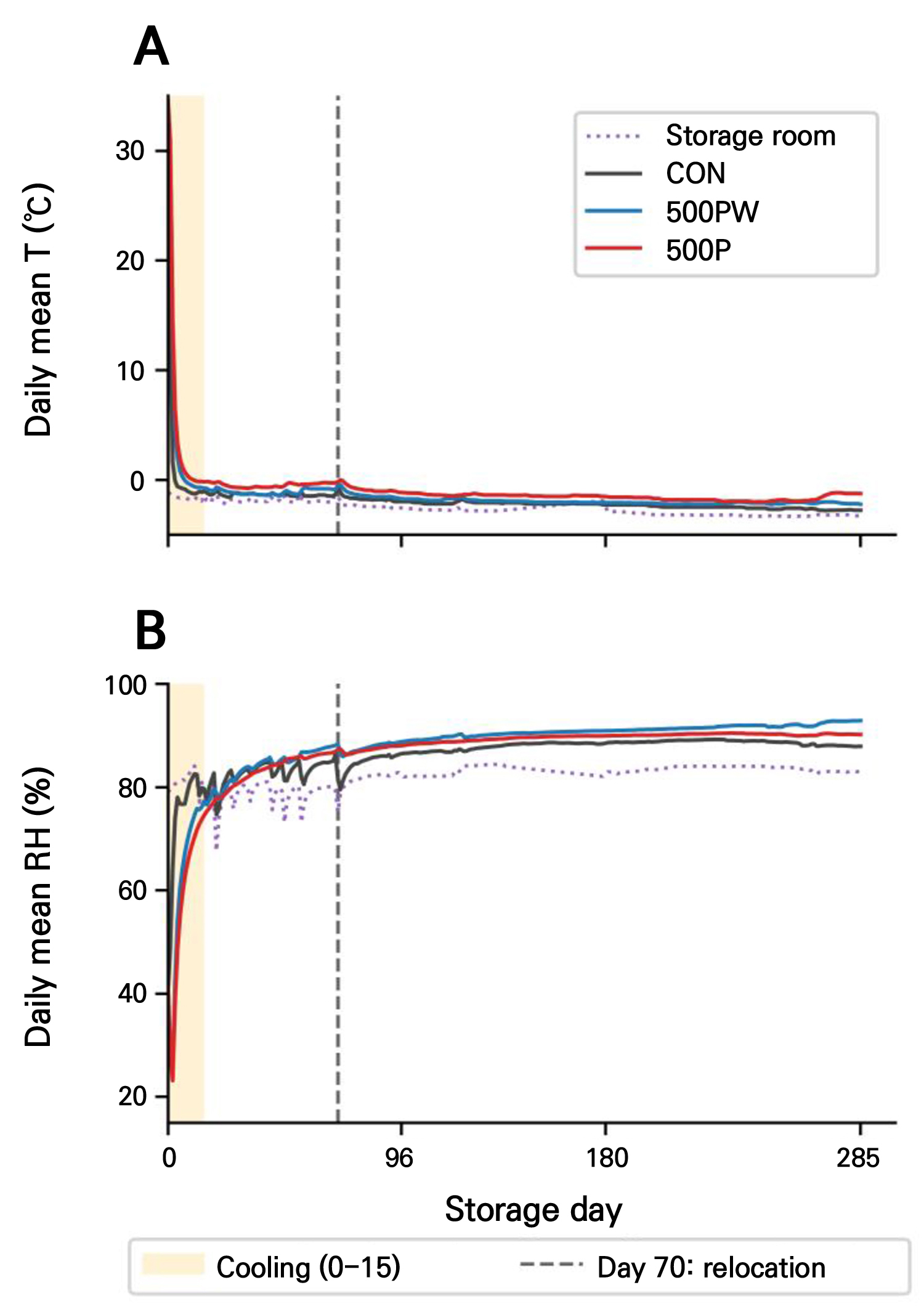
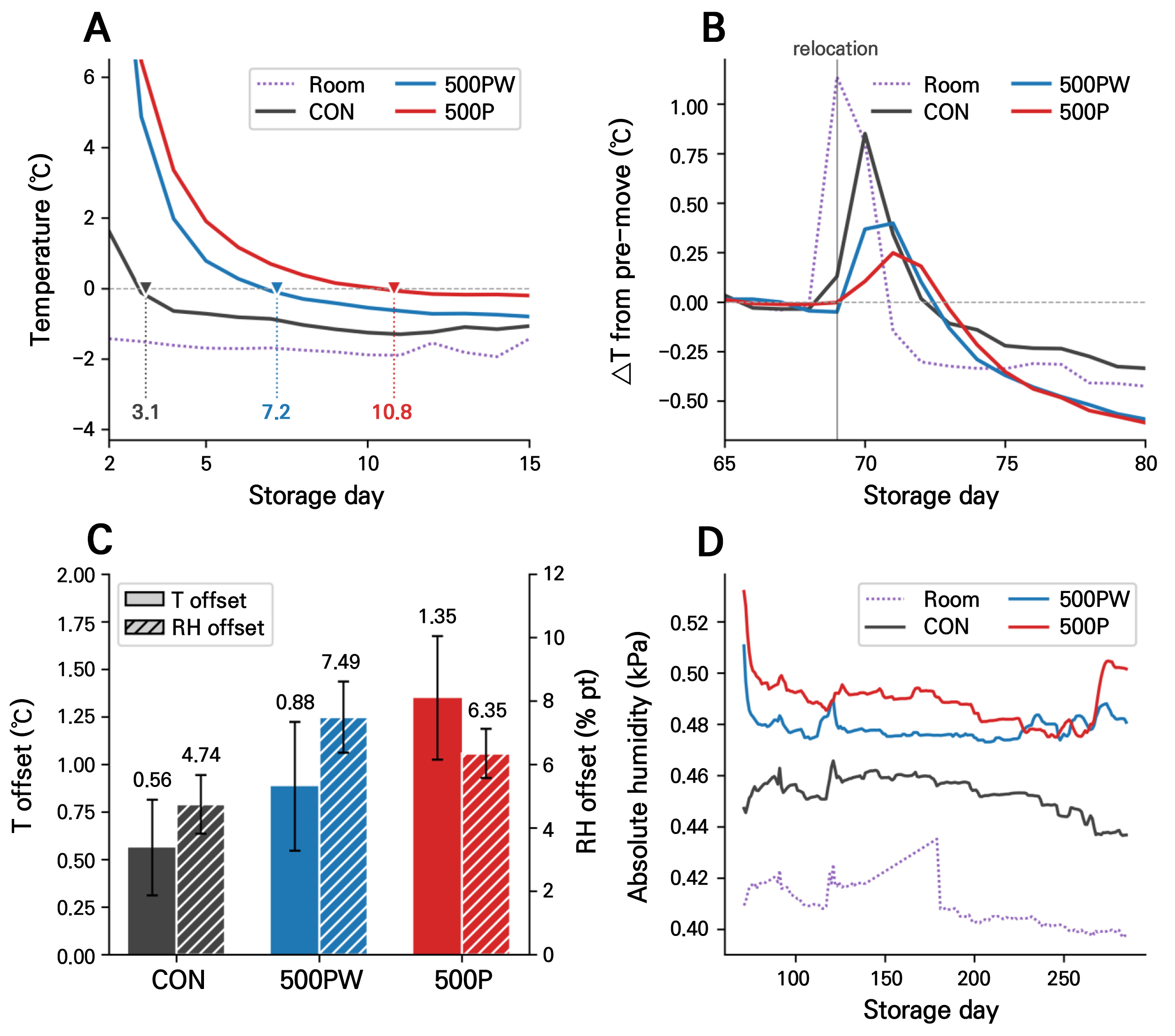
Fig. 3.
Pallet microenvironment dynamics: (A) initial cooling response (time to reach 0°C). (B) In-pallet temperature response to the day-70 store relocation (ΔT from the pre-move baseline). (C) Baseline temperature and relative-humidity offset (mean ± SD of the daily offsets over the long-term phase, n = 215 days). (D) In-pallet absolute humidity (water vapor pressure) during the long-term stable phase (the storage-room reference is indicated by the dotted line).
Clove damage and internal sprouting
The clove damage rate per bulb, averaged over the storage period, was 10.5 ± 13.2% in CON, 11.3 ± 12.8% in 500P, and 14.9 ± 14.7% in 500PW, with wide variation among the bulbs (Supplementary Fig. S1A). The ranking among treatments reversed from one time point to the next; therefore, a numerically higher mean for 500PW held only on certain sampling dates. Microbial decay accounted for approximately 66% of all recorded defects, mostly dry rot (about 58%); physiological disorders, all of which were high-temperature damage, accounted for about 32%, and insect damage by thrips for about 2%. The shares of microbial decay (61%–71%) and physiological disorders (28%–37%) were comparable among the three packing configurations (Supplementary Fig. S1B). High-temperature damage was already present on day 0 and fluctuated between 0.7 and 7.0 cases per 100 cloves without a consistent increase during storage. Internal sprouting behaved differently from damage and increased with storage in all three treatments (Fig. 4A). No internal sprouting was detected in the CON treatment until day 96, and the incidence remained low through mid-storage, whereas the two bulk-packed treatments (500P, 500PW) sprouted earlier. By approximately 180 days, the three treatments converged to 95%–100%. 500PW already showed 20% internal sprouting on day 0, which reflects the starting lot instead of a treatment effect. Sprout length and VID also increased with storage in all treatments (Figs. 4B and 4C); however, sprouting in CON and 500PW leveled off at an intermediate level, whereas it continued to increase in the 500P case throughout the late storage period. The cut-surface whitening area also increased during storage, increased with sprouting, and reached the same treatment ranking as internal sprouting by day 285 (Fig. 4D), with broad bulb-to-bulb variation and a pattern that fluctuated during storage.
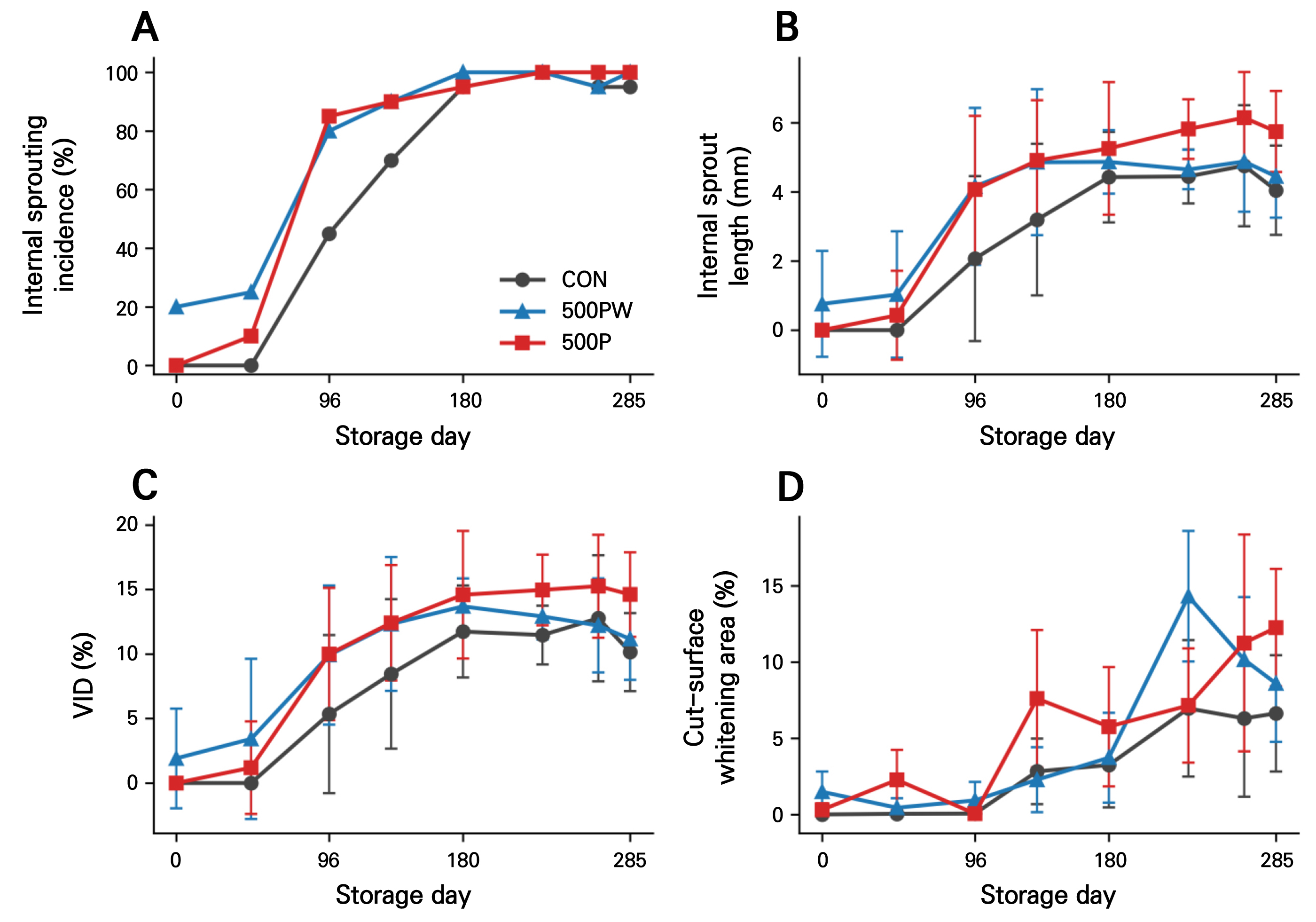
Fig. 4.
Internal sprouting and cut-surface whitening: (A) incidence, (B) sprout length, (C) vertical internal development index (VID), and (D) cut-surface whitening area. Values are based on ten bulbs (two cloves per bulb; 20 cloves) sampled from each treatment at each time point; for 500P and 500PW, the bulbs were pooled from the three replicate pallets. Incidence (A) is the percentage of the 20 cloves with visible internal sprouts. Error bars represent the SD among the 20 cloves (B, C; clove-level variability) or among the ten bulbs (D; bulb-level variability), that is, variability within each treatment rather than variations among independent pallet replicates.
Physicochemical quality
The change in the surface color during storage was mainly due to an increase in yellowness (b*). Thus, b* rose from 16.81 to 19.33 in 500P and from 15.77 to 18.04 in 500PW, whereas it stayed nearly constant in CON. Between the two bulk-packed treatments, the more open 500PW yellowed less than the 500P (Fig. 5 and Supplementary Table S1). Lightness (L*) and redness (a*) showed little difference among the treatments. The color difference from Day 0 (ΔE*ab) at Day 285 was 1.31 ± 0.53 in CON, below the values for 500P (2.92 ± 0.73) and 500PW (2.66 ± 0.65). Clove hardness decreased during storage in all treatments, falling from approximately 33 N to 28–30 N by Day 285, with no difference among the packing configurations (Figs. 6A, 6B, and Supplementary Table S2). Moisture and soluble solids remained within a narrow range for the two bulk-packed treatments. In CON, which consisted of a single pallet, moisture rose from 65.05 ± 1.44% to 68.03 ± 2.06% and soluble solids fell from 36.2 ± 1.1 to 32.8 ± 2.2°Brix (Figs. 6C and 6D); both changes exceeded the bulb-to-bulb SD at either time point. In this exploratory analysis, sprouting, yellowing, L*, and soluble solids were positively associated and moisture was negatively associated with the microenvironmental indices within the sampling days, whereas hardness and clove damage showed no significant correlation (Supplementary Fig. S2).
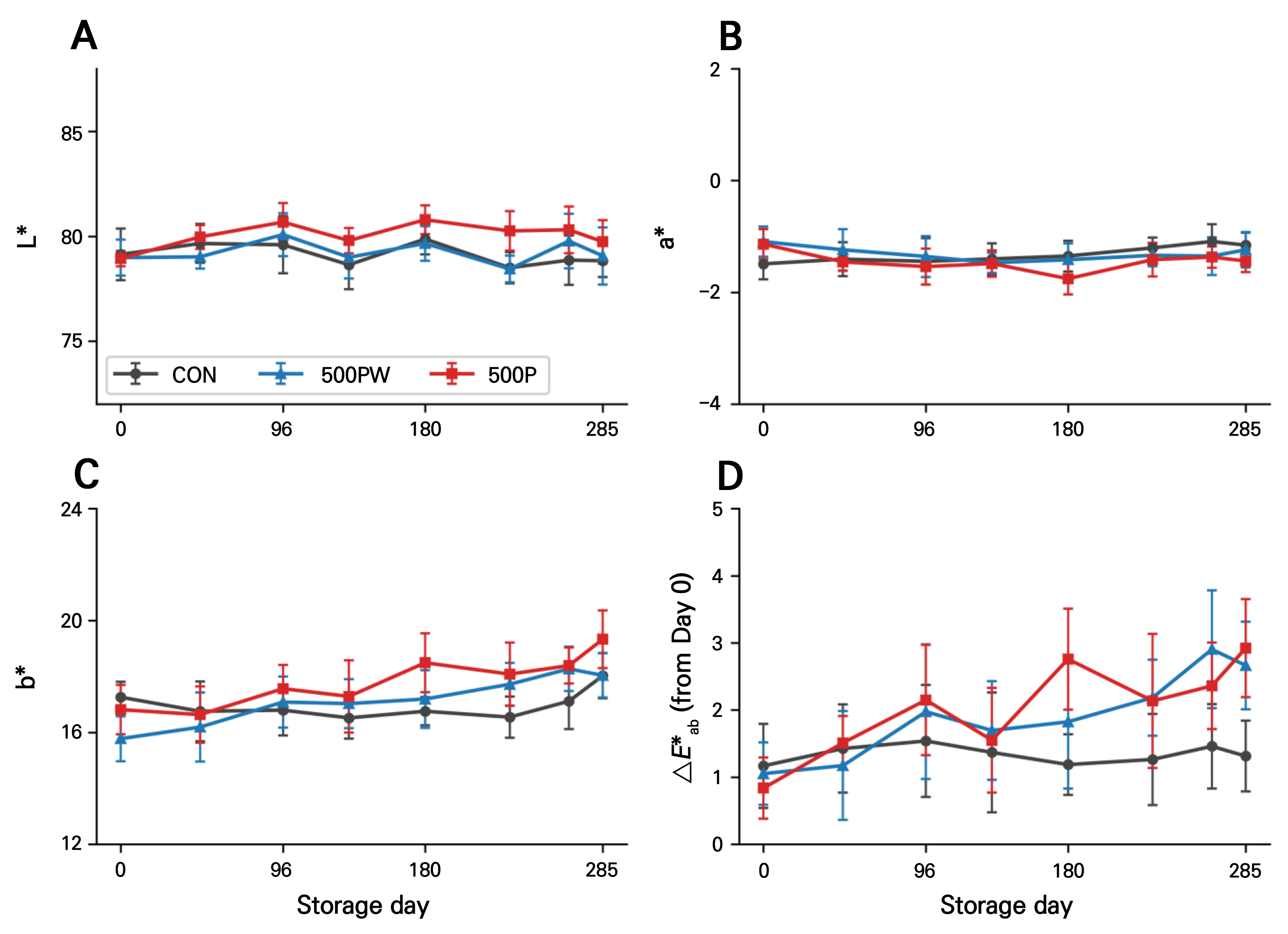
Fig. 5.
Surface color (CIELAB) of garlic cloves during storage according to the packing configuration: (A) L*, (B) a*, (C) b*, and (D) color difference from Day 0 (ΔE*ab). Results are the mean ± SD for ten bulbs sampled from each treatment at each time point; for 500P and 500PW, the bulbs were pooled from the three replicate pallets, and the error bars represent bulb-level variability rather than variations among independent pallet replicates. Raw data are provided in Table S1.
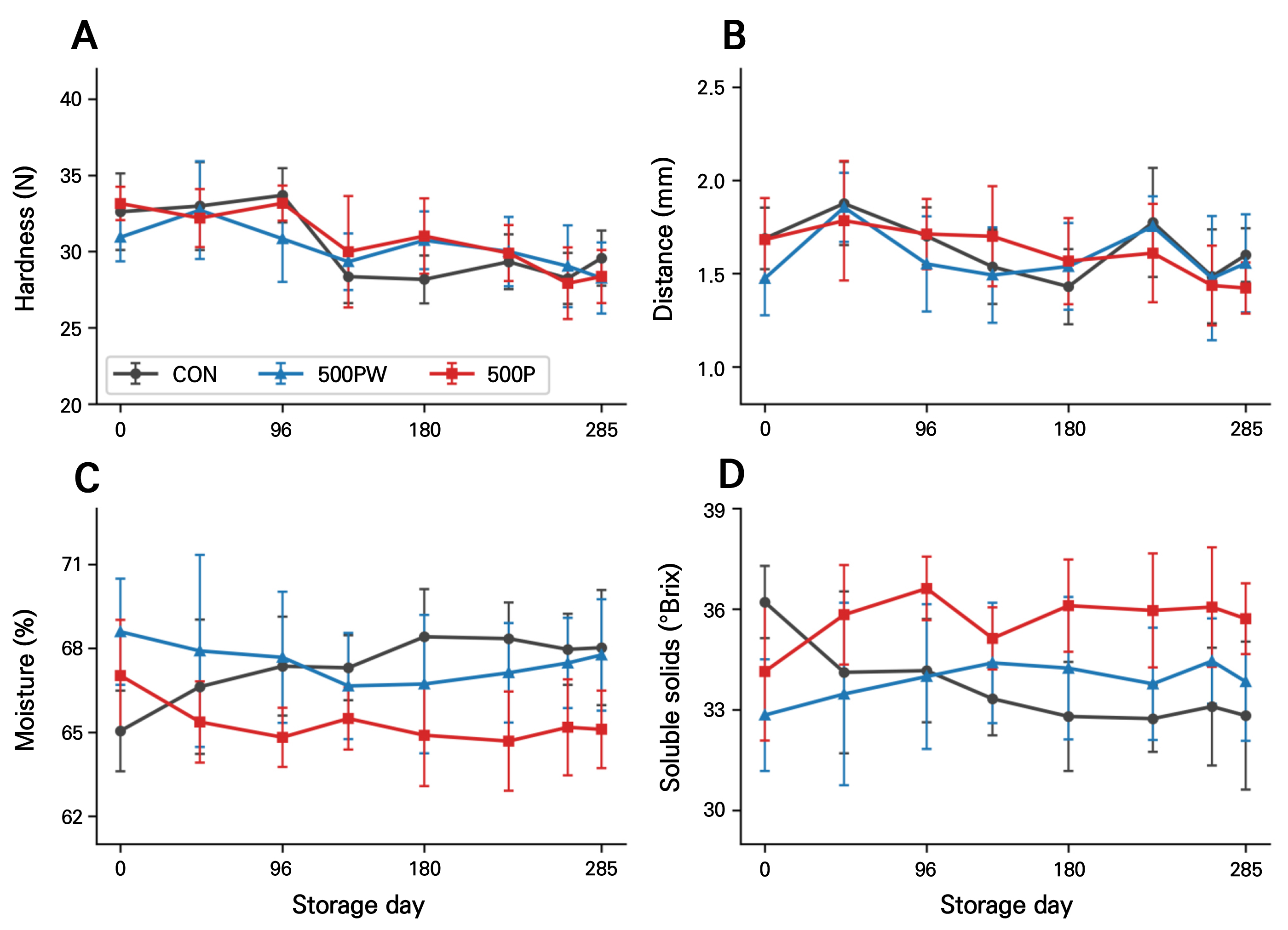
Fig. 6.
Destructive quality measurements during storage according to the packing configuration: (A) clove hardness, (B) distance to peak force, (C) moisture content, and (D) soluble solids. Results are the mean ± SD for ten bulbs sampled from each treatment at each time point; for 500P and 500PW, the bulbs were pooled from the three replicate pallets, and the error bars represent bulb-level variability rather than variations among independent pallet replicates. Raw data are provided in Table S2.
Marketable yield and pallet weight loss
Marketable yield was 83.2 ± 1.1% in 500PW and 81.6 ± 1.3% in 500P (Fig. 7). Both were lower than that of CON, at 86.5%. Under the conditions tested, the central air channel did not significantly improve marketable yield (500PW vs. 500P, Welch’s t-test p = 0.19), although the difference had a large effect size (Hedges g ≈ 1.0) with three pallets per treatment. Pallet-scale weight losses were 6.4% in CON, 5.8 ± 1.6% in 500P, and 8.1 ± 1.9% in 500PW (p = 0.20, Hedges g ≈ 1.0).
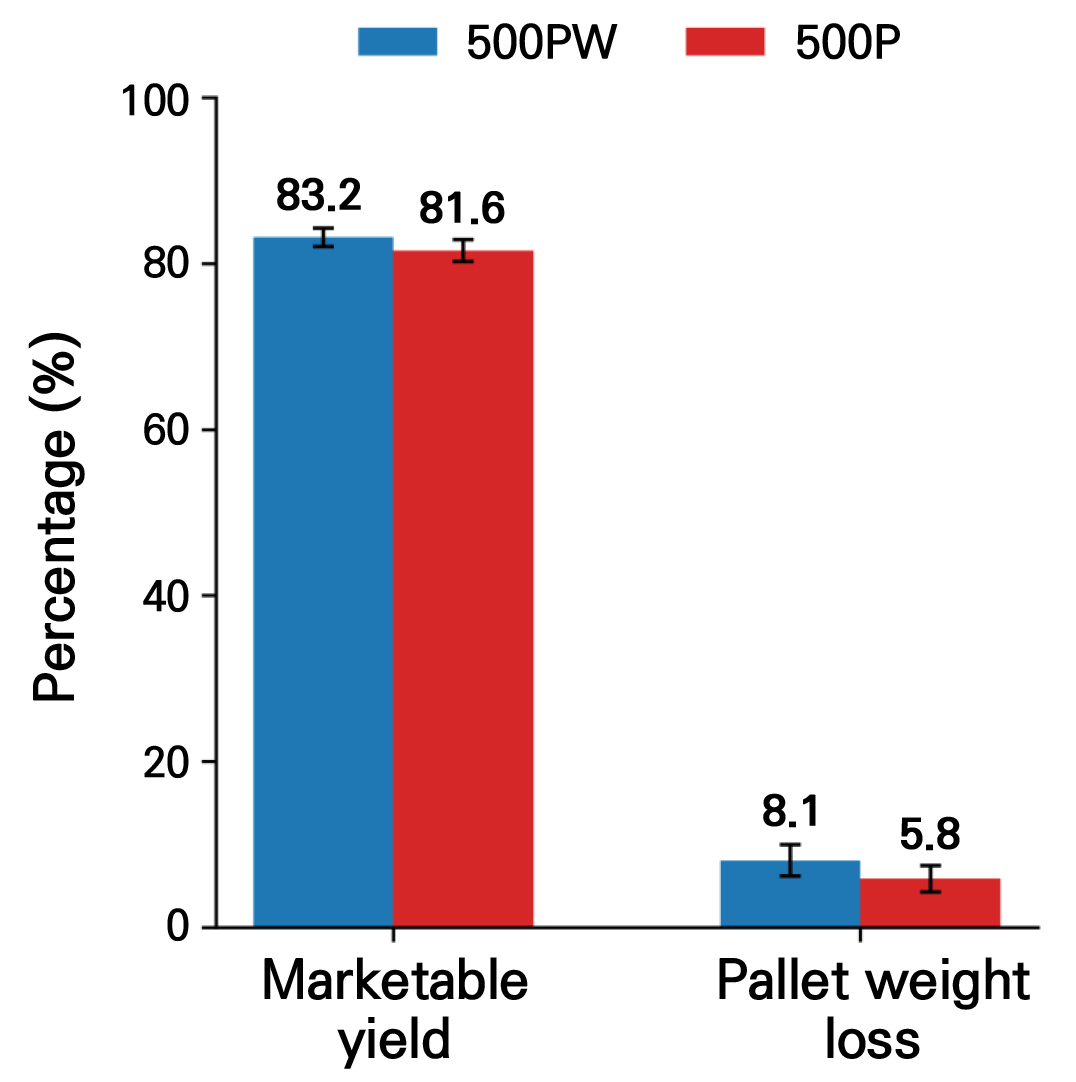
Fig. 7.
Marketable yield and pallet-scale weight loss of the two bulk-packed configurations (mean ± SD, n = 3 pallets per treatment). Marketable yield and weight loss did not differ significantly between the two configurations (Welch’s t-test p = 0.19 and 0.20), with large effect sizes (Hedges g ≈ 1.0 for both). Values for the conventional bagged reference, which consisted of a single pallet, were 86.5% and 6.4% for the marketable yield and weight loss, respectively.
Discussion
The long-term set point is within the range of garlic freezing points reported across studies (about ‒1.4 to ‒5.5°C) and within the subzero storage window (‒1.5 to ‒5°C) documented for whole garlic bulbs (Park et al. 2025). Against this common room reference, the packing configuration governed both how quickly each pallet followed the room and how far it settled from it. The slower cooling of the bulk-packed pallets is consistent with the larger thermal inertia of a continuous bulk bed, and the faster cooling of 500PW relative to 500P indicates that the central air channel accelerated heat removal. The same bulk-bed buffering governed the response to the discrete thermal disturbance occurring upon relocation, where the excursion was largest and earliest in CON and progressively damped in the two bulk-packed pallets. Over the long-term stable phase, the offset order (open bags < air channel < closed bulk) is consistent with a more freely ventilated pallet staying closer to the storage-room temperature, which reduces product respiration and heat ingress (Tashtoush 2000; Alexander et al. 2024). The humidity order requires care in interpretation, as the relative humidity reflects the temperature dependence of that measure; in the colder 500PW case, the relative humidity increased even without an especially high moisture content. The reverse ordering of absolute humidity, highest in 500P and lowest in CON, arose as respiratory and transpirational moisture accumulated in the less open pallets. Temperature and absolute humidity together set the vapor pressure deficit (VPD; es(T) ‒ e, Eqs. (3) and (4)) that drives transpiration from the bulbs (Islam et al. 2019). During the first 70 days, the warmer bulk-packed pallets had a larger VPD (0.17–0.19 kPa) than CON (0.12 kPa), whereas over the long-term phase, the VPD inside all pallets (0.050–0.063 kPa) was smaller than that in the room (0.084 kPa) and smallest in the bulk-packed pallets. Moist air around the bulbs also favors mold growth and, under fluctuating temperatures, can condense on the bulb surface, and ventilation is therefore recommended during garlic storage (Shagun et al. 2024); in this study, the bulb surfaces remained free of visible condensation throughout storage, and mold accounted for about 4% of the recorded defects. Therefore, differences in the in-pallet environment should be interpreted in terms of both temperature and absolute humidity; over long-term storage, the accumulation of heat and moisture was greater in the less open bulk loading configuration.
Clove damage did not follow the packing-openness order. The two main defects arose from different pre-storage factors. Dry rot in this study, the dominant form of microbial decay, is in good agreement with reports that decay in stored garlic depends more on latent infection of the planting material than on storage conditions such as the packing configuration (Gasser et al. 2025). High-temperature damage, the physiological disorder, was already present at the start of storage and did not increase with the storage time, which points to exposure to high field temperatures before harvest rather than to the storage environment. Internal sprouting, in contrast, tracked the in-pallet microenvironment. The onset of internal sprouting varies with the cultivar, maturity at harvest, and the growing conditions; therefore, a fraction of bulbs can sprout internally before storage begins (Islam et al. 2015; Atif et al. 2020), as in the 20% incidence recorded in 500PW on day 0. This initial difference did not carry over to later sprout growth: 500PW leveled off at an intermediate sprout length and VID, whereas 500P, which had no sprouting on day 0, had the largest VID from day 180 onward (Figs. 4B and 4C). The earlier sprouting of the two bulk-packed pallets compared with CON coincided with their warmer and more humid microenvironment during the first 70 days (mean temperature: 500P +0.5°C, 500PW ‒0.2°C, CON–1.0°C). Because subzero storage suppresses the sprouting of garlic bulbs (Park et al. 2025), the temperatures near or above 0°C in the bulk-packed pallets may have allowed sprouting to begin earlier, drawing on the carbohydrate reserves of the cloves (Mashayekhi et al. 2016). Because the sprouting rate and bud-to-clove ratio serve as primary indices of garlic storability (Zhu et al. 2024), the continued increase in 500P through late storage indicates poorer storability in the least open configuration, which also remained the warmest pallet over the long-term phase. The accompanying cut-surface whitening may reflect storage-related changes in the starch and moisture contents of the clove tissue (Mashayekhi et al. 2016), and internal sprouting, together with the secondary growth that accompanies it, affects garlic quality during long-term storage (Purwanto et al. 2019).
A color difference of 2 to 3 is generally perceptible to an observer (Mokrzycki and Tatol 2011), meaning that the color change in the two bulk-packed treatments reached a perceptible level in the later part of storage. Yellowing increased as the packing became less open (500P > 500PW > CON), following the order of the long-term temperature offset. In the same cultivar, ‘Daeseo’, the yellowness (Hunter b) of stored cloves was lowest at ‒4°C and higher at 0°C and room temperature, and respiration and ethylene production rose with the storage temperature (Bae et al. 2008). The yellowing observed here may therefore reflect the higher metabolic activity of cloves in the warmer bulk-packed pallets, which also sprouted earlier. The decline in clove hardness is in accord with reports indicating that clove hardness declines during refrigerated storage (He et al. 2019; El-Mesery et al. 2025) and that the packing configuration leaves the texture of the clove tissue unaffected. Given that most of the dry matter of garlic cloves consists of soluble carbohydrates, moisture and soluble solids track clove dry matter from opposite directions (Martins et al. 2016). Water leaving the bulb during storage is concentrated in the outer skin and neck instead of in the clove tissue (Galsurker et al. 2018), and clove moisture has been reported to stay within 59%–68% over 12 months of storage at both ambient and cold temperatures (Ludlow et al. 2021). The water activity of garlic cloves is approximately 0.98 (Najman et al. 2022), above the relative humidity recorded inside the pallets during storage, such that the vapor pressure gradient runs from the cloves toward the air. Therefore, the changes observed in the single CON pallet (Fig. 6) are more consistent with a decrease in the dry matter content of the cloves than with the movement of water. Mass loss during storage occurs through transpiration and respiration, and the humidity and air movement inside the stack govern both routes (Islam et al. 2019). The bulk-packed pallets held the higher absolute humidity, a microenvironment under which garlic has been reported to show suppressed respiration intensity and stable clove moisture (He et al. 2019). The retained clove dry matter in the 500P and 500PW treatments was consistent with the reported response. Overall, the packing configuration had little effect on the texture, although it was associated with changes in the surface color as well as the clove moisture level and soluble solids content.
Marketable yield was determined based on peeled cloves, whereas pallet weight loss was measured on whole bulbs, including the outer skin and neck, where most of the water lost during storage resides. Therefore, these two measures represent different physical components of the bulb. The higher weight loss in 500PW affects the saleable mass of whole bulbs, whereas the peeled-clove marketable yield of 500PW (83.2%) was comparable to that of 500P (81.6%).
Overall, the packing configuration shaped the in-pallet microenvironment over 285 days and was associated with several quality attributes: the mean temperature offset and the accumulation of moisture rose as the load became less open, internal sprouting began earlier and progressed furthest in the least open pallet, and yellowing followed the same order. These orderings are descriptive trends, as CON was represented by a single pallet; in the statistically tested comparison between the replicated 500P and 500PW pallets, marketable yield and pallet weight loss showed large effect sizes (Hedges g ≈ 1.0) without statistical significance (p = 0.19 and 0.20). Clove damage and clove hardness, in contrast, were governed by pre-storage factors and by the storage duration rather than by the packing configuration. Therefore, future design work should focus on approaches that incorporate more openings into the load, without adding much volume, such as adjusting the number and arrangement of air channels, applying forced-air ventilation, and increasing the open area of the pallet walls. These results provide a practical basis for designing packing configurations for long-term commercial storage applications.
Supplementary Material
Supplementary materials are available at Horticultural Science and Technology website (https://www.hst-j.org).
- HORT_20260055_Table_S1.pdf
Supplementary Table S1. Surface color (CIELAB) of garlic cloves during storage
- HORT_20260055_Table_S2.pdf
Supplementary Table S2. Destructive quality (texture, moisture, soluble solids) of garlic cloves during storage
- HORT_20260055_Fig_S1.pdf
Supplementary Fig. S1. Garlic clove damage according to the pallet packing configuration (CON, 500PW, 500P): (A) Per-bulb damage rate over storage (mean ± SD for ten bulbs sampled from each treatment at each time point; for 500P and 500PW, the bulbs were pooled from the three replicate pallets). (B) Composition of defect categories, shown as the share of the total defect count.
- HORT_20260055_Fig_S2.pdf
Supplementary Fig. S2. Spearman rank correlations (ρ) between quality attributes and in-pallet microenvironmental indices after removal of the common effect of the storage time. For each sampling day (days 47–285), the mean of the three packing configurations was subtracted from each variable before the correlations were calculated (n = 21). Microenvironmental indices were averaged from day 0 to each sampling day, except for the temperature offset, which was summed. The three configurations kept the same order of in-pallet conditions throughout storage; the correlations therefore describe the co-variation of quality with the configuration-dependent microenvironment as a whole. Asterisks indicate the significance of each coefficient (*, p < 0.05; **, p < 0.01; ***, p < 0.001; ****, p < 0.0001). Because the 21 points comprise repeated observations of the three configurations across the sampling days, the correlations are presented as exploratory associations.
