

Introduction
Materials and Methods
Garlic cultivation and sample preparation
Measurement of garlic growth characteristics
Analysis of quality characteristics
Analysis of allicin content
Statistical analysis
Results and Discussion
Growth characteristics of Hongsan garlic according to the nitrogen fertilization level
Postharvest characteristics of Hongsan garlic according to the nitrogen fertilization level
Quality changes in sliced Hongsan garlic during storage
Changes in the allicin content of sliced Hongsan garlic during storage
Conclusion
Introduction
Garlic (Allium sativum L.) is a widely consumed spice and functional vegetable worldwide. Owing to its characteristic flavor and diverse bioactive compounds, garlic has been used as both a food ingredient and health-promoting functional material (Parreño et al. 2023; EL-Saadony et al. 2024). In the Republic of Korea, the consumption of minimally processed garlic products, including peeled, minced, and sliced garlic, has steadily increased, in addition to that of whole bulbs, thereby increasing the importance of stable production and postharvest quality maintenance technologies (Ahn et al. 2019; Yoo et al. 2023). Recent studies have focused on improving the quality of garlic by optimizing cultivar selection, cultivation conditions, and fertilization practices, which may also affect postharvest quality and storage stability (Taha et al. 2024).
The growth and productivity of garlic are strongly affected by the cultivar, climatic conditions, soil properties, and fertilization levels. Nitrogen is an essential macronutrient for crop growth and is closely associated with chlorophyll formation, photosynthesis, and protein synthesis (Zayed et al. 2023). Nitrogen fertilization levels are also known to directly affect growth characteristics and yield-related traits of garlic, such as the plant height, leaf number, and bulb enlargement (Choudhary et al. 2024). An adequate nitrogen supply may promote vegetative growth and increase yields; however, excessive nitrogen fertilization may negatively affect tissue firmness, storability, and other quality-related characteristics (Bloem et al. 2011). Additionally, the conditions of nitrogen fertilization may influence external and quality traits, including the bulb size distribution, tissue firmness, and color, implying the importance of determining appropriate nitrogen fertilization levels (Lee and Min 2022).
Hongsan, a garlic cultivar recently developed in the Republic of Korea, is characterized by green coloration at the upper part of the clove and high levels of functional compounds, and is known to be adaptable to both cold- and warm-region cultivation (Luitel et al. 2024). In particular, Hongsan garlic has attracted attention for its industrial applicability due to its higher antioxidant activity and superior functional properties compared with common garlic cultivars (Kim and Ra 2019; Park and Kim 2023). However, studies of the effects of nitrogen fertilization levels on the growth characteristics and yield performance of Hongsan garlic remain limited, and little information is available pertaining to the link between nitrogen fertilization levels and postharvest quality traits.
Garlic can undergo weight loss, softening, browning, and overall quality deterioration during postharvest storage and distribution. These quality changes can occur more rapidly in minimally processed products, such as sliced garlic, owing to tissue damage that occurs during processing (Sharma et al. 2021; El-Mesery et al. 2025). Preharvest cultivation conditions play an important role in plant growth, yield, and quality at harvest and may also affect quality maintenance during postharvest storage. In garlic, nitrogen fertilization levels during cultivation may alter tissue firmness, color, and quality during storage (Bloem et al. 2011; Choudhary et al. 2024). However, the effects of nitrogen fertilization levels on the postharvest quality of Hongsan garlic and the storage quality of minimally processed sliced garlic have not yet been sufficiently investigated.
The objective of this study was to determine the effects of different nitrogen fertilization levels on the growth, productivity, and postharvest quality of Hongsan garlic, and to provide basic information for establishing an appropriate nitrogen fertilization standard considering cultivar-specific characteristics. These findings may support better cultivar-specific nitrogen management of Hongsan garlic.
Materials and Methods
Garlic cultivation and sample preparation
Hongsan garlic was planted on September 19, 2024, and cultivated in an experimental field at the Allium Vegetable Research Center, Muan, Republic of Korea. The planting bed was 180 cm wide and consisted of a 140 cm ridge and a 40 cm furrow. Garlic cloves were planted in ten rows per ridge at 12 cm between plants and 15 cm between rows, with a planting density of approximately 36,765 plants per 10 a. Four nitrogen fertilization levels were applied: 0 N, 1 N, 2 N, and 3 N, corresponding to total nitrogen application rates of 0, 240, 480, and 720 kg N·ha‒1, respectively. The basal and top-dressing nitrogen application rates were 80 and 160 kg N·ha‒1 for 1 N, 160 and 320 kg N·ha‒1 for 2 N, and 240 and 480 kg N·ha‒1 for 3 N, respectively. The 1 N treatment followed the standard nitrogen fertilization rate recommended by the Rural Development Administration, and 2 N and 3 N represented excessive nitrogen levels. All fertilization conditions other than nitrogen were identical across treatments. Soil chemical properties were analyzed according to the standard methods of the National Institute of Agricultural Science and Technology (NIAST, 2000). Soil pH and electrical conductivity (EC) were measured in a 1:5 soil-to-distilled water suspension. Organic matter content was determined by the Tyurin method, and available phosphate (P2O5) was analyzed using the Lancaster method. Exchangeable K, Ca, Mg, and Na were extracted with 1 N ammonium acetate at pH 7.0 and quantified using an inductively coupled plasma spectrometer. Ammonium nitrogen (NH4+-N) and nitrate nitrogen (NO3‒-N) were extracted by shaking 10 g of fresh soil with 50 mL of 2 M KCl for 30 min, followed by filtration and analysis using an auto-analyzer. The soil chemical properties of each nitrogen fertilization treatment at harvest are shown in Table 1. Garlic bulbs were harvested on June 12, 2025, and bulbs without visible external damage were selected as experimental materials (Luitel et al. 2024).
Table 1.
Chemical properties of soil in Hongsan garlic fields under different nitrogen fertilization levels at harvest
| pH | EC (dS·m‒1) | OM (%) | P2O5 (mg·kg‒1) | Exchangeable cation (cmol+·kg‒1) | NH4+-N (mg·kg‒1) | NO3‒-N (mg·kg‒1) | ||||
| K | Ca | Mg | Na | |||||||
| 0 N | 7.59 ± 0.02 a | 1.19 ± 0.03 b | 2.99 ± 0.03 b | 952.23 ± 26.31 a | 1.35 ± 0.07 a | 7.32 ± 0.43 a | 2.34 ± 0.10 b | 0.15 ± 0.01 a | 5.83 ± 0.36 c | 12.91 ± 0.28 b |
| 1 N | 7.55 ± 0.02 a | 0.53 ± 0.01 d | 2.93 ± 0.03 b | 828.89 ± 43.59 b | 1.05 ± 0.00 d | 6.74 ± 0.17 b | 1.84 ± 0.03 c | 0.07 ± 0.00 c | 8.21 ± 0.41 b | 13.11 ± 0.31 b |
| 2 N | 7.31 ± 0.01 b | 0.66 ± 0.01 c | 3.52 ± 0.06 a | 560.13 ± 24.95 d | 1.15 ± 0.04 c | 7.31 ± 0.33 a | 1.92 ± 0.03 c | 0.08 ± 0.00 b | 6.54 ± 0.25 c | 13.13 ± 0.00 b |
| 3 N | 6.83 ± 0.04 c | 2.45 ± 0.09 a | 3.58 ± 0.01 a | 671.34 ± 36.07 c | 1.26 ± 0.01 b | 7.81 ± 0.08 a | 2.64 ± 0.03 a | 0.14 ± 0.00 a | 9.93 ± 0.49 a | 34.33 ± 1.42 a |
After harvest, undamaged garlic bulbs were sliced using a household garlic slicer, packed at 20 g per package in heat-sealed 60 µm nylon/polyethylene (NY/PE) film (10 × 15 cm) and stored at 20°C for four weeks. The storage condition was accelerated to evaluate quality changes in sliced garlic. Three packages per treatment were used as package-level replicates at each sampling time. Samples for the allicin analysis were collected at each storage time point, lyophilized, and analyzed. Samples for firmness, soluble solids content, and color measurements were immediately analyzed at each storage time point.
Measurement of garlic growth characteristics
Garlic growth characteristics were measured during the growing period. Plant height, side shoot length, and pseudostem length were measured with a steel ruler, and the number of fully expanded leaves per plant was counted (n=12). Individual plants randomly selected from each nitrogen fertilization treatment were used as biological replicates for growth measurements. After harvesting, bulb height and bulb diameter were measured using a Vernier caliper, bulb weight was measured using an electronic balance, and the number of cloves per bulb was counted manually. Immediately after harvest, 100 garlic bulbs were randomly selected from each of three replicates per treatment, resulting in a total of 300 bulbs per treatment. The bulbs were then classified into five size categories based on bulb diameter: ≥55 mm, 45–55 mm, 40–45 mm, 35–40 mm, and ≤35 mm. The percentage of bulbs in each size category was calculated to determine the bulb size distribution.
Analysis of quality characteristics
Firmness, soluble solids content, and color were measured to evaluate the postharvest quality of garlic. Firmness was measured using a texture analyzer (TA 1, LLOYD Instruments, Ametek Inc., Fareham, UK) equipped with a 2 mm-diameter cylindrical probe. Measurements were taken at a penetration speed of 2 mm/s with a penetration distance of 10 mm. Ten samples were analyzed for each treatment. Individual bulbs or cloves were used as measurement units for the bulb and clove quality analyses. The soluble solids content was measured by extracting juice from garlic cloves and analyzing the extract using a digital refractometer (PAL-1, Atago Co., Ltd., Tokyo, Japan). Color values were measured at the equatorial region of the lateral surface of the garlic cloves using a color meter (CR-300, Minolta Co., Tokyo, Japan), with the CIE L* (lightness), a* (redness), and b* (yellowness) values recorded. In addition, the a* value of the upper clove surface was measured to evaluate the green coloration characteristics of Hongsan garlic. The browning index (BI) of sliced garlic during storage was calculated using the following equation (Kim et al. 2025):
Analysis of allicin content
Allicin was extracted from 0.1 g of a lyophilized sample with 2 mL of 70% aqueous methanol (v/v) by shaking at room temperature for 30 min. After centrifugation (13,000 × g for 10 min at 4°C), the supernatant was analyzed using a high-performance liquid chromatography (HPLC) system equipped with a diode array detector (Agilent Technologies, Santa Clara, CA, USA). The sample was injected into an XBridge® C18 column (250 × 4.6 mm, 5 µm; Waters Corp., Milford, MA, USA) maintained at 40°C. The mobile phase comprised water containing 0.1% formic acid (solvent A) and acetonitrile (solvent B). Gradient conditions were as follows: 0 min, 10% B; 10 min, 50% B; 15 min, 80% B; and 20 min, 80% B. The flow rate was 1.0 mL/min. Allicin was detected at 254 nm, identified by comparing its retention time with that of an authentic standard, and quantified using a calibration curve prepared from the standard compound (Nguyen et al. 2021).
Statistical analysis
All experimental results are presented as the mean ± standard deviation (SD). Statistical analyses were performed using SPSS software (version 27; IBM Corp., Armonk, NY, USA). Analysis of variance (ANOVA) was conducted, followed by Duncan’s multiple range test to determine significant differences at p < 0.05. For the growth and storage experiments, two-way ANOVA was utilized to evaluate the effects of the nitrogen fertilization level, experimental period, and their interaction.
Results and Discussion
Growth characteristics of Hongsan garlic according to the nitrogen fertilization level
The growth characteristics of Hongsan garlic generally increased during the growing period and tended to be greater with an increase in the nitrogen fertilization level (Fig. 1A–1C). In particular, near harvest on May 18, plant height in the 1–3 N treatments ranged from 806.7 ± 75.4 to 860.8 ± 35.3 mm, with plants thus significantly higher than those in the control treatment (693.3 ± 37.7 mm; p < 0.05) (Fig. 1A). Pseudostem length values remained greater in the nitrogen-fertilized treatments than in the control after March 20 (Fig. 1C). Side shoot length did not differ significantly among the treatments until April 20 (p > 0.05) but increased sharply on May 18, with the highest value observed in the 1 N treatment (415.3 ± 43.0 mm) (Fig. 1B). The leaf number also increased as the growing period progressed, and at the late growth stage, the 2 N and 3 N treatments showed 8.3 ± 0.9 and 8.8 ± 0.7 leaves, respectively, both significantly higher than that of the control treatment (7.3 ± 0.6 leaves) (Fig. 1D).
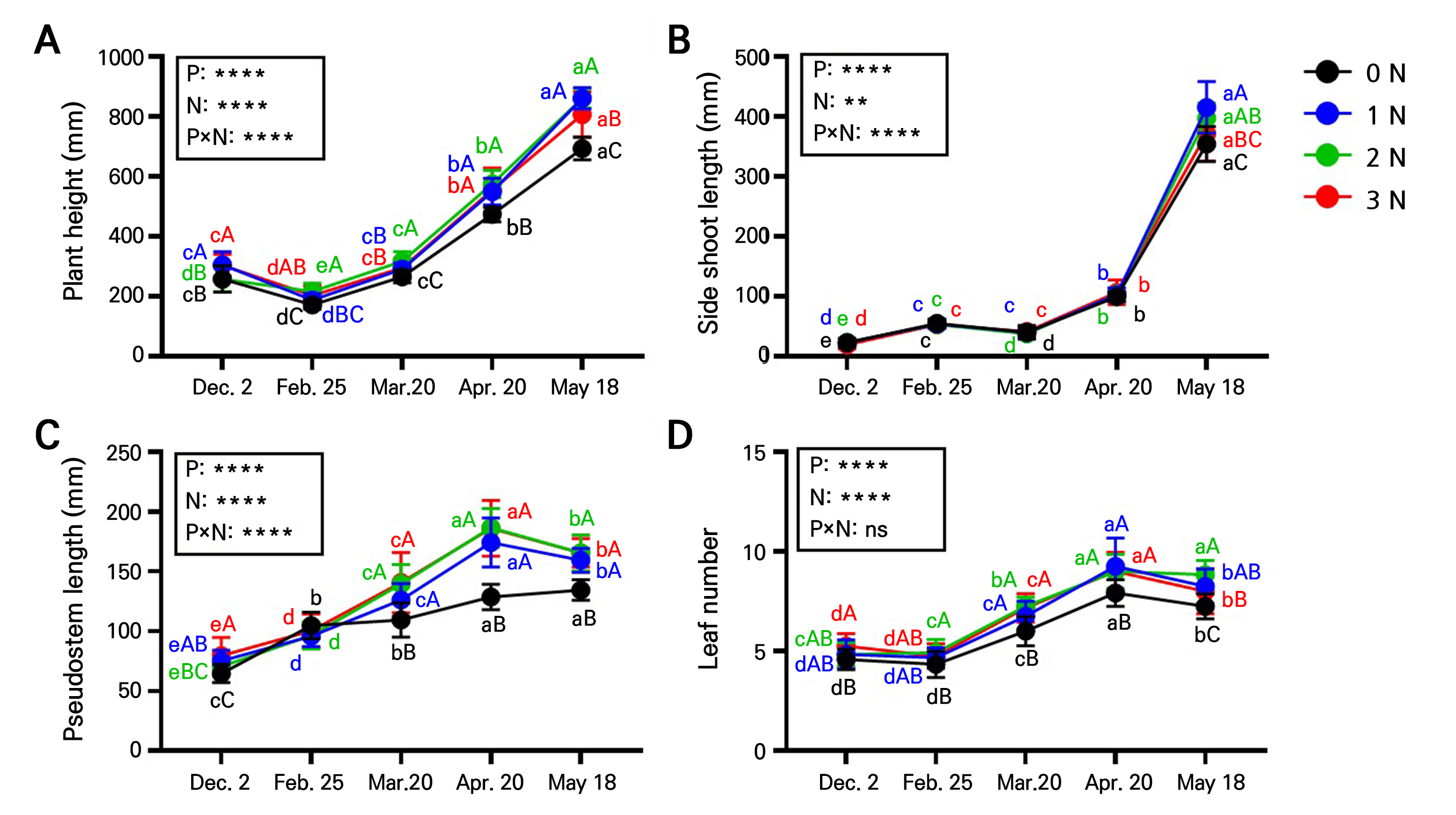
Fig. 1.
Changes in plant height (A), side shoot length (B), pseudostem length (C), and leaf number (D) of Hongsan garlic plants during the growing period according to the nitrogen fertilization level (n=12). The different uppercase letters (A-C) at each point indicate significant differences among the nitrogen application levels, while different lowercase letters (a-e) within each treatment indicate significant differences during the growth period, based on one-way ANOVA with Duncan’s multiple range test (p < 0.05). Asterisks indicate significant effects as determined by two-way ANOVA: 30p < 0.01 and 3030p < 0.0001. ns, not significant; N, nitrogen fertilization levels; P, growing period.
Nitrogen is an essential nutrient closely associated with chlorophyll formation and photosynthesis, and an adequate nitrogen supply has been reported to promote vegetative growth, including plant height and leaf area development (Zayed et al. 2023). These results are consistent with previous reports that nitrogen fertilization increases vegetative growth traits, including plant height, leaf number, and aboveground biomass, in garlic, onion, and other bulb or root crops (Alkhateeb et al. 2024; Taha et al. 2024; Tesfaye and Bayih 2024). However, some growth traits did not differ markedly between the 2 N and 3 N treatments, suggesting that nitrogen when supplied above a certain level may not necessarily result in additional growth enhancements. Similarly, previous studies have reported that an excessive nitrogen supply or fertilization beyond an optimal level can limit further growth improvement or result in no clear differences among such treatments (Gebretsadik and Dechassa 2018; Taha et al. 2024).
Postharvest characteristics of Hongsan garlic according to the nitrogen fertilization level
In the control treatment, small bulbs below 35 mm accounted for the highest proportion (61.6 ± 9.4%), whereas 45–55 mm bulbs increased in the nitrogen-fertilized treatments (Table 2). In particular, the proportions of 45–55 mm bulbs in the 1 N, 2 N, and 3 N treatments were 50.8 ± 9.2%, 56.8 ± 5.0%, and 54.4 ± 20.5%, respectively, outcomes significantly higher than that in the 0 N treatment (3.0 ± 1.1%; p < 0.05). These results suggest that an increased supply of nitrogen positively affects bulb enlargement by promoting vegetative growth and photosynthesis (Choudhary et al. 2024; Taha et al. 2024). Previous studies have also reported that appropriate nitrogen fertilization may enhance bulb enlargement in garlic (Tesfaye and Bayih 2024).
Table 2.
Bulb size distribution of harvested Hongsan garlic according to the nitrogen fertilization level
| Bulb size distribution (%) | |||||
| ≥ 55 mm | 45–55 mm | 40–45 mm | 35–40 mm | ≤ 35 mm | |
| 0 N | 0.5 ± 0.5 bD | 3.0 ± 1.1 bCD | 11.6 ± 3.7 aC | 23.3 ± 7.2 aB | 61.6 ± 9.4 aA |
| 1 N | 4.8 ± 4.8 abC | 50.8 ± 9.2 aA | 26.2 ± 13.0 aB | 11.7 ± 2.5 bC | 6.6 ± 1.7 bC |
| 2 N | 14.8 ± 8.9 aB | 56.8 ± 5.0 aA | 20.3 ± 4.8 aB | 3.6 ± 1.8 bC | 4.5 ± 1.9 bC |
| 3 N | 13.3 ± 5.3 aB | 54.4 ± 20.5 aA | 14.4 ± 13.4 aB | 11.3 ± 7.3 bB | 6.7 ± 4.2 bB |
The postharvest quality characteristics of Hongsan garlic according to the nitrogen fertilization level are shown in Fig. 2. Bulb weight tended to increase with an increase in the nitrogen fertilization level, reaching the highest value in the 2 N treatment (44.5 ± 7.6 g) (Fig. 2A). Bulb height and diameter were also higher in the nitrogen-fertilized treatments than in the control (p < 0.05) (Fig. 2B and 2C). In contrast, firmness tended to decrease with an increase in the nitrogen fertilization level, with the lowest value observed in the 2 N treatment (Fig. 2E). The soluble solids content showed significant but relatively small differences among the treatments (Fig. 2F). These results indicate that nitrogen fertilization may positively affect bulb enlargement, whereas an excessive nitrogen supply may be associated with postharvest quality changes such as reduced tissue firmness. This change may be partly linked to altered water retention during storage (Lee et al. 2022; Taha et al. 2024).
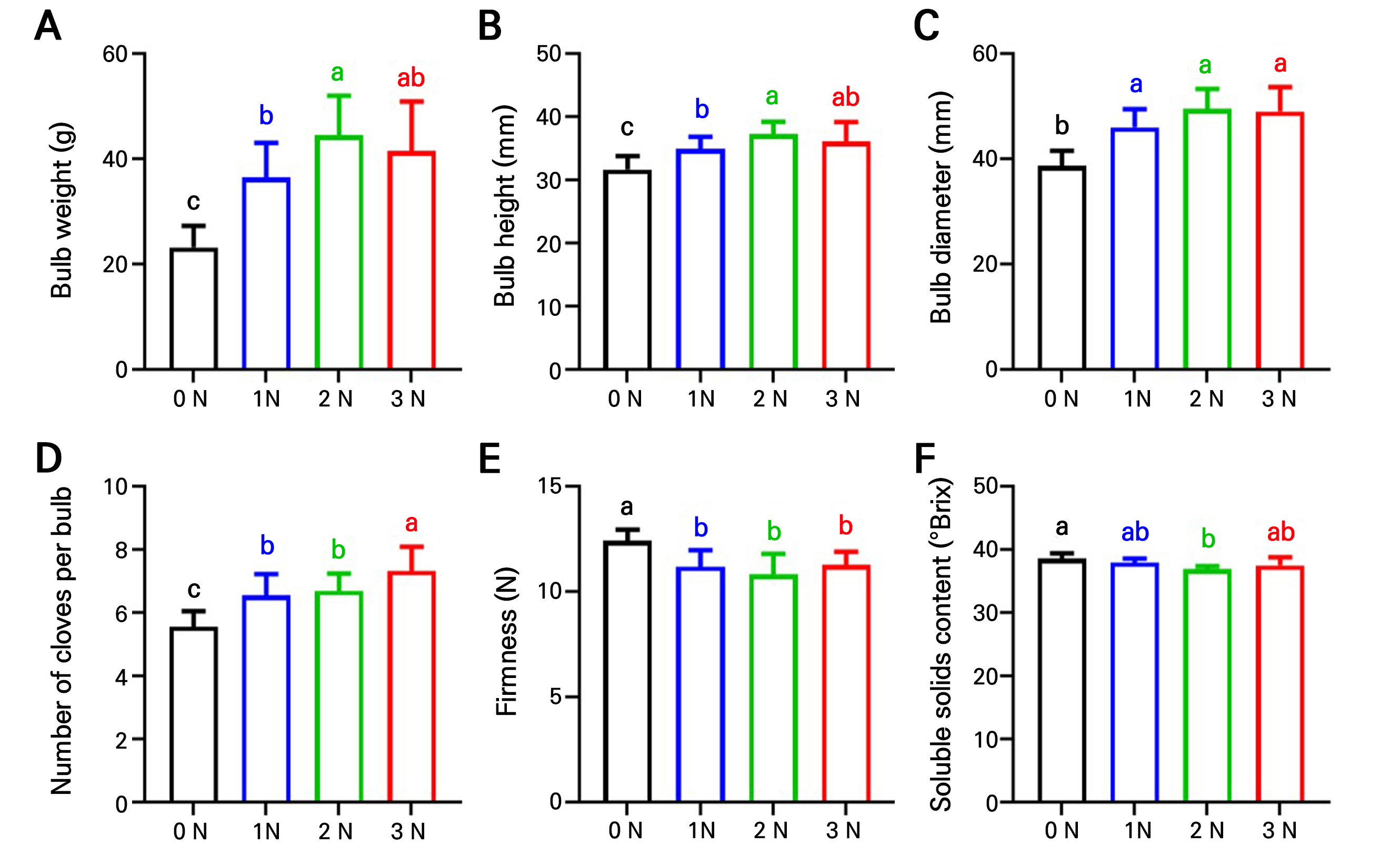
Fig. 2.
Postharvest quality characteristics of Hongsan garlic bulbs in response to the nitrogen application level (n=10). Different letters (a-b) on each bar indicate significant differences based on one-way ANOVA followed by Duncan’s multiple range test (p < 0.05). (A), bulb weight; (B), bulb height; (C), bulb diameter; (D), number of cloves per bulb; (E), firmness of clove; (F), soluble solids content of clove; N, nitrogen fertilization levels.
The color characteristics of Hongsan garlic cloves according to the nitrogen fertilization level are shown in Fig. 3. The L* and b* values did not differ markedly among the treatments, whereas the a* value tended to increase with an increase in the nitrogen fertilization level (Fig. 3A–3C). In contrast, the a* value of the upper clove surface was significantly lower in the 2 N and 3 N treatments, indicating enhanced green coloration in the upper part of the cloves (Fig. 3D). In general, a decrease in the a* value indicates increased greenness, which may be associated with chlorophyll accumulation through the activation of tetrapyrrole biosynthesis and 5-aminolevulinic acid-mediated chlorophyll biosynthesis pathways in response to the nitrogen supply (Jiang et al. 2022; Sinha et al. 2022; Zayed et al. 2023). Green coloration on the upper clove surface of Hongsan garlic is a cultivar-specific trait associated with chlorophyll accumulation (Luitel et al. 2024). This should be distinguished from garlic greening discoloration during processing or storage, which results from reactions between thiosulfinates and amino compounds rather than chlorophyll accumulation (Zhang et al. 2013). However, excessive chlorophyll-based greenness induced by nitrogen fertilization may still be perceived as discoloration, which negatively affects the external quality.
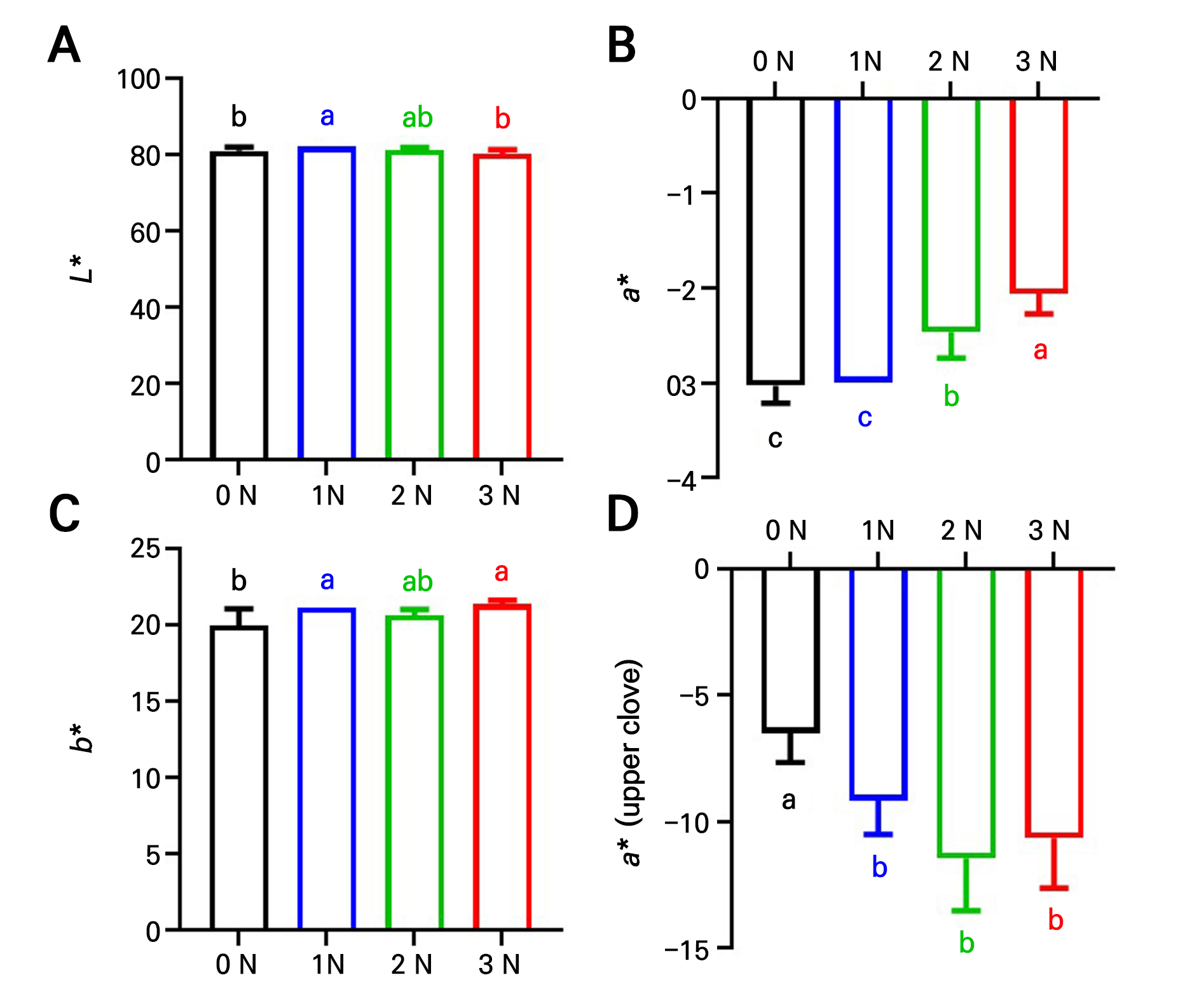
Fig. 3.
Color values of Hongsan garlic cloves in response to the nitrogen application level (n=10). Different letters (a-c) on each bar indicate significant differences based on one-way ANOVA followed by Duncan’s multiple range test (p < 0.05). (A), lightness; (B), redness; (C), yellowness; (D), redness of the upper clove surface; N, nitrogen fertilization levels.
Quality changes in sliced Hongsan garlic during storage
The changes in the firmness and soluble solids content of sliced garlic during storage are shown in Fig. 4A and 4B, respectively. Firmness gradually decreased in all treatments as storage progressed, and the extent of the firmness reduction became greater with an increase in the nitrogen fertilization level. In particular, after four weeks of storage, firmness values in the 2 N and 3 N treatments were 9.5 ± 1.0 and 10.0 ± 1.7 N, respectively, outcomes significantly lower than that of the control treatment (11.9 ± 0.5 N; p < 0.05). In contrast, the soluble solids content remained relatively stable during storage, with no marked differences observed among the treatments (Fig. 4B). Two-way ANOVA showed parameter-dependent effects of the storage period, nitrogen level, and their interaction. Tissue softening in minimally processed garlic is associated with moisture migration and cell-wall degradation during storage (Park et al. 2012; El-Mesery et al. 2025). The greater firmness reduction in the 2 N and 3 N treatments suggests that an excessive nitrogen supply reduces tissue stability during storage, as has been reported for Allium crops (Bloem et al. 2011; Lee and Min 2022).
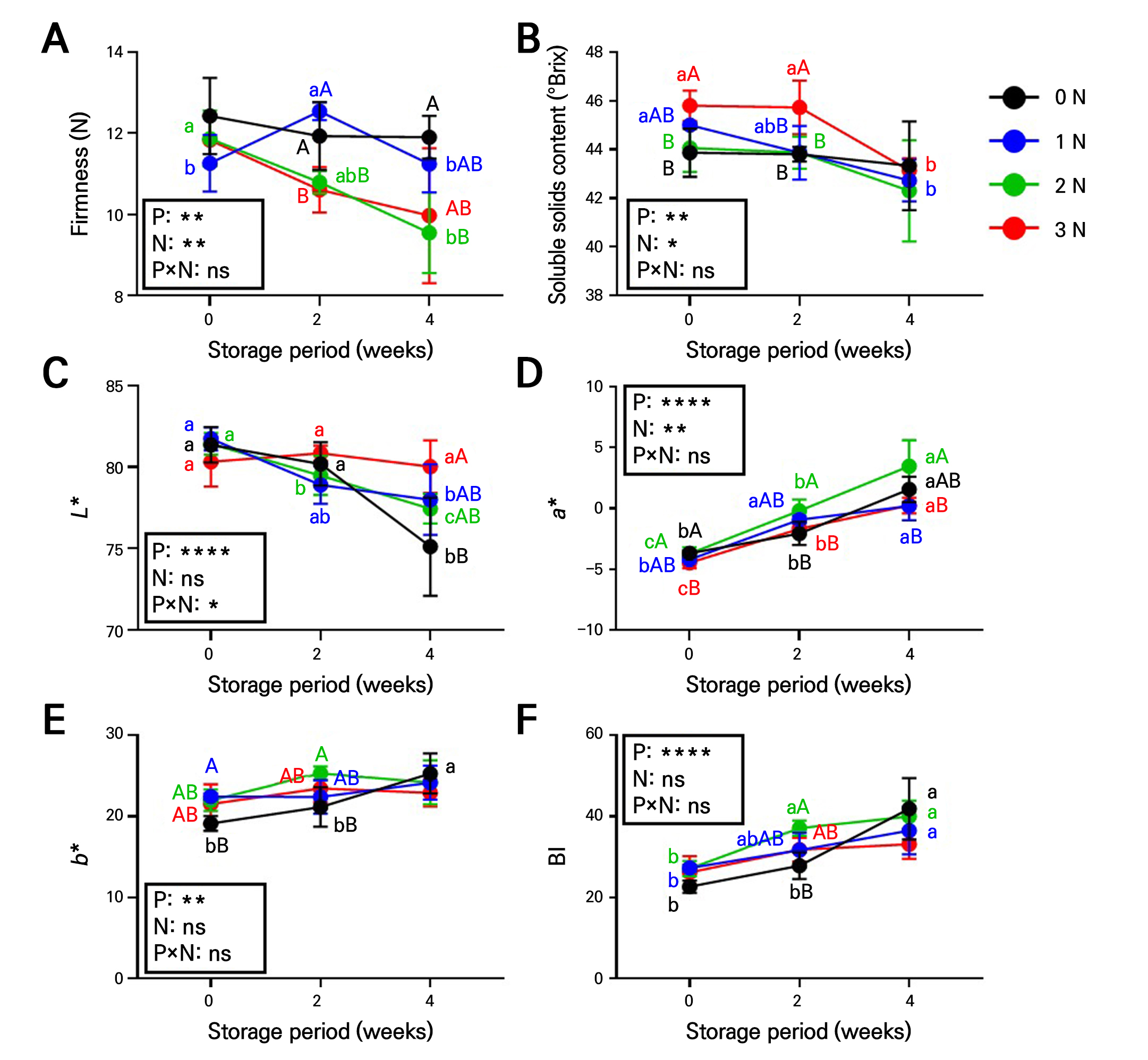
Fig. 4.
Quality changes of sliced garlic during storage according to the nitrogen fertilization level (n=3). The different uppercase letters (A-B) at each point indicate significant differences among nitrogen application levels, while different lowercase letters (a-c) within each treatment indicate significant differences during the storage period, based on one-way ANOVA with Duncan’s multiple range test (p < 0.05). Asterisks indicate significant effects as determined by two-way ANOVA: *p < 0.05, 30p < 0.01, and 3030p < 0.0001. ns, not significant; (A), firmness; (B), soluble solids content; (C), lightness; (D), redness; (E), yellowness; (F), browning index (BI); N, nitrogen fertilization levels; P, storage period.
The changes in the color of sliced garlic during storage are shown in Fig. 4C–4F. The L* value tended to decrease slightly during storage, remaining generally higher in the nitrogen-fertilized treatments than in the control treatment (Fig. 4C). The a* value increased as storage progressed, with the highest value observed in the 2 N treatment after four weeks of storage (3.5 ± 2.1) (Fig. 4D). The b* value also increased during storage and showed some treatment differences, although the variations among the treatments were relatively small (Fig. 4E). In contrast, the BI was slightly higher in the nitrogen-fertilized treatments than in the control after two weeks of storage, with the highest BI observed in the 2 N treatment (Fig. 4F). Garlic browning is generally associated with enzymatic reactions induced by tissue damage (Fante and Noreña 2012; Hamdan et al. 2022), and the preharvest nitrogen supply may influence postharvest color stability by altering tissue characteristics and nitrogen metabolism (Bonasia et al. 2013; Bonasia et al. 2023). Therefore, the relatively high L* values and slight increase in BI during early storage in the nitrogen-fertilized treatments suggest that the nitrogen supply affects the external quality changes in sliced garlic during storage.
Changes in the allicin content of sliced Hongsan garlic during storage
The changes in the allicin content of sliced Hongsan garlic during storage are shown in Fig. 5. On day 0, the allicin content differed significantly depending on the nitrogen fertilization level. The control treatment showed the highest allicin content, at 2,110.1 ± 54.1 µg·g‒1 dry matter (DM), whereas the allicin content generally decreased with an increase in the nitrogen fertilization level (p < 0.05). In particular, the allicin content in the 3 N treatment was 734.5 ± 49.9 µg·g‒1 DM, approximately 2.9-fold lower than in the 0 N treatment. Two-way ANOVA showed significant effects of the storage period, nitrogen level, and their interaction on allicin content levels. Allicin is a representative organosulfur compound in garlic and is known to be produced through the enzymatic conversion of alliin by alliinase (Borlinghaus et al. 2021; Seki and Hosono 2025). Previous studies have reported that nitrogen fertilization may affect the biosynthesis of sulfur-containing compounds and the balance between nitrogen and sulfur metabolism (Bloem et al. 2010; Bloem et al. 2011; Nguyen et al. 2022). Therefore, the present results suggest that an increased nitrogen supply negatively affects allicin accumulation in Hongsan garlic.
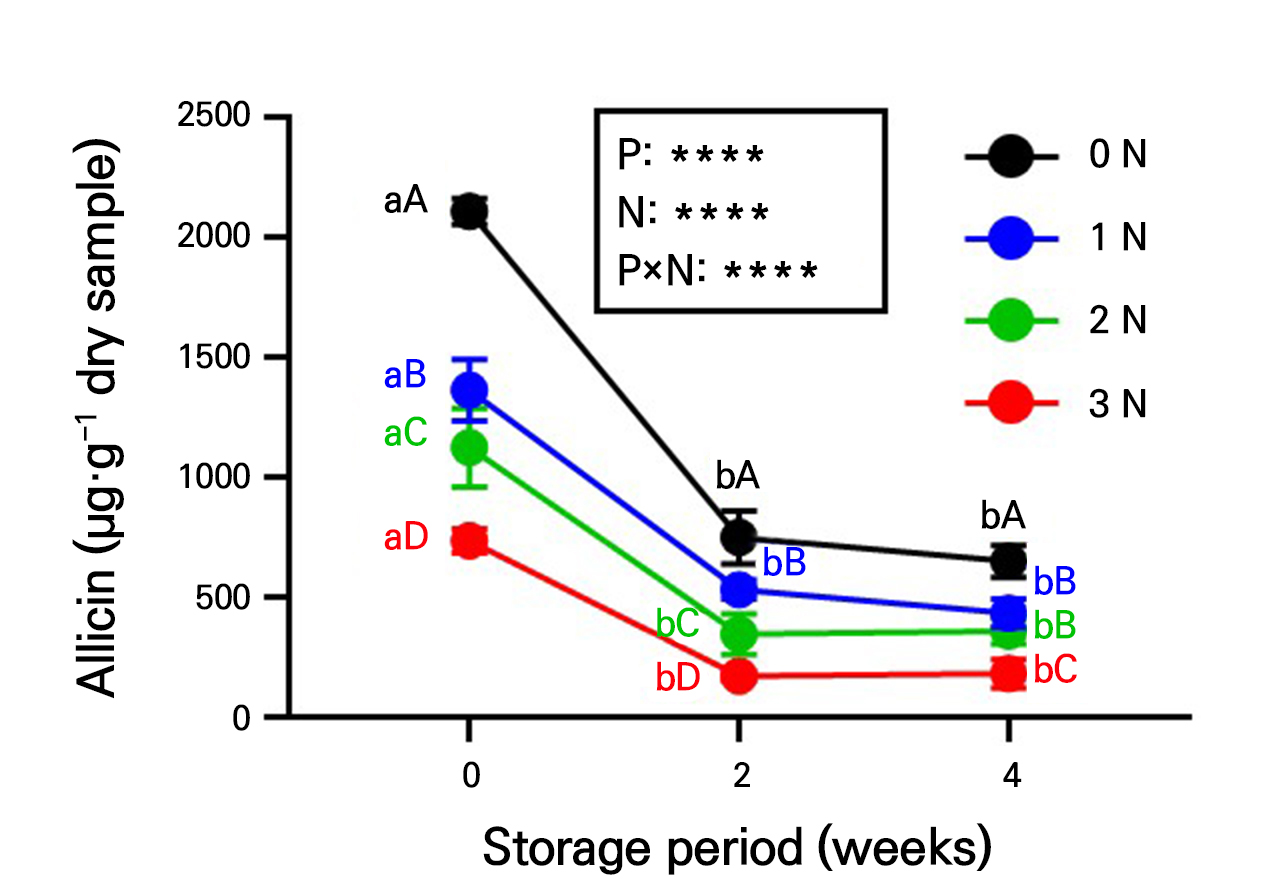
Fig. 5.
Changes in allicin content of sliced garlic during storage according to the nitrogen fertilization level (n=3). The different uppercase letters (A-D) at each point indicate significant differences among the nitrogen application levels, while different lowercase letters (a-b) within each treatment indicate significant differences during the storage period, based on one-way ANOVA with Duncan’s multiple range test (p < 0.05). Asterisks indicate significant effects as determined by two-way ANOVA: *p < 0.05, 30p < 0.01, and 3030p < 0.0001. ns, not significant; N, nitrogen fertilization levels; P, storage period.
During storage, the allicin content gradually decreased in all treatments (Fig. 5). The decrease was particularly pronounced after the initial storage period, and by week 4, most treatments showed a significantly lower allicin content than that observed on day 0 (p < 0.05). In contrast, the 0 N treatment tended to maintain a relatively high allicin content throughout storage and showed higher values than the nitrogen-fertilized treatments, even at later storage stages. Allicin is a highly unstable sulfur compound that can degrade after tissue disruption through enzymatic and oxidative reactions, and its stability is affected by the storage temperature and tissue conditions (Prati et al. 2014; Abe et al. 2020; Rababah et al. 2025; Seki and Hosono 2025). The greater decrease in the allicin content under higher nitrogen fertilization may be associated with reduced firmness, suggesting a possible relationship between the nitrogen supply and allicin stability in sliced garlic (Borlinghaus et al. 2014; Liu et al. 2021; El-Mesery et al. 2025). Further studies focusing on sulfur status, the alliin content, and alliinase activity are needed to better clarify how nitrogen fertilization affects allicin accumulation.
Conclusion
This study evaluated the effects of nitrogen fertilization on the growth, postharvest bulb quality, and storage quality of sliced Hongsan garlic. Nitrogen fertilization generally improves growth characteristics, including the plant height, side shoot length, pseudostem length, and leaf number. It also increased the proportion of medium-to-large bulbs in the 45–55 mm size range and reduced the proportion of small bulbs below 35 mm after harvest. In addition, bulb weight, height, and diameter increased in the nitrogen-fertilized treatments, indicating that an appropriate nitrogen supply could positively affect the growth and bulb enlargement of Hongsan garlic. However, clove firmness tended to decrease as the nitrogen fertilization level increased. During the storage of sliced garlic, the reduction in firmness was greater in the 2 N and 3 N treatments, suggesting that an excessive nitrogen supply is associated with reduced tissue stability during storage. A color analysis showed that nitrogen fertilization decreased the a* value of the upper clove surface, indicating enhanced chlorophyll-based green coloration. In addition, a slight increase in the BI was observed in the nitrogen-fertilized treatments during the early storage period, suggesting that the preharvest nitrogen supply influences external quality changes during storage. The allicin content was highest in the control treatment on day 0 and decreased with an increase in the nitrogen fertilization level. During storage, the allicin content decreased in all treatments, whereas it remained relatively high in the control. Although this study was conducted under limited nitrogen fertilization and storage conditions, the results indicate that nitrogen fertilization promotes growth and bulb enlargement in Hongsan garlic, whereas excessive fertilization may reduce firmness, enhance green coloration, and decrease allicin stability.
