

Introduction
Materials and Methods
Subjects
Experimental Procedures and Physical Activities Performed
Measurements
Data Analysis
Results
Subjects
Metabolic Costs of Horticultural and Common Physical Activities
Discussion
Introduction
Physical activities refer to all physical movements accom-panied by energy consumption as a result of musculoskeletal contraction (Biddle, 1995; Caspersen et al., 1985). As a measure of physical activity, the amount of energy expended during exercise is quantified; subsequently, the metabolic equivalents (METs), representing the metabolic rate during a specific physical activity, are compared to the resting state. One MET is defined as O2 intake during an at-rest state of 3.5 mL・kg-1・min-1 (Jette et al., 1990; Powers and Howley, 2007). METs are categorized according to exercise intensity, namely, sedentary (≤ 1.5 METs), light (1.6-2.9 METs), moderate (3.0-5.9 METs), and vigorous (≥ 6.0 METs) (HHS, 2008a; Pate et al., 2008).
Regular physical activity provides a range of health benefits, including lower risks of chronic disease (e.g., cardiovascular disease, diabetes, cancer, hypertension, obesity, depression, and osteoporosis) or the prevention thereof and premature death, and facilitating improvements in functional ability (Powell et al., 2011; Warburton et al., 2006). In particular, for the health benefits of adults, the United States Depart-ment of Health and Human Services recommends more than 150 min of moderate physical activity (3.0-5.9 METs) a week or more than 75 min of vigorous physical activity (6.0 METs) a week, as well as participation in muscle- strengthening activities for two or more days a week (HHS, 2008b).
The mechanism of various physical benefits stemming from engagement in regular physical activities may be explained in terms of muscle contraction and physical movement, which are key elements of physical activity. Physiological changes in the body reportedly take place as a result of physiological elements such as O2, glucose, and the fat required when energy is consumed to contract muscles with metabolism and neurological elements, thus facilitating physical movement. In particular, aerobic activities facilitate energy consumption that, in turn, forms the basis of physical movements, ultimately facilitating positive changes in the cardiovascular and cellular systems by increasing the capacity and efficiency of O2 and glucose delivery to the appropriate tissues (Powell et al., 2011).
Despite the various health benefits of physical activity, about 31% of the world population, including Africa (27.5%), the Americans (43.3%), the Eastern Mediterranean Region (43.2%), Europe (34.8%), Southeast Asia (17.0%), and the Western Pacific (33.7%), is physically inactive. This is according to a survey conducted on the global level of physical activity (Hallal et al., 2012). Physical inactivity habits are gradually formed from childhood, spanning to adolescence and adulthood. During childhood, vigorous physical activity is quite common, but decreases during adolescence and early adulthood (Calfas et al., 2000; Caspersen et al., 2000; Stone et al., 1998); then, during adulthood, intermediate physical activities such as walking decrease drastically (Leslie et al., 2001). The main reasons for this sharp decrease in physical activities in adulthood are the increase in sedentary behavior-which accounts for a large proportion of everyday life, such as when using computers and mobile phones, watching television, and resting after work-and perceived time constraints (Mein et al., 2005; NASPE, 2003; Popham and Mitchell, 2006; Warren et al., 2010).
There is a need for a national strategy aimed at increasing the public’s participation in physical activities. This can be facilitated through changes in the socio-political and physical environments, which would result in infrastructure development, resource allocation, the fostering of an appro-priate environment, and public policies that take into consideration natural factors that can improve adults’ participation in physical activity (Brownson et al., 2000; King et al., 1995a; Sallis et al., 1998; Schmid et al., 1995). For sustained participation in physical activities, the motivation to engage in such activities must be developed at an individual level (Kilpatrick et al., 2002). The development of individual motivation involves the replacement of extrinsic motivation with intrinsic motivation. Extrinsic motivation refers to external factors such as compensation, pressure, and physical health. Intrinsic motivation can lead to autonomous behavior resulting from the internalizing of various behavioral factors such as interest, joy, skills development, and the formation of social relationships (Deci and Ryan, 1995; Kilpatrick et al., 2002). Therefore, motivation to participate in physical activities must be developed at both an individual and a national level, so as to sustain participation in above- mentioned activities. To this end, individuals must develop an interest in physical activities, as well as experience the joy and establishment of social relationships associated with participation in such activities.
Traditionally, gardening is a popular form of leisure activity in the West (Atwood, 2004). Recently, ‘the Act of Developing and Supporting Urban Agriculture’ has led to increased interest and participation in gardening activities in South Korea (RDA, 2010). Community gardening not only provides nutritious food and opportunities for social bonds among residents as a result of their collaboration, but also enables social diversity in the community, facilitates vocational training and education, and enhances social capital as well as regional safety and security (Dickinson et al., 2003; Doyle and Krasny, 2003; Ferris et al., 2001; Fusco, 2001; Holland, 2004; Irvine et al., 1999).
Advanced research has revealed that gardening involves low- to high-intensity energy consumption and requires the use of various muscles (Bassett et al., 2000; Brooks et al., 2004; Gunn et al., 2002, 2004; Park et al., 2008a, 2011, 2012, 2013, 2014a). Park et al. (2014a) examined the intensity of 10 gardening activities. Moderate-intensity activities (3.5 ± 0.5 to 5.4 ± 1.0 METs) included planting seedlings, mixing soil, watering, harvesting, sowing seeds, and hoeing, while digging soil was classified as a high- intensity physical activity (6.3 ± 1.2 METs). The intensity of yard work specifically for adults was also determined; trimming and raking were classified as moderate-intensity activities (3.53 ± 0.76 to 5.95 ± 1.38 METs) (Bassett et al., 2000). Moreover, lawn mowing was examined in a laboratory setting and subsequently classified as a moderate- intensity activity, at 5.6 ± 1.0 and 6.0 ± 1.0 METs for 35- to 45-year-old Australian adults of both genders, respectively (Brooks et al., 2004; Gunn et al., 2004).
Gardening activities, as a form of physical activity, reportedly provide various health benefits, such as an increase in hand grip strength and a decrease in cholesterol and blood pressure levels (Armstrong, 2000; Kingsley, 2009; Park et al., 2009; Reynolds, 1999; Turner et al., 2002), as well as psychosocial benefits in the form of enhanced self-respect, reduced stress, and increased social interaction (Cammack et al., 2002; Kaplan, 1973; Patel, 1991; Reynolds, 2002; Waliczek et al., 2005; Walsh et al., 2001).
Therefore, this study compared physical activity intensity and energy consumption between common physical activities (running, skipping rope, walking, and muscle strength exercises) and gardening activities (creating a vegetable bed and garden maintenance). The results from this study could help determine if gardening can be utilized as a physical activity to lead the same health benefits from non gardening forms of physical activities in adults.
Materials and Methods
Subjects
The study sample consisted of 19 male students at Konkuk University, Gwangjin-gu, Seoul. The subjects were required to male, aged in 20s, able to engage in physical activities, and without current physical illness. The subjects were recruited by word of mouth or contacted by telephone after their details were obtained from a volunteer list that they had completed. On the phone, we explained the details regarding the test and provided the test date to candidates who wished to participate in this study. The conditions for participation included avoiding excessive physical activities and over-eating 12 h before the test, and refraining from alcohol and caffeine consumption. In addition, the subjects were requested to wear comfortable attire for participation in the scheduled gardening and physical activities. Each subject was compensated with 10,000 KRW for participating in this study.
Experimental Procedures and Physical Activities Performed
The subjects visited the glasshouse at Konkuk University between late June and early July 2013, wherein they per-formed six activities (two horticultural activities and four common physical activities). The glasshouse had an average temperature of 27.0 ± 2.4°C and a relative humidity of 35.0 ± 5.8% (Model Acuba CS-201, Digital Hygro-Thermometer, Chosun, China). Four common physical activities that reported as a moderate or high intensity physical activity for adults aged 18 to 65 years in the compendium of physical activities by Ainsworth et al. (2011) were selected. Two horticultural activities were consisted of gardening tasks with mostly moderate intensity in adults aged in their 20s as determined in the previous study (Park et al., 2014a) because each horticultural activity is generally a series of horticultural tasks rather than the repetition of the same motion.
The order of the activities was decided on by randomly drawing lots. Each activity was performed for 5 min and the total test duration was about 60 min. The subjects took a 5 min break between each activity. Before each activity, the researcher provided a detailed explanation on what that activity involved and the method needed to carry it out, so as to ensure consistency among the subjects. The six activities performed by the subjects were as follows.
For running, the subjects ran back and forth along a corridor (1.2 × 12 m) inside the glasshouse at an average speed of 8.64 km・h-1, based on a 1/8 rhythm of the metro-nome application (Metronome; Gismart, Road Town, UK). Skipping rope required subjects to jump over a 2.7 m skipping rope for 5 min, at an average of 102 skip/minin a pre-prepared space in the glasshouse. The subjects had the option to rest after running or skipping rope (Town et al., 1980). The walking activity involved subjects walking back and forth in a corridor (1.2 × 12 m) inside the glass-house at an average of 5.79 km·h-1, with the metronome application (Metronome; Gismart, Road Town, UK) set at a rhythm of 1/4 for 5 min (Hendelman et al., 2000). During the muscle strength exercises, the subjects held dumbbells (1 kg) with both hands and carried out one set of squats, a dumbbell row, and a lateral raise 15 times, respectively, for a period of 5 min (Miyachi et al., 2010).
When creating a vegetable bed, the subjects had to do so in five stages, which involved moving, mixing, and filling soil, as well as planting seedlings and watering at set times. In the first stage, the subjects had to move soil from a bucket (75 L) into a container for a period of 60 s using a shovel (0.7 kg). In the second stage, the subjects had to mix the soil for 30 s with both hands while squatting down. In the third stage, the subjects used a trowel (0.1 kg) to move the mixed soil into a plant container (0.4 × 1 × 0.4 m) for 90 s. During the fourth stage, subjects planted kale seedlings (Brassica oleracea var. acephala) in the plant container (0.4 × 1 × 0.4 m) for 90 s while squatting down. Finally, in the fifth stage, the subjects watered the plants for 30 s using a watering can (7 L).
Garden maintenance was divided into four stages, which consisted of weeding, propping up support, removing withered leaves, and watering plants. For each activity, the subjects were expected to complete each stage within a set time. During the first stage, participants walked around the indoor garden and weeded for 90 s using their hands. In the second stage, the subjects affixed plants in the indoor garden to the support (30 cm) for 90 s, with the use of a string (10 cm). In the third stage, the subjects removed withered leaves for 90 s, and during the fourth stage, they used a watering can (7 L) to water the plants in the garden for 30 s.
Measurements
In this study, each subject wore a portable indirect calorimeter (K4b2; Cosmed, Rome, Italy) when carrying out the activities. This would enable the measurement of O2 uptake and energy expenditure for the six activities and would therefore provide the MET value, which represents physical activity intensity. Subjects breathed while wearing masks throughout the test period, which enabled the measurement of O2 intake and energy consumption during each activity. Average measurements were recorded con-tinuously at an interval of 3 s through a transmitter and a computer connected specifically for the test.
The value of METs was calculated by dividing O2 uptake per min (VO2) by the value of 1 MET (3.5 mL・kg-1・min-1) (Ainsworth et al., 2011), and the amount of energy consumed was calculated based on the gas exchange rate with Weir’s formula (Weir, 1949).
The measuring equipment consisted of a portable unit, a receiver unit, an exercise mask, a flowmeter, battery, battery changer, and a calibration kit, among others. The portable unit (weight: 1.5 kg), which collects the data, was composed of an O2 analyzer, a CO2 analyzer, sampling pump, UHF transmitter, and barometric sensors. The accuracy rate of the O2 analyzer, which enabled the measurement of VO2 and energy expenditure, was ± 0.02%, and the response time was within 150 ms. The CO2 analyzer allowed VO2 and VCO2 to be measured with an accuracy of ± 0.01% and responded within 150 ms (Cosmed, 2011; Parr et al., 2001).
The flowmeter measured the flow of gas per unit of time with a bidirectional turbine and an optoelectronic reader; the two were assembled together. The flowmeter measured, with an accuracy of ± 2%, the level of ultraviolet ray blockage when the blade in the turbine revolved. This was a preparatory step before the measurement of O2 intake during each activity. During the experiment period, calibration was made for the air and standard gas (O2: 16%, CO2: 5%) inside the glasshouse every day prior to the first test. The analysis of the gas constituency was carried out with a 3.0 L syringe (Cosmed, 2011; Parr et al., 2001).
In addition, subjects wore a wristwatch and related equipment on the lower chest that recorded heart rate wirelessly through radiotelemetry (Polar T 31; FitMed, Kempele, Finland). The subjects’ metabolic rate and heart rate were measured before the commencement of the six activities and during the resting periods. During the breaks, as the subjects sat on a chair in a stable position for 5 min, their metabolism rate and heart rate were measured with the Cosmed K4b2 and radiotelemetry (Polar T 31), respectively. Subjects’ age and height measurements were collected through a demographic survey, while their weight and other physical characteristics were measured with a fat analyzer (Model ioi 353; Jawon Medical, South Korea).
Data Analysis
The means and standard deviations of the subjects’ demographic information were calculated with Excel (Microsoft Office 2002; Microsoft Corp., Redmond, WA, USA). The 10 s used to walk from the resting point to the point where each activity would be carried out was deleted from the raw data prior to analysis, the result of which was indicated as the mean ± SD.
In order to compare the intensity of the two gardening activities and four physical activities, Duncan’s multiple range test was conducted through SAS Version 9 for Windows (SAS Institute, Inc., Cary, NC, USA), with p ≤ 0.05 as the standard.
Results
Subjects
The study subjects were 19 male adults with an average age of 25.3 ± 2.3 (age range 21 to 28 years) and an average body mass index of 22.7 ± 2.1 kg・m-2, which is within the normal range (Table 1).
Metabolic Costs of Horticultural and Common Physical Activities
After measuring the intensity of the two horticultural activities and four common physical activities among subjects, we classified the activity range as intermediate to high intensity (3.8 ± 0.9 to 9.9 ± 2.1 METs) (Table 2 and Fig. 1). High-intensity activities included running (9.9 ± 2.1 METs) and skipping rope (8.8 ± 2.2 METs), whereas moderate-intensity activities included creating a vegetable bed (5.0 ± 1.2 METs), walking (4.9 ± 0.8 METs), muscle strength exercise (4.5 ± 1.3 METs), and garden maintenance (3.8 ± 0.9 METs). We found statistically significant differences among the activities with regard to the various aspects measured in this study (i.e., METs, O2 uptake, heart rate, and energy expenditure) (F = 118.31, p < 0.0001). Creating a vegetable bed, walking, and muscle strength exercises had similar intensities, whereas garden maintenance was found to be the least intense activity among all six (Table 2 and Fig. 1).
Discussion
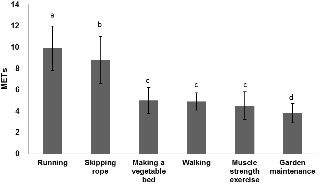
This study sought to examine the physical activity intensity and energy consumption associated with two horticultural activities and four physical activities as performed by 19 males in their twenties (mean 25.8 ± 2.3 years old). The physical activities ranged from intermediate to high intensity (3.8 ± 0.9 to 9.9 ± 2.1 METs) (Table 2 and Fig. 1).
Running and skipping rope, which required the use of the whole body and involved dynamic movements, had a higher intensity and energy consumption than did other activities (Table 2 and Fig. 1). In a previous study, the results for running at a speed of 8.37 km・h-1, 9.66 km・h-1, and 11.27 km・h-1 were 9.0, 10.0, and 11.5 METs, respectively, among adults aged 18 to 65 years old (Ainsworth et al., 2000). In the current study, the subjects’ average speed was 8.64 km・h-1, with an intensity of 9.9 ± 2.1 METs; this result is similar to that of Ainsworth et al. (2000).
In the United States, a study investigating skipping rope among 19 males in their twenties (mean age: 24.7 ± 3.4 years, weights: 73.7 ± 9.7 kg) found that skipping at 125 skip/min(11.7 METs), 135 skip/min (11.8 METs), and 145 skip/min(11.7 METs) were all high intensity (Town et al., 1980). Skipping ropes at 102 skip/minwas also a high-intensity activity (11.9 METs). In the current study, we also found that skipping ropes at 102 skip・min-1 (8.8 ± 2.2 METs) was a high-intensity activity, even though it was slightly lower in terms of METs than it was in previous studies. It is reasonable that skipping rope is a high-intensity activity, as the concentrated use of muscles in the same area during repetitive jumps requires high energy consumption (Jette et al., 1979).
High-intensity physical activities such as skipping rope and running are more effective than low- to moderate-intensity activities in enhancing aerobic capacity, weight adjustment, and decreasing obesity, which are all important for the improvement of cardiovascular health (Braith et al., 1994; Doucet et al., 1999; King et al., 1995b; Swain, 2005; Swain and Franklin, 2002, 2006; Tremblay et al., 1994; Yoshioka et al., 2001). In addition, it is reported that an exercise program consisting of intermittent high-intensity exercises had more effective health benefits than did low-intensity exercise carried out over a long period (Hunter et al., 1998). To ensure that individuals meet the recommended amount of exercise for adults, individuals should combine moderate- and high-intensity activities (Haskell et al., 2007). Therefore, when developing a gardening program aimed at improving health, rather than simply engaging in low- to moderate- intensity gardening activities, high-intensity gardening activities such as digging [6.3 ± 1.2 METs (Park et al., 2014a), 6.6 ± 1.6 METs (Park et al., 2014c)] and raking [6.2 ± 1.5 METs (Park et al., 2014c)] should be intermittently combined as part of the gardening program.
Creating a vegetable bed, walking, muscle strength exercises, and garden maintenance were found to be of low to moderate intensity, as compared to running and skipping rope. According to Ainsworth et al. (2000), for adults aged 18-65, walking at a speed of 5.63 km・h-1 and a very brisk pace of 6.44 km・h-1, respectively, constituted moderate- intensity activities, at 3.8 and 5.0 METs, respectively. In this study on male adults in their twenties, walking at a speed of 5.79 km・h-1 was also found to be a moderate- intensity activity, at 4.9 ± 0.8 METs. When compared to walking at 5.63 km・h-1 (3.8 METs) among adults between 18 and 65 years, the MET value of walking at 5.80 km・h-1 among adults in their twenties was slightly higher; this points to a difference in activity intensity by age. Groups of older individuals tended to obtain a higher mean MET value than younger age groups (Harrell et al., 2005). Therefore, the only slightly higher METs value in this study, relative to previous studies, could be attributed to older subjects (aged 18 to 65 years) were used in Ainsworth et al. (2000). In a study on 25 male and female adults aged 30-50, walking intensity was found to vary in intensity according to speed, with moderate (94.7 m・min-1) and brisk (111.2 m・min-1) paces at 4.09 ± 0.85 and 5.59 ± 1.09 METs, respectively (Hendelman et al., 2000). In the current study, the walking pace of participants was similar to walking at a speed of 96 m・min-1, with an intensity of 4.9 ± 0.8 METs.
Ainsworth et al. (2000) results indicated 3.0 METs for light to moderate weight resistance exercises and 8.0 METs for a vigorous level of weight resistance exercises, depending on the weight of the dumbbell or weight. Muscle strength exercises (i.e., weight lifting) are forms of resistance exercises. Miyachi et al. (2010) conducted a study on 12 adults (7 males, 5 females) aged 22-44 years, measuring the intensity of the Wii Fit Plus video game, in which players had to follow the various motions in balance exercises, yoga, and resistance exercises on a force plate. These authors found 15 resistance exercises, including squats, as well as lunge and single leg extension exercises to be moderate-intensity activities, at 3.2 ± 1.2 METs. The muscle strength exercise intensity (4.5 ± 1.3 METs) in the current study, wherein subjects carried out squats, a dumbbell row, and a lateral raise for 5 min while holding dumbbells weighing 1 kg in each hand (constituting lightweight resistance), seemed slightly high, but all were in the range of moderate-intensity exercise.
In a previous study, 10 gardening activities, such as digging, raking, weeding, and planting seedlings, were considered moderate- to high-intensity activities (3.5 ± 0.5 to 6.3 ± 1.2 METs) for adults in their twenties (Park et al., 2014a). In the current study, creating a vegetable bed involved digging (6.9 ± 0.7 METs), indicated as a high- intensity activity by Park et al. (2014a), and moderate- intensity activities such as mixing growing media (3.9 ± 0.7 METs) and plant transplants (3.6 ± 0.4 METs). In addition, garden maintenance consisted of moderate-intensity activities such as weeding (5.2 ± 0.7 METs), harvesting (4.3 ± 0.5 METs), and watering (4.0 ± 0.5 METs). Therefore, gardening activities were regarded as moderate-intensity activities.
In previous studies, for elderly individuals aged more than 65 years, making a vegetable bed was considered, overall, a moderate-intensity activity (3.6 ± 0.7 METs) that consisted of moderate-intensity sub-activities (Park et al., 2014b), such as digging (4.5 ± 0.7 METs), as well as low-intensity sub-activities, such as mixing soil (2.4 ± 0.7 METs) and transplanting plants (2.9 ± 0.9 METs) (Park et al., 2011). Maintaining a garden is also a moderate- intensity activity (3.4 ± 0.6 METs) composed of low- to moderate-intensity sub-activities (Park et al., 2014b) such as weeding (3.4 ± 0.6 METs), harvesting produce (2.7 ± 0.6 METs), and watering with a watering can (2.8 ± 0.9 METs) (Park et al., 2011). Furthermore, a garden establishment program for children aged 11-13 years, similar to Park et al. (2014c) study, was composed of high-intensity activities such as digging (6.6 ± 1.6 METs) and raking (6.2 ± 1.5 METs), and moderate-intensity activities such as transplanting plants (4.3 ± 0.5 METs) and watering (4.6 ± 1.1 METs); the latter were carried out for a total of 10 min.
Previous studies found that elderly gardeners met physical activity recommendations, as shown by their overall physical condition, such as gripping power, pinching force, and overall physical function. These findings provide evidence that, as a form of physical activity, gardening activities offer various physical benefits (Park et al., 2009). Individuals can engage in these types of moderate-intensity exercises on their own, as they require less guidance or supervision from experts (Blair and Connelly, 1996). Further, the exercise has the added advantage of posing a low risk of injury (ACSM, 1995).
An investigation into the injury rate due to physical activities has revealed that running and muscle strength exercise pose high injury risks, whereas walking and gardening pose a relatively low injury risk. Injury due to physical activities is detrimental to individuals’ participation in the same. Therefore, engaging in activities that pose a lower risk of injury, such as walking and gardening, is recommended (Pons-Villanueva et al., 2010; Powell et al., 1998). It is worth noting that gardening activities also include walking movement. Based on the observation of gardening activities by elderly individuals aged 63-86 years, walking was found to account for 58.8% of overall gardening activities (Park and Shoemaker, 2009). Therefore, gardening is an outdoor physical activity with a high potential for facilitating the maintenance of a physically active lifestyle (Park et al., 2009; Van den Berg et al., 2010).
Based on research on muscle use during gardening activities (e.g., weeding, hoeing), researchers used electro-myography patches to identify the overall muscular activity for gardening, which scanned 16 areas of the body (Park et al., 2014d). Moreover, Turner et al. (2002) proposed that gardening activities such as weeding and digging require the use of the entire body, and that this has a positive impact on subjects’ bone density.
Community gardening consists of group activities, which enable participation in enjoyable work and continuous interaction with neighbors. Support networks (Alaimo et al., 2005; Armstrong, 2000; Been and Voicu, 2006), formed when participants meet and share their experiences, become a key motivator in individuals’ continuing participation in gardening activities (Allender et al., 2006; Arthur and Finch 1999).
Furthermore, gardening activities tend to vary according to plants’ growth cycle and seasonal changes (Park et al., 2008b). This allows participants to predict, plan, and directly engage in various gardening activities necessary for each particular period (Lekies and Sheavly, 2007). This further enables autonomous and regular physical activities among participants. Further, observing plants growing could be interesting enough to motivate individuals to engage in gardening as a form of physical activity (Deci and Ryan, 1995; Park et al., 2008b).
In summary, this study demonstrated the applicability of gardening as a physical activity for health benefits. Horticultural activities can be considered a moderate- to high-intensity exercise involving the whole body, as well as a form of physical activity that could spark motivation. According to the current research results, health benefits such as increased aerobic capacity and muscle strength could be obtained through gardening activities, which consists of moderate-intensity activities such as walking and muscle strength exercises (i.e., weight lifting). Compared to other physical activities, gardening activities are unique in that they carry relatively low injury risks and involve plant life. These render gardening an interesting physical activity, which not only meets the recommended intensity but also is safe. Furthermore, the behavioral elements particular to gardening activities, such as the establishment of social networks as a result of collaboration, autonomy of activities, interest, and joy, can provide intrinsic motivation, such that people might find it rather easy to continue engaging in gardening activities compared with other exercises.
The results of this study lend information towards devising horticultural activity programs based on activity intensity as well as physical activity programs designed to change adults’ physical activity patterns, with the aim of preventing sedentary lifestyles. It would be interesting to determine the health benefits of a long-term horticultural activity intervention or compare the health benefits of a horticultural activity and other common physical activity programs. The application of horticultural activity program based on the research data such as exercise intensities of horticultural activities may contribute to exploring the therapeutic mechanisms of horticultural activities as an intervention in future. Future study needs to investigate the differences of metabolic costs according to gender and age differences.
