

Introduction
Materials and Methods
Experimental site and plant materials
Experimental design
Growth conditions
Measurement of growth and fruit characteristics
Economic analyses
Statistical analyses
Results and Discussion
Changes in CO2 concentrations in the greenhouse
Enhancement of greenhouse cucumber growth as affected by the treatment
Improvement in Yield and Quality with Supplemental Lighting and CO2 Enrichment
Economic analyses
Conclusion
Introduction
Cucumber (Cucumis sativus L.) is a fruit vegetable with a high water content and with various sugars, vitamins, and minerals (Lee et al. 2010; Kim et al. 2018; An et al. 2021). It is a major fruit vegetable in Korea and is consumed in for instance kimchi, pickles, and salads (Lee et al. 2010). According to the Korean Statistical Information Service (KOSIS 2024), the total cultivation area for cucumbers was 3,063 ha in 2022, and the total yield was the third largest that year in Korea at 250,080 t. During the period of 2020–2022, cucumbers generated an average of 553.5 billion KRW in production value, the fifth-highest among fruit-vegetable crops (KOSIS 2024). Therefore, cucumber is a vital crop with high economic value on Korean farms (An et al. 2021; Choi et al. 2023a).
The Rural Development Administration (RDA 2021) reported that cucumbers are highly sensitive to environmental factors such as temperature, humidity, light, and carbon dioxide (CO2), making suitable greenhouse management essential for growth and productivity. Among these factors, light and CO2 are the key determinants of photosynthesis, as light supplies the energy required for ATP and NADPH production while CO2 provides the carbon source for carbohydrate synthesis (Pyon et al. 2014; Sharmeer et al. 2019; Zhang et al. 2023). Previous studies have demonstrated that increased light availability improves the photosynthetic rate, leaf area, and biomass accumulation in cucumber, while CO2 enrichment enhances light utilization, chlorophyll biosynthesis, and photosynthetic performance (Ji et al. 2020; Song et al. 2020; Kim et al. 2024). Furthermore, elevated CO2 concentrations have been shown partially to offset light-limited reductions in photosynthesis and to interact synergistically with increased light intensity levels in tomato, suggesting that combined management of both factors could be particularly effective for enhancing cucumber growth and productivity under greenhouse conditions (Dannehl et al. 2021; Huber et al. 2021; Pan et al. 2019).
Winter in Korea is characterized by insufficient solar radiation and low temperatures, creating unfavorable conditions for cucumber production (Wei et al. 2018; Xiao et al. 2022). In Korea, winter solar radiation decreases by approximately 30–40% compared with summer levels, and recent increases in precipitation days further reduce the light available for plant growth (KMA 2024; Kim et al. 2025b). This light limitation is particularly critical for cucumber, which requires a relatively high daily light integral, with an optimal range of approximately 15–30 mol·m-2·d-1 suggested for greenhouse cultivation (Gruda et al. 2025). Indeed, a 50% reduction in light intensity reportedly decreases yields by approximately 50% in summer greenhouse cucumber cultivation (Yu et al. 2023). In addition, growers often minimize ventilation during winter to maintain greenhouse temperatures, which restricts the inflow of CO2 (Poudel and Dunn 2017; Kang et al. 2024). As crop CO2 uptake proceeds, the limited supply can constrain photosynthesis and ultimately reduce the fruit yield (Choi et al. 2023b).
Supplemental lighting enhances crop growth and yields by compensating for insufficient natural light using artificial sources (Lee et al. 2014). Light-emitting diodes (LED) are widely used because they offer long service lifetimes, minimal heat output, high energy efficiency, and selectable spectra (Singh et al. 2015; Stutte 2015; Oh et al. 2019; Xiao et al. 2022). However, their high initial installation costs and ongoing electricity expenses remain significant economic burdens for farmers. CO2 enrichment can also enhance productivity by artificially increasing greenhouse CO2 concentrations and supporting photosynthesis (Son et al. 1999; Hu et al. 2011; Shang et al. 2018; Choi et al. 2023b). In winter greenhouses, where ventilation is restricted to maintain adequate temperatures, CO2 is not readily replenished through air exchange methods, making active CO2 enrichment particularly important. However, the high cost of liquefied CO2 limits its adoption by small-scale farms, prompting interest in lower-cost options, such as solid CO2 generators (Ribeiro and Barbosa-Póvoa 2021). Solid CO2 generators release CO2 via chemical reactions between carbonates, wetting agents, solvents, and pigments, thus providing a more accessible and cost-effective alternative to liquefied gas systems (Shin et al. 2014). A study of greenhouse Korean melons (Cucumis melo var. hybrida) showed that these generators increased the internal CO2 concentration to 3.0–3.2 times that of ambient air, leading to significant improvements in the fruit weight, soluble solids content, and overall yield (Shin et al. 2014). Therefore, combining supplemental lighting with low-cost CO2 enrichment may be a practical strategy for simultaneously alleviating light and CO2 limitations, thereby improving yields in Korean winter greenhouse cucumber production while maintaining relatively low input costs for small-scale farms.
Although the effects of supplemental lighting and CO2 enrichment on cucumber growth and yield outcomes have been documented, most existing studies have evaluated these technologies separately or relied on costly liquefied CO2 systems, limiting their practical adoption by small-scale farms. In prior work by the authors, supplemental lighting and CO2 enrichment were shown to increase cucumber yields and income ratios under low-radiation conditions, suggesting the potential value of these technologies for winter production (Koo et al. 2025). However, few studies have examined the integrated use of supplemental lighting and solid CO2 generators, a more accessible alternative, under commercial winter greenhouse conditions. Accordingly, this study evaluated the combined effects of supplemental lighting and solid CO2 generators on cucumber growth and productivity under low-radiation winter greenhouse conditions, providing practical baseline data for small-scale producers.
Materials and Methods
Experimental site and plant materials
The duration of this experiment was 75 days, from December 21, 2023, to March 5, 2024, in a polyolefin film-covered tunnel-type plastic greenhouse (W × L × H = 14 m × 105 m × 3.2 m) located in Changnyeong (35°53'N, 128°50'E), Korea. The greenhouse was oriented along a SW–NE axis, with Section A located at the southwestern end and Section B at the northeastern end. The 28-day-old grafted cucumber plants used in this study consisted of Cucumis sativus L. cv. Sindong (Haeoreum Seed Co., Asan, Korea) as the scion and Cucurbita moschata Duch. cv. Powerbanjjagi (Wonnong Seed Co. Ltd., Anseong, Korea) as the rootstock.
Experimental design
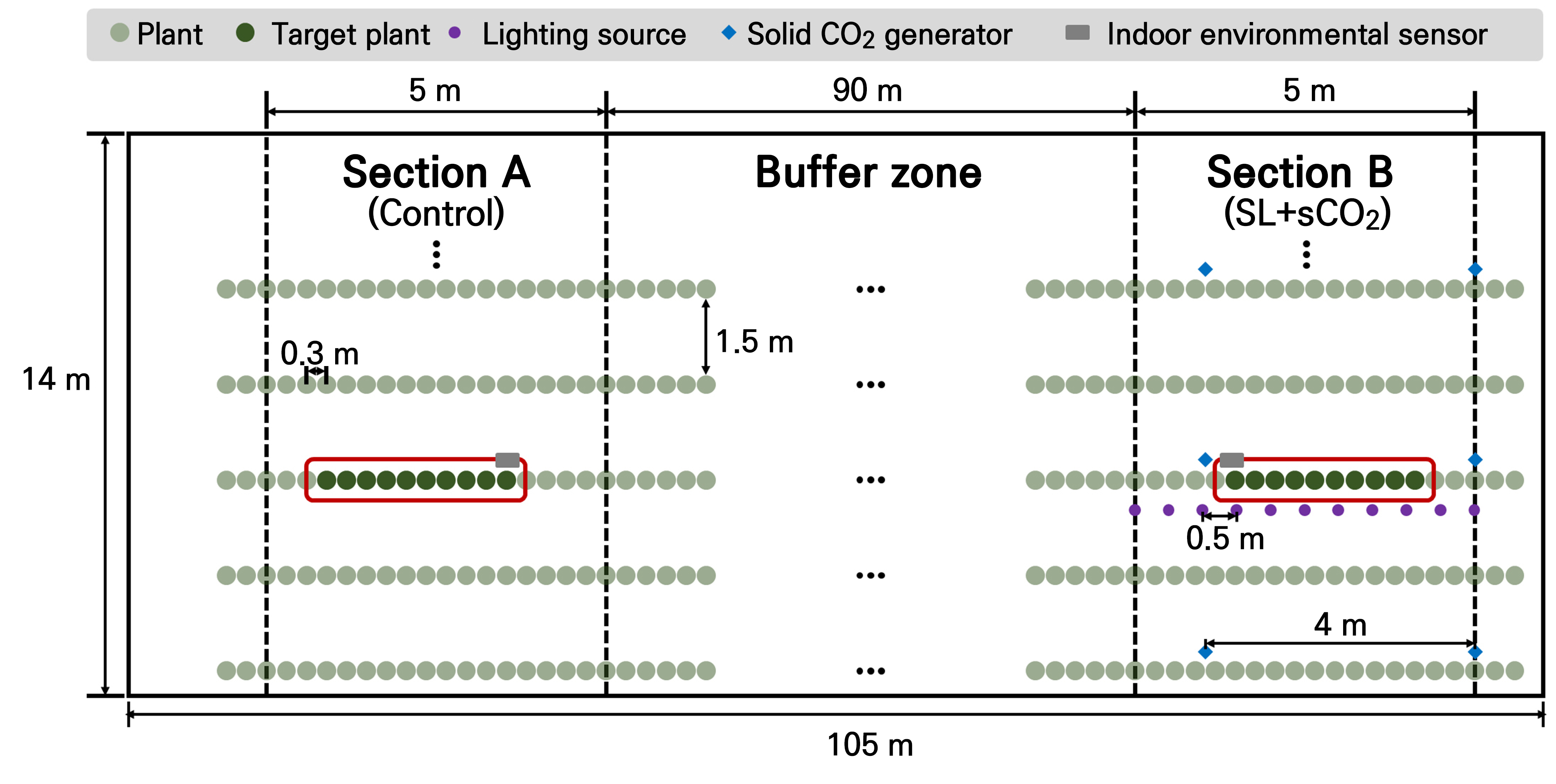
The greenhouse was divided into three sections: section A (5 m), a buffer zone (90 m), and section B (5 m). Section A served as the ambient control section. Treatments were assigned to physically separate sections to minimize CO2 diffusion and light interference between treatments. In section B, a combination of supplemental lighting and solid CO2 enrichment (SL+sCO2) was implemented for 42 days, starting from the onset of female flowering on January 23, 2024 and lasting until March 5, 2024. Supplemental lighting was provided for 4 h after sunrise, with the sunrise time adjusted weekly based on data from the Korea Astronomy and Space Science Institute (KASI 2024). RB LED light sources [red (660 nm):blue (450 nm) = 5:5, PU210, Bissol Co. Ltd., Seoul, Korea] were used for supplemental lighting and were installed at 0.5 m intervals. The light intensity was set to 150 µmol·m-2·s-1 at a height of 200 cm, which corresponds to the height at which the plants were trained and bent. Solid CO2 generators (Tansan Sol; Ecotech. Co., Ltd., Chilgok, Korea) were packaged in plastic bags (100 g each). These bags were installed 30 cm above the plant bending point at 4 m intervals and were refilled and reinstalled upon depletion. Indoor environmental sensors (aM-31; WISE Sensing Inc., Yongin, Korea) monitored the CO2 concentration in each section at 1-h intervals (Fig. 1).
Growth conditions
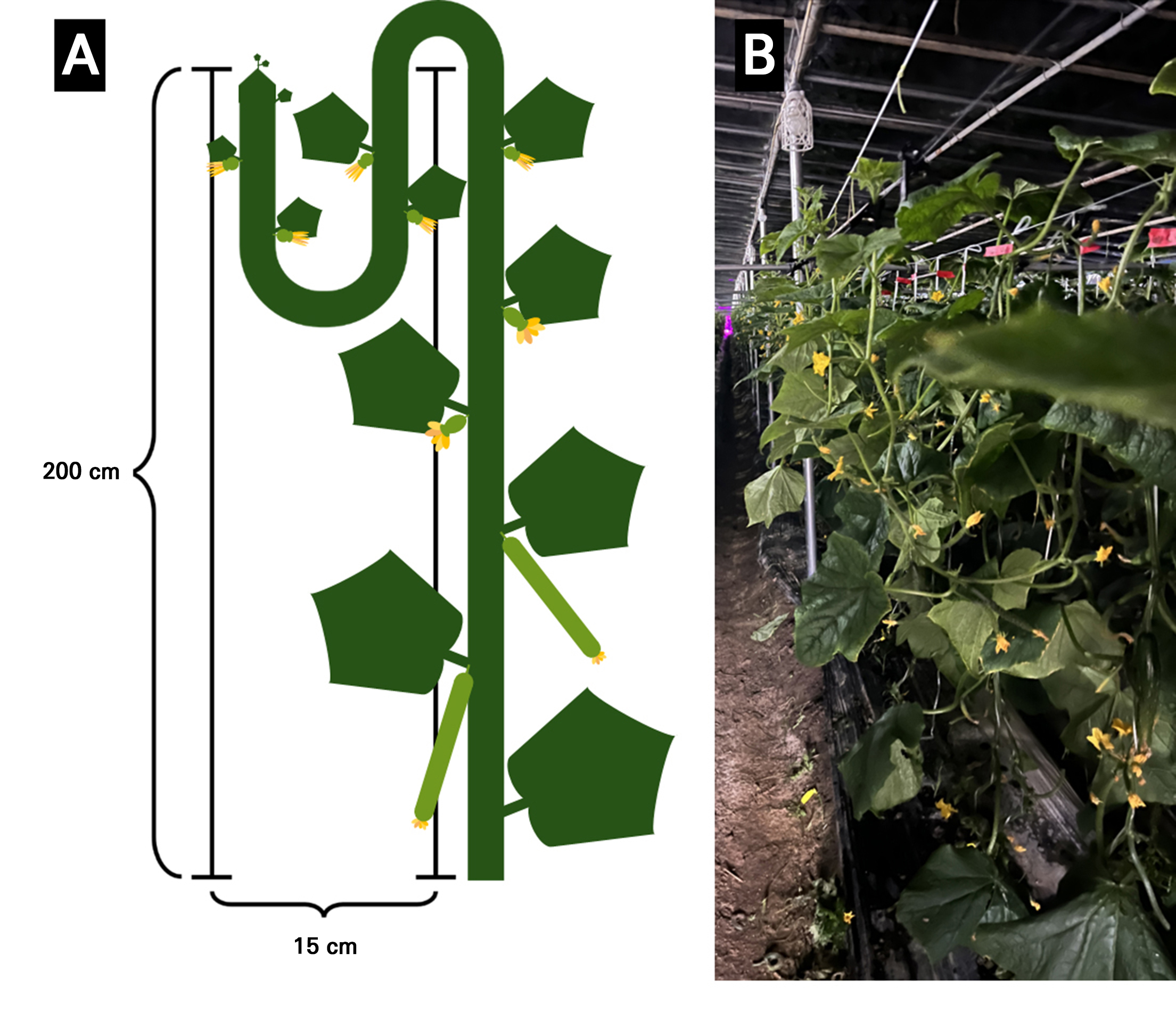
On December 21, 2023, the grafted seedlings were planted into soil ridges at a spacing of 40 cm. Drip irrigation was supplied for 20 min every two days. Starting eight days after transplanting, fertigation was applied biweekly using a commercial fertilizer (SOLUBLE 20-20-20, ASKO Co. Ltd., Icheon, Korea; 1 g·L-1) and a bioactivator (Biocat-15, Atlántica Agrícola S.A., Alicante, Spain; 2 mL·m-2). During the experimental period, a commercial fertilizer (Takicontrol 15-5-15-10, TAKI Chemical Co. Ltd., Kakogawa, Japan) at a rate of 29 g·m-2 and a calcium nitrate fertilizer at a rate of 20 g·m-2 were side-dressed along the sides of the ridges three times at 20-day intervals. The greenhouse temperature was maintained by heating when it fell below 18°C and ventilating when it reached 25°C. Environmental factors, in this case the temperature, relative humidity, light intensity, and CO2 concentration, were measured at 1-h intervals in each section (A and B) using indoor environmental sensors (aM-31, WISE Sensing Inc., Yongin, Korea) from January 23 to March 5, 2024. Crop management, including vine training, tendril removal, defoliation, and pest control, was performed. Vine training was conducted at a height of 200 cm (Fig. 2).
Measurement of growth and fruit characteristics
Beginning seven days after treatment initiation, growth and fruit characteristics were assessed at weekly intervals over the 42-day treatment period. Plant height was defined as the distance from the soil surface to the apical meristem. Leaf length and leaf width were determined from the largest fully expanded leaf on each plant. Fully developed leaves and nodes were counted visually. Using digital Vernier calipers (CD-20CPX; Mitutoyo Co. Ltd., Kawasaki, Japan), the stem diameter was recorded at a point 1 cm above the ground. SPAD was estimated with a portable chlorophyll meter (SPAD-502; Konica Minolta Inc., Tokyo, Japan) on the largest fully expanded mature leaves, and three measurements per plant were averaged. The number of female flowers that bloomed on each survey date was also recorded. Fruits were harvested upon reaching 27–30 cm in length and immediately assessed for quality. Length and width at the thickest cross-section were determined with digital Vernier calipers, and fresh weights were obtained on a precision electronic scale (EW220-3 NM; Kern & Sohn GmbH., Balingen, Germany). Dry weights were subsequently determined after oven-drying at 70°C for three days (Venticell-222; MMM Medcenter Einrichtungen GmbH., Planegg, Germany).
Economic analyses
The economic analysis followed the framework of Hwang et al. (2022), as applied in Koo et al. (2025). The analysis was based on the observed yield during the experimental harvest period and the corresponding average wholesale price. The wholesale price of cucumbers during the harvest window (January 30 to March 5, 2024) averaged 5,175 KRW per kg, based on market data from the Korea Agro-Fisheries and Food Trade Corporation (aT 2024). Operating costs consisted of the electricity cost for the 4-h daily LED operation (55.7 KRW·kWh-1) and the cost of the solid CO2 supply (150 bags at 1,870 KRW each). The income ratio was defined as the additional net income of SL+sCO2 relative to the gross income of the control, expressed as a percentage.
Statistical analyses
For the plant growth, flowering, and fruit quality measurements, an individual plant was considered the experimental unit, and ten biological replicates were used per treatment. To evaluate environmental homogeneity between the sections, daily mean values of the temperature, relative humidity, light intensity, and CO2 concentration were compared using a paired t-test, with the root mean square error (RMSE) calculated to quantify the magnitude of differences. Significant differences in plant growth and fruit quality between the control and SL+sCO2 were assessed using Student's t-test in SAS 9.4 (SAS Institute Inc., Cary, NC, USA). Graphs were generated with SigmaPlot 14.5 (Systat Software Inc., San Jose, CA, USA).
Results and Discussion
Changes in CO2 concentrations in the greenhouse
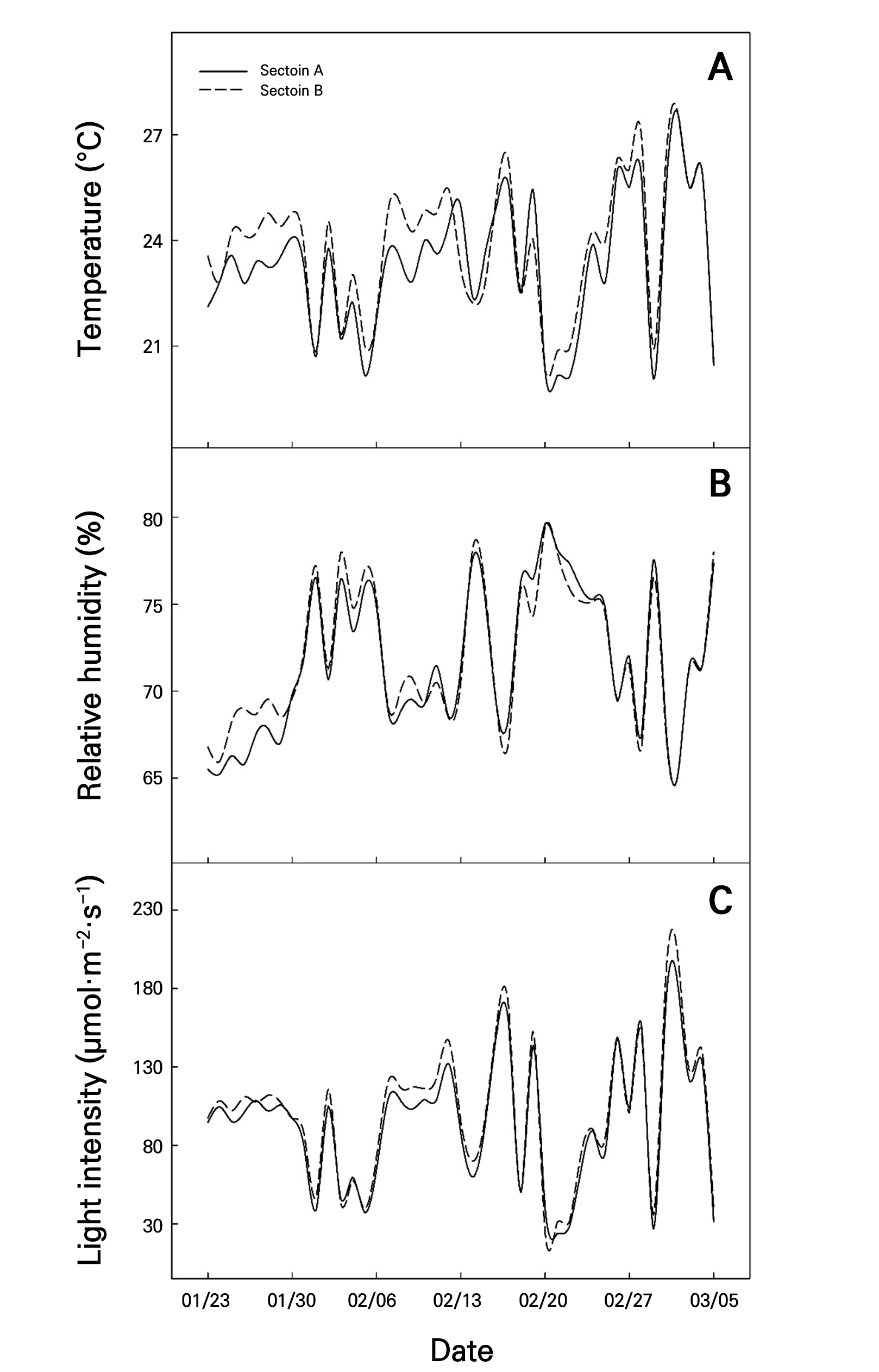
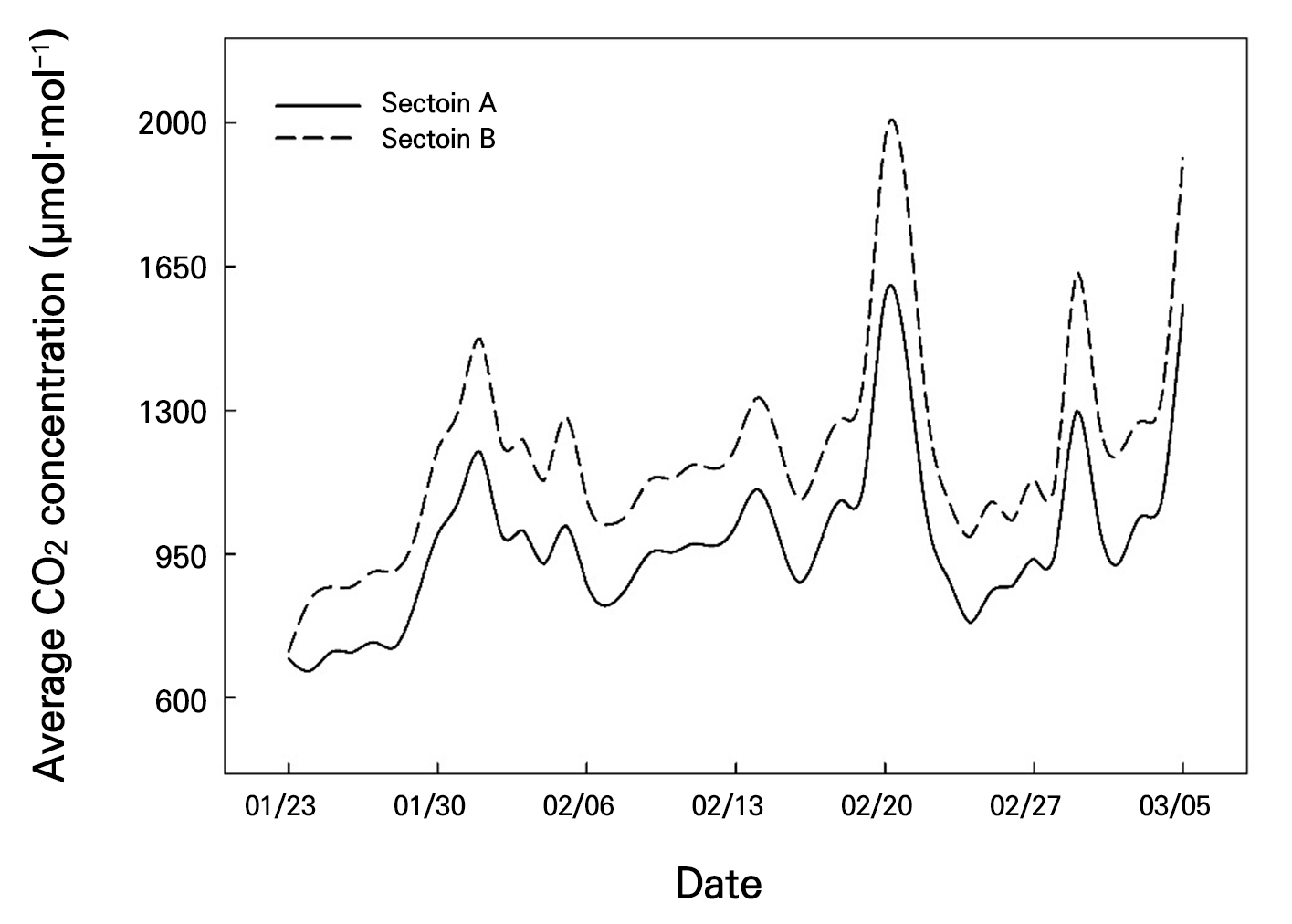
The daily average temperature, relative humidity, and light intensity in Section A were 23.2 ± 2°C, 71.9 ± 4%, and 94.1 ± 41 µmol·m-2·s-1, respectively (Fig. 3). In Section B, the daily average temperature, relative humidity, and natural daily light intensity were 23.8 ± 2°C, 72.0 ± 4%, and 100.1 ± 44 µmol·m-2·s-1, respectively. Although the mean values appeared comparable between sections, statistically significant differences were detected in the temperature (p < 0.001; RMSE = 1.04°C) and light intensity (p < 0.001; RMSE = 5.11 µmol·m-2·s-1), while relative humidity showed no significant difference (p = 0.056; RMSE = 1.13%). The RMSE of light intensity represented less than 3% of the observed range (30–230 µmol·m-2·s-1), indicating that the difference in solar radiation between the sections was minor. The temperature difference was likely attributable to the SW–NE orientation of the greenhouse rather than to the applied treatments; this spatial variation represents an inherent limitation of the single-greenhouse experimental design and should be considered when interpreting the results. Because solid CO2 generators release CO2 continuously without an on/off function, CO2 concentration data are presented as daily averages, as shown in Fig. 4. The CO2 concentration in Section A averaged 981 ± 203 µmol·mol-1, with corresponding minimum and maximum values of 666 and 1,575 µmol·mol-1 (Fig. 4). The CO2 concentration in Section B, with solid CO2 generators installed, averaged 1,199 ± 261 µmol·mol-1, with minimum and maximum values of 712 and 1,955 µmol·mol-1, respectively, maintaining CO2 concentrations that were on average 217 ± 67 µmol·mol-1 higher than those in Section A, a difference that was statistically significant (p < 0.001; RMSE = 227.60 µmol·mol-1), confirming the effectiveness of the solid CO2 generators in elevating greenhouse CO2 concentrations. Although Section A received no intentional CO2 enrichment, it maintained a relatively high CO2 concentration. Son et al. (2021) reported an ambient atmospheric CO2 concentration of approximately 400 µmol·mol-1, whereas Section A averaged 981 µmol·mol-1. Because the experiment was conducted in a commercial greenhouse, the source of this elevated baseline could not be identified, which represents a limitation when interpreting the absolute CO2 concentration of the control section. Nevertheless, the significantly higher CO2 concentration in Section B suggests that the solid CO2 generators contributed to further CO2 enrichment under commercial cucumber greenhouse conditions. Shin et al. (2014) reported that when 10–30 bags of solid CO2 generators were installed in a 600 m2 Korean melon greenhouse and covered with thermal blankets, the CO2 concentration increased by 239–645 µmol·mol-1. While in the present experiment, the increase was smaller, a similar increasing trend was observed, indicating that solid CO2 generators can effectively raise CO2 concentrations in cucumber cultivation greenhouses.
Enhancement of greenhouse cucumber growth as affected by the treatment
Plant height, the number of leaves, number of nodes, and the SPAD values were significantly higher in plants in the SL+sCO2 case compared to those under the control throughout the experiment (Fig. 5A, 5D, 5E, and 5G). Leaf length was significantly greater under SL+sCO2 at 61 days after transplanting (p ≤ 0.05); however, no consistent significant differences were observed over the experiment (Fig. 5B). Moreover, no significant differences were observed in the leaf width (Fig. 5C). Stem diameter was significantly higher in the SL+sCO2 case until 47 days after transplanting, with no significant differences thereafter (Fig. 5F). The combined use of supplemental lighting and solid CO2 generators effectively increased the greenhouse light intensity and CO2 concentrations, creating optimal conditions for photosynthesis (Leakey et al. 2009; Lopez and Runkle 2017; Kang et al. 2024). This improvement in most growth characteristics, except for the leaf length and width, aligns with numerous studies reporting that supplemental lighting enhances cucumber growth (Kwon et al. 2018; Kang et al. 2021; Wang et al. 2021; Yu et al. 2022). Interestingly, not all growth parameters responded uniformly to the treatment. Stem diameter showed a distinct pattern, exhibiting a statistically significant improvement in the early stages of treatment compared to the control but showing no significant differences thereafter (Fig. 5F). These results are consistent with those of earlier studies indicating that elevated CO2 concentrations in greenhouse cucumber cultivation promote initial growth but do not maintain significant differences over extended periods (Nederhoff 1994; Łaźny et al. 2024). The combined application of supplemental lighting and CO2 enrichment has been shown to lead to multiple significantly improved growth parameters in winter greenhouse cultivation (Fierro et al. 1994; Sánchez-Guerrero et al. 2005; Kim et al. 2025a). The results here indicate that simultaneously addressing both light and CO2 limitations promoted vegetative growth during winter. The statistically significant early growth improvements observed under the SL+sCO2 treatment may serve as an important foundation for stable fruit setting and continuous harvesting.
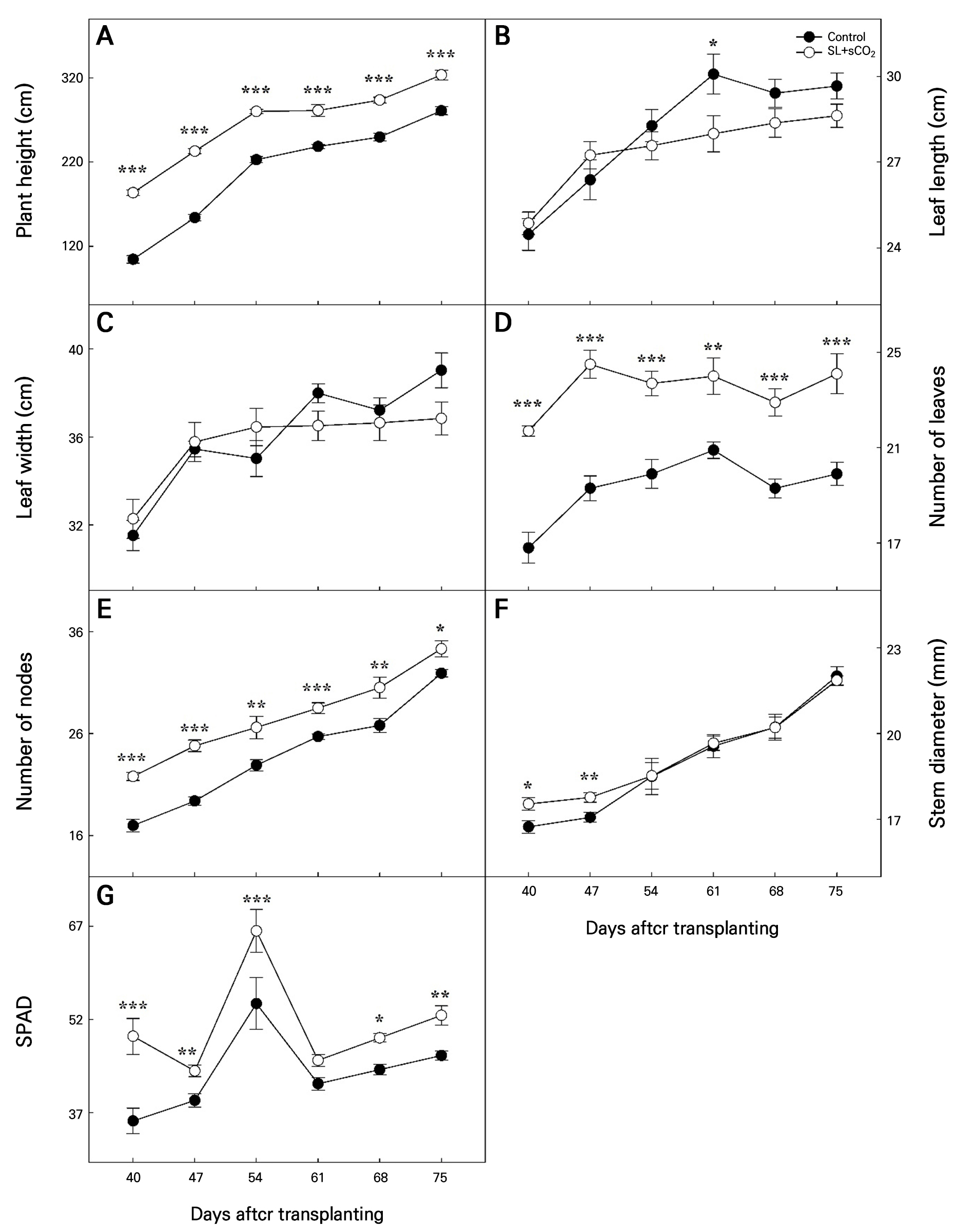
Fig. 5.
Changes in the growth characteristics of cucumber plants as affected by simultaneous supplemental lighting and CO2 enrichment using red and blue light-emitting diodes and solid CO2 generators, respectively (n = 10). Vertical bars represent standard errors. Asterisks indicate significant differences between the control and simultaneous supplemental lighting and solid CO2 generators (SL+sCO2) based on Student’s t-test; *, 25, and 25* indicate significance at p ≤ 0.05, 0.01, and 0.001, respectively.
Improvement in Yield and Quality with Supplemental Lighting and CO2 Enrichment
Fig. 6 shows the average number of female flowers per plant during the cultivation period. The number of female flowers was significantly higher under SL+sCO2 than in the control at 40, 47, and 75 days after transplanting, whereas it was significantly lower at 54 days after transplanting. No significant differences were observed at other time points. Fig. 7 shows the fruit characteristics. Because fruits were harvested when they reached approximately 30 cm in length, fruit length did not differ significantly between the treatments (Fig. 7A). In contrast, fruit width, fresh weight, and dry weight were significantly greater under SL+sCO2 than in the control (Fig. 7B–7D). Fig. 8 shows the average number of fruits per plant and the accumulated number of fruits (Fig. 8). The average number of fruits per plant was 12.2 in the control and 14.4 under SL+sCO2, with a significantly higher value observed under SL+sCO2 (p ≤ 0.01) (Fig. 8A). SL+sCO2 produced 22 additional fruits in total compared with the control, resulting in an 18% increase in the final accumulated fruit yield (Fig. 8B). As reported in previous studies, supplemental lighting and CO2 enrichment promoted assimilate accumulation, thereby improving the fruit quality and yield in cucumber in the present study as well (Marcelis 1996; Hogewoning et al. 2010; Koo et al. 2025). In addition, increased assimilate accumulation may promote fruit development and maturation after flowering, thereby shortening the period from flowering to harvest and ultimately contributing to greater yields (Hovi et al. 2004; Davis and Burns 2016; Ren et al. 2024). Enhanced vegetative growth resulting from increased assimilate accumulation may also spur certain features of reproductive development, such as the occurrence of female flowers (Gao et al. 2021). Supplemental lighting and CO2 enrichment promote photosynthesis in cucumber, enhancing the growth rate and enabling the formation of more nodes (Koo et al. 2025). As nodes are the sites at which flowering occurs, a greater number of nodes can lead to an increased number of female flowers, resulting in a higher yield (Ando et al. 2025). Similar results have been reported in greenhouse crops other than cucumber as well, including tomato, sweet pepper, and strawberry (Demers and Gosselin 2000; Dorais 2003; Hidaka et al. 2014; Pan et al. 2019). However, a temporary reduction or stagnation in the number of female flowers was observed in the control from 54 to 68 days after transplanting and in SL+sCO2 at 54 days after transplanting in this case. This pattern may be explained by differences in the stem growth rate between the treatments, which affected the timing of stem training. Because plants under SL+sCO2 reached the training height of 200 cm earlier than those in the control, stem training was conducted earlier, likely resulting in an earlier reduction in female flower formation.
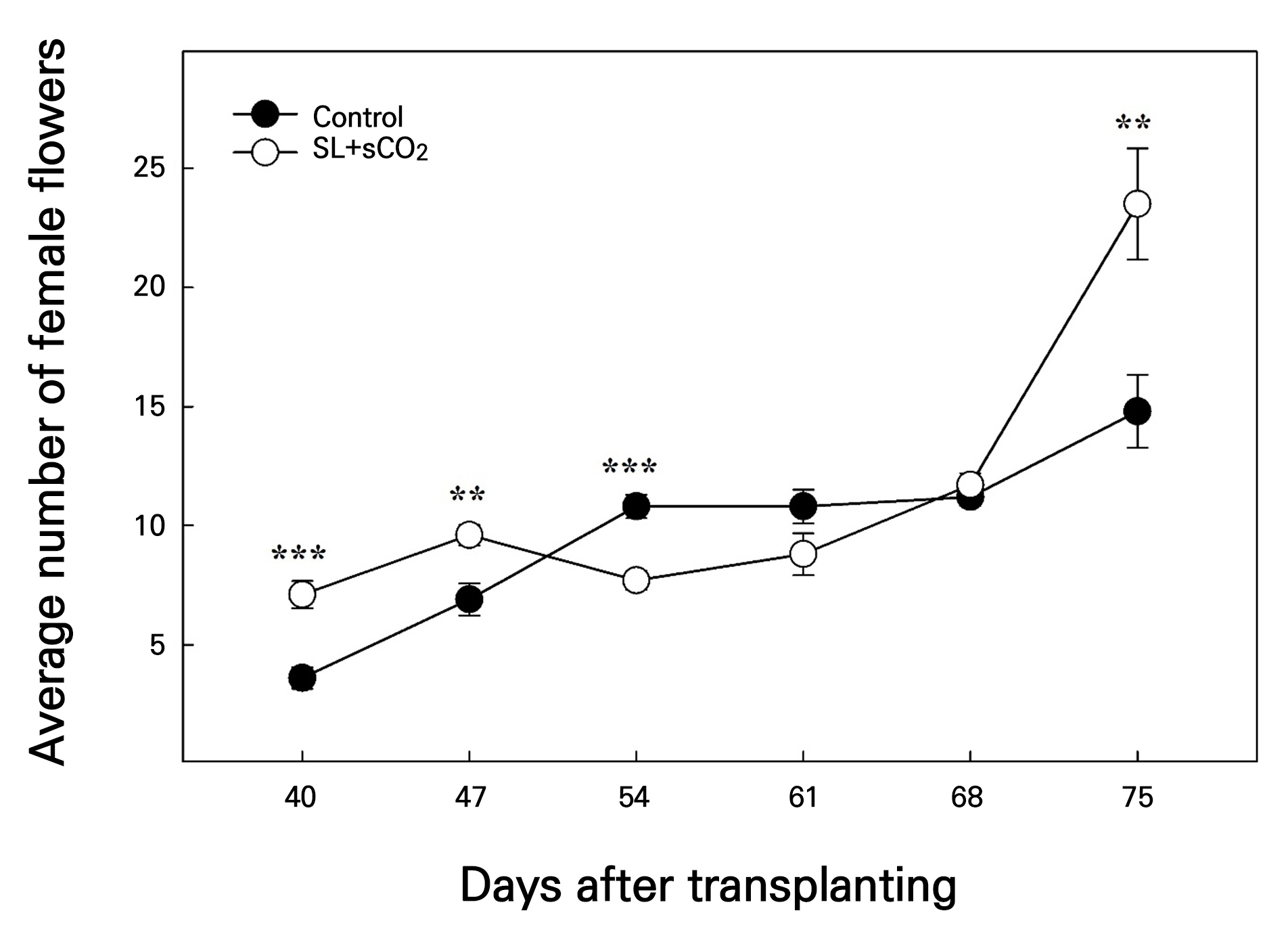
Fig. 6.
Changes in the average number of female flowers per plant as affected by simultaneous supplemental lighting and CO2 enrichment using red and blue light-emitting diodes and solid CO2 generators, respectively (n = 10). Vertical bars represent standard errors. Asterisks indicate significant differences between the control and simultaneous supplemental lighting and solid CO2 generators (SL+sCO2) based on Student’s t-test; 25 and 25* indicate significance at p ≤ 0.01, and 0.001, respectively.
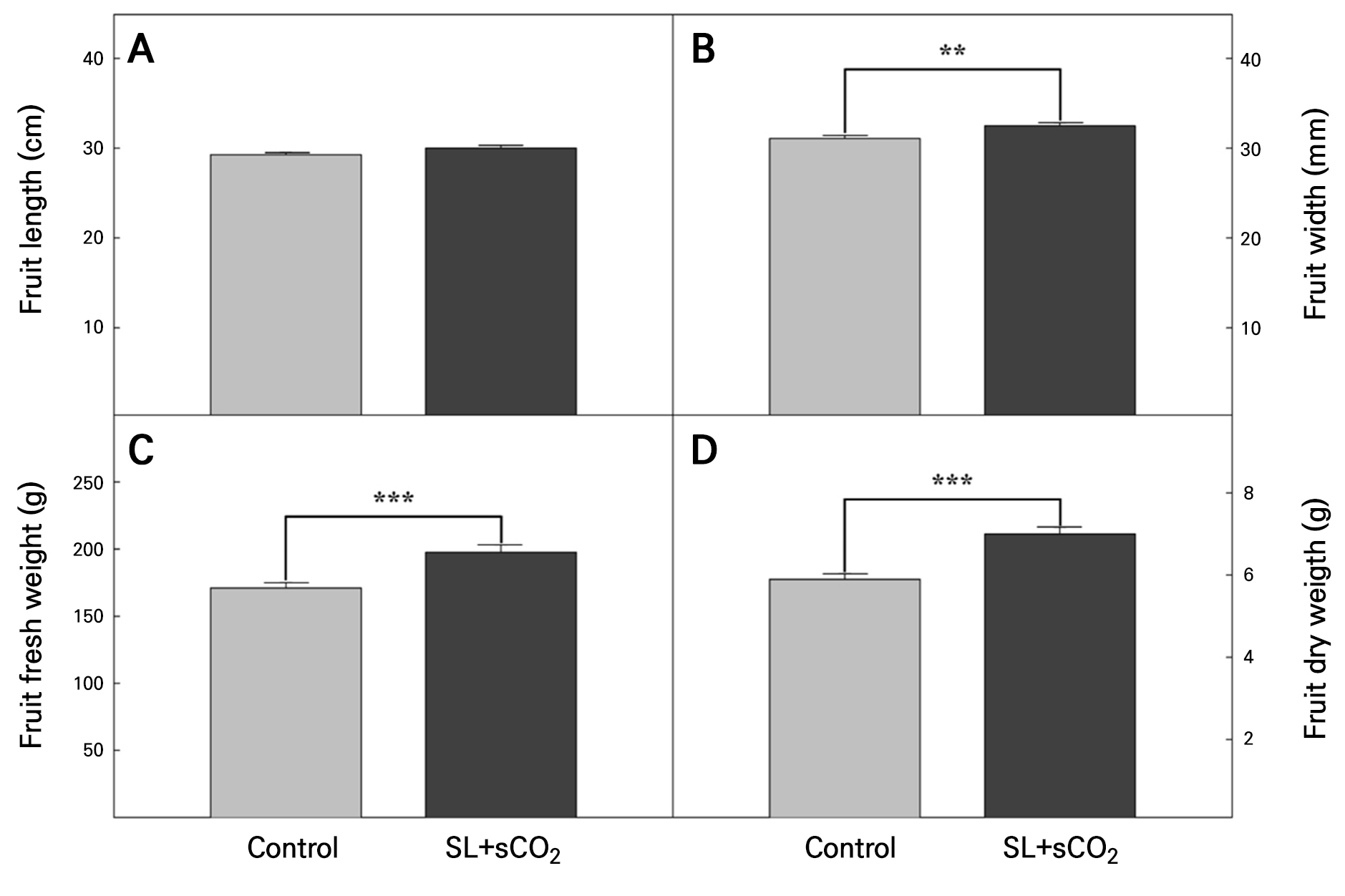
Fig. 7.
Fruit characteristics of cucumber plants as affected by simultaneous supplemental lighting and CO2 enrichment using red and blue light-emitting diodes and solid CO2 generators, respectively. Vertical bars represent standard errors. Asterisks indicate significant differences between the control and simultaneous supplemental lighting and solid CO2 generators (SL+sCO2) based on Student’s t-test; 25 and 25* indicate significance at p ≤ 0.01, and 0.001, respectively.
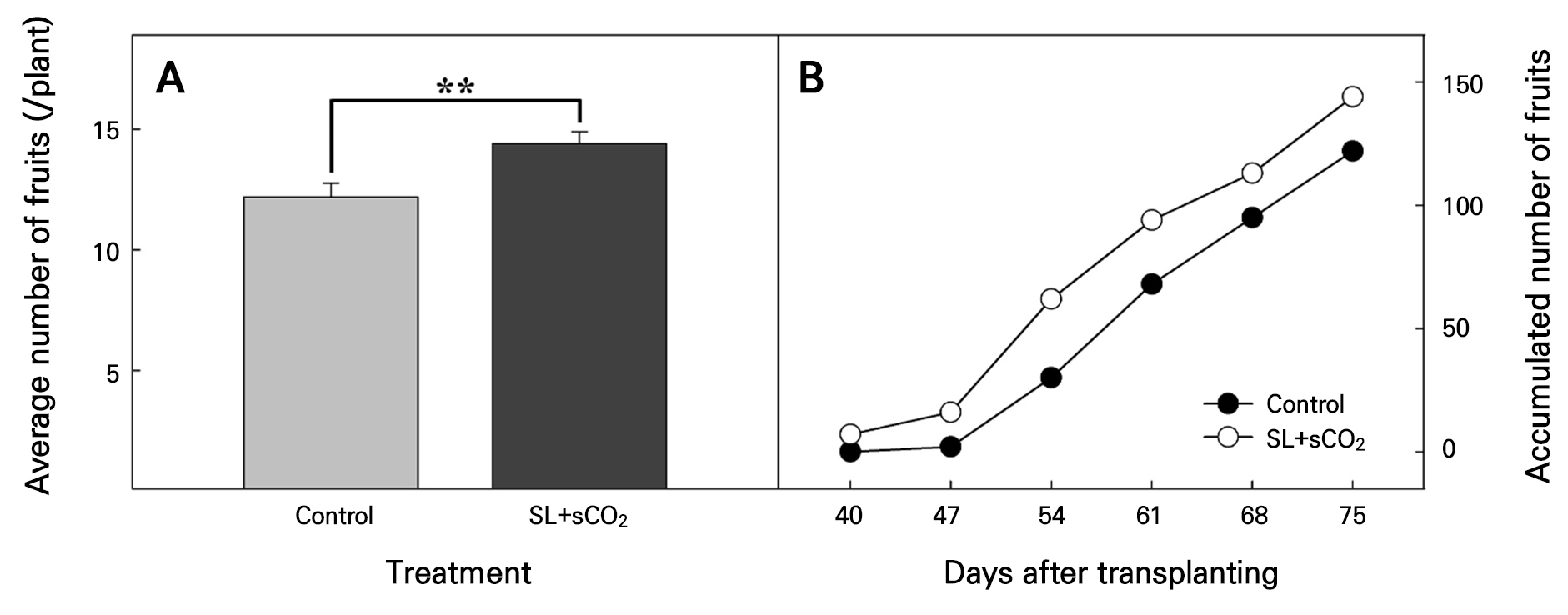
Fig. 8.
Average number of fruits per plant (A) and changes in the accumulated number of fruits (B) as affected by simultaneous supplemental lighting and CO2 enrichment using red and blue light-emitting diodes and solid CO2 generators, respectively (n = 10). Vertical bars represent standard errors. Asterisks indicate significant differences between the control and simultaneous supplemental lighting and solid CO2 generators (SL+sCO2) based on Student’s t-test; 25 indicates significance at p ≤ 0.01.
Economic analyses
The results of the economic analyses based on the yields harvested during the experimental period are presented in Table 1. The commercial yield of SL+sCO2 was 5,583.6 kg·10 a-1, which was 1,089.0 kg·10 a-1 higher than that of the control. Consequently, the gross income from the SL+sCO2 was 28,895,130 KRW·10 a-1, which was higher than that of the control. However, SL+sCO2 incurred an incremental cost of 839,160 KRW·10 a-1, including expenses for the supplemental lighting sources, solid CO2 generators, and the electricity cost. The net income from SL+sCO2 was 4,796,415 KRW·10 a-1 higher than that of the control, corresponding to an income ratio of 21%. These results indicate that the increased yield under SL+sCO2 offset the additional costs of supplemental lighting and solid CO2 generators under the price and cost conditions of the present winter field trial. Therefore, the integrated use of supplemental lighting and solid CO2 generators appears to represent a viable strategy for greenhouse cucumber producers to enhance productivity and profitability under winter low-radiation conditions.
Table 1.
Results of the economic analysis of the simultaneous supplemental lighting and solid CO2 generators during the experiment period
| Treatment |
Commercial yield (kg·10 a-1) |
Gross income (KRW·10 a-1) | Incremental cost (KRW·10 a-1) |
Net income (KRW·10 a-1) |
Income ratio (%) | ||
| Facilityz | Electricityy | Totalx | |||||
| Control | 4,494.6 | 23,259,555 | - | - | - | - | - |
| SL+sCO2w | 5,583.6 | 28,895,130 | 505,655 | 333,505 | 839,160 | 4,796,415 | 21 |
Conclusion
The simultaneous use of supplemental LED lighting and solid CO2 generators, a low-cost alternative to conventional liquefied CO2 systems, effectively addresses two key limitations of winter greenhouse production: insufficient light availability and low CO2 concentrations. This integrated approach significantly enhanced cucumber growth and fruit characteristics and increased the yield per plant compared with the control. These productivity gains translated into substantial economic benefits, with SL+sCO2 increasing the income ratio by 21% over the control, despite incremental costs. These results demonstrate that simultaneously addressing multiple environmental constraints is an effective strategy for improving winter crop productivity. This integrated cultivation strategy offers a practical solution for maintaining stable, high-yield production levels during winter. In the present study, we evaluated the combined effects of supplemental lighting and solid CO2 generators. Future studies employing factorial designs across multiple commercial greenhouses are needed to confirm the independent and interactive contributions of these two factors under commercial production conditions. Our findings provide valuable technical guidance for greenhouse operations seeking to overcome seasonal productivity constraints and maximize year-round profitability.
