

Introduction
Materials and Methods
Fruit materials and treatments
Storage conditions and gas composition analysis
Fruit quality evaluation
Gene expression analysis
Statistical analysis
Results and Discussion
Changes in O2, CO2, and ethylene concentrations surrounding the fruit during shelf life
Changes in temperature and relative humidity surrounding the fruit during shelf life
Changes in fruit weight loss and flesh firmness during shelf life
Changes in fruit peel color characteristics during shelf life
Changes in temperature and relative humidity surrounding the fruit during cold storage followed by shelf life
Changes in fruit weight loss and flesh firmness during cold storage followed by shelf life
Changes in fruit peel color characteristics during cold storage followed by shelf life
Conclusion
Introduction
Ethylene is a key plant hormone involved in fruit ripening and senescence and plays a major role in determining postharvest fruit quality (Jang et al. 2006; Lim et al. 2009). After harvest, ethylene produced either endogenously by the fruit or derived from external sources accelerates fruit softening and alters the texture of fruit, ultimately deteriorating the quality (Jang et al. 2006). Fruit sensitivity to ethylene varies among species and cultivars. Persimmon (Diospyros kaki Thunb.) fruit is particularly sensitive to ethylene and can undergo rapid softening even when exposed to low ethylene concentrations (Takata 1983; Krammes et al. 2005; Park and Lee 2005; Besada et al. 2010). Consequently, considerable efforts have been devoted to reducing ethylene production or removing accumulated ethylene during storage to maintain fruit quality and extend shelf life (Jang et al. 2006).
Sweet persimmon is a major fruit crop in Korea and is marketed both domestically and internationally (Moon et al. 2025). Its primary export markets include Southeast Asian countries such as the Philippines and Vietnam. To enhance competitiveness in these markets, extensive research has focused on cultivar improvement, cultivation practices, and postharvest management (Wijethunga et al. 2024; Moon et al. 2025; Shin et al. 2025). Among sweet persimmon cultivars, ‘Gampung’ has attracted considerable attention as a promising export cultivar owing to its high juice content and desirable crunchy texture (Ma et al. 2020).
Recently, rapid fruit softening during shipment to Vietnam has emerged as a major factor limiting the marketability of ‘Gampung’ persimmon (Moon et al. 2025). To address this issue, research conducted since 2023 has focused on developing postharvest techniques to maintain fruit quality throughout the distribution and marketing phases (Moon et al. 2025). Among the technologies evaluated, 1-methylcyclopropene (1-MCP) and modified atmosphere packaging (MAP) have shown significant potential, with their combined application being particularly effective in maintaining fruit flesh firmness and peel color. Although MAP effectively reduced fruit weight loss, it also resulted in ethylene accumulation within the package. Given the high ethylene sensitivity of persimmon fruit, such accumulation may accelerate fruit softening and ultimately reduce marketability. Therefore, additional strategies are needed to remove ethylene accumulated within MAP and improve postharvest quality maintenance further.
Ethylene absorbents (EAs) can delay fruit ripening and preserve postharvest quality by removing ethylene that accumulates within packages during storage. Previous studies have demonstrated that ethylene removal improves storability in various fruit crops, including banana (Chamara et al. 2000), kiwifruit (Pekmezci et al. 2004), and grape (Jang et al. 2006). Therefore, the objective of this study was to investigate the effects of incorporating 1-MCP and an EA into MAP on the storage quality and shelf life of ‘Gampung’ persimmon fruit.
Materials and Methods
Fruit materials and treatments
‘Gampung’ persimmon (Diospyros kaki Thunb.) fruits were harvested at commercial maturity on October 30, 2024, from an orchard located in Goheung (34°39'00.09"N, 127°25'29.75"E), Korea, and transported to the Fruit Science and Postharvest Laboratory at Gyeongsang National University, Jinju, Korea. Unblemished fruits with uniform size and peel color were selected for the experiment.
The selected fruits were assigned to four treatments: untreated control, MAP-alone, MAP combined with an EA (MAP + EA), and 1-MCP combined with MAP and EA (1-MCP + MAP + EA). Control fruits were packed in 5-kg cardboard boxes (Yeongjin Printing, Paju, Korea), with ten fruits per box. Fruits in the other treatments were individually packaged in film prior to being packed in boxes. A total of 260 fruits were used for each treatment.
For the MAP treatments, fruits were individually packaged in oriented polypropylene anti-condensation film (30 µm thickness; ForceTech, Paju, Korea) with an oxygen transmission rate of 80,000 cc·m-2·day-1. This film was selected based on previous simulated export studies of ‘Wonmi’ persimmon (Kumarihami et al. 2022). In the MAP + EA treatment, an EA (Lipmen Co. Ltd., Incheon, Korea) was placed inside each package. For the 1-MCP + MAP + EA treatment, fruits were exposed to 0.98 mg·L-1 1-MCP (SmartFreshTM; AgroFresh Inc., Philadelphia, PA, USA) at room temperature for 24 h prior to packaging with MAP and EA.
Storage conditions and gas composition analysis
Treated fruits were stored either at 20°C (shelf life condition) for 15 days or at 0°C (cold storage condition) for ten days followed by at 20°C (shelf life condition) for nine days, resulting in a total storage period of 19 days.
Temperature and relative humidity surrounding the fruit during storage were monitored using a temperature and relative humidity data logger (175-H1; Testo, Lenzkirch, Germany). The concentrations of O2, CO2, and ethylene in the atmosphere surrounding the fruit were measured using corresponding DAQ gas sensors (UA54-O2-21, UA52-CO2-20, and UA54-C2H4-100; Dekist, Yongin, Korea).
Fruit quality evaluation
During shelf life, fruit quality was evaluated six times: at harvest and at 3-day intervals during storage at 20°C. During cold storage followed by shelf life, fruit quality was evaluated five times: before storage, immediately after ten days of storage at 0°C, and at 3-day intervals during the subsequent shelf life period at 20°C.
Fruit quality attributes, in this case weight loss, flesh firmness, and peel color, were assessed using 20 fruits per treatment at each sampling date. Fruit weight was measured using a digital balance (Ba6.1k; Daihan Scientific, Wonju, Korea). Weight loss was calculated as the difference between the initial and final fruit weights during storage and is expressed as a percentage of the initial weight.
Fruit flesh firmness was measured using a rheometer (RHEO TEX SD-700; Sun Scientific Inc., Tokyo, Japan) equipped with an 8-mm-diameter cylindrical probe. The central region of a longitudinally cut fruit half was compressed to a depth of 3 mm at 120 mm·min-1, and the maximum force was recorded as flesh firmness in Newton (N) (Kumarihami et al. 2022).
Fruit peel color characteristics were measured using a colorimeter (CR-400; Minolta Co., Tokyo, Japan) and are expressed in terms of the CIELAB color space coordinates L*, a*, and b* (McGuire 1992). These values were used to calculate the hue angle, chroma, and color development index (CDI) according to the method devised by Scalisi et al. (2022). Color measurements were taken at the equatorial region of each fruit, midway between the calyx and stem ends.
Gene expression analysis
The expression levels of genes associated with ethylene biosynthesis, in this case 1-aminocyclopropane-1-carboxylic acid oxidase (ACO) and 1-aminocyclopropane-1-carboxylic acid synthase (ACS); ethylene signaling, including the ethylene responsive sensor (ERS) and ethylene receptor (ETR); and cell wall modification, specifically β-galactosidase (β-Gal), endo-1, 4-β-glucanase (EGase), pectinesterase (PE), polygalacturonase (PG), pectate lyase (PL), and xyloglucan endo-transglucosylase/hydrolase (XTH), were analyzed by quantitative polymerase chain reaction (qPCR) according to the methods published in work by Kumarihami et al. (2022).
For each treatment, four biological replicates were used, with each biological replicate consisting of pooled flesh samples from five fruits. The qPCR analysis was conducted with four technical replicates for each biological replicate. The means and standard errors of the gene expression levels were calculated based on the four biological replicates. Relative gene expression levels were calculated using the untreated control at day 0 of storage as the calibrator, with the corresponding expression level set to 1. The persimmon Actin gene, a housekeeping gene, was used as the internal reference gene for normalization. Relative expression levels were determined using the 2–△△CT method (Livak and Schmittgen 2001). The sequences of the gene-specific primers used for qPCR are listed in Table 1.
Table 1.
Primer sequences used for quantitative polymerase chain reaction in this study
| Gene | Primer sequence (5’ → 3’) |
| Housekeeping gene | |
| Actin | F: TTGGAGCAGAGAGATTCCGC R: TTGCTCATCCGGTCAGCAAT |
| Ethylene biosynthesis- and signaling-related genes | |
| ACO | F: TGGCAATGATGCTGTTATCTATC R: CGAACTATTACAAATAACATGTGTC |
| ACS | F: AGAATCCGGACGTTCGTGGATGA R: AAGCATAGGGGAGTGAGGCGACAAC |
| ERS | F: GCGGATCTCATTGGACATAAGC R; GAGCTTAAGCTTACAGGCACAC |
| ETR | F: AGATGCCTGCAGATTGGCATGA R: GCAAGGCTGTGTTCACCATGGC |
| Cell-wall-modification-related genes | |
| β-Gal | F: TACCAAACTTACCGGCTTGG R: TTAGCCCCCTCTACCTTCGT |
| EGase | F: TCATGATATTGAACACCTCTGG R: CAACACTTCAACAGCCCTACA |
| PE | F: ATTACATCGATTGTGGGTTTTG R: TGCATGCATATTTACCATCAA |
| PG | F: GCCCCATTGTCCTTGAATCAGAGA R: AAATGCACCACACTACGCTT |
| PL | F: CTTTGAATTTTCCCCGGCCC R: TGCTATCTCGGGGCCAAAAG |
| XTH | F: ACGCCAAGTTCTGCGACAC R: GGGTATCGCTTCCTGTCG |
Primer sequences were adapted from Kumarihami et al. (2022).
ACO, 1-aminocyclopropane-1-carboxylic acid oxidase; ACS, 1-aminocyclopropane-1-carboxylic acid synthase; ERS, ethylene responsive sensor; ETR, ethylene receptor; β-Gal, β-galactosidase; EGase, endo-1, 4-β-glucanase; PE, pectinesterase; PG, polygalacturonase; PL, pectate lyase; XTH, xyloglucan endo-transglucosylase/hydrolase.
Statistical analysis
Statistical analyses were performed using JMP Pro 17 (JMP Statistical Discovery LLC, Cary, NC, USA). Differences among treatment means were determined using Tukey’s honestly significant difference test at p < 0.05.
Results and Discussion
Changes in O2, CO2, and ethylene concentrations surrounding the fruit during shelf life
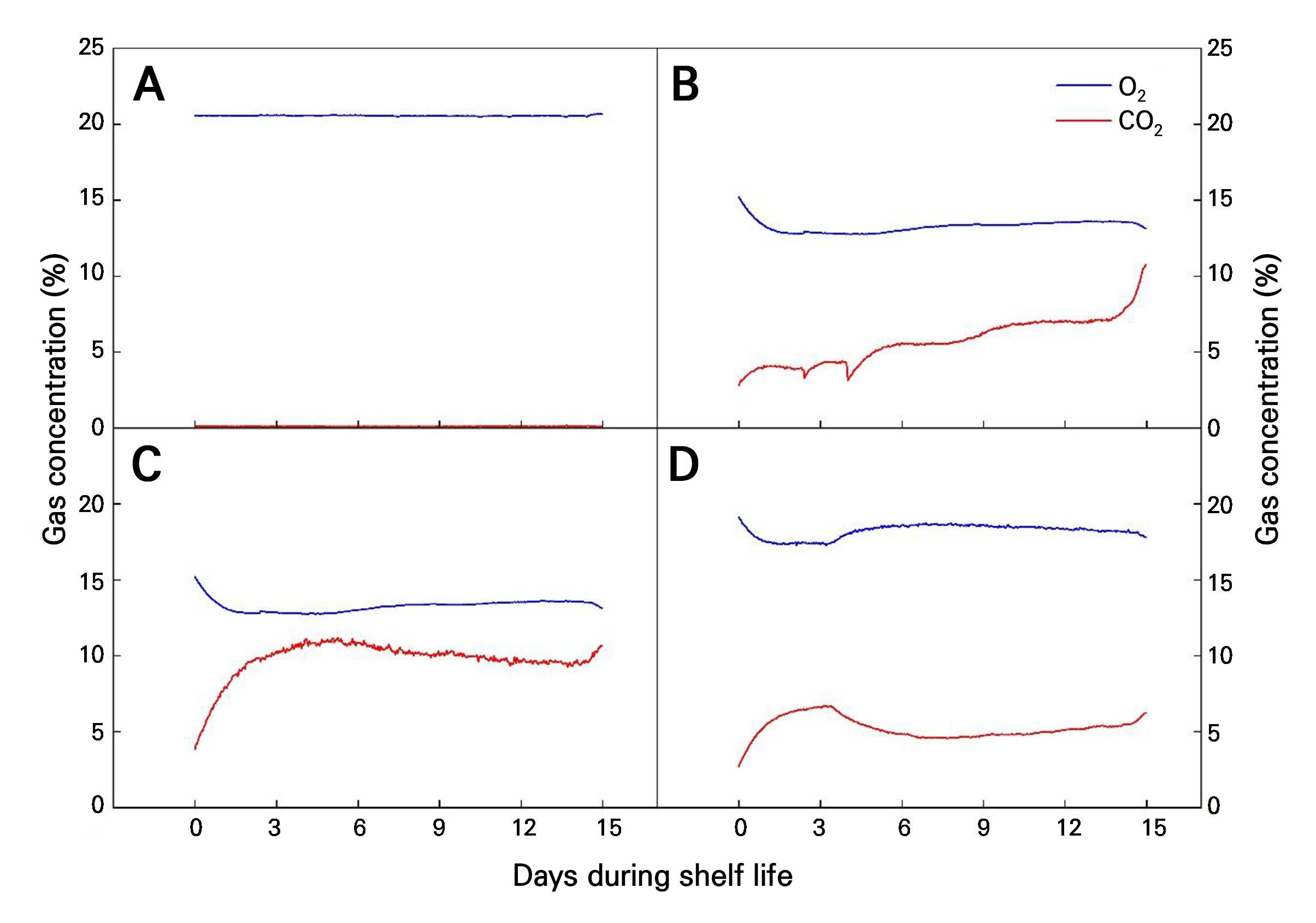
Changes in O2, CO2, and ethylene concentrations surrounding the fruit were monitored during shelf life storage at 20°C using DAQ gas sensors (Figs. 1 and 2). Oxygen and carbon dioxide concentrations varied according to the MAP-based treatments (Fig. 1). MAP modifies the package atmosphere by restricting gas exchange through the packaging film and altering fruit respiration (Li et al. 2017; Roh et al. 2023). Accordingly, the three MAP-based treatments (MAP, MAP + EA, and 1-MCP + MAP + EA) maintained lower O2 concentrations (12.8–19.0%) and higher CO2 concentrations (2.7–11.2%) than the control, which remained at approximately 21% O2 and 0.1% CO2 (Fig. 1). Among the MAP-based treatments, the 1-MCP + MAP + EA treatment maintained higher O2 concentrations (18–19%) and lower CO2 concentrations (4–7%) than the MAP-alone (13–14% O2 and 4–8% CO2) and MAP + EA (13–14% O2 and 6–11% CO2) treatments. These results confirm the inhibitory effect of 1-MCP on fruit respiration and are consistent with previous findings in relation to 1-MCP-treated ‘Mopan’ persimmon fruit (Kou et al. 2020).
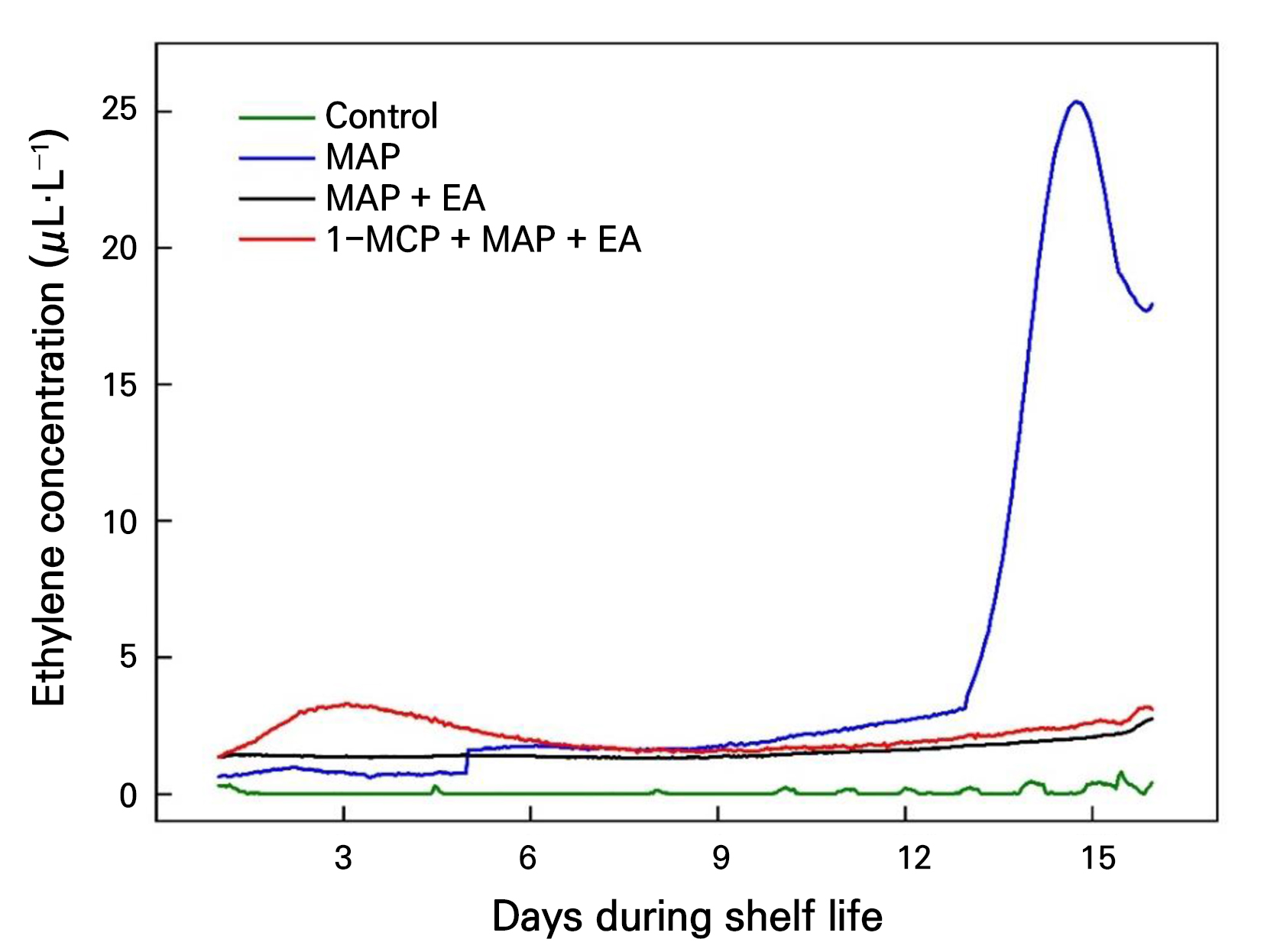
The ethylene concentration was not determined in the control during shelf life because most ethylene produced by fruits diffused into the surrounding atmosphere (Fig. 2). In contrast, ethylene accumulation was observed in all MAP-based treatments, with the highest concentration recorded in the MAP-alone treatment (25 µL·kg-1·h-1). In the two treatments containing EA (MAP + EA and 1-MCP + MAP + EA), ethylene concentrations remained below 3.3 µL·kg-1·h-1 throughout the storage period, substantially lower than those observed in the MAP-alone treatment. These results indicate that EA effectively removed ethylene accumulated within the package.
The relative expression levels of ethylene biosynthesis- and signaling-related genes differed significantly among the treatments (Table 2). Although no ethylene accumulation was detected in the control (Fig. 2), the expression of all analyzed genes increased significantly after six days of shelf life at 20°C (Table 2). Relative to day 0, the expression levels of ACO, ACS, ERS, and ETR increased by 5.8-, 5.6-, 3.6-, and 4.9-fold, respectively. A similar pattern was observed in the MAP-alone treatment. Likewise, despite maintaining a relatively low ethylene concentration (Fig. 2), the MAP + EA treatment showed no significant differences in gene expression compared to either the control or the MAP-alone treatment (Table 2). In contrast, the 1-MCP + MAP + EA treatment effectively suppressed both ethylene accumulation (Fig. 2) and the expression of ethylene biosynthesis- and signaling-related genes (Table 2).
Table 2.
Effects of modified atmosphere packaging (MAP), 1-methylcyclopropene (1-MCP), and an ethylene absorbent (EA) on the relative expression of ethylene biosynthesis- and signaling-related genes in ‘Gampung’ persimmon fruit after six days of shelf life storage at 20°C
| Treatment | Relative expression | |||
| ACO | ACS | ERS | ETR | |
| Control | 5.8 ± 1.1 a | 5.6 ± 0.7 a | 3.6 ± 0.5 a | 4.9 ± 1.0 a |
| MAP | 4.9 ± 1.1 a | 5.0 ± 1.0 ab | 3.5 ± 0.8 a | 4.7 ± 1.1 a |
| MAP + EA | 4.0 ± 1.0 a | 5.2 ± 0.6 a | 3.8 ± 0.4 a | 4.8 ±0.6 a |
| 1-MCP + MAP + EA | 2.2 ± 0.2 b | 3.2 ± 0.5 b | 2.0 ± 0.2 b | 1.2 ± 0.1 b |
EAs effectively remove external ethylene from storage atmospheres but have limited capacity to suppress ethylene produced endogenously within the fruit (Ahn et al. 2000; Jang et al. 2006). In contrast, 1-MCP inhibits ethylene perception, thereby suppressing ethylene biosynthesis, ethylene-related gene expression, and associated enzyme activities (Tian et al. 2000; He et al. 2020; Kumarihami et al. 2022). Consistent with the present findings, previous studies of ‘Gampung’ (Moon et al. 2025) and ‘Wonmi’ (Kumarihami et al. 2022) persimmons reported that 1-MCP effectively suppressed ethylene-related gene expression and contributed to the maintenance of fruit quality during storage.
Changes in temperature and relative humidity surrounding the fruit during shelf life
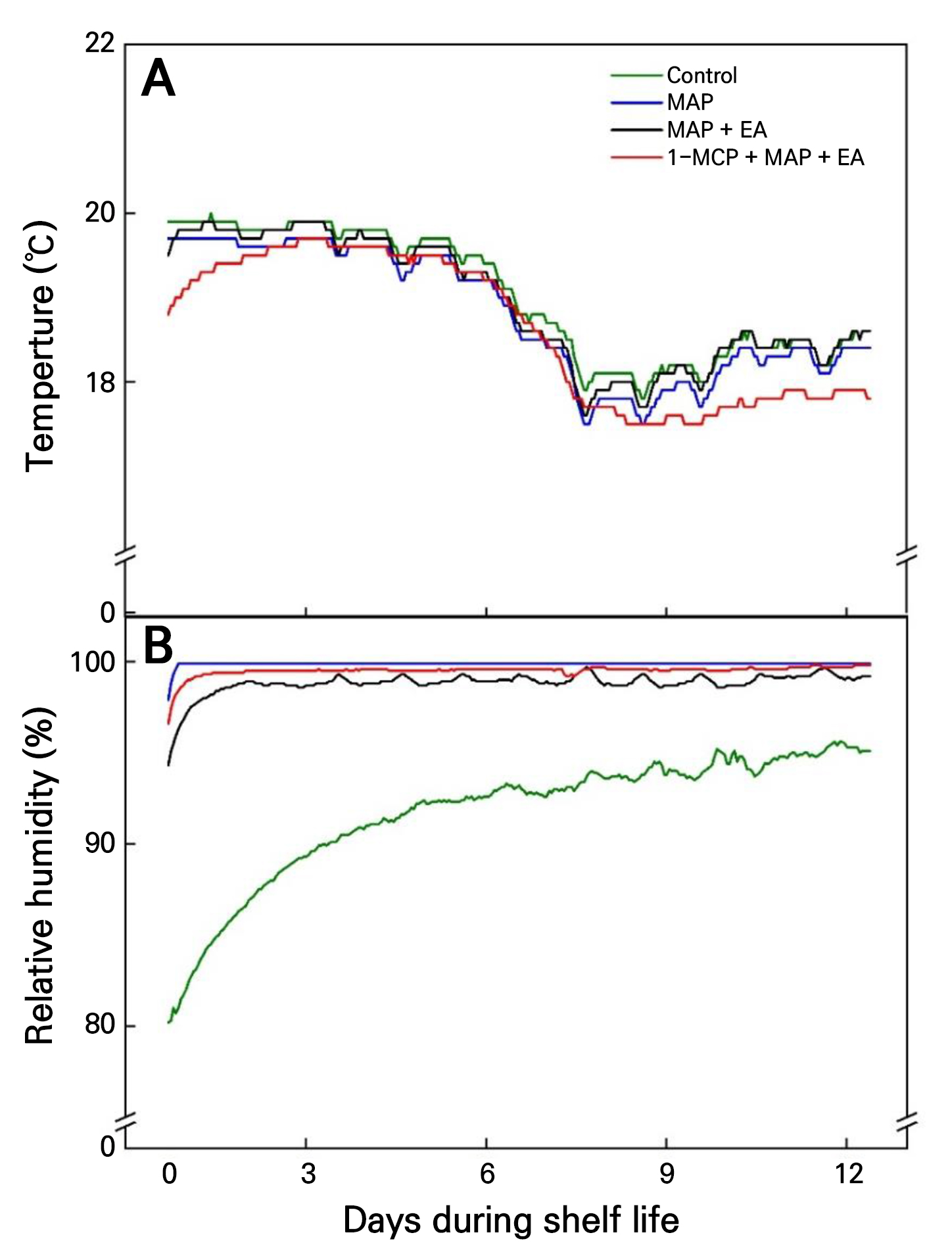
During shelf life storage, the temperature surrounding the fruit remained stable at approximately 18-20°C, and the temperature did not differ among the treatments (Fig. 3A). In contrast, the relative humidity differed markedly between the control and MAP-based treatments (Fig. 3B). In the control, the relative humidity gradually increased from 80% to 95% over the storage period. However, all three MAP-based treatments maintained consistently high relative humidity levels of approximately 99% throughout the storage period. These results indicate that MAP effectively maintained a high-humidity environment surrounding the fruit throughout storage.
Changes in fruit weight loss and flesh firmness during shelf life
Fruit weight loss increased rapidly in the control, which was exposed to relatively lower levels of humidity, resulting in substantial moisture loss during shelf life (Fig. 4A). Weight loss in the control reached 1.8% after 15 days of shelf life at 20°C, whereas all three MAP-based treatments effectively limited weight loss to below 0.3%. Postharvest fruits continuously lose fresh weight through respiration and transpiration. Because fresh weight is closely associated with fruit quality, excessive weight loss can lead to wilting and consequently a reduction in overall quality and marketability. Similarly, previous studies have shown that MAP effectively reduces fresh weight loss in persimmon (Kumarihami et al. 2022; Moon et al. 2025; Shin et al. 2025), as well as in pomegranate (Sudhakar Rao and Shivashankara 2018) and strawberry (Paulsen et al. 2024). The reduced weight loss observed in the present study can be attributed to the high-humidity environment maintained within the MAP, which minimized transpiration and moisture loss.
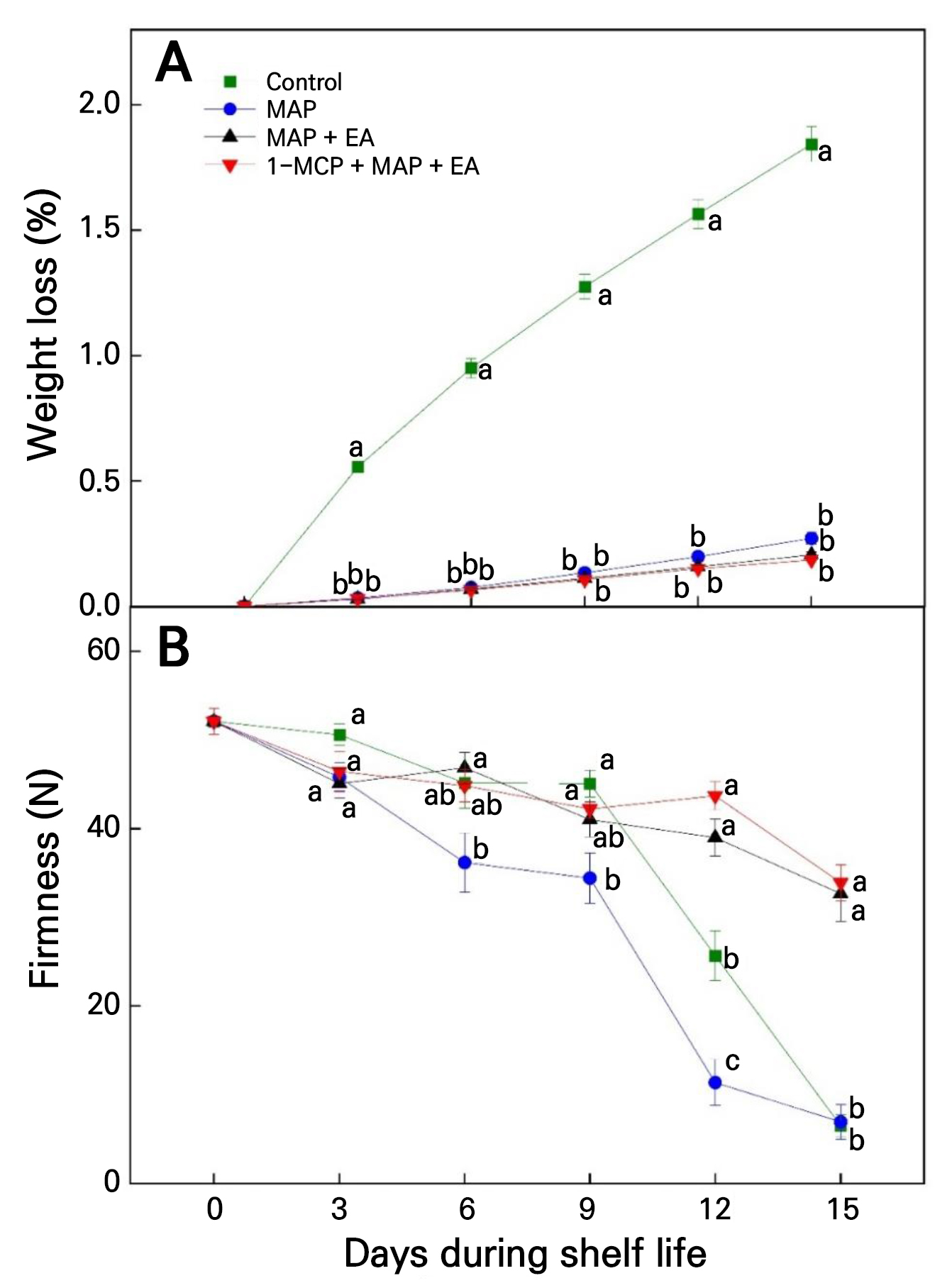
Fig. 4.
Effects of modified atmosphere packaging (MAP), 1-methylcyclopropene (1-MCP), and an ethylene absorbent (EA) on (A) the weight loss and (B) flesh firmness in ‘Gampung’ persimmon fruit during shelf life at 20°C. Vertical bars represent the standard errors of the means. Different letters within each storage day indicate significant differences among the treatments according to Tukey’s honestly significant difference test at p < 0.05.
Fruit flesh firmness declined progressively during shelf life (Fig. 4B). However, the rate of softening varied among the treatments. The control and MAP-alone treatment exhibited rapid softening, with firmness declining to below 7 N after 15 days at 20°C. In contrast, the MAP + EA and 1-MCP + MAP + EA treatments showed a substantially slower decline in firmness, maintaining values above 30 N throughout the same storage period. Firmness is an important quality attribute that directly influences fruit storability and consumer preference. During ripening, cell-wall-degrading enzymes promote fruit softening by disassembling cell wall polysaccharides and the middle lamella (Brummell and Harpster 2001; Kumarihami et al. 2022).
Consistent with the observed differences in firmness (Fig. 4B), the control and MAP-alone treatment exhibited high expression levels of genes involved in cell-wall modifications (Table 3), Relative to day 0, the expression levels of these genes at six days of shelf life at 20°C increased by 9.1–11.7-fold for β-Gal, 1.3–1.5-fold for EGase, 2.1–2.2-fold for PE, 11.7–16.9-fold for PG, 2.5–2.8-fold for PL, and 1.7-fold for XTH. Although the MAP + EA and 1-MCP + MAP + EA treatments effectively maintained fruit firmness (Fig. 4B), their gene expression patterns differed markedly. The MAP + EA treatment exhibited expression levels of genes related to cell-wall modifications comparable to those of the control and the MAP-alone treatment (Table 3). In contrast, the 1-MCP + MAP + EA treatment markedly suppressed the expression of these genes (Table 3).
Table 3.
Effects of modified atmosphere packaging (MAP), 1-methylcyclopropene (1-MCP), and an ethylene absorbent (EA) on the relative expression of cell wall modification-related genes in ‘Gampung’ persimmon fruit after six days of shelf life storage at 20°C
| Treatment | Relative expression | |||||
| β-Gal | EGase | PE | PG | PL | XTH | |
| Control | 9.1 ± 2.5 ab | 1.3 ± 0.3 b | 2.1 ± 0.3 ab | 16.9 ± 4.7 a | 2.8 ± 0.8 a | 1.7 ± 0.3 ab |
| MAP | 11.7 ± 3.7 a | 1.5 ± 0.3 a | 2.2 ± 0.5 a | 11.7 ± 2.4 a | 2.5 ± 0.8 ab | 1.7 ± 0.6 ab |
| MAP + EA | 9.5 ± 1.7 ab | 1.3 ± 0.2 b | 2.2 ± 0.4 a | 14.6 ± 3.2 a | 2.0 ± 0.3 ab | 2.6 ± 0.4 a |
| 1-MCP + MAP + EA | 6.1 ± 0.9 b | 0.8 ± 0.1 c | 1.4 ± 0.1 b | 4.4 ± 0.4 b | 1.5 ± 0.1 b | 0.8 ± 0.1 b |
Changes in fruit peel color characteristics during shelf life
Fruit peel color characteristics changed progressively during shelf life, as indicated by decreases in L*, b*, the hue angle, and the chroma values, and increases in a* and the CDI values (Fig. 5). The control and MAP-alone treatment exhibited rapid peel color changes, whereas the MAP + EA and 1-MCP + MAP + EA treatments showed only minor changes. These differences were also visually apparent (data not shown). Most fruits maintained their initial appearance for up to nine days of shelf life storage at 20°C; however, from day 12 onward, peel color changes became visually evident in the control and MAP-alone treatment.
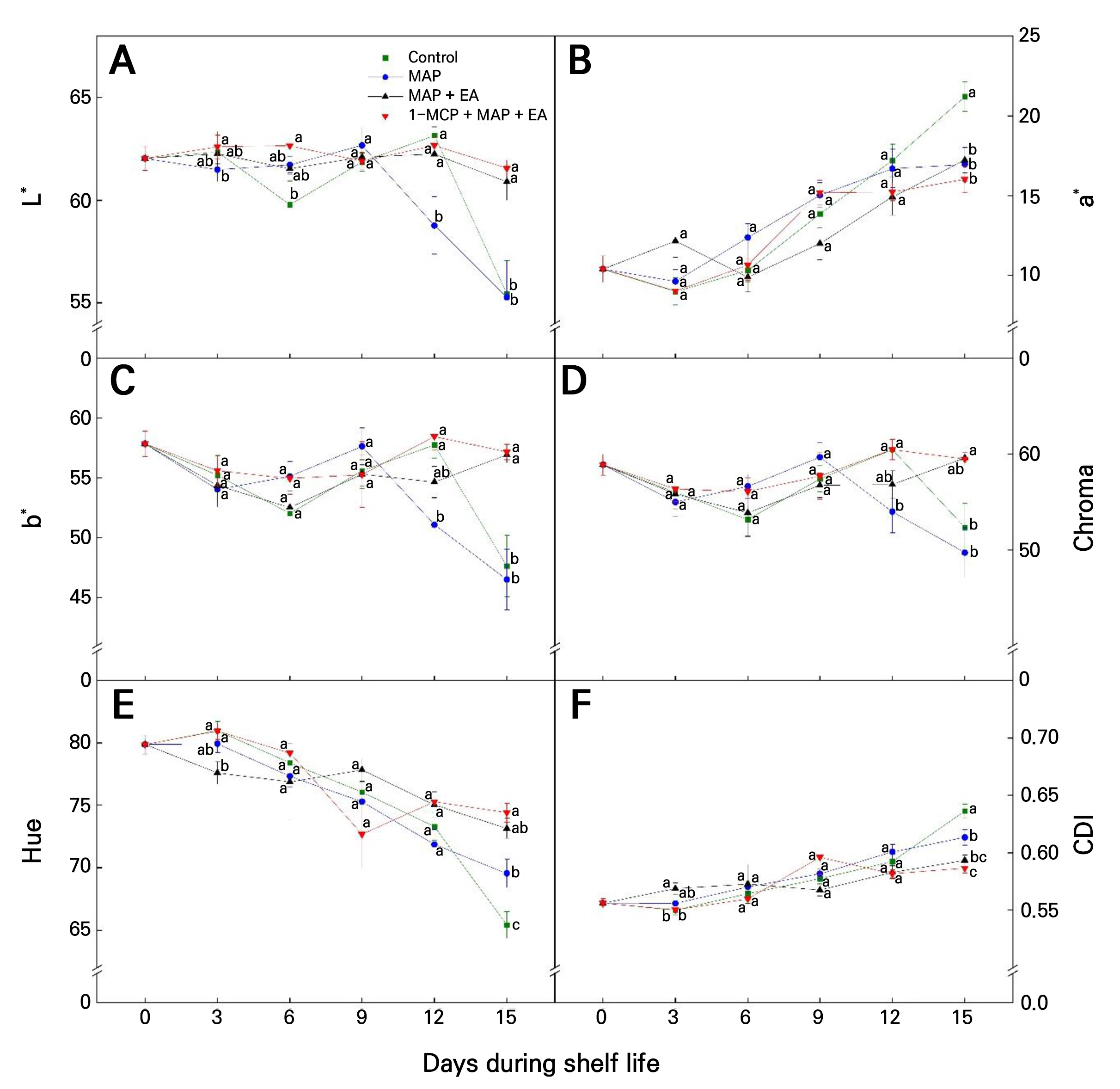
Fig. 5.
Effects of modified atmosphere packaging (MAP), 1-methylcyclopropene (1-MCP), and an ethylene absorbent (EA) on peel color characteristics of (A) L*, (B) a*, (C) b*, (D) chroma, (E) hue angle, and (F) color development index (CDI) in ‘Gampung’ persimmon fruit during shelf life at 20°C. Vertical bars represent the standard errors of the means. Different letters within each storage day indicate significant differences among the treatments according to Tukey’s honestly significant difference test at p < 0.05.
Ethylene is known to accelerate peel color development during fruit ripening by promoting chlorophyll degradation and the accumulation of carotenoids and anthocyanins (Saltveit 1999). In the present study, the accelerated peel color changes observed in the control and MAP-alone treatment (Fig. 5) were likely associated with exposure to higher concentrations of ethylene accumulated within the package. In contrast, the MAP + EA and 1-MCP + MAP + EA treatments effectively reduced ethylene exposure, thereby delaying ethylene-induced peel color development and maintaining the original fruit appearance throughout the shelf life storage period.
Changes in temperature and relative humidity surrounding the fruit during cold storage followed by shelf life
To simulate the export process to Vietnam, fruits were stored at 0°C (cold storage condition) for ten days, followed by storage at 20°C (shelf life condition) for nine days. Throughout both storage periods, the temperature surrounding the fruit remained stable at approximately 0°C and 20°C, respectively, with no significant differences among the treatments (Fig. 6A). In contrast, the relative humidity rate varied depending on the application of MAP (Fig. 6B). In the control, relative humidity increased from 70% to 90% during cold storage and remained at approximately 90% throughout the subsequent shelf life period. In contrast, all three MAP-based treatments maintained consistently high relative humidity of approximately 99% throughout the entire storage period, regardless of the storage temperature.
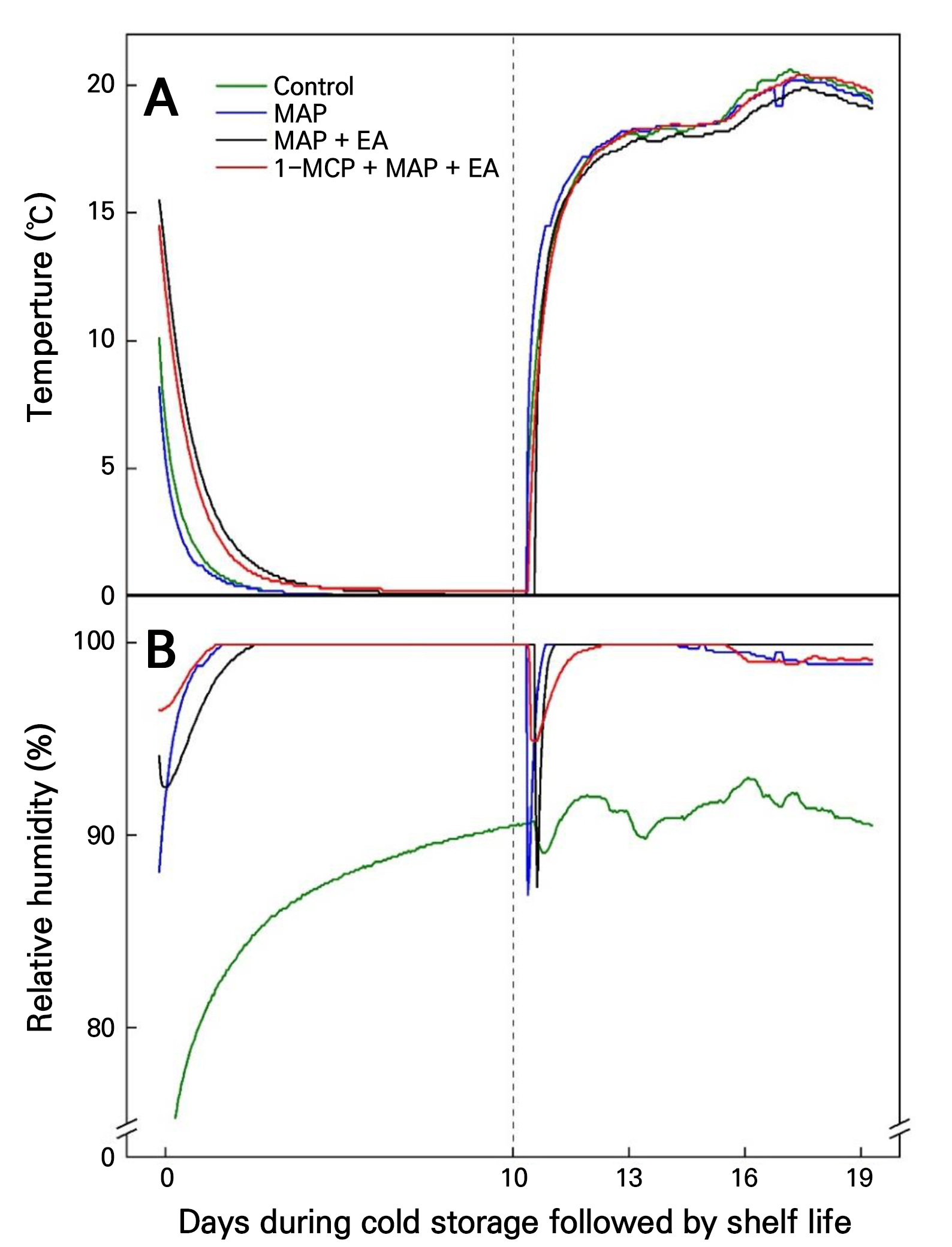
Fig. 6.
Effects of modified atmosphere packaging (MAP), 1-methylcyclopropene (1-MCP), and an ethylene absorbent (EA) on (A) the temperature and (B) relative humidity surrounding ‘Gampung’ persimmon fruit during cold storage at 0°C followed by shelf life at 20°C. Vertical dotted line indicates the transition from 0°C to 20°C.
Changes in fruit weight loss and flesh firmness during cold storage followed by shelf life
In the control, fruit weight loss increased gradually during cold storage and accelerated during the subsequent shelf life period (Fig. 7A). Weight loss in the control reached 0.6% after cold storage and increased further to 1.6% after the subsequent shelf life period. In contrast, all three MAP-based treatments effectively suppressed weight loss, maintaining it near zero during cold storage and below 0.2% throughout shelf life. No significant differences in weight loss were observed among the three MAP-based treatments.
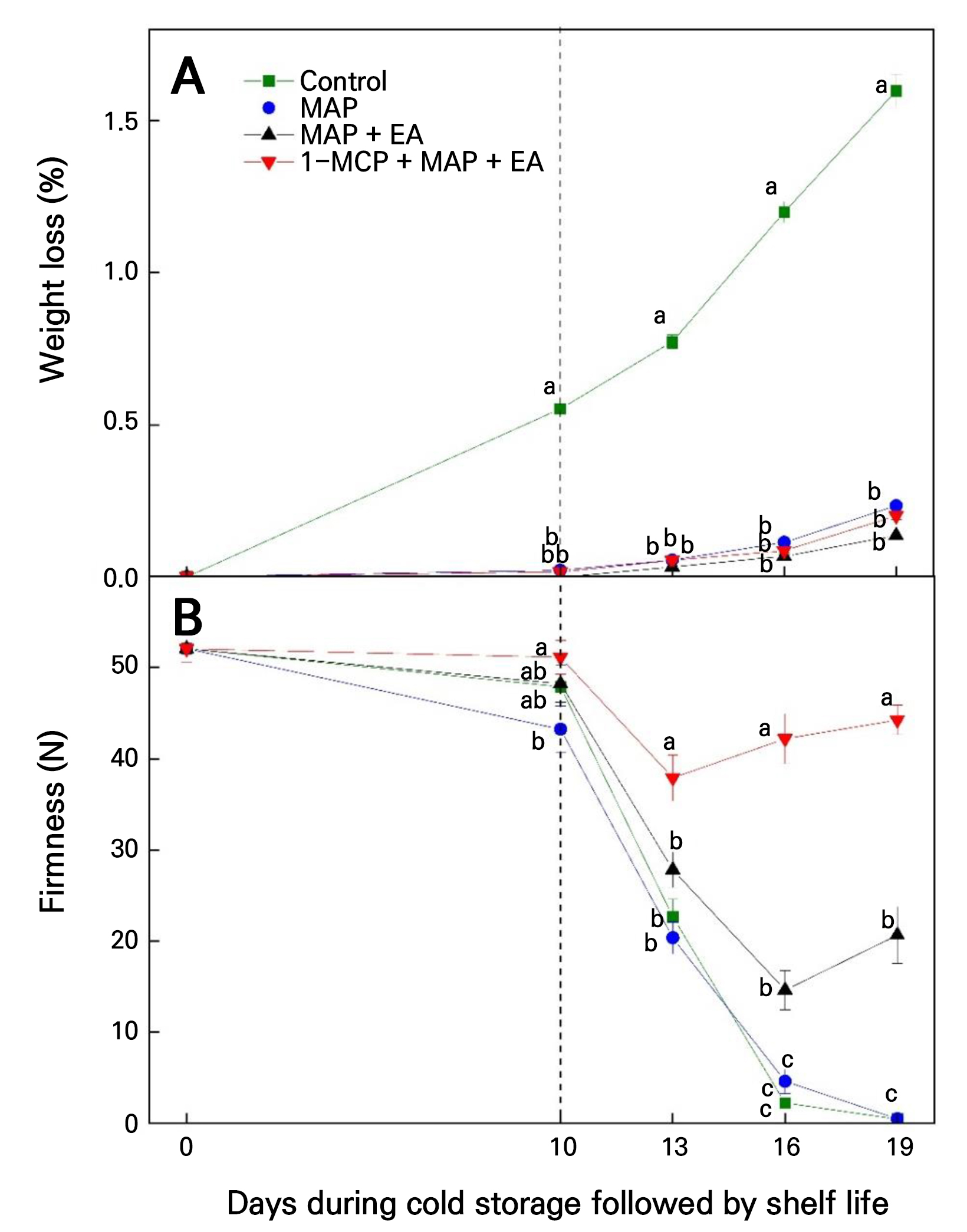
Fig. 7.
Effects of modified atmosphere packaging (MAP), 1-methylcyclopropene (1-MCP), and an ethylene absorbent (EA) on (A) the weight loss and (B) flesh firmness in ‘Gampung’ persimmon fruit during cold storage at 0°C followed by shelf life at 20°C. Vertical dotted line indicates the transition from 0°C to 20°C. Vertical bars represent the standard errors of the means. Different letters within each storage day indicate significant differences among the treatments according to Tukey’s honestly significant difference test at p < 0.05.
Transpiration is a primary cause of weight loss in fresh produce and is driven by the water vapor pressure deficit (WVPD) between the fruit and the surrounding air. Lower temperatures and higher relative humidity rates reduce WVPD, thereby decreasing transpiration. At low temperatures, not only is WVPD reduced, but its sensitivity to changes in relative humidity also decreases, making fruit weight loss less responsive to relative humidity fluctuations (Lentzou et al. 2021). Accordingly, only a slight increase in fruit weight loss was observed in the control during cold storage at 0°C, whereas weight loss increased significantly after transfer to the shelf life condition at 20°C (Fig. 7A). These results indicate that MAP is essential for minimizing moisture loss during commercial distribution, particularly during the shelf life period following cold storage.
Fruit flesh firmness remained relatively stable during cold storage but declined markedly during the subsequent shelf life period, except when applying the 1-MCP + MAP + EA treatment (Fig. 7B). During cold storage, flesh firmness was maintained at approximately 45–52 N, with no significant differences among the treatments. However, during the subsequent shelf life period, firmness declined progressively, with the greatest decline occurring in the control, followed by the MAP-alone, MAP + EA, and 1-MCP + MAP + EA treatments. Fruits in the control and MAP-alone treatment softened almost completely, with flesh firmness decreasing to nearly 0 N, resulting in a complete loss of commercial value. In contrast, after nine days of shelf life, fruits in the MAP + EA and 1-MCP + MAP + EA treatments retained approximately 40% and 80% of their initial firmness, respectively.
Ethylene-removal technologies, such as EAs, can delay fruit softening and thereby help maintain fruit quality (Ahn et al. 2000). Under the shelf life conditions described above, while the two EA-based treatments effectively maintained fruit firmness, they did not suppress the expression of genes linked to cell-wall modifications (Table 3). Similarly, under cold storage conditions, EAs delayed softening but appeared unable to inhibit the physiological and genetic changes associated with ripening during prolonged storage. These results suggest that although EAs reduce the effects of external ethylene, they are insufficient to fully prevent ripening-related changes. Therefore, the application of 1-MCP appears necessary to maintain uniform fruit quality during extended storage and the subsequent shelf life period.
Changes in fruit peel color characteristics during cold storage followed by shelf life
Fruit peel color remained relatively unchanged during cold storage (Fig. 8). However, during the subsequent shelf life period, L*, b*, chroma, and the hue angle values gradually decreased, whereas a* and the CDI values increased over time. Significant differences among the treatments became apparent after 16 days of storage. The control and MAP-alone treatments exhibited more rapid peel color changes than the other treatments, with the control showing the greatest degree of discoloration. In contrast, the MAP + EA and 1-MCP + MAP + EA treatments exhibited only minor changes in peel color, thereby maintaining the original fruit appearance throughout the storage period.
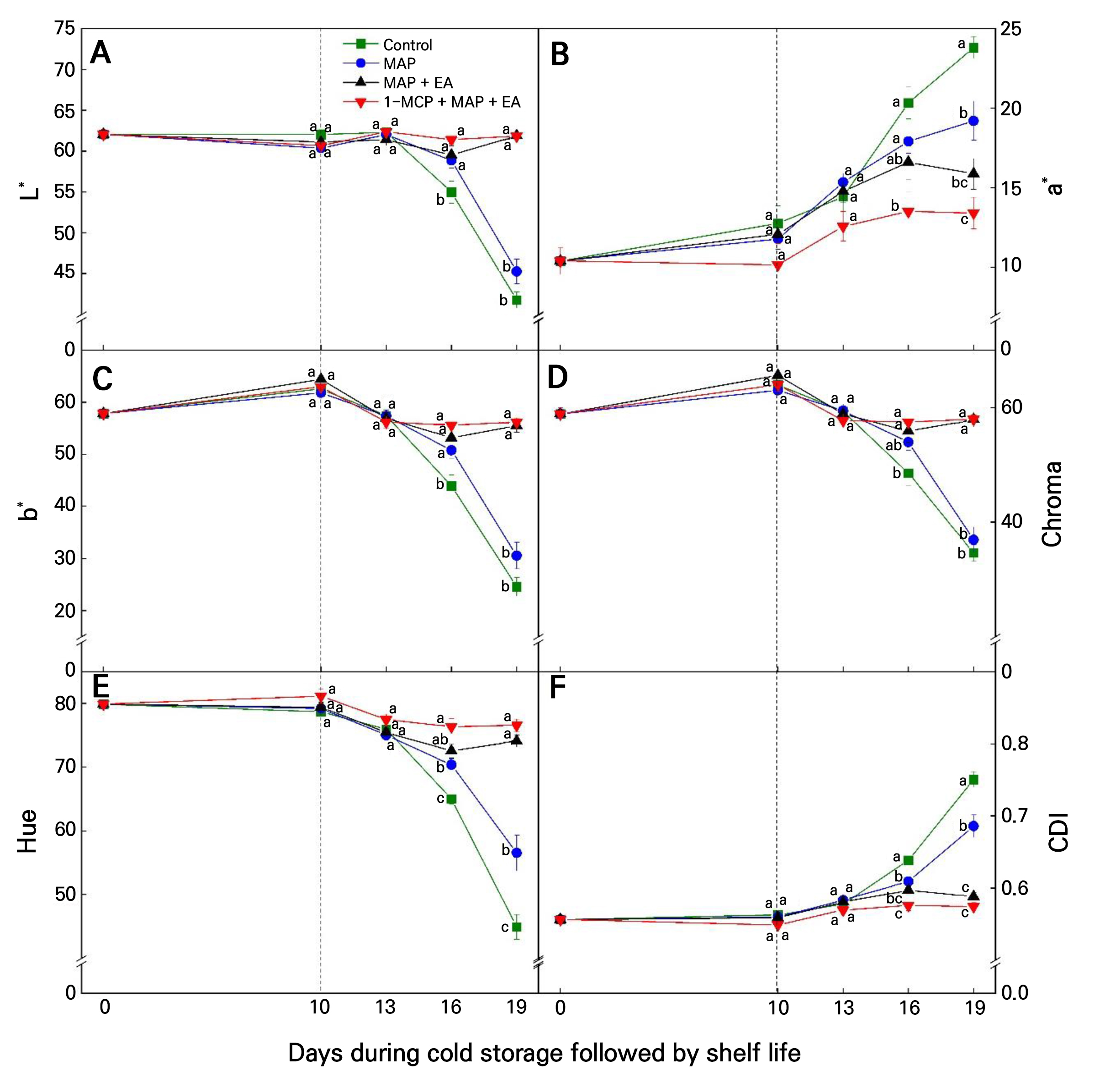
Fig. 8.
Effects of modified atmosphere packaging (MAP), 1-methylcyclopropene (1-MCP), and an ethylene absorbent (EA) on peel color characteristics of (A) L*, (B) a*, (C) b*, (D) chroma, (E) hue angle, and (F) color development index (CDI) in ‘Gampung’ persimmon fruit during cold storage at 0°C followed by shelf life at 20°C. Vertical dotted line indicates the transition from 0°C to 20°C. Vertical bars represent the standard errors of the means. Different letters within each storage day indicate significant differences among the treatments according to Tukey’s honestly significant difference test at p < 0.05.
Conclusion
MAP maintained high levels of relative humidity surrounding the fruit, thereby reducing transpiration and minimizing weight loss. 1-MCP effectively inhibited ethylene perception, suppressing the expression of ethylene biosynthesis- and signaling-related genes. EA effectively removed external ethylene, thereby contributing to the maintenance of fruit quality attributes, specifically flesh firmness and peel color. However, its ability to suppress endogenous ethylene production was limited, and it did not inhibit the expression of genes associated with ethylene biosynthesis, ethylene signaling, or cell wall modification. The MAP + EA and 1-MCP + MAP + EA treatments both effectively maintained fruit quality during storage. However, considering the uniformity of fruit quality levels and the regulation of ripening-related gene expression, the 1-MCP + MAP + EA treatment was the most effective postharvest strategy for maintaining the quality of ‘Gampung’ persimmon fruits throughout the simulated marketing period.
