

Introduction
Materials and Methods
Plant materials and crop management
Experimental design and soil moisture treatments
Growth measurements and storage root yield determination
Statistical analysis
Results
Seasonal changes in soil volumetric water content
Morphological traits and SPAD responses to soil moisture treatments
Correlations between growth traits and storage root weight at the storage root initiation stage
Correlations between growth traits and storage root weight at the storage root bulking stage
Correlations between growth traits and storage root weight at the pre-harvest stage
Storage root yield
Discussion
Seasonal changes in soil volumetric water content
Morphological traits and SPAD responses to soil moisture treatments
Relationships between growth traits and storage root weight at the storage root initiation stage
Relationships between growth traits and storage root weight at the storage root bulking stage
Relationships between growth traits and storage root weight at the pre-harvest stage
Storage root yield
Introduction
Climate change is increasing the frequency and intensity of abiotic types of stress, bringing high temperatures, drought, excessive soil moisture, and flooding and thereby posing substantial challenges to stable crop production and yield sustainability (IPCC 2023). In Korea, abnormal weather events have also become increasingly evident. In 2024, the national mean summer temperature from June to August reached 25.6°C, which was 1.9°C above the climatological normal and the highest recorded since 1973 (KMA 2024). Increasing climatic variability is likely to expose crops more frequently to both water deficit and excessive soil moisture conditions during the growing season, thereby reducing the stability of crop growth and yield formation. Therefore, understanding crop responses to water stress at different growth stages and establishing appropriate soil moisture management criteria are increasingly important under changing climatic conditions.
Sweet potato (Ipomoea batatas (L.) Lam.) is an important food and industrial crop and is also valued as a functional food resource and a potentially climate-resilient crop (Sapakhova et al. 2023). Sweet potato is generally considered relatively tolerant to drought owing to its well-developed root system and comparatively high water-use efficiency (Pushpalatha and Gangadharan 2024). However, a prolonged or severe water deficit can inhibit shoot growth, carbon assimilation, and assimilate partitioning, ultimately reducing storage root formation and yields. Because the marketable yield in sweet potato is largely determined by storage root initiation and subsequent bulking, soil moisture during the growing season is a major environmental factor affecting yield formation.
Under drought conditions, stomatal closure reduces water loss but simultaneously restricts CO2 uptake, resulting in decreased photosynthetic rates (Ludlow 1980; Cornic 2000). In sweet potato, water deficit has been reported to reduce the leaf area, stem elongation, canopy development, and stomatal conductance, thereby limiting the production and translocation of assimilates from leaves to storage roots (Van Heerden and Laurie 2008; Laurie et al. 2015). Thus, drought-induced yield reductions may result not only from suppressed vegetative growth but also from changes in the balance between assimilate production in source tissues and storage root development as a sink.
Conversely, excessive soil moisture and flooding are also important water-related types of stress limiting sweet potato productivity. Prolonged high soil moisture caused by heavy rainfall or excessive irrigation can restrict oxygen diffusion in the root zone, impair root respiration and energy metabolism, and promote the accumulation of reactive oxygen species and fermentative metabolism (Perata et al. 2011; Dela Peña et al. 2025). Such deterioration of the root-zone environment can inhibit root development, storage root initiation, and storage root bulking while altering assimilate partitioning between aboveground tissues and storage roots. Therefore, evaluating sweet potato responses across a broad range of soil moisture conditions, from severe drought to excessive moisture, is important for developing effective water management strategies.
The responses of sweet potato to water stress vary according to the genotype, stress intensity, stress duration, and the growth stage at which the stress occurs. In particular, the storage root initiation and bulking stages are critical periods for determining the final yield because soil moisture during these stages directly affects storage root formation and enlargement (Van Heerden and Laurie 2008; Gajanayake et al. 2014; Naawe et al. 2021). However, many previous studies have evaluated drought or excessive soil moisture conditions separately (Van Heerden and Laurie 2008; Gajanayake et al. 2014; Wang et al. 2025), whereas integrated comparisons of sweet potato responses across a soil moisture gradient ranging from severe drought through optimal moisture to excessive soil moisture remain limited. In addition, most studies have focused on responses at a specific growth stage or on the final yield, and relatively little information is available on how relationships between growth traits and storage root development change among the storage root initiation, bulking, and pre-harvest stages under contrasting soil moisture conditions.
Stem growth traits are sensitive to water availability, and stem elongation has been associated with sweet potato growth and yield responses under water-deficit conditions (Laurie et al. 2015). Therefore, stem length and stem diameter were selected as non-destructive indicators of aboveground vegetative growth and structural development, respectively.
SPAD values provide a rapid and non-destructive indicator of leaf greenness and chlorophyll status and have been widely used to evaluate crop physiological status and its association with yield. Positive relationships between SPAD values and sweet potato yields have also been reported (Pepó 2020; Balázs et al. 2024). However, it remains unclear as to whether the relationship between SPAD and storage root development remains consistent across different levels of soil moisture stress and throughout different growth stages. In particular, multi-year studies comparing the relationships among stem growth, SPAD values, and storage root weight under soil moisture conditions ranging from drought to excessive moisture are scarce. Such information may help clarify the potential and limitations of SPAD as a non-destructive indicator of crop status and improve soil moisture-based management strategies for sweet potato production.
Therefore, this study was conducted over three consecutive years from 2023 to 2025 under rain-shelter greenhouse conditions. Three soil moisture regimes—severe drought (DD), optimal moisture (N), and excessively wet soil conditions (WW)—were evaluated in 2023, and five regimes—DD, drought (D), N, wet soil conditions (W), and WW—were evaluated in 2024 and 2025. The objectives were to (1) evaluate the effects of soil moisture regimes on stem growth and SPAD responses at the storage root initiation, storage root bulking, and pre-harvest stages; (2) determine how the relationships of the stem length, stem diameter, and SPAD value with the storage root weight vary among growth stages and soil moisture regimes; and (3) provide a scientific basis for developing growth-stage-specific soil moisture management strategies to reduce yield losses caused by drought and excessive soil moisture in sweet potato.
Materials and Methods
Plant materials and crop management
This study was conducted over three consecutive years from 2023 to 2025 in a rain-shelter greenhouse at the experimental farm of Gyeongsang National University, Naedong Campus, Jinju, Gyeongsangnam-do, Republic of Korea (35°09'19.1"N, 128°05'59"E) to evaluate the effects of soil moisture conditions on sweet potato growth and storage root yields. The rain-shelter greenhouse was equipped with a semi-automatic rapid-opening system to exclude natural rainfall and enable the controlled regulation of soil moisture. During rain-free periods, the roof and sidewall openings of the greenhouse were kept open to promote natural ventilation and reduce heat accumulation during the summer growing season. During rainfall events, both the roof and sidewall openings were closed to prevent the entry of natural precipitation and were reopened after rainfall ceased. No active cooling or heating system was used, and the same ventilation management strategy was applied to all soil moisture treatments throughout the experimental period.
The sweet potato cultivar ‘Jinyulmi’ was used. Before transplanting, compost (Dure, Woori Agricultural Cooperative, Republic of Korea) was applied at 15 Mg ha-1, followed by rotary tillage. Ten days after tillage, a compound fertilizer formulated for sweet potato (Enpico, Poongnong Co., Ltd., Republic of Korea; N–P–K = 7–7–18) was applied at 1,286 kg ha-1, together with potassium fertilizer (Enpico, Poongnong Co., Ltd., Republic of Korea) at 9 kg ha-1. All fertilizers were applied as basal fertilizer.
Ridges were prepared at a width of 100 cm and height of 30 cm, with 30-cm-wide furrows. The ridges were covered with two-tone polyethylene film (0.02 mm thick and 150 cm wide), which was black on both sides with a 55-cm-wide transparent section in the center. Sweet potato slips were obtained from the Hamchorom Sweet Potato Farm in Hamyang, Gyeongsangnam-do, Republic of Korea, and stored for four days before transplanting in a well-ventilated shaded area at 13–15°C.
Transplanting was conducted on May 10, 2023, May 8, 2024, and May 7, 2025. Slips were planted horizontally at a spacing of 100 cm between the rows and 30 cm between the plants, with one slip per hill. Weeds were removed manually during the growing season, and pest and disease control and other crop management practices were conducted according to the standard sweet potato cultivation guidelines of the Rural Development Administration (RDA 2018).
Experimental design and soil moisture treatments
In 2023, three soil moisture treatments—severe drought (DD), optimal moisture (N), and excessively wet soil conditions (WW)—were arranged in a randomized complete block design with three replications in one 320-m2 rain-shelter greenhouse. In 2024 and 2025, five soil moisture treatments—severe drought (DD), drought (D), optimal moisture (N), wet soil conditions (W), and excessively wet soil conditions (WW)—were evaluated using two rain-shelter greenhouses of the same size, with a total area of 640 m2. The DD, D, and N treatments were established in one greenhouse, whereas the N, W, and WW treatments were established in the other greenhouse. Each treatment was replicated three times within its assigned greenhouse, and the N treatment was independently replicated three times in each greenhouse (six N plots in total). Thus, the N treatment was included in both greenhouses as a common reference for comparison between the two greenhouse environments. The greenhouse was not treated as a separate blocking factor because not all soil moisture treatments were represented in both greenhouses. Each experimental plot had an area of 24 m2, and the remaining space was used as buffer zones between the treatments and as management pathways.
Soil moisture treatments were established at three levels (DD, N, and WW) in 2023 and expanded to five levels (DD, D, N, W, and WW) in 2024 and 2025. The target volumetric soil water content (VWC) levels were established with reference to general ranges of the field capacity and permanent wilting point reported for agricultural soils (Soil Science Society of America 2008; Brady and Weil 2016). The DD treatment was maintained at approximately 20% VWC or lower, the D treatment at approximately 20 ± 2%, the N treatment at approximately 30 ± 3%, the W treatment at approximately 40 ± 3%, and the WW treatment at 40% or higher. These VWC levels were used as approximate operational targets rather than as strict, non-overlapping irrigation thresholds. Field capacity, permanent wilting point, maximum water-holding capacity, and other soil physical properties were not directly measured for the experimental soil; therefore, the VWC levels described above should be interpreted as operational treatment targets rather than as site-specific soil physical constants.
Soil water content was measured manually at a depth of 20 cm using a FieldScout TDR-300 meter (Spectrum Technologies, USA) to guide irrigation management. In addition, the volumetric soil water content was continuously monitored using SMEC 300 sensors connected to WatchDog 1000 Series data loggers (Spectrum Technologies Inc., USA). One SMEC 300 sensor was installed independently in each replicate plot (Rep 1, Rep 2, and Rep 3) at a soil depth of 20 cm, positioned near the center of the ridge between the sweet potato plants to minimize edge effects. Thus, three independent sensors were used per treatment. In 2024 and 2025, because the N treatment was independently replicated in both greenhouses, six sensors were used for the N treatment. The continuously recorded soil moisture data were averaged on a daily basis for each replicate plot, and treatment-level means were subsequently calculated from the replicate-level daily means.
Irrigation was supplied using an inverter pump (220 V, 1.5 kW, 130 L min-1; PBI-403MA, Wilo, Germany) connected to perforated sprinkler hoses (Korea N&S Co., Ltd., Republic of Korea) installed on the ridge surface beneath the polyethylene mulch. Irrigation was applied before 10:00 a.m. only to treatments requiring water based on soil moisture measurements. In the DD treatment, and in the D treatment in 2024 and 2025, minimum corrective irrigation was applied when necessary to prevent severe growth inhibition or plant death.
In 2023, the WW treatment was maintained from May 31 to September 27, and the polyethylene mulch was removed from the DD treatment on June 12 to induce water-deficit stress. In 2024, the W and WW treatments were maintained from June 8 to September 20, whereas the mulch was removed from the D and DD treatments on June 26. In 2025, the W and WW treatments were maintained from June 4 to August 31, and the polyethylene mulch was removed from the D and DD treatments on June 2 to initiate soil drying.
Growth measurements and storage root yield determination
Growth characteristics were evaluated at three developmental stages: storage root initiation, storage root bulking, and pre-harvest. The developmental stages were classified based on the general growth pattern of sweet potato described in the standard cultivation guidelines of the Rural Development Administration (RDA 2018), while allowing for differences in crop development among the years. The storage root initiation stage represented the early period of storage root differentiation and formation, the bulking stage represented the period of active storage root enlargement, and the pre-harvest stage represented the late growth period approaching final harvest. Therefore, the actual measurement dates differed among the years according to how the crop developed. Measurements at the storage root initiation stage were conducted on June 28, 2023, July 10, 2024, and June 8, 2025. Measurements at the storage root bulking stage were conducted on August 18, 2023, August 8, 2024, and July 8, 2025. Pre-harvest measurements were conducted on October 4, 2023, September 12, 2024, and August 6, 2025.
Stem length, stem diameter, and SPAD value were measured according to the standard research investigation and analysis guidelines of the Rural Development Administration (RDA 2012). Stem length was measured along the main stem, and stem diameter was measured between the soil surface and the first leaf node using a digital Vernier caliper (SMN-853, SMN, China). SPAD values were measured using a SPAD-502 PLUS chlorophyll meter (Konica Minolta, Japan). Measurements were taken three times on the second or third fully expanded leaf from the upper canopy, and the mean value was used for the analysis.
At each developmental stage, three plants were destructively sampled from each replicate plot. Before excavation, stem length, stem diameter, and the SPAD value were measured on the same individual plants. The plants were then carefully excavated, and storage roots were separated from fibrous roots. The fresh weight of all storage roots from each individual plant was measured and expressed as the total storage root weight per plant (TW). Thus, the plants used for storage root weight determination were the same plants used for the corresponding shoot growth and SPAD measurements in the correlation analyses.
The final storage root yield was determined by harvesting ten plants from each replicate plot. The total weight of the harvested storage roots was measured for each replicate plot and converted to the total storage root yield per unit area (Mg ha-1).
Statistical analysis
Statistical analyses were conducted using SAS version 9.4 (SAS Institute Inc., Cary, NC, USA). Because three soil moisture treatments (DD, N, and WW) were applied in 2023, whereas five treatments (DD, D, N, W, and WW) were applied in 2024 and 2025, growth characteristics and the storage root yield were analyzed separately by year.
Within each year, the effects of the soil moisture treatments on the growth characteristics and storage root yield were evaluated by means of an analysis of variance (ANOVA). Treatment means were compared using Duncan’s multiple range test at a significance level of p < 0.05. Plot means were used as the experimental units for the ANOVA.
Exploratory Pearson correlation analyses were conducted separately for each soil moisture treatment to examine the direction and strength of associations among the stem length, stem diameter, SPAD value, and storage root weight at each growth stage. Individual plant observations from the available growing years were pooled within each soil moisture treatment and growth stage. Because plants sampled within the same replicate plot shared the same soil moisture treatment and plot environment, these correlation analyses were regarded as exploratory and were not interpreted as independent plot-level treatment effects. Year was not explicitly included as a factor in the correlation analysis; therefore, the resulting correlations represent unadjusted associations across the pooled growing years and were thus interpreted cautiously. Because the D and W treatments were introduced in 2024 and were evaluated over only two growing seasons, correlations for these treatments were interpreted with additional caution. The significance levels of the correlation coefficients were reported at p < 0.05, p < 0.01, and p < 0.001 as descriptive measures of the observed associations.
Correlation plots were generated using the GGally package (Schloerke et al. 2021) and ggplot2 package (Wickham 2016) in R version 4.4.1 (R Core Team 2024).
Results
Seasonal changes in soil volumetric water content
Across the three experimental years, soil moisture levels were clearly differentiated according to the intended moisture regimes (Fig. 1). In 2023, the mean soil water contents during the treatment period were 18.9% in DD, 31.3% in N, and 38.4% in WW. In the DD and D treatments, soil water content temporarily increased following corrective irrigation; however, lower soil moisture levels than those in the N treatment were maintained during most of the treatment period. In contrast, the W and WW treatments maintained higher soil moisture levels than the N treatment. In 2024 and 2025, the mean soil water content during the treatment period followed the order DD < D < N < W < WW. The D treatment was 2.2–2.4 percentage points higher than the DD treatment, whereas the WW treatment was 4.1–4.3 percentage points higher than the W treatment. Thus, the intended differences among soil moisture treatments were generally maintained throughout the growing period.
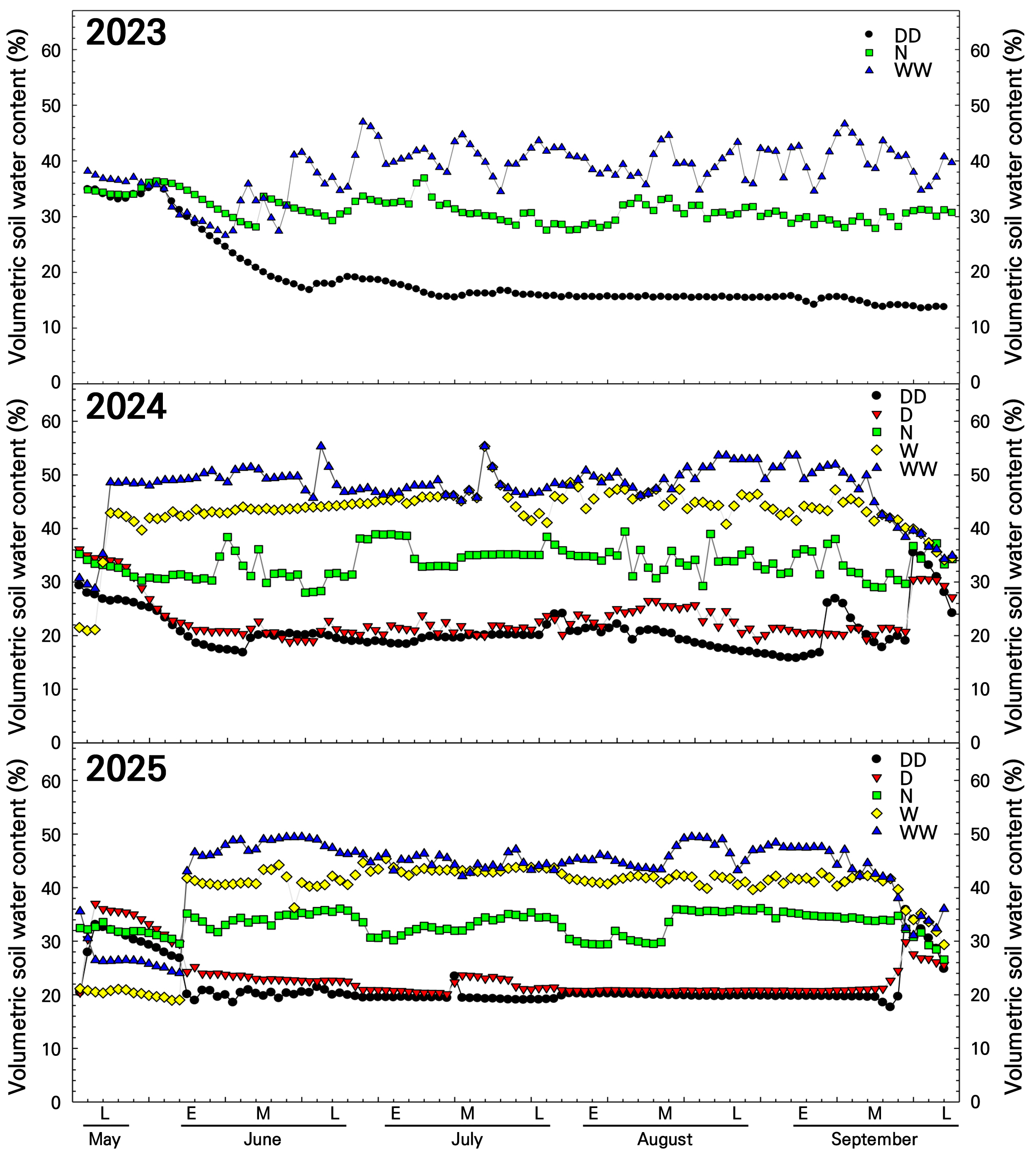
Fig. 1.
Changes in volumetric soil water content under different soil moisture regimes during the sweetpotato growing seasons from 2023 to 2025. DD, severe drought; D, drought; N, optimal moisture; W, wet soil condition; WW, excessively wet soil condition. E, M, and L indicate the early, middle, and late periods of each month, respectively.
Morphological traits and SPAD responses to soil moisture treatments
Morphological traits and SPAD responses of sweet potato varied depending on the soil moisture treatment, growth stage, and year (Table 1). At the storage root initiation stage, relatively clear treatment differences in the stem length and SPAD value were observed in 2023 and 2024, whereas no significant differences among the treatments were detected in stem length, stem diameter, or the SPAD value in 2025. In 2023, stem length in the WW treatment was 52.4 cm, which was greater than that in the DD treatment, whereas the SPAD value in WW was 45.6, lower than those in the DD and N treatments. In 2024, the WW treatment also showed the numerically greatest stem length at 162.3 cm, whereas the corresponding SPAD value was 46.2, lower than the 52.6 observed in the N treatment.
Table 1.
Morphological and physiological traits of sweetpotato under different soil moisture treatments at three growth stages from 2023 to 2025
At the storage root bulking stage, differences in growth characteristics among the soil moisture treatments became more pronounced. In 2023, stem length was greatest in the WW treatment at 106.0 cm and lowest in the DD treatment at 68.7 cm. In 2024, WW again showed the greatest stem length at 190.7 cm, and in 2025, WW showed the numerically greatest value at 166.7 cm. In contrast, SPAD values in the WW treatment were 42.5 in 2024 and 43.8 in 2025, both lower than the corresponding values in the N treatment (53.0 and 57.5, respectively). The N treatment showed the highest SPAD values in both years. Stem diameter differed among the treatments during some years and in some growth stages; however, the response of this metric to the soil moisture treatments was less consistent than those noted for the stem length and SPAD value.
At the pre-harvest stage, clear differences in SPAD values among the treatments were observed in 2024 and 2025. The N treatment showed the highest SPAD values at 51.5 and 52.0, respectively, whereas the WW treatment showed lower values of 41.3 and 38.0. In 2025, the WW treatment maintained a relatively long stem length of 201.0 cm but had the lowest SPAD value of 38.0. The W treatment showed the numerically greatest stem length at 230.3 cm, whereas the SPAD value in this case was 41.9, lower than that of the N treatment.
SPAD responses in the drought treatments varied among the years and growth stages. For example, at the pre-harvest stage in 2023, the DD treatment showed a SPAD value of 47.5, higher than those of the N and WW treatments. Overall, the N treatment maintained relatively high SPAD values, particularly at the storage root bulking and pre-harvest stages, whereas the WW treatment tended to show relatively low SPAD values despite a greater stem length at several growth stages.
Correlations between growth traits and storage root weight at the storage root initiation stage
At the storage root initiation stage, correlations among the stem growth traits, SPAD value, and storage root weight (TW) varied among the soil moisture treatments (Fig. 2). Significant positive correlations between the SPAD value and storage root weight were observed in the D, N, W, and WW treatments, but not in the DD treatment (D: r = 0.921**, N: r = 0.510**, W: r = 0.844*, WW: r = 0.560**).
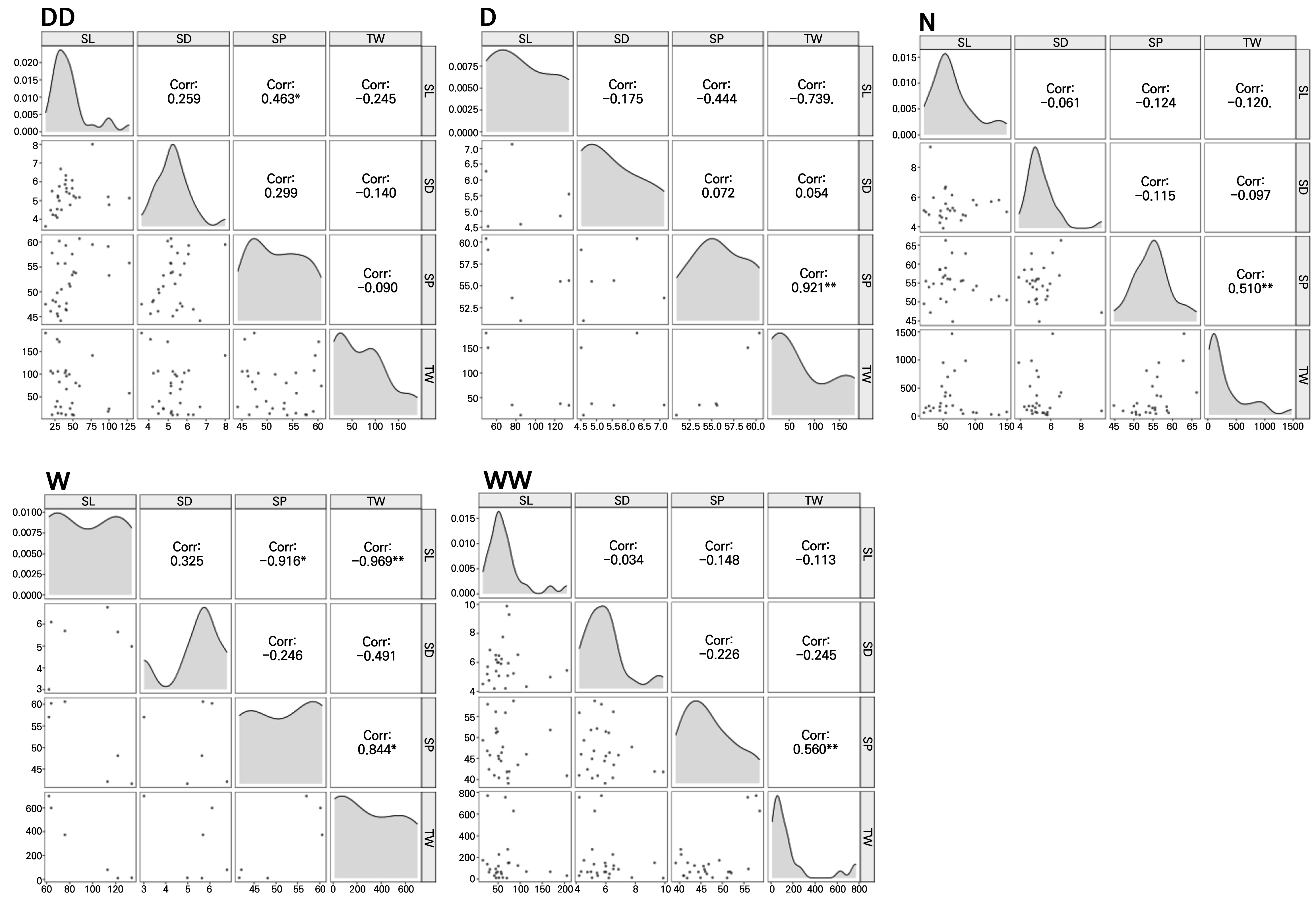
Fig. 2.
Pearson's correlation coefficients among growth traits and the storage root weight of sweet potato under different soil moisture treatments at the storage root initiation stage. DD, severe drought; D, drought; N, optimal moisture; W, wet soil condition; WW, excessively wet soil condition. SL, stem length; SD, stem diameter; SP, SPAD value; TW, total storage root weight per plant. *, **, and *** indicate significance at p < 0.05, p < 0.01, and p < 0.001, respectively.
In the W treatment, the SPAD value was strongly and positively correlated with the storage root weight (r = 0.844*), whereas stem length was strongly and negatively correlated with the storage root weight (r = −0.969**).
In the DD treatment, no significant correlation was observed between the SPAD value and storage root weight, whereas a significant positive correlation was found between stem length and the SPAD value (r = 0.463*). Overall, the relationship between the SPAD value and storage root weight at the storage root initiation stage varied among the soil moisture treatments, with the DD treatment showing a distinct correlation pattern from the other treatments.
Correlations between growth traits and storage root weight at the storage root bulking stage
At the storage root bulking stage, correlations among the stem growth traits, SPAD value, and storage root weight (TW) varied among the soil moisture treatments (Fig. 3). In the N treatment, stem length was significantly and positively correlated with the SPAD value (r = 0.415**). Significant positive correlations were also observed between stem diameter and storage root weight (r = 0.519***) and between the SPAD value and storage root weight (r = 0.500***).
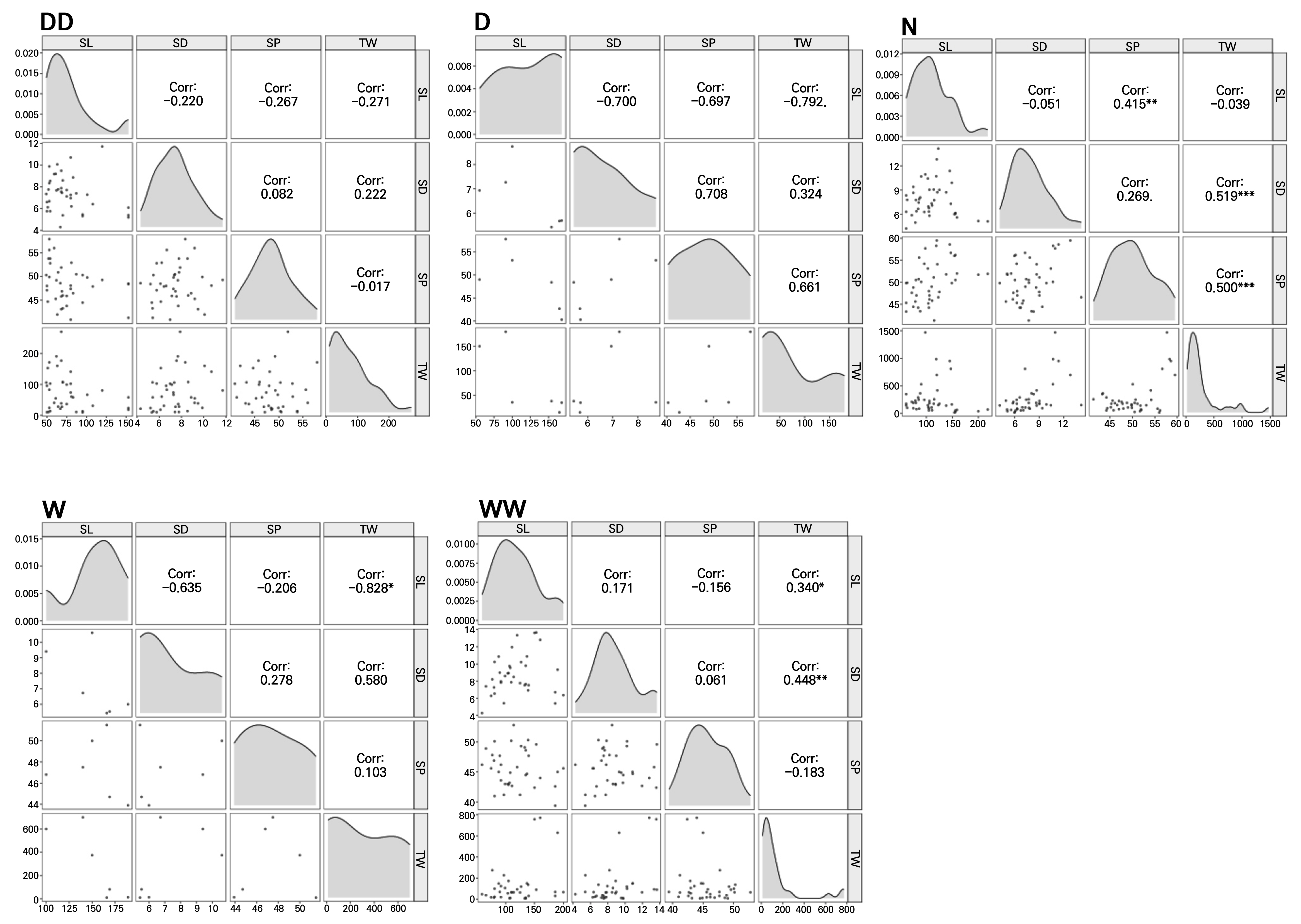
Fig. 3.
Pearson’s correlation coefficients among growth traits and the storage root weight of sweet potato under different soil moisture treatments at the storage root bulking stage. DD, severe drought; D, drought; N, optimal moisture; W, wet soil condition; WW, excessively wet soil condition. SL, stem length; SD, stem diameter; SP, SPAD value; TW, total storage root weight per plant. *, **, and *** indicate significance at p < 0.05, p < 0.01, and p < 0.001, respectively.
In the WW treatment, stem length was significantly and positively correlated with the storage root weight (r = 0.340*), and stem diameter was also significantly and positively correlated with the storage root weight (r = 0.448**). In contrast, no significant correlation was observed between the SPAD value and storage root weight.
In the W treatment, stem length was significantly and negatively correlated with the storage root weight (r = −0.828*). Overall, stem diameter and the SPAD value were positively associated with storage root weight in the N treatment, whereas different correlation patterns were observed in the W and WW treatments under high soil moisture conditions.
Correlations between growth traits and storage root weight at the pre-harvest stage
At the pre-harvest stage, correlations among the stem length (SL), stem diameter (SD), SPAD value, and storage root weight (TW) varied among the soil moisture treatments (Fig. 4).
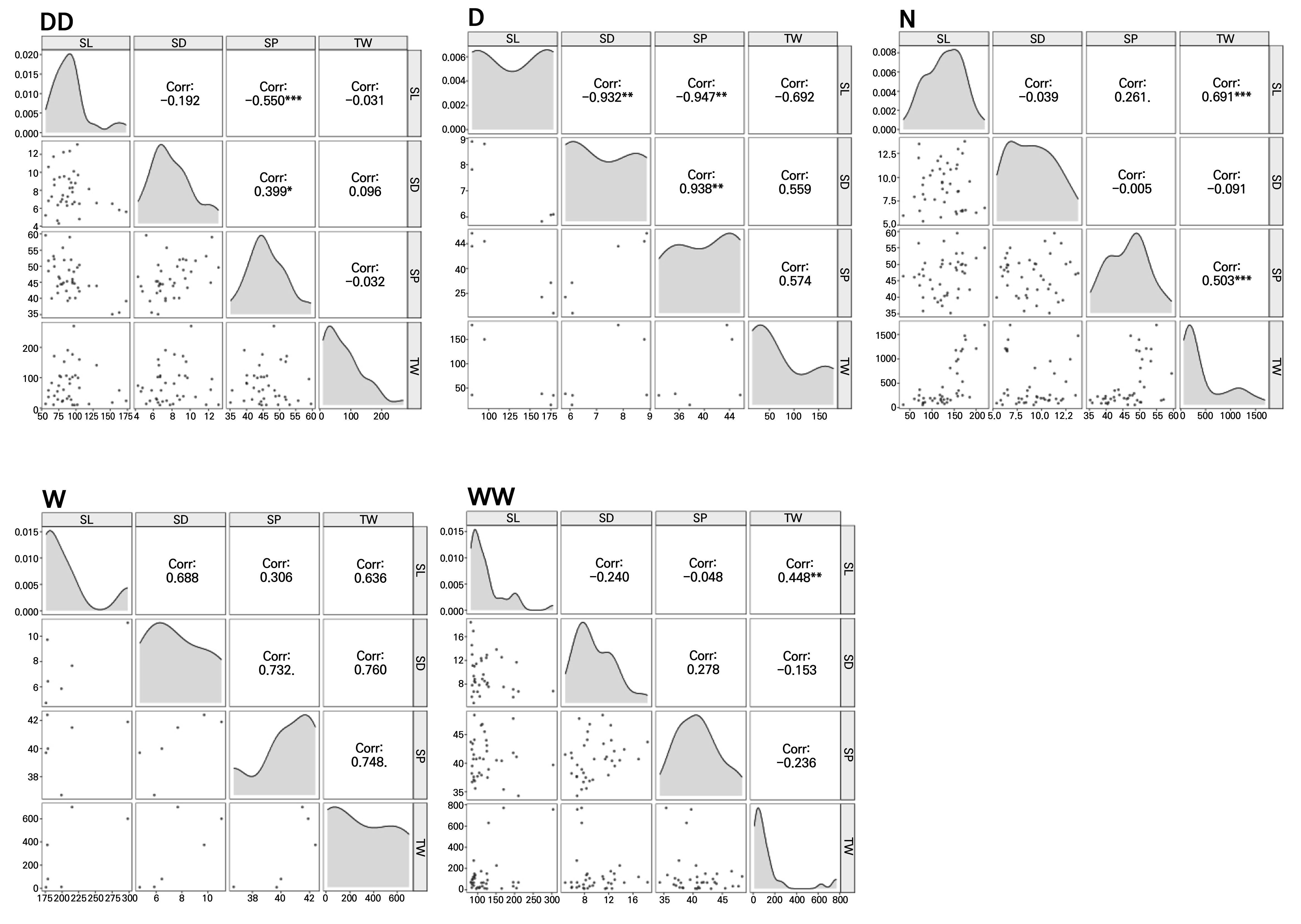
Fig. 4.
Pearson’s correlation coefficients among growth traits and the storage root weight of sweet potato under different soil moisture treatments at the pre-harvest stage. DD, severe drought; D, drought; N, optimal moisture; W, wet soil condition; WW, excessively wet soil condition. SL, stem length; SD, stem diameter; SP, SPAD; TW, total storage root weight. *, **, and *** indicate significance at p < 0.05, p < 0.01, and p < 0.001, respectively.
In both the DD and D treatments, stem length was significantly and negatively correlated with the SPAD value (DD: r = −0.550*; D: r = −0.947**). In contrast, stem diameter was significantly and positively correlated with the SPAD value in both treatments (DD: r = 0.399*; D: r = 0.938**).
In the N treatment, stem length was significantly and positively correlated with the storage root weight (r = 0.691***), and the SPAD value was also significantly and positively correlated with the storage root weight (r = 0.503***).
In the WW treatment, stem length was significantly and positively correlated with the storage root weight (r = 0.448**). However, no significant correlation was observed between the SPAD value and storage root weight.
Storage root yield
The final storage root yield of sweet potato differed among the soil moisture treatments (Fig. 5). The N treatment produced the highest storage root yield in all three years, with yields of 31 Mg ha-1 in 2023, 49 Mg ha-1 in 2024, and 37 Mg ha-1 in 2025.
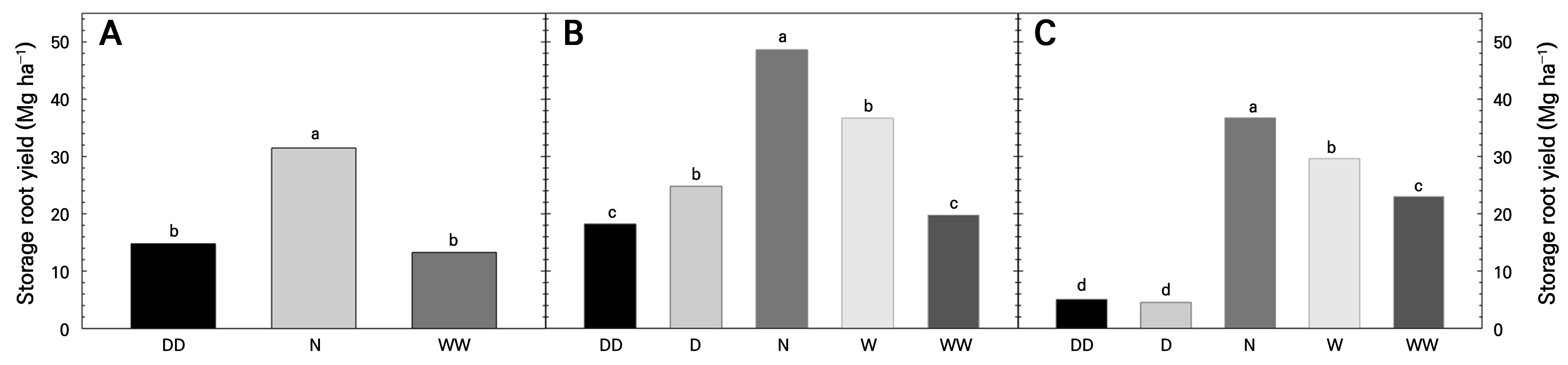
Fig. 5.
Effects of soil moisture treatments on the storage root yield of sweet potato from 2023 to 2025. DD, severe drought; D, drought; N, optimal moisture; W, wet soil condition; WW, excessively wet soil condition. Different letters indicate significant differences among the treatments within the same year at p < 0.05 according to Duncan’s multiple range test.
In 2023, storage root yields in the DD and WW treatments were 14 and 13 Mg ha-1, respectively, representing reductions of 54.8 and 58.1% relative to the N treatment. In 2024, storage root yields in the DD, D, W, and WW treatments were 18, 25, 37, and 20 Mg ha-1, respectively, corresponding to reductions of 63.3, 49.0, 24.5, and 59.2% relative to the N treatment. In 2025, both the DD and D treatments produced 5 Mg ha-1, representing an 86.5% reduction relative to the N treatment, whereas the W and WW treatments produced 30 and 23 Mg ha-1, respectively, corresponding to reductions of 18.9 and 37.8%.
The mean volumetric soil water content in the N treatment during the treatment period was 31.3% in 2023, 33.6% in 2024, and 33.3% in 2025 (Fig. 1). Thus, the N treatment consistently produced the highest storage root yield under mean soil water contents of approximately 31–34%, whereas marked yield reductions were observed under both drought and excessive soil moisture conditions.
Discussion
Seasonal changes in soil volumetric water content
In this study, soil moisture levels were progressively regulated under rain-shelter conditions over three consecutive years, resulting in clear differentiation in the volumetric soil water content among the treatments. In particular, during 2024 and 2025, the mean soil water content during the treatment period followed the order DD < D < N < W < WW, establishing a continuous moisture gradient from drought to excessive soil moisture. The mean soil water content in the N treatment remained relatively stable at 31.3–33.6%, representing the soil moisture conditions associated with the highest storage root yield under the specific conditions of this study.
In the DD and D treatments, the soil water content temporarily increased following corrective irrigation applied to prevent severe growth inhibition or plant death; however, it remained consistently lower than that in the N treatment throughout most of the treatment period. These results suggest that the prolonged soil moisture status during the growing season may be more important in determining the degree of water stress in sweet potato than short-term increases in soil moisture. Because the storage root initiation and bulking stages are critical periods for determining the final storage root yield (Van Heerden and Laurie 2008; Gajanayake et al. 2014), the prolonged water deficit during these stages may have affected subsequent storage root formation and enlargement.
In contrast, the soil water content in the W and WW treatments remained above 40% during most of the treatment period, with the WW treatment averaging 47.6% in 2024 and 45.9% in 2025. Excessively high soil moisture can restrict oxygen availability in the root zone, thereby impairing root respiration and storage root formation (Roberts and Russo 1991; Eguchi and Yoshida 2007). Thus, the distinct soil moisture gradient established in this study provided an important environmental basis for interpreting subsequent differences in growth, the SPAD response, and the storage root yield.
Morphological traits and SPAD responses to soil moisture treatments
The growth responses of sweet potato to the soil moisture treatments indicated that shoot elongation and the maintenance of leaf greenness did not necessarily respond in the same direction. In particular, the WW treatment exhibited increased stem lengths at several growth stages, whereas the SPAD values tended to be lower than those in the N treatment. This suggests that shoot elongation may be maintained under excessive soil moisture conditions even when leaf greenness or chlorophyll status is not maintained to the same extent.
In contrast, the N treatment maintained relatively high SPAD values during the storage root bulking and pre-harvest stages. These results indicate that optimal soil moisture conditions were favorable for maintaining leaf greenness during the later stages of growth. When considered together with the final storage root yield results (Fig. 5), the increased stem elongation observed under high soil moisture conditions did not necessarily correspond to a higher storage root yield, suggesting that the relationship between shoot growth and storage root production varies depending on the soil moisture status.
SPAD responses under drought conditions were inconsistent across years and growth stages. For example, at the pre-harvest stage in 2023, the DD treatment exhibited a higher SPAD value than the N and WW treatments despite producing a lower final storage root yield than the N treatment. Therefore, the SPAD value alone may be insufficient to explain storage root yield responses under drought conditions, and its interpretation should be combined with stem growth, the growth stage, and relationships with the storage root weight.
Overall, optimal soil moisture conditions were associated with relatively high SPAD values and stable growth, whereas excessive soil moisture tended to be associated with greater stem lengths at some growth stages, without a corresponding increase in the SPAD value or storage root yield; however, this pattern was not consistent across the years. These findings indicate that sweet potato responses to soil moisture stress should be interpreted while considering shoot growth, the SPAD response, and the storage root yield together rather than relying on a single growth indicator.
Relationships between growth traits and storage root weight at the storage root initiation stage
The relationship between the SPAD value and storage root weight at the storage root initiation stage varied markedly among the soil moisture treatments. Significant positive correlations between the SPAD value and storage root weight in the D, N, W, and WW treatments, but not in the DD treatment, suggest that greater leaf greenness during storage root initiation may be associated with a greater storage root weight measured at the same developmental stage. This pattern is consistent with the findings of Pepó (2020) and Balázs et al. (2024), who reported positive relationships between SPAD values during the growing period and sweet potato yield. However, because SPAD is an indirect indicator of leaf greenness and chlorophyll status, the present results cannot be used to directly infer changes in the photosynthetic rate.
In the W treatment, the SPAD value was strongly and positively correlated with the storage root weight, whereas stem length was strongly and negatively correlated with the storage root weight. This suggests that although higher leaf greenness may be associated with a greater storage root weight under relatively high soil moisture conditions, greater stem elongation may not necessarily be associated with increased storage root development. One possible explanation is that the relatively great vegetative growth under high soil moisture may have altered assimilate partitioning between aboveground tissues and storage roots. However, assimilate partitioning was not directly measured in this study, and this interpretation should therefore be considered tentative.
In contrast, no significant relationship between the SPAD value and storage root weight was observed in the DD treatment. As drought stress intensifies, reductions in CO2 uptake caused by stomatal closure may be accompanied by the impairment of chloroplast function and cellular metabolism under severe stress conditions (Lu et al. 2010; Huang et al. 2025). Therefore, under a severe water deficit, SPAD values may no longer be directly associated with storage root weight even when some degree of leaf greenness is maintained. The absence of a significant relationship between SPAD and the storage root weight in the DD treatment suggests that the association between leaf greenness and storage root development weakens under severe drought stress.
The positive correlation between stem length and the SPAD value in the DD treatment further indicates that plants that maintained relatively greater growth under severe drought also tended to retain higher leaf greenness. However, this relationship alone cannot be used to infer photosynthetic performance or assimilate translocation directly; additional measurements, such as those of the photosynthetic rate and stomatal conductance, would be required to clarify the underlying physiological mechanisms.
Overall, the SPAD value at the storage root initiation stage was positively associated with the storage root weight under several soil moisture conditions, although the strength and significance of this relationship varied with the soil moisture level. In particular, no significant relationship was observed under severe drought. Therefore, SPAD should be interpreted together with soil moisture status rather than used as a single predictor of the storage root weight or yield.
Relationships between growth traits and storage root weight at the storage root bulking stage
The storage root bulking stage is a critical period during which photoassimilates are translocated to and accumulated in storage roots, thereby contributing directly to yield formation (Naawe et al. 2021). Adequate soil moisture during this stage has been reported to favor storage root enlargement and final yields (Pérez-Pazos et al. 2021). In the N treatment, the significant positive relationships of the stem diameter and SPAD value with the storage root weight indicate that shoot growth and leaf greenness were closely associated with storage root development under optimal soil moisture conditions.
In contrast, although stem length and stem diameter were positively correlated with the storage root weight in the WW treatment, no significant relationship was observed between the SPAD value and storage root weight. Excessive soil moisture can restrict oxygen diffusion in the root zone, impair root respiration and energy metabolism, and consequently inhibit root development and storage root bulking (Eguchi and Yoshida 2007; Grzesiak et al. 2016; Xu et al. 2024). The absence of a significant SPAD–storage root weight relationship therefore suggests that the association between aboveground growth and storage root development under excessive soil moisture differed from that under optimal moisture conditions.
In the W treatment, stem length was strongly and negatively correlated with the storage root weight. Excessive soil moisture may alter the balance between aboveground growth and assimilate allocation to underground storage organs (Lewthwaite and Triggs 2000), and increased stem elongation under such conditions may not necessarily result in greater storage root development. This negative relationship suggests an association between enhanced shoot growth under wet soil conditions and reduced storage root development.
Overall, the relationships between growth traits and storage root weight during the bulking stage differed according to the soil moisture level. Stem diameter and the SPAD value were positively associated with the storage root weight under optimal moisture, whereas different correlation patterns were observed under wet and excessively wet conditions. These findings suggest that maintaining optimal soil moisture during storage root bulking would be important for maintaining a favorable balance between shoot growth and storage root development.
Relationships between growth traits and storage root weight at the pre-harvest stage
At the pre-harvest stage, drought, optimal moisture, and excessive soil moisture treatments exhibited distinct correlation patterns. The strong negative correlations between the stem length and SPAD value in the DD and D treatments indicate that the relationship between stem elongation and maintenance of leaf greenness was altered under water-deficit conditions. Under drought, plants may regulate aboveground growth to reduce water loss and improve the use of limited water resources (Makhubu et al. 2024), which may partly explain the negative relationship observed in this study between stem length and SPAD value.
In contrast, significant positive correlations between the stem diameter and SPAD value were observed in both the DD and D treatments. This indicates that plants maintaining relatively high SPAD values under drought also tended to have greater stem diameters. However, because the photosynthetic rate and stomatal conductance were not measured, this relationship should be interpreted as an association between leaf greenness and stem growth rather than as direct evidence of maintained photosynthetic capacity.
In the N treatment, both stem length and the SPAD value were significantly and positively correlated with the storage root weight. Moreover, positive relationships between the SPAD value or stem growth and storage root weight were repeatedly observed at the storage root initiation, bulking, and pre-harvest stages. These patterns suggest that under optimal soil moisture conditions, the relationships among aboveground growth, leaf greenness, and storage root development remained relatively stable throughout the growing period.
In the WW treatment, stem length was positively correlated with the storage root weight, whereas no significant relationship was observed between the SPAD value and storage root weight. Excessive soil moisture can restrict the oxygen supply in the root zone and adversely affect root growth and storage root formation (Eguchi and Yoshida 2007). Thus, the relationship between aboveground growth and storage root development under excessive moisture may differ from that under optimal conditions.
Overall, the N treatment showed relatively consistent positive associations among stem growth, the SPAD value, and the storage root weight, whereas different correlation patterns were observed under drought and excessive soil moisture conditions. These results suggest that maintaining optimal soil moisture until the pre-harvest stage would help sustain a favorable balance among aboveground growth, leaf greenness, and storage root development.
Storage root yield
The N treatment produced the highest storage root yield in all three years, with the mean volumetric soil water content maintained within 31.3–33.6% during the treatment period. The final yield in sweet potato is largely determined by storage root initiation and subsequent bulking (Ravi et al. 2014), and soil moisture is an important environmental factor affecting both shoot growth and storage root formation and enlargement (Van Heerden and Laurie 2008). The N treatment also maintained relatively high SPAD values during the storage root bulking and pre-harvest stages (Table 1), and positive relationships between growth traits or the SPAD value and storage root weight were observed at several growth stages (Figs. 2, 3, 4). Together, these results suggest that aboveground growth and storage root development were relatively well coordinated under optimal soil moisture conditions.
Storage root yields were markedly reduced in the D and DD treatments. Although sweet potato is generally considered relatively tolerant to drought (de Andrade et al. 2025), a prolonged water deficit during the storage root initiation and bulking stages can inhibit storage root initiation and enlargement, thereby reducing the final yield (Gajanayake et al. 2014; Makhubu et al. 2024). In 2025, the storage root yield decreased to 5 Mg ha-1 in both the D and DD treatments. The soil water content in these treatments remained at approximately 20–23% from the storage root initiation stage onward (Fig. 1), and the final yield was identical despite the slightly higher soil water content in D than in DD. This suggests that the severe water deficit during the early stage of storage root formation may have constrained subsequent development. However, because recovery following early water stress was not directly evaluated, this response should not be interpreted as irreversible but rather as indicating the possibility of a persistent yield reduction following an early-season water deficit.
The storage root yield was also substantially reduced in the WW treatment. The mean soil water content remained high at 47.6% in 2024 and 45.9% in 2025, while the yield was 59.2 and 37.8% lower, respectively, than that in the N treatment. Excessive soil moisture can restrict oxygen diffusion in the root zone, impair root respiration and growth, and consequently inhibit storage root formation and bulking, as noted above (Roberts and Russo 1991; Eguchi and Yoshida 2007). The WW treatment showed greater stem lengths at some growth stages but relatively low SPAD values (Table 1), and no significant relationship between the SPAD value and storage root weight was observed at the bulking or pre-harvest stages (Figs. 3, 4). Thus, continued shoot elongation under excessively wet soil conditions did not necessarily translate into greater storage root yields.
Across the three years, the N treatment consistently produced the highest storage root yield at mean volumetric soil water contents of approximately 31–34% under the specific soil and experimental conditions studied here, whereas yields were substantially reduced under both drier and wetter conditions. In the D treatment, mean soil water contents of 22.2–23.3% were associated with yield reductions of 49.0–86.5% relative to the N treatment, whereas the W treatment at 41.8–43.3% resulted in reductions of 18.9–24.5%. In this experiment, marked yield reductions were observed when the soil water content declined to approximately 20% from the storage root initiation stage onward or remained above approximately 45% for prolonged periods. These values represent the soil moisture conditions observed in this experiment and should not be interpreted as physiological threshold values for sweet potato. Therefore, under the conditions in this study, maintaining soil moisture near the range associated with the highest observed storage root yield and avoiding prolonged exposure to severe drought or excessive soil moisture may be important for minimizing storage root yield losses.
