Introduction
Description and Performance
Origin
Growth characteristics
Growth habit and landscaping potential
Visual representation of growth and flowering
Leaf morphology
Floral morphology
Notes for Production
International Intellectual Property Rights and Availability
Introduction
Contemporary horticultural research prioritizes the development of ornamental shrubs characterized by extreme compactness, prolific and extended flowering, ecological adaptability, and low maintenance. Increasing urbanization and shrinking residential garden spaces have driven a shift in consumer preference toward space-efficient, visually impactful plants requiring minimal care (Van Laere et al. 2007; Kang et al. 2016). The increase in demand for dwarf and semi-dwarf cultivars is particularly driven by urban landscaping and container gardening, where plants must thrive in confined spaces while maintaining prolonged aesthetic appeal. Concurrently, societal pressure for ecological sustainability and reduced maintenance inputs has amplified the need for cultivars that enhance biodiversity and improve the quality of urban environments (Van Laere et al. 2007).
Hibiscus syriacus L., commonly known as rose of Sharon, is a deciduous flowering shrub classified in the Malvaceae family that is widely cultivated as an ornamental species and is officially recognized as the national flower of Korea (Lee et al. 2008; Kang et al. 2019). This species is highly valued for its broad environmental adaptability, including tolerance to high temperatures in summer, drought, urban pollution, and infertile soils (Shim and Ha 2010). Historically, H. syriacus has been primarily utilized for hedges and screens owing to its vigorous, upright growth and resilience to frequent pruning. However, these growth characteristics limit its utility in compact urban spaces, such as small urban gardens, patios, and balconies (Ha et al. 2014; Lim et al. 2018). Consequently, recent breeding programs have increasingly focused on developing novel cultivars with an extremely compact, upright growth habit and profuse, extended floral displays to fulfill the aesthetic and functional requirements of modern urban landscapes (Kang et al. 2016; Moon and Shin 2025).
The protection of breeder innovations through intellectual property rights, including plant breeders’ rights and plant patents, is crucial for augmenting the commercial value of horticultural cultivars. The plant variety protection (PVP) system, formalized under the World Trade Organization’s TRIPS Agreement and the International Union for the Protection of New Varieties of Plants (UPOV) Convention, establishes a global framework for safeguarding breeders’ rights and fostering innovation in plant breeding (Thiele-Wittig and Claus 2003; Srinivasan 2005; Lee et al. 2008; Park et al. 2016; Di Fonzo et al. 2019; Kim and Park 2020). Recent breeding initiatives have effectively utilized these systems to aid the introduction of desirable traits via a combination of traditional and advanced breeding techniques, such as controlled hybridization, interspecific crossing, mutation breeding, and polyploidy induction (Van Laere et al. 2007; Ha et al. 2014; Kang et al. 2016). Korean breeding programs have significantly diversified the ornamental characteristics of H. syriacus, generating cultivars with novel flower colors, compact and upright growth forms, sterility, and enhanced ornamental utility. Several Korean-bred cultivars, including Lil’ Kim® (‘Antong Two’), Lil’ Kim® Red (‘SHIMRR38’), Lil’ Kim® Violet (‘SHIMRV24’), and Ruffled Satin® (‘SHIMCR1’), have received U.S. plant patents (CPVO 2024; UPOV 2023). Exemplary cultivars, such as Lil’ Kim®, ‘Tohagol Red’, ‘Ggoma’, and ‘Mikyung’, underscore the capability of Korean-bred H.syriacus selections to satisfy global market demand and achieve competitive international positioning when coupled with strategic intellectual property management’ (Kim 2016; Kim et al. 2015; Ha et al. 2015a, 2015b).
Given this context, the development of a novel H. syriacus cultivar integrating an extremely dwarf and upright growth habit, prolific and extended flowering, and adaptability to small-scale and urban planting environments constitutes both a significant scientific advancement and a commercial opportunity. Notably, despite considerable progress in breeding, no Korean-bred H. syriacus cultivar had previously secured simultaneous intellectual property rights in Korea, the United States, or Europe. This study presents the first documented instance of a Korean-developed H. syriacus cultivar achieving such extensive intellectual property protection across these major international markets. This article summarizes the development and characterization of a new H. syriacus cultivar integrating the aforementioned desirable traits, an achievement that contributes to the diversification of ornamental germplasm and addresses the evolving needs of modern horticulture. By documenting the breeding process and evaluating the morphological and horticultural characteristics of the newly developed cultivar, this work provides valuable insights into strategies for breeding compact ornamental shrubs with superior traits suitable for contemporary urban landscapes.
Description and Performance
Origin
Development of the novel Hibiscus syriacus cultivar ‘Samilhong’ commenced with the objective of creating a compact, upright plant ideal for container cultivation, distinguished by a unique single red-centered flower with an extended flower longevity of approximately 72 h (3 days).
In 2005, controlled hybridization was carried out using the six-year-old white-centered cultivar ‘Andong’ as the female parent and pollen from the red-centered cultivar ‘Samchulli’ as the male parent. A total of 200 flowers were pollinated, from which 50 mature capsules were harvested, yielding 210 fully developed seeds. These seeds were sown under greenhouse conditions in 2006, resulting in 150 healthy seedlings that were successfully germinated and established. The first flowering was induced in 2007, providing the basis for a preliminary evaluation. From 2006 to 2009, screening was conducted to investigate the ornamental traits and growth performance of the hybrid progenies. As a result, 30 vigorous individuals were selected in 2009 and transplanted to a nursery field for phenotypic evaluations under open-field conditions. Among these, one outstanding individual exhibiting superior characteristics—specifically a narrow and upright growth habit, a compact plant size, and desirable floral attributes—was further selected and provisionally designated as breeding line ‘R-201’ (Fig. 1).
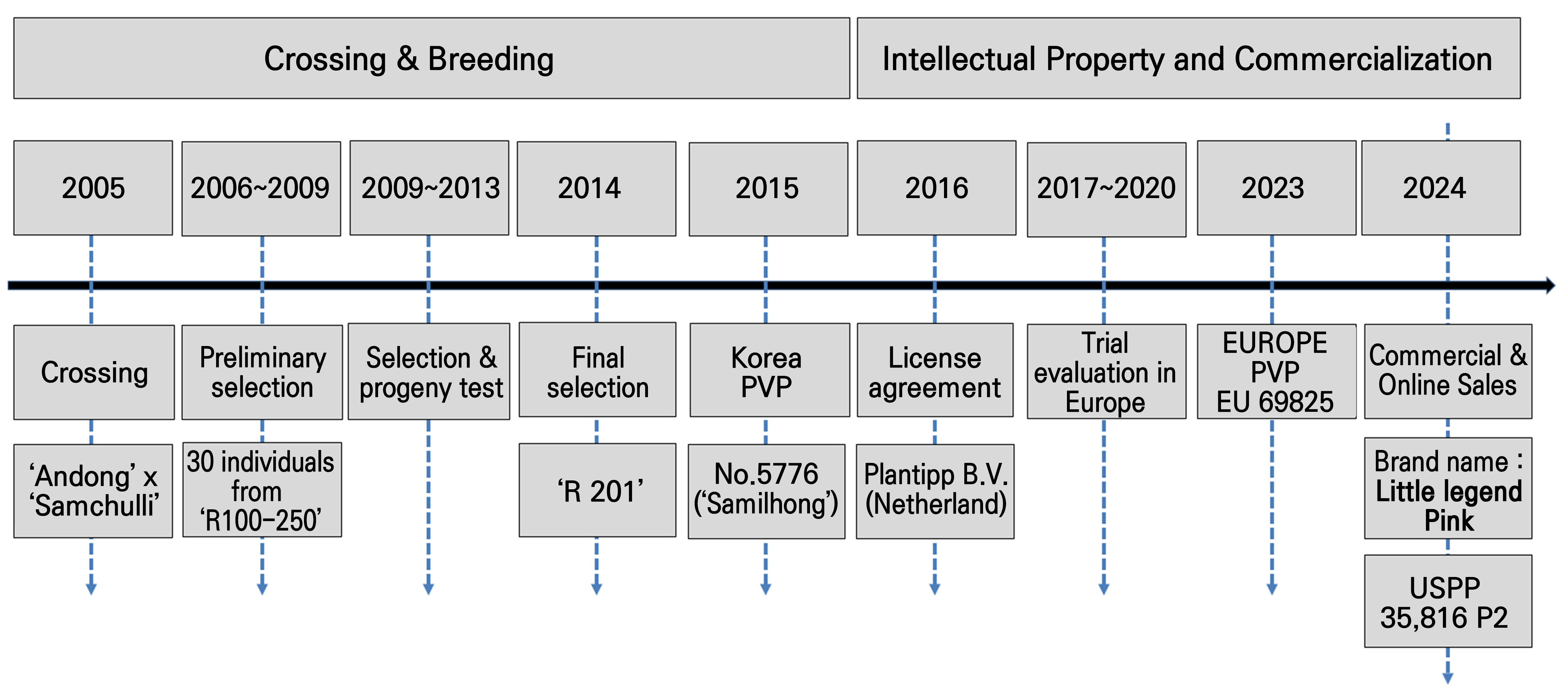
Asexual propagation of ‘R-201’ was initially achieved by the inventors via stem cuttings in 2012 in Cheonan-si, Chungcheongnam-do, Republic of Korea. Subsequent asexual propagation by stem cuttings confirmed the stability and true-to-type reproduction of the cultivar’s characteristics across successive generations. To confirm proper trait stability and uniformity, progeny testing and field evaluations were conducted over three consecutive years (2012–2014; Fig. 1). Based on the consistent performance observed in these trials, the line was officially released as the cultivar ‘Samilhong’ in 2014, demonstrating its suitability for ornamental container applications. Subsequently, European Plant Breeders’ Rights (EU 69825) were granted in 2023, with the protection published on August 15, 2023. Concurrently, a U.S. plant patent application filed on May 21, 2024 was eventually granted as USPP 35,816 P2 (Fig. 1).
Growth characteristics
Growth characteristics of H. syriacus ‘Samilhong’ and the control cultivar ‘Samchulli’ were quantitatively assessed across multiple developmental stages (Table 1). ‘Samilhong’ consistently displayed a dwarf and compact growth habit, characterized by a reduced plant height, balanced canopy width, and lower shape indices compared to those of ‘Samchulli’. At five years of age, ‘Samilhong’ exhibited a height of 122.0 ± 5.7 cm and a shape index of 0.85 ± 0.09; in contrast, ‘Samchulli’ attained a height of 228.0 ± 13.5 cm with a shape index of 1.38 ± 0.12, indicating a tendency for more pronounced upright growth. Similar patterns of stable dwarfism and moderate shoot elongation were observed in younger ‘Samilhong’ plants at the one- and three-year stages. These findings are consistent with reports on other dwarf cultivars suitable for containers and bonsai, such as H. hybrid ‘Jinsun’, ‘Red Heart’, ‘Baekryeongdo’, ‘Dasom’, ‘Red Bohanjae’, ‘Ggoma’, and ‘Lil’ Kim’ (Kim et al. 2015; Ha et al. 2015b; Kim 2016). The sustained compact and manageable shoot architecture of ‘Samilhong’ throughout its growth and development contrasts strongly with the vigorous vertical growth typical of ‘Samchulli’. On the basis of these traits, ‘Samilhong’ is considered to be highly suitable for spatially restricted planting areas, urban landscapes, and ornamental applications demanding a controlled plant size and form.
Table 1.
Growth characteristics of the new cultivar ‘Samilhong’
| Cultivar | Plant type |
Tree height (cm) (A) |
Canopy width (cm) (B) |
Shape index (A/B) |
Shoot length (cm) |
| ‘Samilhong’ | 15-year-old mother plant | 158.0 | 182.0 | 0.86 | 58.8 ± 6.3 |
| 5-year-old grafted plant | 122.0 ± 5.7z | 144.0 ± 9.6 | 0.85 ± 0.09 | 44.8 ± 6.1 | |
| 3-year-old grafted plant | 73.2 ± 2.4 | 79.4 ± 3.5 | 0.92 ± 0.06 | 46.8 ± 8.5 | |
| 1-year-old grafted plant | 44.0 ± 5.6 | 52.0 ± 5.7 | 0.86 ± 0.04 | 38.4 ± 8.1 | |
| ‘Samchulli’ (control) | 5-year-old grafted plant | 228.0 ± 13.5 | 165.0 ± 8.7 | 1.38 ± 0.12 | 64.0 ± 6.5 |
| 1-year-old grafted plant | 62.0 ± 9.0 | 40.0 ± 6.1 | 1.60 ± 0.46 | 32.0 ± 5.7 |
Growth habit and landscaping potential
A comparative analysis of the growth habit and landscaping potential of ‘Samilhong’ and ‘Samchulli’ was conducted (Table 2). ‘Samilhong’ is characterized by a dense branching pattern, compact dwarf stature, and slightly ascending stems. In contrast, ‘Samchulli’ exhibits an intermediate branch density, a tall upright habit, and strongly erect stems. The compact, dense stem architecture of ‘Samilhong’ is highly suitable for hedges, container and patio plantings, foundation beds, and narrow spaces and is thus is well suited to urban and spatially restricted landscapes. Conversely, the vigorous upright growth form of ‘Samchulli’ is appropriate for traditional hedges and as a specimen tree in expansive landscapes. These findings underscore the utility of ‘Samilhong’ as a compact, low-maintenance ornamental shrub tailored to modern landscape design requirements.
Table 2.
Growth habit and stem characteristics of the new cultivar ‘Samilhong’
Visual representation of growth and flowering
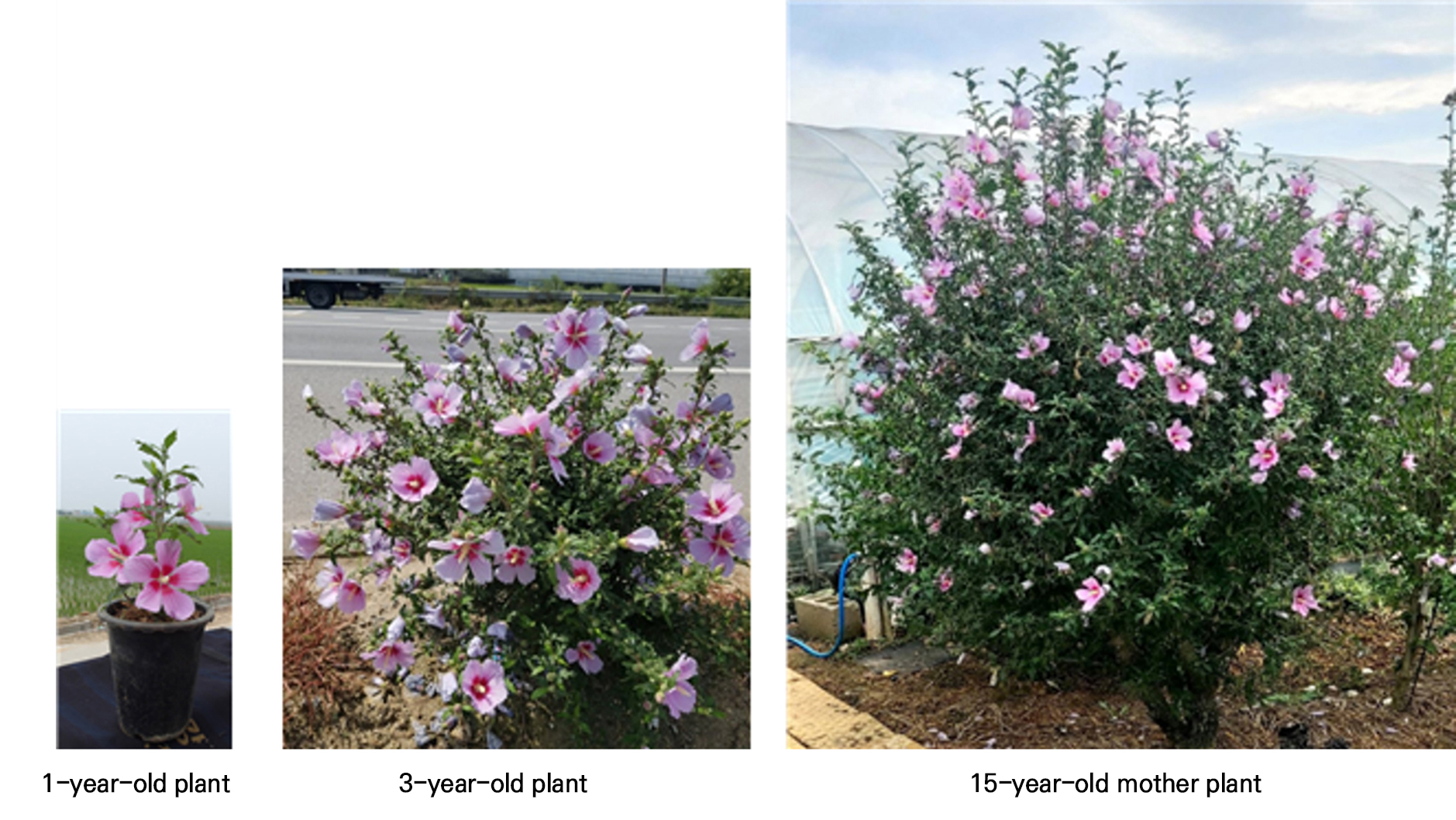
Fig. 2 graphically illustrates the growth habit and flowering performance of ‘Samilhong’ across three distinct developmental stages. The container-grown, one-year-old grafted plant exhibited precocious flowering, indicating its suitability for quick-impact ornamental applications. The three-year-old grafted plant, cultivated under open-field conditions, demonstrated a stable dwarf and compact growth habit, characterized by a high density of short shoots and prolific flowering. Notably, the 15-year-old mother plant consistently maintained its dwarf stature, dense branching, and abundant floral display, confirming the long-term stability of the cultivar’s dwarfism and floriferous traits. These observations suggest that ‘Samilhong’ possesses advantageous horticultural characteristics, including early flowering, compact growth, and sustained high flower productivity, making it suitable for both landscape and container cultivation.
Leaf morphology
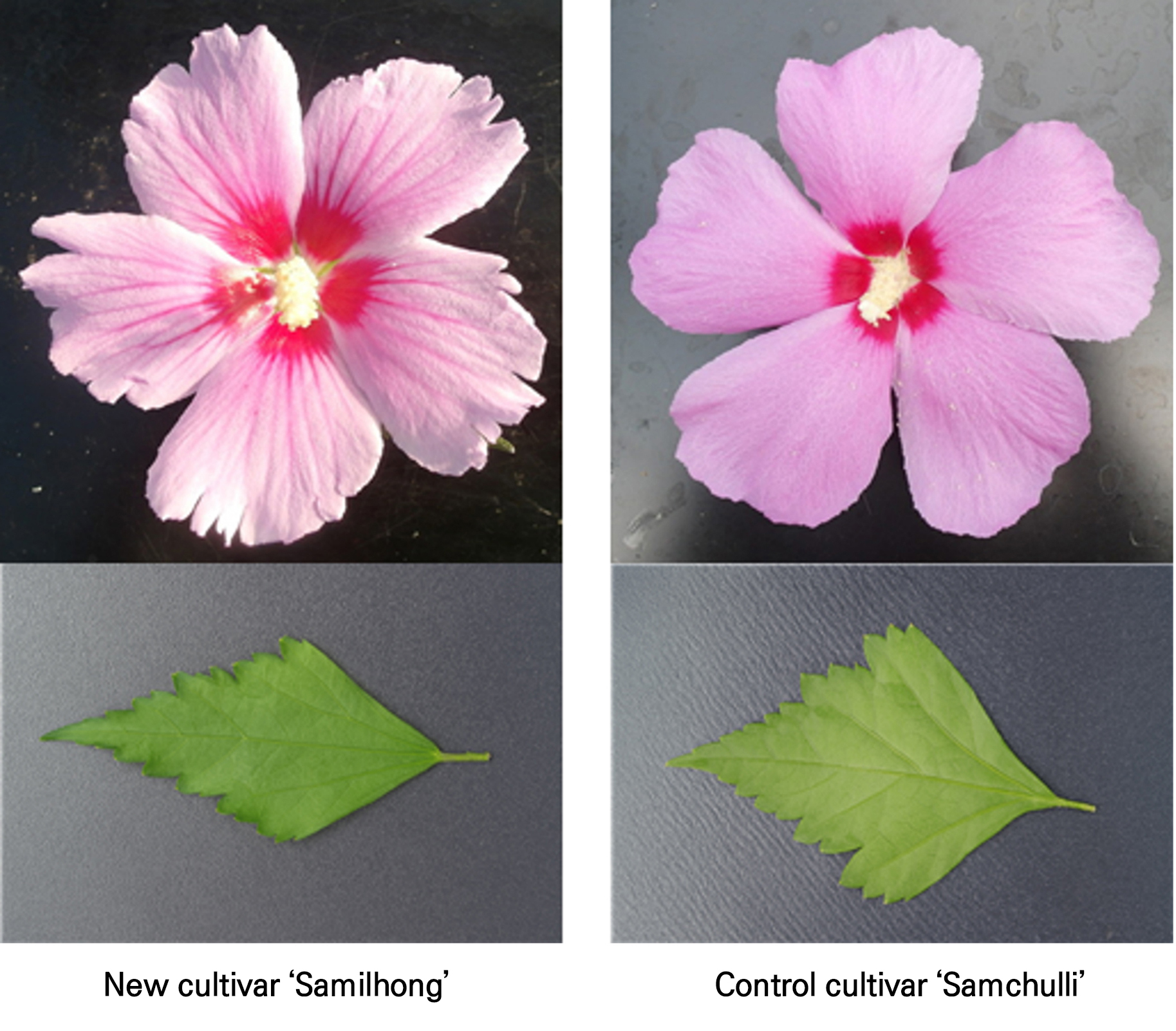
‘Samilhong’ exhibits a distinct leaf morphology compared to that of the control cultivar ‘Samchulli’ (Table 3). Although both cultivars share an ovate leaf shape with an acute apex and cuneate base, ‘Samilhong’ has a significantly greater leaf length (5.94 ± 0.30 cm) and petiole length (0.84 ± 0.27 cm) compared to those of ‘Samchulli’. Conversely, ‘Samilhong’ shows a markedly reduced leaf width (2.38 ± 0.13 cm) and leaf shoulder width (1.76 ± 0.18 cm) relative to those of ‘Samchulli’. This combination of slender, elongated leaves with deeper lobes enhances the ornamental appeal of ‘Samilhong’, conferring a distinctive visual character that differentiates it from conventional cultivars.
Table 3.
Leaf shape and size characteristics of the new cultivar ‘Samilhong’
| Cultivar |
Leaf Shape |
Apex shape |
Base shape |
Leaf length (cm) |
Leaf width (cm) |
Leaf shoulder width (cm) |
Petiole length (cm) |
| ‘Samilhong’ | Ovate | Acute | Cuneate | 5.94 ± 0.30z | 2.38 ± 0.13 | 1.76 ± 0.18 | 0.84 ± 0.27 |
| ‘Samchulli’ (control) | Ovate | Acute | Cuneate | 4.82 ± 0.29 | 3.40 ± 0.29 | 2.18 ± 0.24 | 0.40 ± 0.10 |
|
t-statistic (p-value) | - | - | - | 5.987 (< 0.001) | ‒7.141 (0.001) | ‒3.130 (0.015) | 3.415 (0.018) |
Floral morphology
The floral morphology of ‘Samilhong’ differs distinctly from that of ‘Samchulli’ (Table 4). While both cultivars produce single flowers with a red eye spot and a pinkish-purple corolla, ‘Samilhong’ is distinguished by a significantly stronger degree of petal margin serration and undulation, which collectively confer a more intricate and ornamental floral texture. Furthermore, the petal overlap pattern differs substantially; ‘Samilhong’ exhibits slight overlap (I-b), resulting in a more open floral display, whereas ‘Samchulli’ shows complete overlap (I-c), creating a more compact floral form. Both cultivars consistently maintain the typical fan-type floral architecture.
Table 4.
Floral morphological characteristics of the new cultivar ‘Samilhong’
Fig. 3 illustrates these floral differences: ‘Samilhong’ possesses narrower, elongated petals with pronounced serration and undulation, slight petal overlap (I-b), and a larger, more vivid red eye spot. In contrast, ‘Samchulli’ displays broader, smoother petals with complete overlap (I-c) and a smaller eye spot. These morphological distinctions underscore the unique ornamental attributes of ‘Samilhong’.
Quantitatively, ‘Samilhong’ exhibits a smaller flower diameter (9.7 ± 0.8 cm) and reduced petal length and width (5.87 ± 0.2 cm and 3.64 ± 0.2 cm, respectively) compared to those of ‘Samchulli’ (13.3 ± 0.3 cm, 7.5 ± 0.3 cm, and 5.34 ± 0.2 cm, respectively; p <0.01). Conversely, ‘Samilhong’ possesses a significantly longer red eye spot (4.24 ± 0.2 cm) than ‘Samchulli’ (1.54 ± 0.1 cm; p <0.01), whereas the stigma length is slightly shorter in ‘Samilhong’ (Table 5). These traits, particularly the prominent and elongated eye spot, are consistent with characteristics reported in other cultivars, such as ‘High Lee Red’, ‘Gaeryang Dansim’, ‘Nonggajeong’, ‘Hunjang’, ‘Byeoli’, H. hybrid ‘Mujigae’, and H. hybrid ‘Daemang’ (Kim 2016).
Table 5.
Floral size characteristics of the new cultivar ‘Samilhong’
| Cultivar |
Flower diameter (cm) |
Petal length (cm) |
Petal width (cm) |
Length of red eye spot (cm) |
Stigma length (cm) |
| ‘Samilhong’ | 9.7 ± 0.8z | 5.7 ± 0.2 | 3.6 ± 0.2 | 4.2 ± 0.2 | 3.5 ± 0.1 |
| ‘Samchulli’ (control) | 13.3 ± 0.3 | 7.5 ± 0.3 | 5.3 ± 0.2 | 1.5 ± 0.1 | 4.6 ± 0.1 |
| t-statistic (p-value) | ‒9.394 (0.000) | ‒10.955 (0.000) | ‒15.336 (0.000) | 26.613 (0.000) | ‒16.454 (0.000) |
The flower longevity of ‘Samilhong’ extends to approximately 54 h, which is substantially longer than that of ‘Samchulli’, in which flower abscission is completed within 16 h (Table 6). This extended floral longevity, combined with a greater profusion of flowers, significantly enhances the ornamental potential of ‘Samilhong’ in landscape applications.
Notes for Production
Hibiscus syriacus ‘Samilhong’ demonstrates high adaptability to diverse horticultural conditions, exhibiting optimal growth and flowering performance in well-drained soils with moderate moisture content levels. While it tolerates partial shade, maximal floral display is achieved under full sun exposure. The cultivar thrives in moist, organically enriched soils but also tolerates relatively infertile soils and periods of drought stress, underscoring its ecological resilience. Furthermore, ‘Samilhong’ exhibits notable tolerance to high summer temperatures and humidity and is thus well adapted to a broad range of climatic regions.
Horticultural management practices, particularly pruning, are recommended to optimize its ornamental value. Spring pruning will maintain a compact plant form, whereas more intensive pruning in late winter or early spring (reducing stems to two or three buds) will promote the development of larger flowers. The cultivar is readily propagated via stem cuttings, ensuring clonal fidelity and preservation of its unique traits. Although propagation from seed is possible, seed-derived progeny may exhibit variability with regard to flower color and other characteristics compared to the parental plant. Collectively, these attributes highlight the horticultural versatility and flexible management of ‘Samilhong’, supporting its considerable potential for widespread adoption in ornamental landscapes and container cultivation.
International Intellectual Property Rights and Availability
The commercialization of ‘Samilhong’ was executed through a comprehensive international strategy encompassing legal protection, licensing, and market introduction. In 2015, the cultivar was granted plant variety protection in Korea (PVP No. 5776), thereby confirming its distinctiveness, uniformity, and stability. A licensing agreement was subsequently established in 2016 with Plantipp Nursery Co. (Netherlands) to facilitate its entry into the European market. Extensive trial evaluations were conducted across the Netherlands and France from 2017 to 2020 to assess its horticultural performance and market acceptance under European conditions.
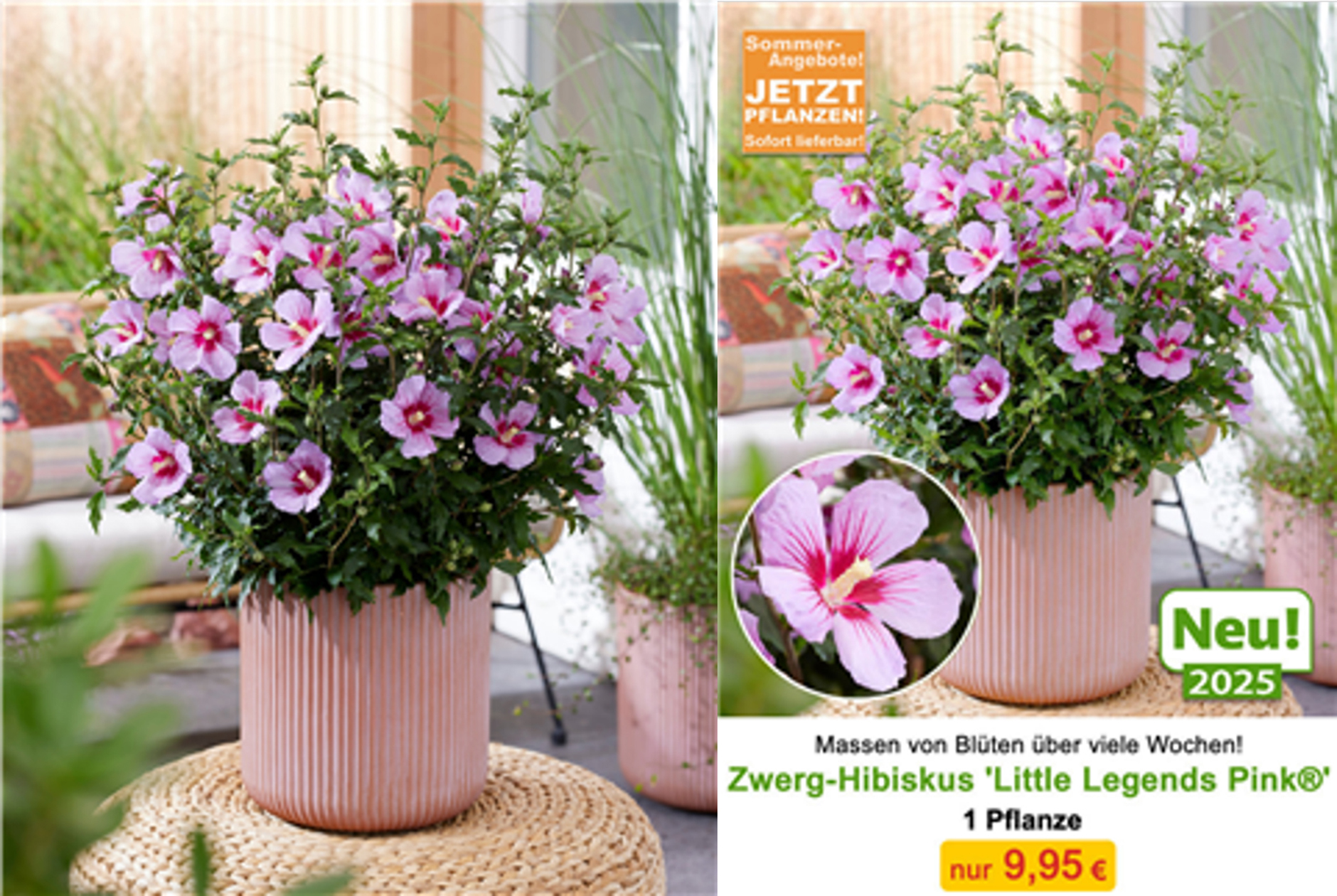
Following successful trials, European Community plant variety rights (EU 69825) were granted on August 15, 2023. Upon securing legal protection and completing market trials, the cultivar was commercially released in Europe in 2024 under the trade name ‘Little Legends Pink’, marking its entry into both conventional and online retail markets (Figs. 1 and 4). Concurrently, a U.S. plant patent application was filed on May 21, 2024 and subsequently granted as USPP 35,816 P2. This case exemplifies the critical importance of integrating breeding efforts, intellectual property management, international partnerships, and rigorous market testing for the successful global deployment of novel ornamental cultivars. The commercialization trajectory of ‘Samilhong’ underscores the capacity of Korean-bred H. syriacus cultivars to attain competitive positioning in international horticultural markets via scientifically informed and strategically executed breeding and marketing programs.