Review

Horticultural Science and Technology. 28 February 2026. 1-25
https://doi.org/10.7235/HORT.20250064

ABSTRACT


MAIN

  • Introduction

  • Climate Change: An Important Concern

  • Overview of Metabolic Profile Changes under Stress Owing to Climate Change

  • Comprehensive Influence of Ecological Factors on Plant Secondary Metabolite Biosynthesis

  • Metabolic Engineering of Plant Secondary Metabolites

  • Functional Genomics of Plant Secondary Metabolites

  • Transcription Factors and Genes Related to Plant Secondary Metabolites

  •   WRKY Transcription factors

  •   MYB Transcription factors

  •   bHLH Transcription factors

  •   bZIP Transcription factors

  • Effects of Genetic Factors on the Biosynthesis of Metabolites

  •   Transcription factors involved in the biosynthesis of alkaloids

  •   Transcription factors involved in the biosynthesis of phenolic acids

  •   Transcription factors involved in the biosynthesis of flavonoids

  • Conclusions

Introduction

Metabolites produced by horticultural plants are crucial for environmental adaptability despite the fact that they are not directly involved in growth, development, or reproduction (Holweg et al. 2025). These substances have a variety of chemical configurations and biological roles; they attract pollinators, control growth and development, and provide a defense against infections and herbivores (Erb and Kliebenstein 2020; Naamala and Smith 2020). It is essential to understand the genetic foundations of secondary metabolite production and their ecological roles in fostering sustainable agriculture and protecting natural ecosystems. The genes responsible for secondary metabolite production contribute significantly to plant adaptation under environmental stress. Plant secondary metabolites were once commonly believed to be tiny biological molecules that weren’t necessary for an organism to survive (Clemensen et al. 2020). It is now widely acknowledged, nonetheless, that plant secondary metabolites are crucial for environmental adaptation because they shield organisms from environmental stress and promote the development of symbiotic relationships (Zhan et al. 2022). Various secondary metabolites have been classified as phenolics, flavonoids and terpenoids, among other classes (Table 1).

Table 1.

Various plant secondary metabolites secreted by different horticultural plants

Secondary metabolites Examples Plant species References
Phenolics Chlorogenic acid Lonicera japonicaWang et al. 2020
Chlorogenic acid Magnolia officinalisHyeon et al. 2021
Chicoric acid Echinacea purpureaSalmanzadeh et al. 2020
Coffee quinic acids Coffee Pinto et al. 2021
Dicoffee quinic acids Coffee Bachheti et al. 2021
Eugenol Cinnamomum verumGao et al. 2020
Magnolol Magnolia officinalisNiu et al. 2021
Quinic acid Coffee Alcázar Magaña et al. 2021
Total phenolic Astragalus compactusNurzyńska-Wierdak 2023
Flavonoids Baicalin Scutellaria baicalensisPei et al. 2022
Flavonoids Scutellaria baicalensisXu et al. 2020b
Hyperin rutin and quercetin Magnolia officinalisZeru 2023
Luteolin Lonicera japonicaGuan et al. 2023
Total flavonoids Scutellaria baicalensisLi et al. 2023
Terpenoids/ Essential Oils Camphor, 1,8-cineole Achillea millefoliumFar et al. 2023
Essential oils Cinnamomum cassia; Cinnamomum verumWerrie et al. 2021
Essential oils Magnolia zeniiBharti et al. 2023
Essential oils Citrus medicaBordoloi et al. 2022
Myrcene, Ocimene Antirrhinum majusTerry López 2020
Triterpene Codonopsis pilosulaWang et al. 2023
Others Azulene Achillea millefoliumSatari et al. 2021
Oleanolic acid, Ecdysterone Achyranthes bidentataLiu et al. 2020b
Saponins Panax notoginsengZhang et al. 2020b
Trans-cinnamaldehyde Cinnamomum cassiaWerrie et al. 2022

Environmental conditions such as heat, cold, and drought put plants under continual stress, which can harm crop quality and yields. Plants use a variety of strategies to reduce the harm caused by stress, such as adjusting gene expression and plant secondary metabolites synthesis (Jan et al. 2021; Anas et al. 2025a). Alfalfa plants activate an antioxidative mechanism to scavenge reactive oxygen species under biotic and abiotic forms of stress (Anas et al. 2025a). Because poplars (Populus spp.) have more lignin, they have a greater ability to withstand heat. Furthermore, transcriptome and RT-qPCR analyses revealed that key genes (PtrMYBs, PtrC3’H1, PtrCCR2) are highly expressed under high temperatures, indicating their role in lignin accumulation and offering insights for improving lignin quality and for more efficient resource utilization (Zhao et al. 2022). Likewise, poplar plants increase the amount of lignin accumulated in their stems to tolerate high-temperature stress through higher production levels of caffeate and conifer aldehyde (Movahedi et al. 2021). Similar to this, sweet potatoes (Ipomoea batatas (L.) Lam.) have several B-box transcription factor genes, including IbBBX28. Additionally, an adverse correlation between IbBBX28 and plant resilience to water deficiency was investigated. This lays the foundation for future studies on the role of B-box transcription factors in enhancing stress resilience in sweet potato (Gao et al. 2023).

For a detailed understanding of how plants control the manufacturing of their secondary metabolites and molecular processes analysis behind the procedure, it is imperative to explore functional genes. The molecular mechanisms regulating the synthesis of monoterpenes and sesquiterpenes in Cinnamomum burmannii were investigated, with a focus on their roles in the composition of essential oil (Xu et al. 2023). It was discovered that C. burmannii is the source of essential oil, a finding that led to an investigation of the genes and lncRNAs specifically regulated during the production of monoterpenoids and sesquiterpenoids (Hou et al. 2023). Additionally, scientists provided a fresh perspective on the workings of the plant secondary metabolites produced in C. burmannii. Additionally, it was shown that several WRKY transcriptional factors play a subcellular role in protoberberine production alkaloids in Coptis chinensis Franch (Liu et al. 2021a). This is significant when seeking to understand climatic changes and adaptations in plants at the genomic level for agricultural sustainability.

Climate Change: An Important Concern

The existence of plants is being threatened by climate change, which is a severe issue that is present around the world. Environmental variables, such as weather conditions and biological factors, influence a plant’s secondary metabolites. Therefore, any alterations to these circumstances may have impacts on the production of various therapeutic species (Khare et al. 2020). Furthermore, billions of people rely on herb-based medications for treatment and cures, even in the presence of the widespread use of manmade and organic-based pharmaceuticals. Plants continue to be among the most important sources of medicine. Currently, numerous natural compounds are being investigated for their alleged capacity to lower illness risk and promote healthy aging. As a result, several plant species are very important, and numerous plant parts can provide a diversity of secondary metabolites (Srivastava et al. 2021).

An estimated four billion people, or 80% of the global population, reside in underdeveloped nations where traditional medicine and pharmaceuticals are their primary sources of healthcare (Qinsheng and Ginting 2022). The World Health Organization estimates that over 21,000 species of plants, totaling approximately 45,000 distinct varieties, are used for medicinal purposes. Many chemicals commonly utilized in the food, cosmetic, and pharmaceutical industries, such as terpenoids, phenols, steroids, flavonoids, tannins, and aromatic compounds, can be derived from medicinal plants (Pant et al. 2021). These chemicals, often referred to as plant-based secondary metabolites (e.g., specialized products), are thought to be defense compounds that help the plant interact with its surroundings and adapt. They are not necessary for the plant’s progression and expansion. Discoveries thus far include approximately 2,140,000 secondary metabolites, classified into many types (Pant et al. 2021). Due to the great chemical variety of these plants as well as the ability to generate novel medicines with low side effects and commercial value, the demand for medicinal plants has expanded significantly in the last era. Numerous studies have examined several classes of secondary metabolites as possible therapeutic or prophylactic agents for several major illnesses or conditions, including diabetes, cancer, Alzheimer’s disease, cardiovascular disease, ulcers, diabetes, asthma, and Parkinson’s disease (Adetuyi et al. 2022; Thirugnanasambantham et al. 2023).

In addition to vital contributions to many facets of human existence, vegetation is impacted by a diversity of ecological issues throughout its growth and development, including changes in temperature, light intensity, high carbon dioxide levels, UV radiation, ozone, drought, salt, and floods. These ecological elements are significant because different vegetal species require different ecological circumstances to develop (Mahajan et al. 2020). In tandem with a rise in CO2 to 407.4 parts per million, the mean annual temperature is rising at a quicker pace of 0.06–0.1°C/year. Changes in the climate have an influence on plants’ physiology along with their typical behaviors, which in turn has an impact on secondary metabolite production (Ofiti 2022). Research has indicated that certain environmental conditions, such as high CO2 levels, high temperatures, ozone, UV radiation, and drought, harm plant metabolism, growth, and productivity by changing metabolites (Table 2). These studies, however, are frequently patchy and currently contain insufficient data for a proper comprehension of the precise function that each environmental component plays in the production and buildup of secondary metabolites (Naamala and Smith 2020). Numerous individuals as well as entire communities are greatly impacted by plant species, which also have substantial economic worth. We can therefore hypothesize that certain plants, which are important sources of bioactive compounds, may be influenced by various factors that regulate the synthesis and accumulation of secondary metabolites (Yadav and Siddiqui 2023). Such influences can create challenges related to deficiencies in metabolite production, as well as complications during extraction, purification, and removal of contaminants in the development of medicinal products. Important variations related to weather change and environmental alterations can arise during the production of secondary metabolites (Ahmadi-Lahijani and Moori 2022).

Table 2.

Various plant species for which metabolite synthesis is affected by climatic change

Plant species Climatic factor References
Asparagus aethiopicus Salinity Punetha et al. 2022
Brassica napus Drought Jabeen et al. 2021
Brassica oleracea UV light Sathasivam et al. 2023
Carthamus tinctorius Salinity Kim et al. 2021
Caryopteris mongolica UV light Nocchi et al. 2020
Chrysanthemum morifolium Drought Yeloojeh et al. 2020
Cucumis sativus Drought Abdelaziz et al. 2021
Cuminum cyminum UV light Kamel et al. 2022
Cynara cardunculus Salinity Pappalardo et al. 2020
Kalanchoe pinnata UV light Fkiara et al. 2020
Lactuca sativa Drought Ouhaddou et al. 2023
Lotus japonicus Drought García-Calderón et al. 2020
Mentha piperita Salinity Assaf et al. 2022
Nicotiana tabacum Drought Begum et al. 2021
Ocimum basilicum Salinity Saia et al. 2021
Ocimum spp. Drought Mulugeta and Radácsi 2022
Oryza sativa Drought Yadav et al. 2021
Salinity Shahzad et al. 2021
Red pepper Salinity Zamljen et al. 2022
Ribes nigrum UV light Rizwana et al. 2022
Solanum Lycopersicon Salinity Abdel-Farid et al. 2020
UV light Pizarro-Oteíza and Salazar 2022
Thymus vulgaris Drought Szabo et al. 2022
Triticum aestivum Salinity Khan et al. 2022
UV light Semenov et al. 2020
Drought Yadav et al. 2021
Vigna radiata UV light Gamit and Amaresan 2023
Vitis vinifera Drought Savoi et al. 2020
UV light Del‐Castillo‐Alonso et al. 2021
Zea mays Drought Chávez-Arias et al. 2022
Salinity Shahid et al. 2023
UV light Yavaş et al. 2020

Henceforth, it is concluded that climate change is threatening the existence of plants, particularly in regions with high biodiversity. Environmental variables, such as climate and ecological concerns, disturb secondary metabolite quantity levels in plants, potentially impacting their production (Wang et al. 2017; Srivastava et al. 2021). Plants serve as a vital source of medicine, with more than half of the worldwide population depending on them for a range of treatments. The demand for medicinal plants has grown significantly over the last era owing to their biochemical variety and potential to contain therapeutic or prophylactic agents that can be used to treat various diseases (Li et al. 2016; Abdallah et al. 2023). Ecological factors, such as high temperatures, sunlight intensity, and climate, also affect plant growth and productivity. Changes in these factors could lead to shortages and other issues related to the manufacturing and decontamination of therapeutic products.

Overview of Metabolic Profile Changes under Stress Owing to Climate Change

Metabolism is strongly linked to plant production and reflects biological circumstances and activities. With advancements in metabolite detection and identification over the past ten years, particularly with the use of mass-spectrometry-based analytical techniques, research on metabolic control under stressful circumstances has been simplified (Medda et al. 2022). Metabolomic studies of Arabidopsis and horticultural plant species have been carried out to gain a greater understanding of cellular states under stress. It appears that plants reorganize their metabolic network to adapt to stressful environments. Factors controlling metabolic movements were examined in conjunction with other “omic” investigations, such as transcriptome experiments, using metabolic changes as a “map” or “marker” (Salam et al. 2023).

Tomato (Solanum lycopersicum) under drought and heat stress upregulate transcription factors such as SlDREB and SlAREB, which regulate proline biosynthesis genes (e.g., P5CS) and the ABA signaling pathway, resulting in the increased accumulation of osmoprotectants and antioxidants (Orellana et al. 2010; Xue et al. 2023). In grapevines (Vitis vinifera), elevated temperatures downregulate VviMYBA1 and VviUFGT, key genes for anthocyanin biosynthesis, reducing the pigment content, while mild water stress can stimulate the ABA-mediated upregulation of VviMYBA1, enhancing anthocyanin levels (Leng et al. 2025). For Capsicum annuum, salinity and heat stress upregulate PAL and CHS, promoting the biosynthesis of capsaicinoids and flavonoids (Zhang et al. 2024). Similarly, in strawberry (Fragaria × ananassa), UV-B and drought stress induce FaAKR23 genes that increase ascorbic acid and anthocyanin (Wei et al. 2022). Lettuce (Lactuca sativa) exposed to cold and high light stress shows altered expression of glucosinolate biosynthesis genes MYB28 and MYB29, boosting stress resistance and enhancing nutritional quality (Li et al. 2021). These genomic shifts reflect the dynamic interplay between environmental stress and plant metabolism, shaping both crop resilience and quality.

It has also been validated that CBF/DREB1 transcription factors are crucially linked to Arabidopsis’s ability to acclimatize to cold and tolerate it. In Arabidopsis, sulfur deficiency triggers the formation of glucosinolate (Meraj et al. 2020). A thorough examination of time-series data pertaining to the levels of metabolites and transcripts using self-organizing mapping revealed that the transcription factors MYB28 and MYB29, together with several downstream enzymes, are responsible for the synthesis of glucosinolate during the sulfur-starvation stress response (Mitreiter and Gigolashvili 2021). The fact that glucosinolate and transcripts for glucosinolate biosynthetic enzymes were present in lower and larger amounts in a gene knockout mutant and in transgenic plants overexpressing MYB28, respectively, supported the role of MYB28 in glucosinolate production (Chen et al. 2024). Henceforth, it is concluded that metabolism is crucial for plant production and adapts to stressful environments. Advancements in metabolite detection and identification have made research easier. Studies of Arabidopsis reveal that transcriptional factors such as MYB28 and MYB29 function as glucosinolate synthesis agents during sulfur-starvation stress.

Similarly, changes in weather often influence primary metabolites such as sugars, amino acids, and organic acids, and secondary metabolites such as phenolics, flavonoids and alkaloids in horticultural plants. For instance, tomato (Solanum lycopersicum) plants exposed to drought stress exhibit elevated levels of proline and soluble sugars, which function as osmoprotectants to maintain cellular turgor and enzyme stability (Patanè et al. 2022). In grapevines (Vitis vinifera), heat stress leads to the increased synthesis of anthocyanins and flavonols, enhancing their antioxidant capacity to counteract oxidative damage (Rienth et al. 2021). In lettuce (Lactuca sativa), salinity stress induces a marked increase in phenolic compounds (Sardar et al. 2023). These metabolic adjustments not only reflect the physiological responses of plant to stress but also influence the quality, flavor, and health-promoting properties of horticultural produce.

Comprehensive Influence of Ecological Factors on Plant Secondary Metabolite Biosynthesis

Many biotic and abiotic stressors influence the production and tissue-specific buildup of plant secondary metabolites, which are tightly controlled in a spatiotemporal manner (Table 3). Environments stress influences how plant secondary metabolites produce and accumulate in plants (Li et al. 2020). In the Brassicaceae family, glucosinolates play a significant role as precursors to a variety of active compounds. Strong light, high temperatures, and droughts cause more glucosinolate accumulation in Brassica rapa (Zafar et al. 2020; Rao et al. 2021). Brassica oleracea exhibits strong resistance to freezing and chilling, which is believed to be supported by the low glucosinolate concentration resulting from low temperatures (Essoh et al. 2020). Apart from low temperatures, additional postharvest stressors including wounding also cause B. oleracea to produce glucosinolates through biosynthesis. The specific glucosinolate and phenolic profiles in broccoli sprouts are impacted by both UV-A and UV-B dosages, indicating a significant function related to light stress in glucosinolate production (Chen et al. 2022). Additionally, biotic stressors may affect the composition of glucosinolate in plants. A buildup of indolyl glucosinolates is caused by the expression of CYP79B2, CYP79B3, and PAD33, which are stimulated by aphids. Strong resistance to herbivory is displayed by the gain-of-function Arabidopsis mutant cml42, which has a greater aliphatic glucosinolate content than the wild type (Nogia and Pati 2021). Therefore, glucosinolates in Brassicaceae plants are influenced by light, temperature, and drought, with Brassica rapa and B. oleracea resistant to freezing and chilling (Ljubej et al. 2021). Light, biotic stressors and aphids also impact glucosinolate composition (Zhan et al. 2022).

Table 3.

Effects of climate change on plant secondary metabolites

Climatic factor Secondary metabolites Sub-class of secondary metabolites References
Cold stress Phenolics Flavonoids Kumar et al. 2023a
N- containing Alkaloids Glucosinolates Glycosides Teklić et al. 2021
Terpenoids -- He et al. 2023
Heat stress Phenolics Flavonoids Laddomada et al. 2021
N- containing Alkaloids Glucosinolates Glycosides Rehman et al. 2024
Terpenoids -- Liu et al. 2021b
Elevated carbon dioxide Phenolics Flavonoids Kumar et al. 2020b
N- containing Alkaloids Glucosinolates Glycosides Mahajan et al. 2020
Terpenoids -- Jamloki et al. 2021
Drought Phenolics Flavonoids Laddomada et al. 2021
N- containing Alkaloids Glucosinolates Glycosides Yadav et al. 2021
Terpenoids -- Liang et al. 2021
Low light Phenolics Flavonoids Hu et al. 2020
N- containing Alkaloids Glucosinolates Glycosides Thoma et al. 2020
Terpenoids -- Zhang et al. 2021
High light Phenolics Flavonoids Ferreyra et al. 2021
N- containing Alkaloids Glucosinolates Glycosides Landi et al. 2020
Terpenoids -- Sankhuan et al. 2022
Ultraviolet B-radiation Phenolics Flavonoids Liu et al. 2020a
N- containing Alkaloids Glucosinolates Glycosides Jaiswal et al. 2020
Terpenoids -- Shamala et al. 2020

Phytohormones and terpenoids are frequently involved in plant defense, with examples including sesquiterpene abscisic acid, triterpene brassinosteroids, and diterpene gibberellins (Divekar et al. 2022; Anas et al. 2025b). Long-lasting contact with heat speeds up the buildup of gibberellin in lettuce, which causes bolting. Significant sesquiterpene abscisic acid accumulation takes place in wheat guard cells during water-deficient conditions (He et al. 2023). Through the regulation of many genes along the carotenoid biosynthesis pathway, NaCl stress significantly increases the level of carotenoid in maize sprouts. Carotenoids are a type of tetraterpenoid with strong antioxidant ability. The endogenous brassinosteroids content of winter wheat is elevated by cold treatments, suggesting that triterpene brassinosteroids play a part in enhancing the low-temperature tolerance of wintertime crops (Zhou et al. 2021b; Siddique et al. 2025). Additionally, terpenoid contents in plants can be impacted by biotic stressors. Three significant aromatic terpenes with confirmed cytotoxic properties - linalool, germacrene D, and γ-cadinene - accumulate more readily in a variety of Iranian basil cultivars when subjected to water deficiency stress (Ghassemi et al. 2021). The capacity of oats (Avena spp.) to synthesize certain triterpenoids, such as avenacins, which have antibacterial properties, is most likely what has enabled them to fight several illnesses (Yeshi et al. 2022). Rich in Euphorbia peplus latex, terpenoids serve as protective agents against a range of agricultural phytopathogenic fungi and insect herbivores. Numerous studies have demonstrated the role terpenoids play as phytohormones in the resistance to environmental stress. Plant cells obtain environmental cues from phytohormones, which act as signal molecules (Park 2021). Accordingly, terpenoids play a vital role in plant defense and in their confrontation mechanisms with environmental stress and can be influenced by numerous stressors, such as high temperatures, water deficiency, and biotic stressors, while also being able to act as signal molecules in plant cells.

Abiotic stress conditions have a substantial impact on the formation of phenolic chemicals. Long-term drought treatments significantly reduce several phenolic acids, including protocatechuic, caffeic, and sinapic acids, in several inbred lines of maize (Ranilla et al. 2021). Salt stress causes significant drops in phenolic chemicals, including ferulic acid, salicylic acid, and sinapic acid, in Chinese cabbage. Rice stimulates the root epidermis and stele to secrete more phenolic acid in an alkaline environment (Riaz et al. 2025). This successfully boosts ion absorption and reduces Fe-deficiency responses (Ahlawat et al. 2024). Drought stress significantly raises the levels of phenolics such as chlorogenic and caffeic in Achillea pachycephala. Plants with systemic resistance mediated by rhizobacteria are better able to fend off insects and diseases. Plants under pathogenic stress are bio-protected by phenolic-acid-induced systemic resistance. It has also been discovered that the protective actions of phenolics and rice seedling against Rhizoctonia solani are correlated (Tuladhar et al. 2021). High-performance liquid chromatography research revealed that seedlings infected with Rhizobium show significantly improved phenolic acid production compared to uninfected controls (Zhan et al. 2022). Dendrobium viroid contamination raises the total phenolic concentration in D. officinale orchids, which may be crucial for initiating pathogen defense responses. The biological roles of phenolic acid are multifaceted (Kumar et al. 2020a). The production of phenolic acid is inhibited by some strains, while phenolic acid concentrations are promoted by other pressures. Phenolic acids may have both helpful and harmful influences on the body's capability to endure environmental stress (Marchiosi et al. 2020). Therefore, phosphoric acid can play a vital function in plant defense against environmental stress (Khan et al. 2023). Long-term drought treatments reduce phenolic acids in maize, Chinese cabbage, and Achillea pachycephala (Gharibi et al. 2019). Phosphoric-acid-induced systemic resistance protects plants against insects and diseases while inhibiting or promoting phenolic acid production (Rashid and Chung 2017).

Polyphenols such as flavonoids are antioxidant agents that are necessary for plants to withstand stress. Under environmental stress, plants with higher flavonoid concentrations may have subcellular antioxidant properties (Shi et al. 2025). In model plants, the overabundance of several flavonoids, including cyanidin, quercetin, and kaempferol, has been extensively studied (Ahmed et al. 2021). Certain ortho-dehydroxylated B-ring flavonoids, which are potent ROS scavengers, are found in higher concentrations in Chinese liquorice when exposed to UV-B light (Pandey et al. 2023). Stress tolerance in rice is mostly dependent on flavonoid accumulation, which is enhanced by heat and salt stress. Abiotic stressors have a detrimental effect on the accumulation of flavonoids in several plant species. For instance, under salt stress, Na2+ deposited in Apocynum venetum leaves lowers the quantity of flavonoids and reduces salinity (Chen et al. 2020). In citrus fruit, hesperidin and hesperidin, considered as the main flavonoids, have been extensively studied for their potential to ward off pathogens and poisons (Yan et al. 2024). Short-wavelength radiation increases the levels of many flavonol glycosides, including quercetin and kaempferol glycosides, thus strengthening plant defenses against a variety of herbivorous insects (Rechner et al. 2017). Plants sometimes create another category of flavonoids called anthocyanins under living and nonliving stressors (Shah and Smith 2020). In plants, anthocyanin production and tissue-specific accumulation are influenced by a variety of environmental variables (Do et al. 2023). Water deficiency, lower temperatures, UV-blue rays, and light contact greatly increase the amount of anthocyanin in apples, whereas high temperatures and increased levels of nitrogen fertilizer dramatically decrease the amount (Gao et al. 2021), suggesting that flavonoids, antioxidants essential for plants to withstand stress, are found in various plant species. High flavonoid concentrations can enhance stress tolerance, while biotic stressors can negatively affect their accumulation. Flavonoids in citrus fruits, anthocyanins, and other plants also respond to environmental factors.

Metabolic Engineering of Plant Secondary Metabolites

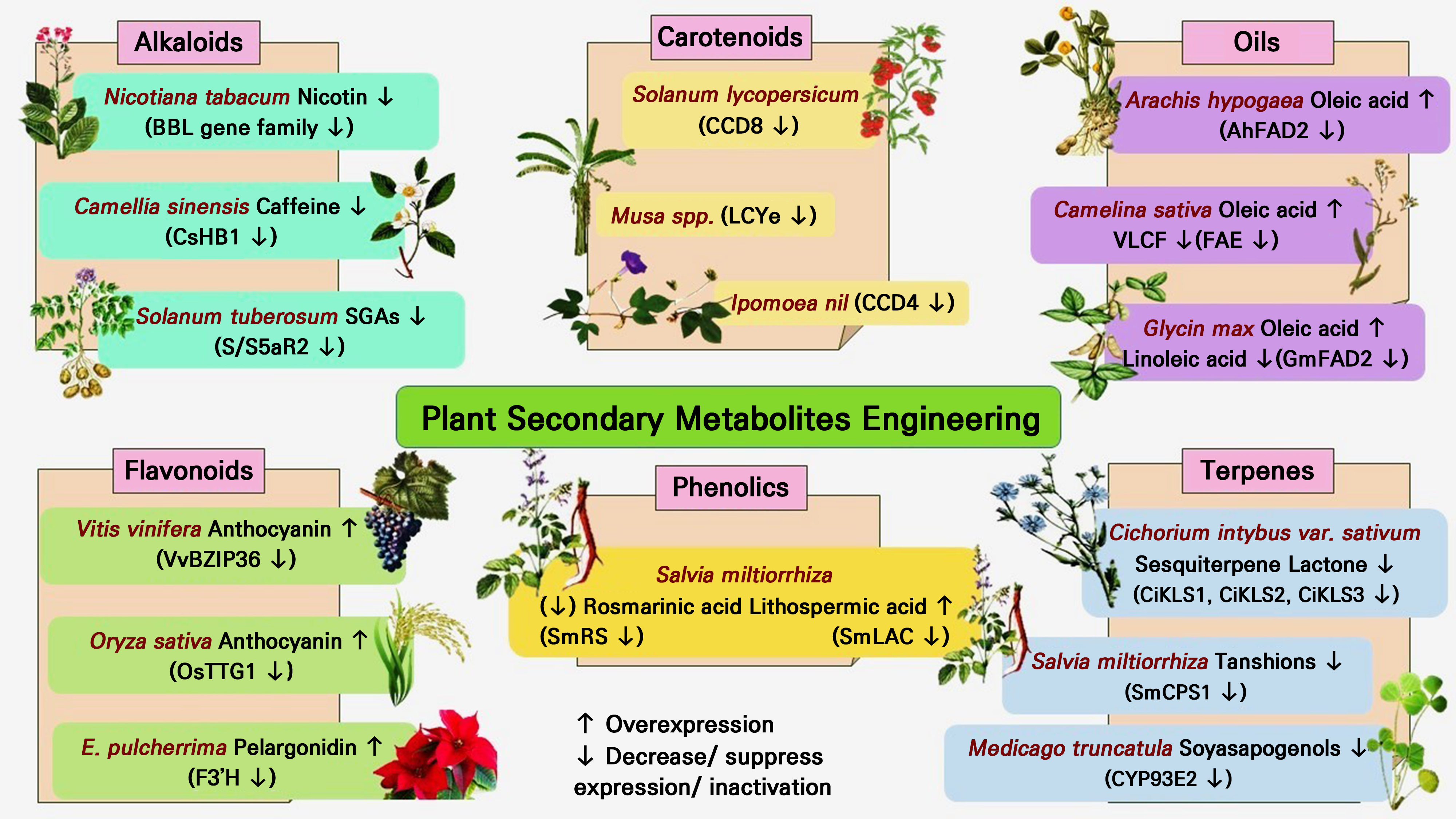
A comprehensive grasp of the entire biological synthetic process and a profound comprehension of the controlling processes governing the start and flow of the aforementioned processes are necessary to realize the lucid engineering of secondary metabolic actions in plants (Barone et al. 2020). For most secondary metabolites, such data are currently unavailable, which explains why metabolic engineering has had only patchy success (Elshamy et al. 2019; Chai et al. 2020). Increased production levels and the targeted production of desired molecules were made possible by recent developments in the metabolic engineering of microbes that produce both built-in and heterologous secondary metabolites (Fig. 1). Additionally, it has proven possible to design cells to produce new substances such as polyketide antibiotics (Vasudevan and Lee 2020). However, unlike those of plants, the biological synthetic routes for organic compounds in microbes are frequently shorter and require fewer enzyme steps to create the required end product. As a consequence of many years of traditional biochemical study, only a few routes (such as flavonoids, terpenoid indoles, and isoquinoline alkaloids) in plants have been fully studied thus far. Genetic engineering can be applied in several ways to improve the manufacturing of desired medications (Anwar et al. 2021).
https://cdn.apub.kr/journalsite/sites/kshs/2026-044-01/N020250064/images/HST_20250064_F1.jpg
Fig. 1.

Graphic demonstration of secondary metabolite engineering in various plants.

It is known that there is great potential with regard to metabolically engineering secondary metabolites obtained from plants by altering anthocyanin and flavonoid pathways, which can result in altered floral colors or greater synthesis of antioxidant flavonols in tomatoes. Nevertheless, there has not been much success in altering pathways to create molecules with significant medicinal value thus far (Mipeshwaree Devi et al. 2023). The high-value tropane alkaloid scopolamine, which was beforehand only present in minute levels in Atropa bella-donna, accumulated as a result of the insertion of a gene that produced hyoscyamine-6b-hydroxylase, previously discovered in Hyoscyamus niger. Scopolamine was produced almost entirely from hyoscyamine (Halder and Roy 2023). This was the first instance of a significant medicinal plant being successfully engineered to produce a valuable end product. While a similar genetic factor was up-regulated in Hyoscyamus muticus hairy roots, an even more pronounced impact was noted. In this instance, there was an accumulation of high quantities of hyoscyamine in the hairy roots in addition to the production of considerable amounts of scopolamine (Özmen et al. 2022). Another illustration is the finding that putrescine N-methyltransferase was downregulated by antisense in transgenic tobacco plants, which coincided with a decrease in the nicotine quantity and however, curiously, likewise resulted in increased levels of anatabine (Zhou and Jander 2021). However, there has been limited success in creating molecules with significant medicinal value. The ectopic production of transcription factors and the activation of entire pathways create new opportunities for developing secondary metabolite pathways (Atkins et al. 2016).

Functional Genomics of Plant Secondary Metabolites

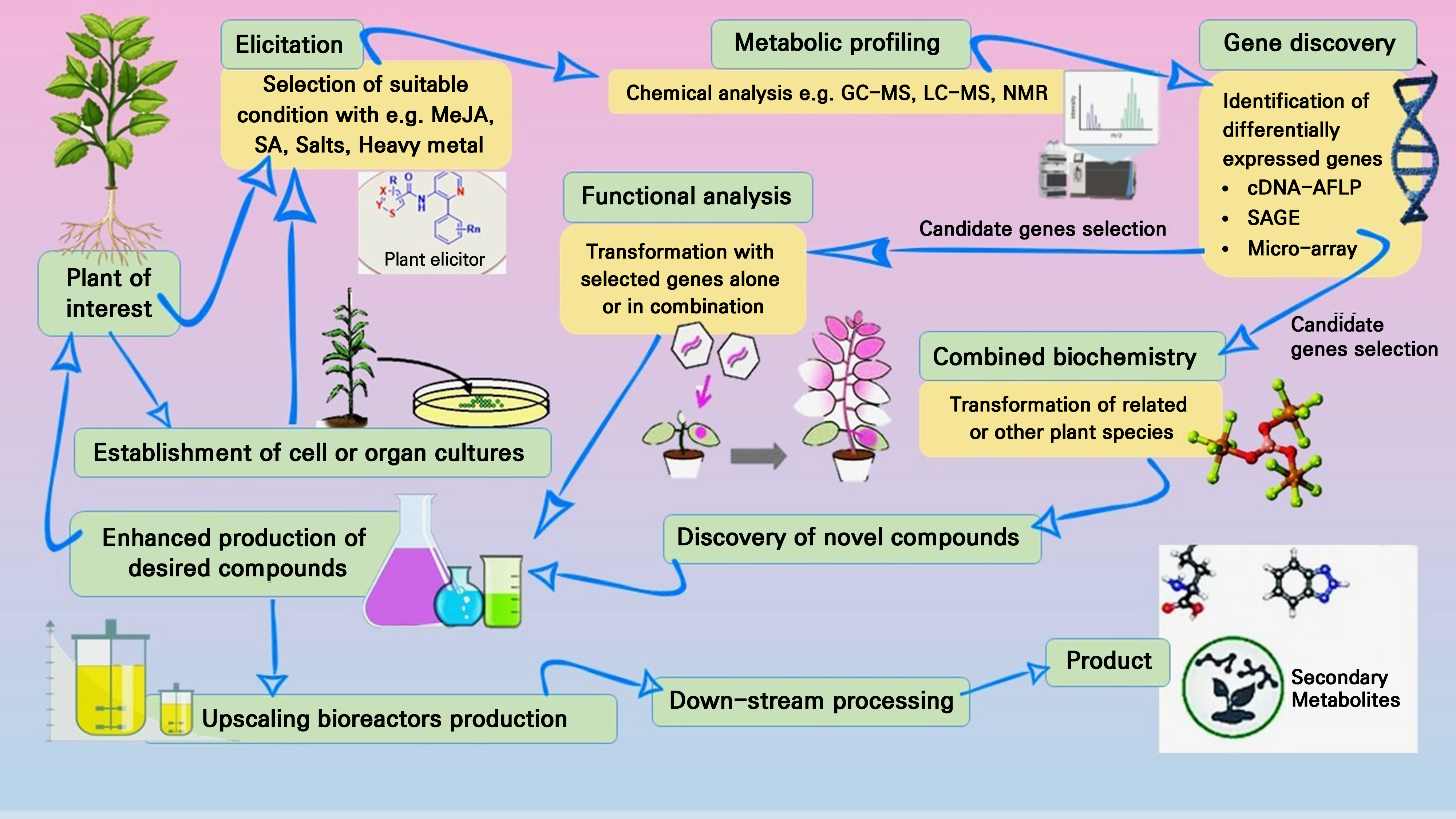
Transcriptomics, proteomics, and metabolomics are three functional genomics techniques that are effective in expediting thorough examinations of biological systems. It is hardly unexpected that almost no such thorough investigations have been published, as most plants that produce important secondary metabolites (such as paclitaxel and terpenoid indole alkaloids) lack genetic tools (Neumann et al. 2020). For a better understanding of how plants regulate their secondary metabolites production and molecular processes, it is imperative to explore functional genes. At the subcellular level, C. chinensis Franch exhibit numerous WRKY transcription factors that are responsible for the production of protoberberine alkaloids. These findings may serve as the basis for more investigations of berberine biosynthesis control methods (Xu et al. 2020a). Genome-wide transcription describing techniques at the cell/organ level may also be used to identify genetic factors which regulate anticipated metabolite build up once the conditions necessary to elicit it (like methyl-jasmonate) have been established (Fig. 2).
https://cdn.apub.kr/journalsite/sites/kshs/2026-044-01/N020250064/images/HST_20250064_F2.jpg
Fig. 2.

Schematic illustration of enhanced secondary metabolite generation by functional genomics in plants.

Many possible secondary metabolites that synthesize genetic materials have been found through transcript profiling, which is a high-throughput functional study to clarify their regulation actions. Examples of this type of analysis include the sequestration of full-length complementary chromosomes, the high-throughput creation of expression vectors for desired products using tools such as Gateway, the development of a rapid transformation method, the optimization of plant tissue cultures, the efficient profiling of metabolites, and measurable analyses (Fig. 2). Characterizing the plant metabolome is a general challenge due to the significant chemical variety and complexity of molecules. When profiling many metabolites simultaneously, analytical methods are challenged by the diversity of chemical characteristics (Li and Gaquerel 2021). This is especially clear with regard to the study of secondary metabolites, which remain significantly intricate compared to primary metabolite profiles. A veritable revolution in the profiling of primary and secondary metabolites has occurred recently (Zhao et al. 2020).

Functional genomics techniques such as transcriptomics, proteomics, and metabolomics are helpful to study biological systems. However, many plants producing secondary metabolites lack genetic tools, making it crucial to explore functional genes to understand their regulation and molecular processes (Xu et al. 2023). A functional genomics method could expedite secondary metabolite pathway gene identification if it could work with tissue culturing as well as known gene sequences. A genome-wide transcriptional profile can recognize genetic materials whose regulation relates to the accumulation of desired metabolites, such as nicotine manufacturing in tobacco cells (Loukola et al. 2015). A high-throughput functional analysis is required to clarify the potential functions of the genetic materials responsible for secondary metabolite synthesis. Post-transcriptional regulation appears to play a role in stress reactions, with mRNA processing and metabolism closely related to stress responses (Hernández-Elvira and Sunnerhagen 2022).

Transcription Factors and Genes Related to Plant Secondary Metabolites

Transcriptional control by transcription factors, the synthesis of inducible secondary metabolites, and the expression of relevant biological synthetic genetic factors are significantly altered at different stages. Transcription factors are DNA-binding proteins that bind to target gene promoter parts using RNA polymerases to change the pace at which transcription initiates (Kumar et al. 2023b). Transcription factors can combine internal and external cues to control enzyme genetic factor regulation and to monitor the built-up of secondary metabolites. Numerous transcription factors regulate the genes linked to the biological synthesis of secondary metabolites at different levels. In recent decades, there has been a surge in the discovery of transcription factors and an increased emphasis on understanding the regulatory mechanisms involved in the biosynthesis of secondary metabolites (Cao et al. 2020). We provide a summary of transcriptional factors linked to secondary metabolites pathway control methods in different plant species in this section and summarize our understanding.

WRKY Transcription factors

Numerous investigations have been conducted on the WRKY transcription factor class in stressed plants. The control of defense-related secondary metabolite biological synthesis is supported via an inducible regulation pattern of WRKY genetic factors. A 60-amino acids long chain was found in WRKY family members, which regulates genes expression (Ma et al. 2024). The primary role of plant WRKY transcription factors is to respond to stress (Adjibolosoo et al. 2024). They are regulated by wound signaling and jasmonic acid, which, along with genetic modifications, influence the production of various secondary metabolites, including terpenoids, alkaloids, and their derivatives. For instance, WRKY3 and WRKY6 are linked to the production of volatile terpenes in tobacco (Biswas et al. 2022). WRKY1 regulates the biological synthesis of gossypol in cotton plants by binding to the promoter region of the gene involved in cadinene synthesis (Xu et al. 2004). Similarly, in Artemisia annua, WRKY1 influences the biosynthesis of artemisinin by attaching to the promoter of the sesquiterpene synthesis gene (Han et al. 2014). Additionally, WRKY1 was investigated in late blight-infected potato plants, where it bound to the promoter site of the gene encoding the production of hydroxycinnamic acid amide (HCAA) by modifying the phenylpropanoid pathway (Xie et al. 2021). These transcriptional factors may control genes function during the generation of secondary metabolites, including terpenoids and alkaloids. They are controlled via signaling pathways as well as the phenylpropanoid modification pathway. The coordinated transcriptional initiation of the entire biosynthetic pathway may not always be caused by a single transcription factor.

MYB Transcription factors

MYBs, among the several types of transcriptional elements, are engaged in the biological synthesis of secondary metabolites and take part in several genetic functions, including development, reproduction, and stress lenience. The DNA-attaching domains of MYB transcript elements, composed of imperfect repetitions of 50–53 amino acids each, vary in number (Thakur and Vasudev 2022). They fall into one of four subclasses, designated R1 to R4, based on repetitions of the DNA-attaching domain. In several plant species, the R2R3 class of MYB transcription factors plays a major role in the control of multiple secondary metabolite pathways. For example, in Arabidopsis thaliana, AtMYB113, AtMYB114, AtMYB75, and AtMYB90 may be implicated in anthocyanin residue modulation by phenylpropanoid synthesis modification (Xiao et al. 2021). Furthermore, in Arabidopsis, aliphatic glucosinolate accumulated in the shoot is linked to MYB29 and AtMYB76, while the accumulation of indole glucosinolates is influenced by AtMYB34, AtMYB51, and AtMYB122 through changes in the regulation of tryptophan synthesis genetic materials, including CYP79B2, CYP79B3, and CYP83B1 (He et al. 2021). These genes initiate the phenylpropanoid pathway, which includes HCT, 4CL3, C4H, and PAL. In poplar trees, PtMYB115 attaches to ANR1 and LAR3 promoter regions to boost the expression levels of these genes, which increases both proanthocyanin accumulation and resistance to Dothiorella gregaria (Liu 2022). This suggests that MYBs, a type of transcription factor, are crucial for plant development, reproduction, and stress tolerance. They are categorized into four subclasses, with the R2R3 family regulating several secondary metabolite pathways (Yan et al. 2021). In Arabidopsis thaliana, the genes AtMYB113, AtMYB114, AtMYB75, and AtMYB90 are involved in the accumulation of anthocyanins, glucosinolates (GLs), flavonoids, hydroxycinnamic acids (HCAAs), and proanthocyanins (Mao et al. 2025). The accumulation of flavonoids is influenced by the heterologous expression of AtMYB transcription factors across different plant species (Pandey et al. 2014).

bHLH Transcription factors

Potential regulators of stress-response processes, the bHLH transcription factors often form complexes with MYB proteins that promote the expression of particular genes. These 60-amino-acid proteins are called transcription factors, and they include bipartite conserved domains (Banerjee et al. 2022). Two alpha helices let helix-loop-helix attach to proteins to create a dimeric composite, while the crucial remains at the N-terminal of the protein enables bHLH to bind to genetic material. The bHLH transcriptional factors control the manufacture of secondary metabolites such as anthocyanins, alkaloids, glucosinolates, diterpenoid phytoalexins, and saponins and are significant modulators of stress responses (Yamada and Sato 2021). In particular, MYB51 interacts with bHLH04, bHLH05, and bHLH06 to control GLs production meaningfully in Arabidopsis. bHLHs are extensively implicated in the phenylpropanoid pathway expression during the manufacturing of anthocyanins and flavonoids. For example, in the presence of TTG1, the bHLH proteins (GL3, eGL3, and TT8) join with MYB to form a transcriptional regulatory complex that controls the genes involved in anthocyanin production (Escaray et al. 2024). This suggests that BHLH transcription factors are 60-amino-acid proteins that regulate stress-response processes in plants. They form complexes with MYB proteins to promote gene expression, controlling the manufacture of stress-inhibiting substances such as anthocyanins, alkaloids, glucosinolates, diterpenoid phytoalexins, and saponins. Transcription factors are implicated in the phenylpropanoid pathway, jasmonic acid signaling, and the biosynthesis of nicotine. They can regulate stress responses in plants on their own or in conjunction with other protein families.

bZIP Transcription factors

The bZIP transcription factors are dimeric transcriptional enhancer proteins with a preserved leucine zipper and a positively charged genetic material requisite region. They usually modulate plant genetic methods. bZIP transcriptional factor family members are related to stress responses, including ROS lenience as well as osmotic disproportion. Numerous Yap-like bZIPs (YAP is yeast bZIP protein’s subsection), including NapA, AtfA, Aoyap1, Afyap1, and Apyap1, were found to function in Aspergillus species under osmotic, oxidative, nutritional, as well as pharmacological stressors (Hrmova and Hussain 2021). Previous examinations indicated that bZIP and oxidative stress govern secondary metabolite biological synthesis in fungi. In a modified line, the bZIP-like protein RsmA hinders metabolite synthesis; whereas in an overexpressed line, RsamA actively contributes to the restoration of secondary metabolites. It is also known that some bZIP proteins, such as SmbZIP20, SmbZIP7, and AabZIP1, control pharmaceutically significant secondary metabolites in Salvia miltiorrhiza and Artemisia annua, respectively: tanshinone and artemisinin (Han et al. 2023), suggesting that bZIP transcription factors, including YAP-like proteins, regulate plant biological processes and stress responses. They function in secondary metabolite biosynthesis, anthocyanin generation, and the production of terpenoid phytoalexins in rice. They also regulate aflatoxin regulation in Aspergillus species. Various bZIP proteins, including RsmA, SmbZIP20, SmbZIP7, and AabZIP, play crucial roles in plant health.

Effects of Genetic Factors on the Biosynthesis of Metabolites

Plant secondary metabolite accumulation in stressful environments is regulated by a complex network made up of several transcription factors. Numerous important genes that encode enzymes for plant secondary metabolite production are downstream targets of many transcription factors (Zhan et al. 2022).

Transcription factors involved in the biosynthesis of alkaloids

Numerous transcription factors that regulate certain stages and branches of the TIA and BIA biosynthesis pathways were found in earlier research. Genes associated with the TIA biosynthesis pathway, including geissoschizine synthase, strictosidine synthase, and deacetylvindoline acetyltransferase, are expressed in C. roseus under the control of an ORCA3 transcription factor. Through its modulation of the TIA pathway genes in C. roseus, the interaction between MYC2 and GBF controls TIA production (Ahmed et al. 2023). Positive regulation of the TIA biosynthesis pathway is mediated by WRKY1. The TIA biosynthesis route is regulated by a MAP kinase cascade that activates the downstream target AP2/ERF transcription factor genes. Furthermore, in the TIA biosynthesis pathway, the zinc-finger transcription factor ZCT1 functions as a transcriptional repressor (Ahmed et al. 2024). OpWRKY2 and OpWRKY3 are two positive regulators in the biosynthesis of camptothecin in Ophiorrhiza pumila. In lotus (Nelumbo nucifera), CYP80G, TYDC, NCS, and 7OMT genes are regulated by WRKY40a and WRKY40b, which are involved in the BIA biosynthesis pathway. The transcription factor RAP2-7 is involved in controlling the biosynthesis route of quinolizidine alkaloids in narrow-leaved lupin (Li et al. 2022). Nicotine, the main alkaloid in tobacco leaves, is produced by two jasmonate-responsive transcription factors, ERF189 and ERF199. By controlling the expression of the PMT1 gene, which encodes a putrescine N-methyl transferase implicated in the crucial stage of the pyridine alkaloid pathway, MYC2 increases the nicotine concentration under high-temperature-stress circumstances. CjbHLH1 homologs regulate isoquinoline alkaloid production in Coptis japonica (Bhushan et al. 2023). Previous studies have indicated that various transcription factors regulate the biosynthesis pathways of TIA and BIA in plants (Godbole et al. 2022; Li et al. 2025). The ORCA3 transcription factor specifically controls TIA genes in C. roseus, while WRKY1 and ZCT1 are responsible for regulating BIA pathways. Additionally, the transcription factors RAP2-7, ERF189, and ERF199 govern the production of quinolizidine alkaloids in lupin and tobacco leaves (Suttipanta et al. 2011; Paul et al. 2017).

Transcription factors involved in the biosynthesis of phenolic acids

The Chinese medicinal plant Salvia miltiorrhiza has a phenolic acid pathway that is regulated by several transcription factors. The phenolic acid biosynthetic pathway is regulated by a multitude of transcription factors, comprising two members of the ERF family (SmERF115 and SmERF1L1), three members of the MYB family (SmMYB2a, SmMYB2b, and SmMYB52), four members of the bHLH family (SmbHLH3, SmbHLH37, SmbHLH51, and SmbHLH148), one ZIP family member (SmZIP1), two GRAS family members (SmGRAS1 and SmGRAS2), and four members of the bHLH family (SmbHLH3, SmbHLH3, SmbHLH37, SmbHLH51, and SmbHLH148) (Zhou et al. 2021a). Moreover, S. miltiorrhiza has been shown to have matching downstream targets of the aforementioned transcription factors. SmHCT6 and SmCYP98A14, two important genes involved in the synthesis of 4-coumaroyl-3',4'-dihydroxyphenyllactic acid, and rosmarinic acid, respectively, have promoter regions that include E-boxes that are bound by SmMYC2a/b. Tanshinones are biosynthesized from GGPP through the binding of SmGRAS1 and SmGRAS2 to the GARE box in the promoter region of SmKSL1 (Deng et al. 2020). The G-Box-like1 motif in the promoter region of SmC4H1, which is involved in the biosynthesis of phenolic acid precursors, is bound by the ABA-responsive transcription factor SmbZIP1. SmbHLH148 and SmMYB1 control the production of phenolic acids by promoting the expression of downstream genes including CYP98A14, TAT, HPPR, RAS, and PAL1 (Ding et al. 2023). By attaching to the MBE elements in the promoter regions of SmTAT1, Sm4CL9, SmC4H1, and SmHPPR1, SmMYB52 concurrently influences the synthesis of phenolic acids. Furthermore, by downregulating the expression of DXS3, DXR, HMGR1, KSL1, CPS1, and CYP76AH1, SmbHLH3 functions as a repressor during the production of phenolic acids in S. miltiorrhiza hairy roots (Zhang et al. 2020a). Tanshinone and salvianolic acid production in S. miltiorrhiza hairy roots are regulated by SmMYB09. It is noteworthy that in S. miltiorrhiza hairy roots, the over-expression of Arabidopsis MYC2 simultaneously stimulates the production of phenolic acid and tanshinone. Furthermore, SmJRB1 was found to be a positive regulator in the control of the biosynthesis of phenolic acid (Liu et al. 2022), suggesting that S. miltiorrhiza has a phenolic acid pathway regulated by various transcription factors (TFs). These include the ERF, MYB, bHLH, ZIP, GRAS, and bHLH families. SmMYB1 controls phenolic acid production by promoting downstream genes, while SmMYB09 regulates tanshinone and salvianolic acid production. The over-expression of Arabidopsis MYC2 stimulates phenolic acid and tanshinone production.

Transcription factors involved in the biosynthesis of flavonoids

Three main branches make up the entire flavonoid biosynthesis pathway, which has been extensively researched in plants. Transcription factors from several families, including bHLH, WRKY, and MYB, have also been characterized recently. Activating flavonol biosynthesis in M. truncatula, MtMYB134 binds to the promoters of MtFLS1, MtFLS2, and MtCHS2 (Naik et al. 2022). Through the activation of the promoters of the MdMYB9 and MdMYB11 genes, MdNAC52 controls the production of anthocyanin and proanthocyanidins in apples. By upregulating the DFR and LDOX genes, MYBF1 controls the flavonol biosynthesis pathway in buckwheat. Light-induced FtMYB116 in Fagopyrum tataricum directly binds to the F3'H promoter region to facilitate the accumulation of rutin. By activating the promoters of PpCHS, PpCHI, PpF3H, PpFLS, and PpUFGT, PpMYB17 positively regulates the flavonoid biosynthesis pathway in pears (Pyrus pyrifolia) (Premathilake et al. 2020; Liu et al. 2021c). PbWRKY75, a different pear (Pyrus × bretschneideri) transcription factor, controls the expression levels of PbDFR, PbUFGT, and PbMYB10b, thus influencing flavonoid biosynthesis. PtMYB6 physically interacts with KNAT7 in Populus tomentosa to increase the production of anthocyanins and proanthocyanidins. StWRKY13 activates the promoters of StCHS, StF3H, StDFR, and StANS in potato (Solanum tuberosum) tubers to enhance anthocyanin biosynthesis. When MdWRKY11 is overexpressed in apple calli, it becomes clear that its unique role involves binding to the MdHY5 promoter and accelerating the accumulation of flavonoids and anthocyanins (Zhao et al. 2023). Furthermore, a variety of plant species have been found to have several negative regulators of the flavonoid biosynthesis pathway (Liu et al. 2024). GbMYBF2, a negative regulator found in Ginkgo biloba, inhibits the production of flavonoids by downregulating several important genes, including GbPAL, GbANS, GbFLS, and GbCHS2. BnWRKY41-1, a Brassica napus WRKY transcription factor, suppresses the production of anthocyanins. SmbHLH60 has been shown to be a negative regulator of anthocyanin biosynthesis in S. miltiorrhiza, mostly through the SmDRF gene (Wu et al. 2021), This suggests that the flavonoid biosynthesis pathway in plants is regulated by three main branches: MtMYB134, MdNAC52, MYBF1, and PpMYB17. TFs from various families, such as bHLH, WRKY, and MYB, play a crucial role in regulating flavonol biosynthesis. Additionally, negative regulators such as AtMYB4 and MdBHLH33 prevent flavonoid build-up, suppress anthocyanin accumulation, and inhibit the production of essential genes.

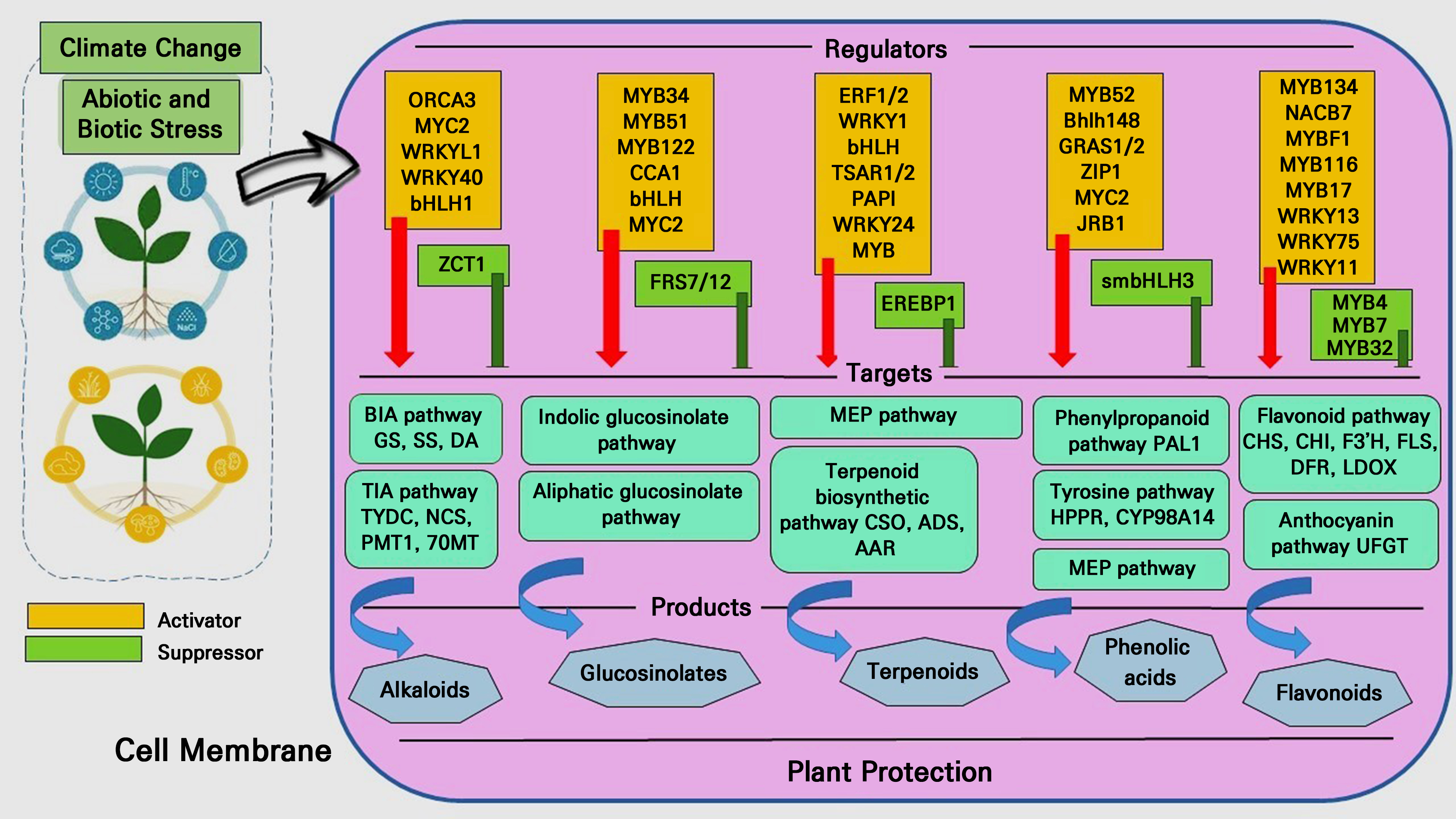
Numerous transcription factors allow environmental cues to cross the cell membrane and activate downstream functional genes. Numerous transcription factors participating in the metabolic process have been found in various plants thus far (Pacheco et al. 2021). A network involved in the transcriptional control of plant secondary metabolites biosynthesis under environmental stressors is summarized in our review (Fig. 3). While there are still very few known negative transcription factors, a significant number of positive transcription factors have been found to date. Additionally, the creation of a dynamic equilibrium in plant secondary metabolism is largely dependent on negative regulatory transcription factors. Cloning and the finding of negative regulatory transcription factors have emerged as critical research areas for the future (Sun and Fernie 2023). Henceforth, transcription factors in plants activate genes under environmental stress, controlling PSM biosynthesis. Despite the few known negative transcription factors, positive transcription factors are abundant, as noted above. Cloning and negative regulatory transcription factors are critical research areas.
https://cdn.apub.kr/journalsite/sites/kshs/2026-044-01/N020250064/images/HST_20250064_F3.jpg
Fig. 3.

Summarized responses of secondary metabolite biosynthesis under climate change at the cellular level.

Conclusions

Plant secondary metabolites are essential for environmental adaptability. They also attract pollinators, regulate development, and guard against diseases and herbivores. Gene expression and plant secondary metabolites synthesis are two ways in which plants respond to environmental stress. For example, poplars and sweet potatoes modify their lignin content. Encouraging sustainable agriculture and protecting natural ecosystems requires an understanding of the molecular processes involved in the production of plant secondary metabolites. Particularly in areas with significant biodiversity, plants are threatened by climate change. Plant production depends on metabolism, which also helps plants adapt to harsh conditions. Research has become easier due to developments in metabolite detection and identification. Research on Arabidopsis shows that certain transcription factors, such as MYB28 and MYB29, aid glucosinolate production under sulfur-starvation stress. In C. roseus, more than 100 TIAs, including bisindole alkaloids, have been found. Seedlings subjected to salt and dehydration stress have shown higher alkaloid contents. One type of plant secondary metabolite that is essential for managing environmental stress is alkaloids.

Plant metabolism engineering necessitates a thorough comprehension of the metabolic pathway and regulatory mechanisms. Recent advancements in the metabolic engineering of microbes have enabled the targeted synthesis of desired compounds and increased production levels. Genetic engineering can modify anthocyanin and flavonoid pathways to enhance the production of targeted pharmaceuticals. There are more opportunities to create secondary metabolite pathways when transcription factors are produced ectopically and whole pathways are activated. Functional genomics methods may be helpful for understanding biological systems. Nevertheless, because many plants that produce secondary metabolites are genetically limited, it is essential to investigate functional genes to comprehend the regulatory and molecular mechanisms involved. Given that functional genomics may be used in any plant or cell culture that lacks known gene sequences, it may speed up the process of identifying the genes encoding secondary metabolite pathways.

Stress reactions appear to be influenced by post-transcriptional regulation, as stress responses are strongly associated with mRNA metabolism and processing. Stressed plants have demonstrated that the WRKY transcription factor family regulates defense-related secondary metabolite biosynthesis using inducible expression patterns. The production of chemicals that inhibit various secondary metabolites is governed by BHLH transcription factors, responsible for expressing stress-response mechanisms. Through the regulation of plant stress mediators, AP2/ERF transcription factors are essential in the regulation of plant stress responses. Protecting natural ecosystems and promoting sustainable agriculture depend on knowledge of the molecular processes behind plant secondary metabolite generation.

Acknowledgements

The authors would like to acknowledge all of the team members of the Institute of Environment and Ecology, School of the Environment and Safety Engineering, Jiangsu University, Zhenjiang 212013, China.

Funding

This work was supported by the National Natural Science Foundation of China (32271587, 32171509), the Jiangsu Funding Program for Excellent Postdoctoral Talent (2023ZB861), and the Carbon Peak and Carbon Neutrality Technology Innovation Foundation of Jiangsu Province (BK20220030). Drug Efficacy and Health Risk Assessment Key Laboratory of Zhenjiang (SS2024006).

CRediT Authorship Contribution Statement

Conceptualization, Methodology, Funding, Resources, Writing – original draft, Muhammad Anas; Investigation, Writing – review & editing, S-S.Q.; Project administration, Resources, Writing – review & editing, Z-C.D.; Supervision, Validation, D-L.D.

Data availability

No data were used in this manuscript.

Conflicts of interest

The authors have no known conflicts of interest.

References

1

Abdallah EM, Alhatlani BY, de Paula MR, Martins CHG (2023) Back to Nature: Medicinal Plants as Promising Sources for Antibacterial Drugs in the Post-Antibiotic Era. Plants 12:3077. https://doi.org/10.3390/plants12173077

10.3390/plants1217307737687324PMC10490416
2

Abdelaziz ME, Atia MA, Abdelsattar M, Abdelaziz SM, Ibrahim TA, Abdeldaym EA (2021) Unravelling the Role of Piriformospora indica in combating water deficiency by modulating physiological performance and chlorophyll metabolism-related genes in Cucumis sativus. Horticulturae 7:399. https://doi.org/10.3390/horticulturae7100399

10.3390/horticulturae7100399
3

Abdel-Farid IB, Marghany MR, Rowezek MM, Sheded MG (2020) Effect of Salinity Stress on Growth and Metabolomic Profiling of Cucumis sativus and Solanum lycopersicum. Plants 9:1626. https://doi.org/10.3390/plants9111626

10.3390/plants911162633238519PMC7700630
4

Adetuyi BO, Odine GO, Olajide PA, Adetuyi OA, Atanda OO, Oloke JK (2022) Nutraceuticals: role in metabolic disease, prevention and treatment. World News Nat Sci 42:1-27

5

Adjibolosoo D, Nartey MA, Aboagye ET, Danso B, Fatima I, Hua J, Guo A (2024) Genome-wide studies and expression profiling of GhWRKY41 family genes in different tissues and stress conditions in upland cotton (Gossypium hirsutum). Ind Crops Prod 215:118486. https://doi.org/10.1016/j.indcrop.2024.118486

10.1016/j.indcrop.2024.118486
6

Ahlawat YK, Singh M, Manorama K, Lakra N, Zaid A, Zulfiqar F (2024) Plant phenolics: neglected secondary metabolites in plant stress tolerance. Rev Bras Bot 47:703-721. https://doi.org/10.1007/s40415-023-00949-x

10.1007/s40415-023-00949-x
7

Ahmadi-Lahijani MJ, Moori S (2022) Current status of medicinal plants in perspective of environmental challenges and global climate changes. In: Environmental Challenges and Medicinal Plants: Sustainable Production Solutions under Adverse Conditions. Springer, pp 1-28. https://doi.org/10.1007/978-3-030-92050-0_1

10.1007/978-3-030-92050-0_1
8

Ahmed J, Sajjad Y, Gatasheh MK, Ibrahim KE, Huzafa M, Khan SA, Situ C, Abbasi AM, Hassan A (2023) Genome-wide identification of NAC transcription factors and regulation of monoterpenoid indole alkaloid biosynthesis in Catharanthus roseus. Front Plant Sci 14:1. https://doi.org/10.3389/fpls.2023.1286584

10.3389/fpls.2023.128658438223288PMC10785006
9

Ahmed J, Sajjad Y, Latif A, Lodhi MS, Huzafa M, Situ C, Ahmad R, Shah MM, Hassan A (2024) Genome-wide identification and characterization of wall-associated kinases, molecular docking and polysaccharide elicitation of monoterpenoid indole alkaloids in micro-propagated Catharanthus roseus. J Plant Res 137:125-142. https://doi.org/10.1007/s10265-023-01504-1

10.1007/s10265-023-01504-1
10

Ahmed U, Rao MJ, Qi C, Xie Q, Noushahi HA, Yaseen M, Shi X, Zheng B (2021) Expression profiling of flavonoid biosynthesis genes and secondary metabolites accumulation in Populus under drought stress. Molecules 26:5546. https://doi.org/10.3390/molecules26185546

10.3390/molecules2618554634577017PMC8467073
11

Alcázar Magaña A, Kamimura N, Soumyanath A, Stevens JF, Maier CS (2021) Caffeoylquinic acids: chemistry, biosynthesis, occurrence, analytical challenges, and bioactivity. The Plant J 107:1299-1319. https://doi.org/10.1111/tpj.15390

10.1111/tpj.1539034171156PMC9084498
12

Anas M, Riaz M, Yan MT, Liu YF, Li Y, Shan Qi S, Dai ZC, Du DL (2025a) Microplastics, invasive species and fungal stressors modulate antioxidative mechanisms, rhizosphere enzymes and microbial dynamics in alfalfa. Plant Stress 17:100901. https://doi.org/10.1016/j.stress.2025.100901

10.1016/j.stress.2025.100901
13

Anas M, Khan IU, Zhang RK, Qi SS, Dai ZC, Du DL (2025b) Interactive Effect of Microplastics and Fungal Pathogen Rhizoctonia solani on Antioxidative Mechanism and Fluorescence Activity of Invasive Species Solidago canadensis. Plants 14:1972. https://doi.org/10.3390/plants14131972

10.3390/plants1413197240647980PMC12251564
14

Anwar M, Chen L, Xiao Y, Wu J, Zeng L, Li H, Wu Q, Hu Z (2021) Recent advanced metabolic and genetic engineering of phenylpropanoid biosynthetic pathways. Int J Mol Sci 22:9544. https://doi.org/10.3390/ijms22179544

10.3390/ijms2217954434502463PMC8431357
15

Assaf M, Korkmaz A, Karaman Ş, Kulak M (2022) Effect of plant growth regulators and salt stress on secondary metabolite composition in Lamiaceae species. S Afr J Bot 144:480-493. https://doi.org/10.1016/j.sajb.2021.10.030

10.1016/j.sajb.2021.10.030
16

Atkins M, Potier D, Romanelli L, Jacobs J, Mach J, Hamaratoglu F, Aerts S, Halder G (2016) An ectopic network of transcription factors regulated by hippo signaling drives growth and invasion of a malignant tumor model. Curr Biol 26:2101-2113. https://doi.org/10.1016/j.cub.2016.06.035

10.1016/j.cub.2016.06.035
17

Bachheti A, Deepti, Bachheti RK, Husen A (2021) Medicinal plants and their pharmaceutical properties under adverse environmental conditions. In: Husen A (Ed.) Harsh Environment and Plant Resilience: Molecular and Functional Aspects. Springer International Publishing, Cham, pp 457-502. https://doi.org/10.1007/978-3-030-65912-7_19

10.1007/978-3-030-65912-7_19
18

Banerjee S, Roy P, Roy S (2022) Transcription factor mediated plant metabolite production in response to environmental stress factors: current understanding and future aspects. In: Metabolic Engineering in Plants. Springer, pp 91-122. https://doi.org/10.1007/978-981-16-7262-0_4

10.1007/978-981-16-7262-0_4
19

Barone RP, Knittel DK, Ooka JK, Porter LN, Smith NT, Owens DK (2020) The production of plant natural products beneficial to humanity by metabolic engineering. Curr Plant Biol 24:100121. https://doi.org/10.1016/j.cpb.2019.100121

10.1016/j.cpb.2019.100121
20

Begum N, Akhtar K, Ahanger MA, Iqbal M, Wang P, Mustafa NS, Zhang L (2021) Arbuscular mycorrhizal fungi improve growth, essential oil, secondary metabolism, and yield of tobacco (Nicotiana tabacum L.) under drought stress conditions. ESPR 28:45276-45295. https://doi.org/10.1007/s11356-021-13755-3

10.1007/s11356-021-13755-3
21

Bharti PK, Singh SK, Kumari S (2023) Elicitors: role in secondary metabolite production in medicinal plants. In: Genetic Manipulation of Secondary Metabolites in Medicinal Plant. Springer, pp 147-178. https://doi.org/10.1007/978-981-99-4939-7_7

10.1007/978-981-99-4939-7_7
22

Bhushan S, Sharma D, Rakshant, Kaul S, Dhar MK, Sharma M (2023) Recent strategies to engineer alkaloid biosynthesis in medicinal plants. In: Medicinal Plants: Their Response to Abiotic Stress. Springer, pp 391-416. https://doi.org/10.1007/978-981-19-5611-9_15

10.1007/978-981-19-5611-9_15
23

Biswas P, Ghorai M, Pandey DK, Singh J, Al-Tawaha AR, Bursal E, Kumar V, Nongdam P, Shekhawat MS, et al. (2022) Regulation of expression of transcription factors for enhanced secondary metabolites production under challenging conditions. In: Environmental Challenges and Medicinal Plants: Sustainable Production Solutions under Adverse Conditions. Springer, pp 249-280. https://doi.org/10.1007/978-3-030-92050-0_10

10.1007/978-3-030-92050-0_10
24

Bordoloi KS, Baruah PM, Das M, Agarwala N (2022) Unravelling lncRNA mediated gene expression as potential mechanism for regulating secondary metabolism in Citrus limon. Food Biosci 46:101448. https://doi.org/10.1016/j.fbio.2021.101448

10.1016/j.fbio.2021.101448
25

Cao Y, Li K, Li Y, Zhao X, Wang L (2020) MYB transcription factors as regulators of secondary metabolism in plants. Biology 9:61. https://doi.org/10.3390/biology9030061

10.3390/biology903006132213912PMC7150910
26

Chai Z, Tian L, Yu H, Zhang L, Zeng Q, Wu H, Yan Z, Li D, Hutabarat RP, et al. (2020) Comparison on chemical compositions and antioxidant capacities of the green, oolong, and red tea from blueberry leaves. Food Sci Nutr 8:1688-1699. https://doi.org/10.1002/fsn3.1455

10.1002/fsn3.145532180976PMC7063381
27

Chávez-Arias CC, Ramírez-Godoy A, Restrepo-Díaz H (2022) Influence of drought, high temperatures, and/or defense against arthropod herbivory on the production of secondary metabolites in maize plants: A review. Curr Plant Biol 32:100268. https://doi.org/10.1016/j.cpb.2022.100268

10.1016/j.cpb.2022.100268
28

Chen C, Wang C, Liu Z, Cai Z, Hua Y, Mei Y, Wei L, Liu X (2020) iTRAQ-based proteomic technique provides insights into salt stress responsive proteins in Apocyni Veneti Folium (Apocynum venetum L.). Environ Exp Bot 180:104247. https://doi.org/10.1016/j.envexpbot.2020.104247

10.1016/j.envexpbot.2020.104247
29

Chen D, Mubeen B, Hasnain A, Rizwan M, Adrees M, Naqvi SAH, Iqbal S, Kamran M, El-Sabrout AM, et al. (2022) Role of promising secondary metabolites to confer resistance against environmental stresses in crop plants: Current scenario and future perspectives. Front Plant Sci 13:881032. https://doi.org/10.3389/fpls.2022.881032

10.3389/fpls.2022.88103235615133PMC9126561
30

Chen L, Zeng Q, Zhang J, Li C, Bai X, Sun F, Kliebenstein DJ, Li B (2024) Large-scale identification of novel transcriptional regulators of the aliphatic glucosinolate pathway in Arabidopsis. J Exp Bot 75:300-315. https://doi.org/10.1093/jxb/erad376

10.1093/jxb/erad376
31

Clemensen AK, Provenza FD, Hendrickson JR, Grusak MA (2020) Ecological implications of plant secondary metabolites—phytochemical diversity can enhance agricultural sustainability. Front Sustain Food Syst 4:547826. https://doi.org/10.3389/fsufs.2020.547826

10.3389/fsufs.2020.547826
32

Del‐Castillo‐Alonso MÁ, Monforte L, Tomás‐Las‐Heras R, Ranieri A, Castagna A, Martínez‐Abaigar J, Núñez‐Olivera E (2021) Secondary metabolites and related genes in Vitis vinifera L. cv. Tempranillo grapes as influenced by ultraviolet radiation and berry development. Physiol Plant 173:709-724. https://doi.org/10.1111/ppl.13483

10.1111/ppl.13483
33

Deng C, Wang Y, Huang F, Lu S, Zhao L, Ma X, Kai G (2020) SmMYB2 promotes salvianolic acid biosynthesis in the medicinal herb Salvia miltiorrhiza. J Integr Plant Biol 62:1688-1702. https://doi.org/10.1111/jipb.12943

10.1111/jipb.12943
34

Ding M, Xie Y, Zhang Y, Cai X, Zhang B, Ma P, Dong J (2023) Salicylic acid regulates phenolic acid biosynthesis via SmNPR1–SmTGA2/SmNPR4 modules in Salvia miltiorrhiza. J Exp Bot 74:5736-5751. https://doi.org/10.1093/jxb/erad302

10.1093/jxb/erad302
35

Divekar PA, Narayana S, Divekar BA, Kumar R, Gadratagi BG, Ray A, Singh AK, Rani V, Singh V, et al. (2022) Plant secondary metabolites as defense tools against herbivores for sustainable crop protection. Int J Mol Sci 23:2690. https://doi.org/10.3390/ijms23052690

10.3390/ijms2305269035269836PMC8910576
36

Do VG, Lee Y, Kim JH, Kwon YS, Park JT, Yang S, Park J, Win NM, Kim S (2023) The Synergistic Effects of Environmental and Genetic Factors on the Regulation of Anthocyanin Accumulation in Plant Tissues. Int J Mol Sci 24:12946. https://doi.org/10.3390/ijms241612946

10.3390/ijms24161294637629128PMC10454628
37

Elshamy AI, Mohamed TA, Essa AF, Abd-El Gawad AM, Alqahtani AS, Shahat AA, Yoneyama T, Farrag ARH, Noji M, et al. (2019) Recent advances in Kaempferia phytochemistry and biological activity: A comprehensive review. Nutrients 11:2396. https://doi.org/10.3390/nu11102396

10.3390/nu1110239631591364PMC6836233
38

Erb M, Kliebenstein DJ (2020) Plant secondary metabolites as defenses, regulators, and primary metabolites: the blurred functional trichotomy. Plant Physiol 184:39-52. https://doi.org/10.1104/pp.20.00433

10.1104/pp.20.0043332636341PMC7479915
39

Escaray FJ, Valeri MC, Damiani F, Ruiz OA, Carrasco P, Paolocci F (2024) Multiple bHLH/MYB-based protein complexes regulate proanthocyanidin biosynthesis in the herbage of Lotus spp. Planta 259:1-15. https://doi.org/10.1007/s00425-023-04281-2

10.1007/s00425-023-04281-238041705PMC10693531
40

Essoh AP, Monteiro F, Pena AR, Pais MS, Moura M, Romeiras MM (2020) Exploring glucosinolates diversity in Brassicaceae: a genomic and chemical assessment for deciphering abiotic stress tolerance. Plant Physiol Biochem 150:151-161. https://doi.org/10.1016/j.plaphy.2020.02.032

10.1016/j.plaphy.2020.02.032
41

Far BF, Behzad G, Khalili H (2023) Achillea millefolium: Mechanism of action, pharmacokinetic, clinical drug-drug interactions and tolerability. Heliyon 7:e06618

42

Ferreyra MLF, Serra P, Casati P (2021) Recent advances on the roles of flavonoids as plant protective molecules after UV and high light exposure. Physiol Plant 173:736-749. https://doi.org/10.1111/ppl.13543

10.1111/ppl.13543
43

Fkiara A, Barba-Espín G, El-Houri R, Müller R, Christensen LP, Lütken H (2020) Elicitation of flavonoids in Kalanchoe pinnata by Agrobacterium rhizogenes-mediated transformation and UV-B radiation. Medicinal Plants: Biodiversity, Sustainable Utilization and Conservation, pp 395-403. https://doi.org/10.1007/978-981-15-1636-8_22

10.1007/978-981-15-1636-8_22
44

Gamit HA, Amaresan N (2023) Methylobacterium spp. mitigation of UV stress in mung bean (Vigna radiata L.). Photochem Photobiol Sci 22:2839-2850. https://doi.org/10.1007/s43630-023-00490-6

10.1007/s43630-023-00490-6
45

Gao H, Xu D, Zhang H, Qian J, Yang Q (2020) Transcriptomics and metabolomics analyses reveal the differential accumulation of phenylpropanoids between Cinnamomum cassia Presl and Cinnamomum cassia Presl var. macrophyllum Chu. Ind Crops Prod 148:112282. https://doi.org/10.1016/j.indcrop.2020.112282

10.1016/j.indcrop.2020.112282
46

Gao HN, Jiang H, Cui JY, You CX, Li YY (2021) The effects of hormones and environmental factors on anthocyanin biosynthesis in apple. Plant Sci 312:111024. https://doi.org/10.1016/j.plantsci.2021.111024

10.1016/j.plantsci.2021.111024
47

Gao XR, Zhang H, Li X, Bai YW, Peng K, Wang Z, Dai ZR, Bian XF, Zhang Q, et al. (2023) The B-box transcription factor IbBBX29 regulates leaf development and flavonoid biosynthesis in sweet potato. Plant Physiol 191:496-514. https://doi.org/10.1093/plphys/kiac516

10.1093/plphys/kiac51636377782PMC9806656
48

García-Calderón M, Pérez-Delgado CM, Palove-Balang P, Betti M, Márquez AJ (2020) Flavonoids and isoflavonoids biosynthesis in the model legume Lotus japonicus; connections to nitrogen metabolism and photorespiration. Plants 9:774. https://doi.org/10.3390/plants9060774

10.3390/plants906077432575698PMC7357106
49

Gharibi S, Sayed Tabatabaei BE, Saeidi G, Talebi M, Matkowski A (2019) The effect of drought stress on polyphenolic compounds and expression of flavonoid biosynthesis related genes in Achillea pachycephala Rech.f. Phytochemistry 162:90-98. https://doi.org/10.1016/j.phytochem.2019.03.004

10.1016/j.phytochem.2019.03.004
50

Ghassemi S, Delangiz N, Lajayer BA, Saghafi D, Maggi F (2021) Review and future prospects on the mechanisms related to cold stress resistance and tolerance in medicinal plants. Acta Ecol Sin 41:120-129. https://doi.org/10.1016/j.chnaes.2020.09.006

10.1016/j.chnaes.2020.09.006
51

Godbole RC, Pable AA, Singh S, Barvkar VT (2022) Interplay of transcription factors orchestrating the biosynthesis of plant alkaloids. Biotech 12:250. https://doi.org/10.1007/s13205-022-03316-x

10.1007/s13205-022-03316-x36051988PMC9424429
52

Guan R, Guo F, Guo R, Wang S, Sun X, Zhao Q, Zhang C, Li S, Lin H, et al. (2023) Integrated metabolic profiling and transcriptome analysis of Lonicera japonica flowers for chlorogenic acid, luteolin and endogenous hormone syntheses. Gene 888:147739. https://doi.org/10.1016/j.gene.2023.147739

10.1016/j.gene.2023.147739
53

Halder M, Roy S (2023) Current status of metabolic engineering of medicinal plants for production of plant-derived secondary metabolites. Medicinal Plants: Biodiversity, Biotechnology and Conservation. Springer, pp 819-869. https://doi.org/10.1007/978-981-19-9936-9_28

10.1007/978-981-19-9936-9_28
54

Han H, Wang C, Yang X, Wang L, Ye J, Xu F, Liao Y, Zhang W (2023) Role of bZIP transcription factors in the regulation of plant secondary metabolism. Planta 258:13. https://doi.org/10.1007/s00425-023-04174-4

10.1007/s00425-023-04174-4
55

Han J, Wang H, Lundgren A, Brodelius PE (2014) Effects of overexpression of AaWRKY1 on artemisinin biosynthesis in transgenic Artemisia annua plants. Phytochemistry 102:89-96. https://doi.org/10.1016/j.phytochem.2014.02.011

10.1016/j.phytochem.2014.02.011
56

He J, Yao L, Pecoraro L, Liu C, Wang J, Huang L, Gao W (2023) Cold stress regulates accumulation of flavonoids and terpenoids in plants by phytohormone, transcription process, functional enzyme, and epigenetics. Crit Rev Biotechnol 43:680-697. https://doi.org/10.1080/07388551.2022.2053056

10.1080/07388551.2022.2053056
57

He R, Li Y, Ou S, Gao M, Zhang Y, Song S, Liu H (2021) Regulation of growth and main health-promoting compounds of Chinese kale baby-leaf by UV-A and FR light. Front Plant Sci 12:799376. https://doi.org/10.3389/fpls.2021.799376

10.3389/fpls.2021.79937634975989PMC8719463
58

Hernández-Elvira M, Sunnerhagen P (2022) Post-transcriptional regulation during stress. FEMS Yeast Res 22:foac025. https://doi.org/10.1093/femsyr/foac025

10.1093/femsyr/foac02535561747PMC9246287
59

Holweg MMSF, Curren T, Cravino A, Kaiser E, Kappers IF, Heuvelink E, Marcelis LFM (2025) High air temperature reduces plant specialized metabolite yield in medical cannabis, and has genotype-specific effects on inflorescence dry matter production. Environ Exp Bot 230:106085. https://doi.org/10.1016/j.envexpbot.2025.106085

10.1016/j.envexpbot.2025.106085
60

Hou C, He B, Xie P, Wang Y, Liang D, Lian H, Zhang Q, Cai Y (2023) Disentangling the potential functions of miRNAs in the synthesis of terpenoids during the development of Cinnamomum burmannii leaves. Forests 14:555. https://doi.org/10.3390/f14030555

10.3390/f14030555
61

Hrmova M, Hussain SS (2021) Plant transcription factors involved in drought and associated stresses. Int J Mol Sci 22:5662. https://doi.org/10.3390/ijms22115662

10.3390/ijms2211566234073446PMC8199153
62

Hu C, Cui D, Sun X, Shi J, Xu N (2020) Primary metabolism is associated with the astaxanthin biosynthesis in the green algae Haematococcus pluvialis under light stress. Algal Res 46:101768. https://doi.org/10.1016/j.algal.2019.101768

10.1016/j.algal.2019.101768
63

Hyeon H, Hyun HB, Go B, Kim SC, Jung YH, Ham YM (2021) Profiles of essential oils and correlations with phenolic acids and primary metabolites in flower buds of Magnolia heptapeta and Magnolia denudata var. purpurascens. Molecules 27:221. https://doi.org/10.3390/molecules27010221

10.3390/molecules2701022135011454PMC8746637
64

Jabeen M, Akram NA, Ashraf M, Alyemeni MN, Ahmad P (2021) Thiamin stimulates growth and secondary metabolites in turnip (Brassica rapa L.) leaf and root under drought stress. Physiol Plant 172:1399-1411. https://doi.org/10.1111/ppl.13215

10.1111/ppl.13215
65

Jaiswal D, Pandey A, Agrawal S (2020) Physiological, biochemical, and molecular responses of the plants against enhanced ultraviolet B and heavy metal stress. Plant Ecophysiology and Adaptation under Climate Change: Mechanisms and Perspectives I:513-554. https://doi.org/10.1007/978-981-15-2156-0_17

10.1007/978-981-15-2156-0_17
66

Jamloki A, Bhattacharyya M, Nautiyal M, Patni B (2021) Elucidating the relevance of high temperature and elevated CO2 in plant secondary metabolites (PSMs) production. Heliyon 7:e06618. https://doi.org/10.1016/j.heliyon.2021.e07709

10.1016/j.heliyon.2021.e0770934430728PMC8371220
67

Jan R, Asaf S, Numan M, Lubna, Kim KM (2021) Plant secondary metabolite biosynthesis and transcriptional regulation in response to biotic and abiotic stress conditions. Agronomy 11:968. https://doi.org/10.3390/agronomy11050968

10.3390/agronomy11050968
68

Kamel RM, El-kholy MM, Tolba NM, Amer A, Eltarawy AM, Ali LM (2022) Influence of germicidal ultraviolet radiation UV-C on the quality of Apiaceae spices seeds. Chem Biol Technol Agric 9:89. https://doi.org/10.1186/s40538-022-00358-4

10.1186/s40538-022-00358-4
69

Khan F, Siddique AB, Shabala S, Zhou M, Zhao C (2023) Phosphorus Plays Key Roles in Regulating Plants' Physiological Responses to Abiotic Stresses. Plants 12:2861. https://doi.org/10.3390/plants12152861

10.3390/plants1215286137571014PMC10421280
70

Khan MI, Ali N, Jan G, Hamayun M, Jan FG, Iqbal A, Hussain A, Lee IJ (2022) Salt stress alleviation in Triticum aestivum through primary and secondary metabolites modulation by Aspergillus terreus BTK-1. Front Plant Sci 13:779623. https://doi.org/10.3389/fpls.2022.779623

10.3389/fpls.2022.77962335360328PMC8960994
71

Khare S, Singh N, Singh A, Hussain I, Niharika K, Yadav V, Bano C, Yadav RK, Amist N (2020) Plant secondary metabolites synthesis and their regulations under biotic and abiotic constraints. J Plant Biol 63:203-216. https://doi.org/10.1007/s12374-020-09245-7

10.1007/s12374-020-09245-7
72

Kim NS, Kim JK, Sathasivam R, Park HW, Nguyen BV, Kim MC, Cuong DM, Chung YS, Park SU (2021) Impact of betaine under salinity on accumulation of phenolic compounds in safflower (Carthamus tinctorius L.) sprouts. Nat Prod Commun 16:1934578X211015090. https://doi.org/10.1177/1934578X211015090

10.1177/1934578X211015090
73

Kumar K, Debnath P, Singh S, Kumar N (2023a) An overview of plant phenolics and their involvement in abiotic stress tolerance. Stresses 3:570-585. https://doi.org/10.3390/stresses3030040

10.3390/stresses3030040
74

Kumar M, Tak Y, Potkule J, Choyal P, Tomar M, Meena NL, Kaur C (2020a) Phenolics as plant protective companion against abiotic stress. Plant Phenolics in Sustainable Agriculture 1:277-308. https://doi.org/10.1007/978-981-15-4890-1_12

10.1007/978-981-15-4890-1_12
75

Kumar R, Joshi R, Kumari M, Thakur R, Kumar D, Kumar S (2020b) Elevated CO2 and temperature influence key proteins and metabolites associated with photosynthesis, antioxidant and carbon metabolism in Picrorhiza kurroa. J Proteomics 219:103755. https://doi.org/10.1016/j.jprot.2020.103755

10.1016/j.jprot.2020.103755
76

Kumar S, Korra T, Thakur R, Arutselvan R, Kashyap AS, Nehela Y, Chaplygin V, Minkina T, Keswani C (2023b) Role of plant secondary metabolites in defence and transcriptional regulation in response to biotic stress. Plant Stress 100154. https://doi.org/10.1016/j.stress.2023.100154

10.1016/j.stress.2023.100154
77

Laddomada B, Blanco A, Mita G, D’Amico L, Singh RP, Ammar K, Crossa J, Guzmán C (2021) Drought and heat stress impacts on phenolic acids accumulation in durum wheat cultivars. Foods 10:2142. https://doi.org/10.3390/foods10092142

10.3390/foods1009214234574252PMC8468590
78

Landi M, Zivcak M, Sytar O, Brestic M, Allakhverdiev SI (2020) Plasticity of photosynthetic processes and the accumulation of secondary metabolites in plants in response to monochromatic light environments: A review. Biochim Biophys Acta Bioenerg 1861:148131. https://doi.org/10.1016/j.bbabio.2019.148131

10.1016/j.bbabio.2019.148131
79

Leng X, Li C, Wang P, Ren Y, Chen J, Liu G, Hakeem A, Liu Y, Shi X, et al. (2025) The transcription factor VvMYB44-1 plays a role in reducing grapevine anthocyanin biosynthesis at high temperature. Plant Physiol 197:kiae657. https://doi.org/10.1093/plphys/kiae657

10.1093/plphys/kiae657
80

Li D, Gaquerel E (2021) Next-generation mass spectrometry metabolomics revives the functional analysis of plant metabolic diversity. Annu Rev Plant Biol 72:867-891. https://doi.org/10.1146/annurev-arplant-071720-114836

10.1146/annurev-arplant-071720-114836
81

Li J, Li Y, Dang M, Li S, Chen S, Liu R, Zhang Z, Li G, Zhang M, et al. (2022) Jasmonate-responsive transcription factors NnWRKY70a and NnWRKY70b positively regulate benzylisoquinoline alkaloid biosynthesis in Lotus (Nelumbo nucifera). Front Plant Sci 13:862915. https://doi.org/10.3389/fpls.2022.862915

10.3389/fpls.2022.86291535783938PMC9240598
82

Li M, Shao Y, Pan B, Liu C, Tan H (2025) Regulation of important natural products biosynthesis by WRKY transcription factors in plants. J Adv Res S2090-1232(25)00028-1. https://doi.org/10.1016/j.jare.2025.01.009

10.1016/j.jare.2025.01.009
83

Li P, Ren G, Wu F, Chen J, Jiang D, Liu C (2023) Root-specific flavones and critical enzyme genes involved in their synthesis changes due to drought stress on Scutellaria baicalensis. Front Ecol Evol 11:1113823. https://doi.org/10.3389/fevo.2023.1113823

10.3389/fevo.2023.1113823
84

Li Y, Gao M, He R, Zhang Y, Song S, Su W, Liu H (2021) Far-red light suppresses glucosinolate profiles of Chinese kale through inhibiting genes related to glucosinolate biosynthesis. Environ Exp Bot 188:104507. https://doi.org/10.1016/j.envexpbot.2021.104507

10.1016/j.envexpbot.2021.104507
85

Li Y, Kong D, Fu Y, Sussman MR, Wu H (2020) The effect of developmental and environmental factors on secondary metabolites in medicinal plants. Plant Physiol Biochem 148:80-89. https://doi.org/10.1016/j.plaphy.2020.01.006

10.1016/j.plaphy.2020.01.006
86

Li Y, Kong W, Li M, Liu H, Zhao X, Yang S, Yang M (2016) Litsea cubeba essential oil as the potential natural fumigant: Inhibition of Aspergillus flavus and AFB1 production in licorice. Ind Crops Prod 80:186-193. https://doi.org/10.1016/j.indcrop.2015.11.008

10.1016/j.indcrop.2015.11.008
87

Liang SM, Zhang F, Zou YN, Kuca K, Wu QS (2021) Metabolomics analysis reveals drought responses of trifoliate orange by arbuscular mycorrhizal fungi with a focus on terpenoid profile. Front Plant Sci 12:740524. https://doi.org/10.3389/fpls.2021.740524

10.3389/fpls.2021.74052434691116PMC8528288
88

Liu B, Zhang L, Rusalepp L, Kaurilind E, Sulaiman HY, Püssa T, Niinemets Ü (2021b) Heat priming improved heat tolerance of photosynthesis, enhanced terpenoid and benzenoid emission and phenolics accumulation in Achillea millefolium. Plant Cell Environ 44:2365-2385. https://doi.org/10.1111/pce.13830

10.1111/pce.13830
89

Liu G, Li D, Mai H, Lin X, Lu X, Chen K, Wang R, Riaz M, Tian J, et al. (2024) GmSTOP1-3 regulates flavonoid synthesis to reduce ROS accumulation and enhance aluminum tolerance in soybean. J Hazard Mater 6:136074. https://doi.org/10.1016/j.jhazmat.2024.136074

10.1016/j.jhazmat.2024.136074
90

Liu H, Liu Z, Wu Y, Zheng L, Zhang G (2021c) Regulatory mechanisms of anthocyanin biosynthesis in apple and pear. Int J Mol Sci 22:8441. https://doi.org/10.3390/ijms22168441

10.3390/ijms2216844134445149PMC8395115
91

Liu S, Wang Y, Shi M, Maoz I, Gao X, Sun M, Yuan T, Li K, Zhou W, et al. (2022) SmbHLH60 and SmMYC2 antagonistically regulate phenolic acids and anthocyanins biosynthesis in Salvia miltiorrhiza. J Adv Res 42:205-219. https://doi.org/10.1016/j.jare.2022.02.005

10.1016/j.jare.2022.02.00536513414PMC9788942
92

Liu Y (2022) CRISPR/Cas9 mutation of MYB134 and MYB115 to study regulation and functions of proanthocyanidins in poplar roots. Doctoral Dissertation

93

Liu Y, Liu J, Abozeid A, Wu KX, Guo XR, Mu LQ, Tang ZH (2020a) UV-B radiation largely promoted the transformation of primary metabolites to phenols in Astragalus mongholicus seedlings. Biomolecules 10:504. https://doi.org/10.3390/biom10040504

10.3390/biom1004050432225015PMC7226020
94

Liu Y, Tang L, Wang C, Li J (2020b) NAA and 6-BA promote accumulation of oleanolic acid by JA regulation in Achyranthes bidentata Bl. PLOS ONE 15:e0229490. https://doi.org/10.1371/journal.pone.0229490

10.1371/journal.pone.022949032107496PMC7046271
95

Liu Y, Wang B, Shu S, Li Z, Song C, Liu D, Niu Y, Liu J, Zhang J, et al. (2021a) Analysis of the Coptis chinensis genome reveals the diversification of protoberberine-type alkaloids. Nat Commun 12:3276. https://doi.org/10.1038/s41467-021-23611-0

10.1038/s41467-021-23611-034078898PMC8172641
96

Ljubej V, Radojčić Redovniković I, Salopek-Sondi B, Smolko A, Roje S, Šamec D (2021) Chilling and freezing temperature stress differently influence glucosinolates content in Brassica oleracea var. acephala. Plants 10:1305. https://doi.org/10.3390/plants10071305

10.3390/plants1007130534199146PMC8309204
97

Loukola A, Buchwald J, Gupta R, Palviainen T, Hällfors J, Tikkanen E, Korhonen T, Ollikainen M, Sarin AP, et al. (2015) A Genome-Wide Association Study of a Biomarker of Nicotine Metabolism. PLoS Genet 11:e1005498. https://doi.org/10.1371/journal.pgen.1005498

10.1371/journal.pgen.100549826407342PMC4583245
98

Ma F, Zhou H, Yang H, Huang D, Xing W, Wu B, Li H, Hu W, Song S, et al. (2024) WRKY transcription factors in passion fruit analysis reveals key PeWRKYs involved in abiotic stress and flavonoid biosynthesis. Int J Biol Macromol 256:128063. https://doi.org/10.1016/j.ijbiomac.2023.128063

10.1016/j.ijbiomac.2023.128063
99

Mahajan M, Kuiry R, Pal PK (2020) Understanding the consequence of environmental stress for accumulation of secondary metabolites in medicinal and aromatic plants. J Appl Res Med Aromat Plants 18:100255. https://doi.org/10.1016/j.jarmap.2020.100255

10.1016/j.jarmap.2020.100255
100

Mao Y, Luo J, Cai Z (2025) Biosynthesis and Regulatory Mechanisms of Plant Flavonoids: A Review. Plants 14:1847. https://doi.org/10.3390/plants14121847

10.3390/plants1412184740573835PMC12196789
101

Marchiosi R, dos Santos WD, Constantin RP, de Lima RB, Soares AR, Finger-Teixeira A, Mota TR, de Oliveira DM, Foletto-Felipe MP, et al. (2020) Biosynthesis and metabolic actions of simple phenolic acids in plants. Phytochem Rev 19:865-906. https://doi.org/10.1007/s11101-020-09689-2

10.1007/s11101-020-09689-2
102

Medda S, Fadda A, Mulas M (2022) Influence of climate change on metabolism and biological characteristics in perennial woody fruit crops in the Mediterranean environment. Horticulturae 8:273. https://doi.org/10.3390/horticulturae8040273

10.3390/horticulturae8040273
103

Meraj TA, Fu J, Raza MA, Zhu C, Shen Q, Xu D, Wang Q (2020) Transcriptional factors regulate plant stress responses through mediating secondary metabolism. Genes 11:346. https://doi.org/10.3390/genes11040346

10.3390/genes1104034632218164PMC7230336
104

Mipeshwaree Devi A, Khedashwori Devi K, Premi Devi P, Lakshmipriyari Devi M, Das S (2023) Metabolic engineering of plant secondary metabolites: prospects and its technological challenges. Front Plant Sci 14:1171154. https://doi.org/10.3389/fpls.2023.1171154

10.3389/fpls.2023.117115437251773PMC10214965
105

Mitreiter S, Gigolashvili T (2021) Regulation of glucosinolate biosynthesis. J Exp Bot 72:70-91. https://doi.org/10.1093/jxb/eraa479

10.1093/jxb/eraa479
106

Movahedi A, Almasi Zadeh Yaghuti A, Wei H, Rutland P, Sun W, Mousavi M, Li D, Zhuge Q (2021) Plant secondary metabolites with an overview of Populus. Int J Mol Sci 22:6890. https://doi.org/10.3390/ijms22136890

10.3390/ijms2213689034206964PMC8268465
107

Mulugeta SM, Radácsi P (2022) Influence of drought stress on growth and essential oil yield of Ocimum species. Horticulturae 8:175. https://doi.org/10.3390/horticulturae8020175

10.3390/horticulturae8020175
108

Naamala J, Smith DL (2020) Relevance of plant growth promoting microorganisms and their derived compounds, in the face of climate change. Agronomy 10:1179. https://doi.org/10.3390/agronomy10081179

10.3390/agronomy10081179
109

Naik J, Misra P, Trivedi PK, Pandey A (2022) Molecular components associated with the regulation of flavonoid biosynthesis. Plant Sci 317:111196. https://doi.org/10.1016/j.plantsci.2022.111196

10.1016/j.plantsci.2022.111196
110

Neumann KH, Kumar A, Imani J (2020) Secondary metabolism. Plant Cell and Tissue Culture-A Tool in Biotechnology: Basics and Application, pp 233-308. https://doi.org/10.1007/978-3-030-49098-0_10

10.1007/978-3-030-49098-0_10
111

Niu L, Hou Y, Jiang M, Bai G (2021) The rich pharmacological activities of Magnolia officinalis and secondary effects based on significant intestinal contributions. J Ethnopharmacol 281:114524. https://doi.org/10.1016/j.jep.2021.114524

10.1016/j.jep.2021.114524
112

Nocchi N, Duarte HM, Pereira RC, Konno TUP, Soares AR (2020) Effects of UV-B radiation on secondary metabolite production, antioxidant activity, photosynthesis and herbivory interactions in Nymphoides humboldtiana (Menyanthaceae). J Photochem Photobiol B 212:112021. https://doi.org/10.1016/j.jphotobiol.2020.112021

10.1016/j.jphotobiol.2020.112021
113

Nogia P, Pati PK (2021) Plant secondary metabolite transporters: Diversity, functionality, and their modulation. Front Plant Sci 12:758202. https://doi.org/10.3389/fpls.2021.758202

10.3389/fpls.2021.75820234777438PMC8580416
114

Nurzyńska-Wierdak R (2023) Phenolic compounds from new natural sources—plant genotype and ontogenetic variation. Molecules 28:1731. https://doi.org/10.3390/molecules28041731

10.3390/molecules2804173136838719PMC9959341
115

Ofiti NO (2022) Carbon dynamics in response to warming and elevated atmospheric CO2 concentration in temperate forest and boreal peatland plant-soil systems. University of Zurich, Zurich, Swiss

116

Orellana S, Yanez M, Espinoza A, Verdugo I, Gonzalez E, RUIZ‐LARA SI, Casaretto JA (2010) The transcription factor SlAREB1 confers drought, salt stress tolerance and regulates biotic and abiotic stress‐related genes in tomato. Plant Cell Environ 33:2191-2208. https://doi.org/10.1111/j.1365-3040.2010.02220.x

10.1111/j.1365-3040.2010.02220.x
117

Ouhaddou R, Ech-chatir L, Anli M, Ben-Laouane R, Boutasknit A, Meddich A (2023) Secondary metabolites, Osmolytes and antioxidant activity as the main attributes enhanced by biostimulants for growth and resilience of lettuce to drought stress. Gesunde Pfl 1:17. https://doi.org/10.1007/s10343-022-00827-8

10.1007/s10343-022-00827-8
118

Özmen S, Demirci T, Baydar NG (2022) 24-Epibrassinolide and methyl jasmonate can encourage cell growth and the production of secondary metabolites in immobilized cells of Hyoscyamus niger. In Vitro Cell Dev Biol Plant 58:826-836. https://doi.org/10.1007/s11627-022-10313-5

10.1007/s11627-022-10313-5
119

Pacheco JM, Mansilla N, Moison M, Lucero L, Gabarain VB, Ariel F, Estevez JM (2021) The lncRNA APOLO and the transcription factor WRKY42 target common cell wall EXTENSIN encoding genes to trigger root hair cell elongation. Plant Signal Behav 16:1920191. https://doi.org/10.1080/15592324.2021.1920191

10.1080/15592324.2021.192019133944666PMC8244768
120

Pandey A, Jaiswal D, Agrawal M, Agrawal SB (2023) Secondary Metabolites Biosynthesis and Related Gene Expression Under Ultraviolet-B Radiation. Stress-responsive Factors and Molecular Farming in Medicinal Plants 155:168. https://doi.org/10.1007/978-981-99-4480-4_10

10.1007/978-981-99-4480-4_10
121

Pandey A, Misra P, Bhambhani S, Bhatia C, Trivedi PK (2014) Expression of Arabidopsis MYB transcription factor, AtMYB111, in tobacco requires light to modulate flavonol content. Sci Rep 4:5018. https://doi.org/10.1038/srep05018

10.1038/srep0501824846090PMC4028898
122

Pant P, Pandey S, Dall'Acqua S (2021) The influence of environmental conditions on secondary metabolites in medicinal plants: A literature review. Chem Biodiversity 18:e2100345. https://doi.org/10.1002/cbdv.202100345

10.1002/cbdv.202100345
123

Pappalardo HD, Toscano V, Puglia GD, Genovese C, Raccuia SA (2020) Cynara cardunculus L. as a multipurpose crop for plant secondary metabolites production in marginal stressed lands. Front Plant Sci 11:240. https://doi.org/10.3389/fpls.2020.00240

10.3389/fpls.2020.0024032296448PMC7136453
124

Park SJ (2021) Investigating the Diversity of Latex Metabolites in Species of the Euphorbia Genus. https://hdl.handle.net/1813/104203

125

Patanè C, Cosentino SL, Romano D, Toscano S (2022) Relative Water Content, Proline, and Antioxidant Enzymes in Leaves of Long Shelf-Life Tomatoes under Drought Stress and Rewatering. Plants 11:3045. https://doi.org/10.3390/plants11223045

10.3390/plants1122304536432775PMC9699019
126

Paul P, Singh SK, Patra B, Sui X, Pattanaik S, Yuan L (2017) A differentially regulated AP 2/ERF transcription factor gene cluster acts downstream of a MAP kinase cascade to modulate terpenoid indole alkaloid biosynthesis in Catharanthus roseus. New Phytol 213:1107-1123. https://doi.org/10.1111/nph.14252

10.1111/nph.14252
127

Pei T, Yan M, Huang Y, Wei Y, Martin C, Zhao Q (2022) Specific flavonoids and their biosynthetic pathway in Scutellaria baicalensis. Front Plant Sci 13:866282. https://doi.org/10.3389/fpls.2022.866282

10.3389/fpls.2022.86628235310641PMC8928390
128

Pinto RT, Cardoso TB, Paiva LV, Benedito VA (2021) Genomic and transcriptomic inventory of membrane transporters in coffee: Exploring molecular mechanisms of metabolite accumulation. Plant Sci 312:111018. https://doi.org/10.1016/j.plantsci.2021.111018

10.1016/j.plantsci.2021.111018
129

Pizarro-Oteíza S, Salazar F (2022) Effect of UV-LED irradiation processing on pectolytic activity and quality in tomato (Solanum lycopersicum) juice. Innov Food Sci Emerg Technol 80:103097. https://doi.org/10.1016/j.ifset.2022.103097

10.1016/j.ifset.2022.103097
130

Premathilake AT, Ni J, Bai S, Tao R, Ahmad M, Teng Y (2020) R2R3-MYB transcription factor PpMYB17 positively regulates flavonoid biosynthesis in pear fruit. Planta 252:1-16. https://doi.org/10.1007/s00425-020-03473-4

10.1007/s00425-020-03473-4
131

Punetha A, Kumar D, Suryavanshi P, Padalia R, Venkatesha K (2022) Environmental abiotic stress and secondary metabolites production in medicinal plants: a review. J Agric Sci 28:351-362. https://doi.org/10.15832/ankutbd.999117

10.15832/ankutbd.999117
132

Qinsheng Z, Ginting R (2022) An integrated framework related to contributions of traditional medicines towards a public health. PIJPH 1. https://doi.org/10.59088/pijph.v1i3.55

10.59088/pijph.v1i3.55
133

Ranilla LG, Rios-Gonzales BA, Ramírez-Pinto MF, Fuentealba C, Pedreschi R, Shetty K (2021) Primary and phenolic metabolites analyses, in vitro health-relevant bioactivity and physical characteristics of purple corn (Zea mays L.) grown at two Andean geographical locations. Metabolites 11:722. https://doi.org/10.3390/metabo11110722

10.3390/metabo1111072234822380PMC8625611
134

Rao SQ, Chen XQ, Wang KH, Zhu ZJ, Yang J, Zhu B (2021) Effect of short-term high temperature on the accumulation of glucosinolates in Brassica rapa. Plant Physiol Biochem 161:222-233. https://doi.org/10.1016/j.plaphy.2021.02.013

10.1016/j.plaphy.2021.02.013
135

Rashid MH, Chung YR (2017) Induction of systemic resistance against insect herbivores in plants by beneficial soil microbes. Fronti Plant Sci 8:1816. https://doi.org/10.3389/fpls.2017.01816

10.3389/fpls.2017.0181629104585PMC5654954
136

Rechner O, Neugart S, Schreiner M, Wu S, Poehling HM (2017) Can narrow-bandwidth light from UV-A to green alter secondary plant metabolism and increase Brassica plant defenses against aphids?. PLoS One 12:e0188522. https://doi.org/10.1371/journal.pone.0188522

10.1371/journal.pone.018852229190278PMC5708618
137

Rehman A, Khan I, Farooq M (2024) Secondary metabolites mediated reproductive tolerance under heat stress in plants. J Plant Growth Regul 43:2993-3011. https://doi.org/10.1007/s00344-023-11161-2

10.1007/s00344-023-11161-2
138

Riaz M, Hussain S, Ali Q, Yan L (2025) Glutathione promotes aluminum tolerance in rice through cell wall remodeling and nitrogen metabolic regulation. Ecotoxicol Environ Saf 302:118561. https://doi.org/10.1016/j.ecoenv.2025.118561

10.1016/j.ecoenv.2025.118561
139

Rienth M, Vigneron N, Darriet P, Sweetman C, Burbidge C, Bonghi C, Walker RP, Famiani F, Castellarin SD (2021) Grape berry secondary metabolites and their modulation by abiotic factors in a climate change scenario-a review. Front Plant Sci 12:643258. https://doi.org/10.3389/fpls.2021.643258

10.3389/fpls.2021.64325833828576PMC8020818
140

Rizwana H, Alwhibi MS, Al-Judaie RA, Aldehaish HA, Alsaggabi NS (2022) Sunlight-mediated green synthesis of silver nanoparticles using the berries of Ribes rubrum (red currants): characterisation and evaluation of their antifungal and antibacterial activities. Molecules 27:2186. https://doi.org/10.3390/molecules27072186

10.3390/molecules2707218635408589PMC9000498
141

Saia S, Corrado G, Vitaglione P, Colla G, Bonini P, Giordano M, Stasio E D, Raimondi G, Sacchi R, et al. (2021) An endophytic fungi-based biostimulant modulates volatile and non-volatile secondary metabolites and yield of greenhouse basil (Ocimum basilicum L.) through variable mechanisms dependent on salinity stress level. Pathogens 10:797. https://doi.org/10.3390/pathogens10070797

10.3390/pathogens1007079734201640PMC8308794
142

Salam U, Ullah S, Tang ZH, Elateeq AA, Khan Y, Khan J, Khan A, Ali S (2023) Plant metabolomics: An overview of the role of primary and secondary metabolites against different environmental stress factors. Life 13:706. https://doi.org/10.3390/life13030706

10.3390/life1303070636983860PMC10051737
143

Salmanzadeh M, Sabet MS, Moieni A, Homaee M (2020) Heterologous expression of an acid phosphatase gene and phosphate limitation leads to substantial production of chicoric acid in Echinacea purpurea transgenic hairy roots. Planta 251:1-14. https://doi.org/10.1007/s00425-019-03317-w

10.1007/s00425-019-03317-w
144

Sankhuan D, Niramolyanun G, Kangwanrangsan N, Nakano M, Supaibulwatana K (2022) Variation in terpenoids in leaves of Artemisia annua grown under different LED spectra resulting in diverse antimalarial activities against Plasmodium falciparum. BMC Plant Biol 22:128. https://doi.org/10.1186/s12870-022-03528-6

10.1186/s12870-022-03528-635313811PMC8935710
145

Sardar H, Khalid Z, Ahsan M, Naz S, Nawaz A, Ahmad R, Razzaq K, Wabaidur SM, Jacquard C, et al. (2023) Enhancement of Salinity Stress Tolerance in Lettuce (Lactuca sativa L.) via Foliar Application of Nitric Oxide. Plants 12:1115. https://doi.org/10.3390/plants12051115

10.3390/plants1205111536903975PMC10005404
146

Satari AH, Bhat MF, Hassan R, Masoodi MH (2021) Achillea millefolium E. Mey: phytochemistry and pharmacological profile. Curr Tradit Med 7:343-347. https://doi.org/10.2174/2215083805666190614112030

10.2174/2215083805666190614112030
147

Sathasivam R, Park SU, Kim JK, Park YJ, Kim MC, Nguyen BV, Lee SY (2023) Metabolic profiling of primary and secondary metabolites in kohlrabi (Brassica oleracea var. gongylodes) sprouts exposed to different light-emitting diodes. Plants 12:1296. https://doi.org/10.3390/plants12061296

10.3390/plants1206129636986982PMC10057582
148

Savoi S, Herrera JC, Carlin S, Lotti C, Bucchetti B, Peterlunger E, Castellarin SD, Mattivi F (2020) From grape berries to wines: drought impacts on key secondary metabolites. Oeno One 54:569-582. https://doi.org/10.20870/oeno-one.2020.54.3.3093

10.20870/oeno-one.2020.54.3.3093
149

Semenov A, Korotkova I, Sakhno T, Marenych M, Nanhur V, Liashenko V, Kaminsky V (2020) Effect of UV-C radiation on basic indices of growth process of winter wheat (Triticum aestivum L.) seeds in pre-sowing treatment. Acta Agric Slov116:49-58. https://doi.org/10.14720/aas.2020.116.1.1563

10.14720/aas.2020.116.1.1563
150

Shah A, Smith DL (2020) Flavonoids in agriculture: chemistry and roles in, biotic and abiotic stress responses, and microbial associations. Agronomy 10:1209. https://doi.org/10.3390/agronomy10081209

10.3390/agronomy10081209
151

Shahid S, Kausar A, Zahra N, Hafeez MB, Raza A, Ashraf MY (2023) Methionine-induced regulation of secondary metabolites and antioxidants in maize (Zea mays L.) subjected to salinity stress. Gesunde Pfl 75:1143-1155. https://doi.org/10.1007/s10343-022-00774-4

10.1007/s10343-022-00774-4
152

Shahzad R, Harlina PW, Ewas M, Zhenyuan P, Nie X, Gallego PP, Ullah Khan S, Nishawy E, Khan AH, et al. (2021) Foliar applied 24-epibrassinolide alleviates salt stress in rice (Oryza sativa L.) by suppression of ABA levels and upregulation of secondary metabolites. J Plant Interact 16:533-549. https://doi.org/10.1080/17429145.2021.2002444

10.1080/17429145.2021.2002444
153

Shamala LF, Zhou HC, Han ZX, Wei S (2020) UV-B induces distinct transcriptional re-programing in UVR8-signal transduction, flavonoid, and terpenoids pathways in Camellia sinensis. Front Plant Sci 11:234. https://doi.org/10.3389/fpls.2020.00234

10.3389/fpls.2020.0023432194607PMC7062797
154

Shi L, Ghafoor K, Viejo CG, Jara SAF, Ahmadi F, Suleria HAR (2025) Impact of roasting temperature on antioxidant activities and characterization of polyphenols in date seed beverages from different cultivars. J Food Sci 90:5. https://doi.org/10.1111/1750-3841.70242

10.1111/1750-3841.7024240331789PMC12057541
155

Siddique AB, Shabala S, Li C, Chen ZH, Varshney RK, Zhao C, Zhou M (2025) Reducing heat stress damage in cereal crops through agronomic management and breeding strategies. Plant Stress 16:100888. https://doi.org/10.1016/j.stress.2025.100888

10.1016/j.stress.2025.100888
156

Srivastava AK, Mishra P, Mishra AK (2021) Effect of climate change on plant secondary metabolism: an ecological perspective. Evolutionary Diversity as a Source for Anticancer Molecules. Elsevier pp 47-76. https://doi.org/10.1016/B978-0-12-821710-8.00003-5

10.1016/B978-0-12-821710-8.00003-5
157

Sun Y, Fernie AR (2023) Plant secondary metabolism in a fluctuating world: climate change perspectives. Trends Plant Sci 29:560-571. https://doi.org/10.1016/j.tplants.2023.11.008

10.1016/j.tplants.2023.11.008
158

Suttipanta N, Pattanaik S, Kulshrestha M, Patra B, Singh SK, Yuan L (2011) The transcription factor CrWRKY1 positively regulates the terpenoid indole alkaloid biosynthesis in Catharanthus roseus. Plant Physiol 157:2081-2093. https://doi.org/10.1104/pp.111.181834

10.1104/pp.111.18183421988879PMC3327198
159

Szabo D, Zamborine EN, Falade MA, Radacsi P, Inotai K, Pluhar Z (2022) Effect of water deficit on growth and concentration of secondary metabolites of Thymus vulgaris. Zemdirbyste 109. https://doi.org/10.13080/z-a.2022.109.032

10.13080/z-a.2022.109.032
160

Teklić T, Parađiković N, Špoljarević M, Zeljković S, Lončarić Z, Lisjak M (2021) Linking abiotic stress, plant metabolites, biostimulants and functional food. Ann Appl Biol 178:169-191. https://doi.org/10.1111/aab.12651

10.1111/aab.12651
161

Terry López MI (2020) Analysis of the circadian clock and its role in scent emission in antirrhinum majus and petunia hybrida. Universidad Politécnica de Cartagena, Murcia, Spain

162

Thakur S, Vasudev PG (2022) MYB transcription factors and their role in medicinal plants. Mol Biol Rep 49:10995-11008. https://doi.org/10.1007/s11033-022-07825-z

10.1007/s11033-022-07825-z
163

Thirugnanasambantham K, Nisha SN, Mandal AKA (2023) Novel secondary metabolites in tea and their biological role in communicable and noncommunicable human diseases. Biosynthesis of Bioactive Compounds in Medicinal and Aromatic Plants: Manipulation by Conventional and Biotechnological Approaches. Springer, pp 287-329. https://doi.org/10.1007/978-3-031-35221-8_13

10.1007/978-3-031-35221-8_13
164

Thoma F, Somborn-Schulz A, Schlehuber D, Keuter V, Deerberg G (2020) Effects of light on secondary metabolites in selected leafy greens: a review. Front Plant Sci 11:497. https://doi.org/10.3389/fpls.2020.00497

10.3389/fpls.2020.0049732391040PMC7193822
165

Tuladhar P, Sasidharan S, Saudagar P (2021) Role of phenols and polyphenols in plant defense response to biotic and abiotic stresses. Biocontrol Agents and Secondary Metabolites. Elsevier pp 419-441. https://doi.org/10.1016/B978-0-12-822919-4.00017-X

10.1016/B978-0-12-822919-4.00017-X
166

Vasudevan UM, Lee EY (2020) Flavonoids, terpenoids, and polyketide antibiotics: role of glycosylation and biocatalytic tactics in engineering glycosylation. Biotechnol Adv 41:107550. https://doi.org/10.1016/j.biotechadv.2020.107550

10.1016/j.biotechadv.2020.107550
167

Wang B, Zhang Y, Venkitasamy C, Wu B, Pan Z, Ma H (2017) Effect of pulsed light on activity and structural changes of horseradish peroxidase. Food Chem 234:20-25. https://doi.org/10.1016/j.foodchem.2017.04.149

10.1016/j.foodchem.2017.04.149
168

Wang H, Li Y, Wang S, Kong D, Sahu SK, Bai M, Li H, Li L, Xu Y, et al. (2020) Comparative transcriptomic analyses of chlorogenic acid and luteolosides biosynthesis pathways at different flowering stages of diploid and tetraploid Lonicera japonica. Peer J 8:e8690. https://doi.org/10.7717/peerj.8690

10.7717/peerj.869032185107PMC7061910
169

Wang Zx, Li Pp, Jia Yj, Wen Lx, Tang Zs, Wang Yp, Cui F, Sun K, Hu FD (2023) Integrated metabolomic and transcriptomic analysis of triterpenoid accumulation in the roots of Codonopsis pilosula var. modesta (Nannf.) LT Shen at different altitudes. Phytochem Anal 36:358-368. https://doi.org/10.1002/pca.3362

10.1002/pca.3362
170

Wei L, Liu H, Ni Y, Dong J, Zhong C, Sun R, Li S, Xiong R, Wang G, et al. (2022) FaAKR23 Modulates Ascorbic Acid and Anthocyanin Accumulation in Strawberry (Fragaria × ananassa) Fruits. Antioxidants 11:1828. https://doi.org/10.3390/antiox11091828

10.3390/antiox1109182836139903PMC9495909
171

Werrie PY, Burgeon C, Le Goff GJ, Hance T, Fauconnier ML (2021) Biopesticide trunk injection into apple trees: a proof of concept for the systemic movement of mint and cinnamon essential oils. Front Plant Sci 12:650132. https://doi.org/10.3389/fpls.2021.650132

10.3389/fpls.2021.65013233897739PMC8063119
172

Werrie PY, Juillard A, Heintz C, Brisset MN, Fauconnier ML (2022) Phytotoxicity and plant defence induction by Cinnamomum cassia essential oil application on Malus domestica tree: a molecular approach. Agronomy 12:512. https://doi.org/10.3390/agronomy12020512

10.3390/agronomy12020512
173

Wu S, Zhu B, Qin L, Rahman K, Zhang L, Han T (2021) Transcription factor: a powerful tool to regulate biosynthesis of active ingredients in Salvia miltiorrhiza. Front Plant Sci 12:622011. https://doi.org/10.3389/fpls.2021.622011

10.3389/fpls.2021.62201133719294PMC7943460
174

Xiao R, Zhang C, Guo X, Li H, Lu H (2021) MYB transcription factors and its regulation in secondary cell wall formation and lignin biosynthesis during xylem development. Int J Mol Sci 22:3560. https://doi.org/10.3390/ijms22073560

10.3390/ijms2207356033808132PMC8037110
175

Xie L, Yan T, Li L, Chen M, Ma Y, Hao X, Fu X, Shen Q, Huang Y, et al. (2021) The WRKY transcription factor AaGSW2 promotes glandular trichome initiation in Artemisia annua. J Exp Bot 72:1691-1701. https://doi.org/10.1093/jxb/eraa523

10.1093/jxb/eraa523
176

Xu YH, Sun PW, Tang XL, Gao ZH, Zhang Z, Wei JH (2020a) Genome-wide analysis of WRKY transcription factors in Aquilaria sinensis (Lour.) Gilg. Sci Rep 10:3018. https://doi.org/10.1038/s41598-020-59597-w

10.1038/s41598-020-59597-w32080225PMC7033210
177

Xu YH, Wang JW, Wang S, Wang JY, Chen XY (2004) Characterization of GaWRKY1, a cotton transcription factor that regulates the sesquiterpene synthase gene (+)-delta-cadinene synthase-A. Plant Physiol 135:507-515. https://doi.org/10.1104/pp.104.038612

10.1104/pp.104.03861215133151PMC429402
178

Xu Z, Gao R, Pu X, Xu R, Wang J, Zheng S, Zeng Y, Chen J, He C, et al. (2020b) Comparative genome analysis of Scutellaria baicalensis and Scutellaria barbata reveals the evolution of active flavonoid biosynthesis. Genom Proteom Bioinform 18:230-240. https://doi.org/10.1016/j.gpb.2020.06.002

10.1016/j.gpb.2020.06.00233157301PMC7801248
179

Xu Z, Ullah N, Duan Y, Hou Z, Liu A, Xu L (2023) Plant secondary metabolites and their effects on environmental adaptation based on functional genomics. Front Genet 14:1211639. https://doi.org/10.3389/fgene.2023.1211639

10.3389/fgene.2023.121163937260776PMC10227598
180

Xue R, Zhang C, Yan H, Li J, Ren J, Akhlaq M, Hameed MU, Disasa KN (2023) Physiological response of tomato and cucumber plants to micro-spray in high-temperature environment: a scientific and effective means of alleviating crop heat stress. Agronomy 13:2798. https://doi.org/10.3390/agronomy13112798

10.3390/agronomy13112798
181

Yadav B, Jogawat A, Rahman MS, Narayan OP (2021) Secondary metabolites in the drought stress tolerance of crop plants: A review. Gene Rep 23:101040. https://doi.org/10.1016/j.genrep.2021.101040

10.1016/j.genrep.2021.101040
182

Yadav P, Siddiqui ZH (2023) Role of secondary metabolites in stress management under changing climate conditions. Global Climate Change and Plant Stress Management, pp 383-397. https://doi.org/10.1002/9781119858553.ch26

10.1002/9781119858553.ch26
183

Yamada Y, Sato F (2021) Transcription factors in alkaloid engineering. Biomolecules 11:1719. https://doi.org/10.3390/biom11111719

10.3390/biom1111171934827717PMC8615522
184

Yan H, Pei X, Zhang H, Li X, Zhang X, Zhao M, Chiang VL, Sederoff RR, Zhao X (2021) MYB-Mediated Regulation of Anthocyanin Biosynthesis. Int J Mol Sci 22:3103. https://doi.org/10.3390/ijms22063103

10.3390/ijms2206310333803587PMC8002911
185

Yan L, Cheng J, Riaz M, Xiao S, Jiang C (2024) Boron modulates cell wall structure that alleviate aluminum toxicity-induced root growth defects in citrus. Sci Hortic 333:113240. https://doi.org/10.1016/j.scienta.2024.113240

10.1016/j.scienta.2024.113240
186

Yavaş İ, Ünay A, Ali S, Abbas Z (2020) UV-B radiations and secondary metabolites. TURJAF 8:147-157. https://doi.org/10.24925/turjaf.v8i1.147-157.2878

10.24925/turjaf.v8i1.147-157.2878
187

Yeloojeh KA, Saeidi G, Sabzalian MR (2020) Drought stress improves the composition of secondary metabolites in safflower flower at the expense of reduction in seed yield and oil content. Ind Crops Prod 154:112496. https://doi.org/10.1016/j.indcrop.2020.112496

10.1016/j.indcrop.2020.112496
188

Yeshi K, Crayn D, Ritmejerytė E, Wangchuk P (2022) Plant secondary metabolites produced in response to abiotic stresses has potential application in pharmaceutical product development. Molecules 27:313. https://doi.org/10.3390/molecules27010313

10.3390/molecules2701031335011546PMC8746929
189

Zafar S, Yu YK, Zhu KM, Wang WJ, Tan XL (2020) Overexpression of Nicotiana tabacum HSP17. 6 enhances abiotic stress tolerance in Brassica napus, pp 164-170.

190

Zamljen T, Medic A, Hudina M, Veberic R, Slatnar A (2022) Salt stress differentially affects the primary and secondary metabolism of peppers (Capsicum annuum L.) according to the genotype, fruit part, and salinity level. Plants 11:853. https://doi.org/10.3390/plants11070853

10.3390/plants1107085335406833PMC9003448
191

Zeru AE (2023) Influence of accessions, metabolite ion features, storage and processing conditions on efficacy of Moringa plant extracts to inhibit enteric methane emission. University of Pretoria (Ph.D Dissertation)

192

Zhan X, Chen Z, Chen R, Shen C (2022) Environmental and genetic factors involved in plant protection-associated secondary metabolite biosynthesis pathways. Front Plant Sci 13:877304. https://doi.org/10.3389/fpls.2022.877304

10.3389/fpls.2022.87730435463424PMC9024250
193

Zhang C, Xing B, Yang D, Ren M, Guo H, Yang S, Liang Z (2020a) SmbHLH3 acts as a transcription repressor for both phenolic acids and tanshinone biosynthesis in Salvia miltiorrhiza hairy roots. Phytochem 169:112183. https://doi.org/10.1016/j.phytochem.2019.112183

10.1016/j.phytochem.2019.112183
194

Zhang JY, Cun Z, Wu HM, Chen JW (2020b) Integrated analysis on biochemical profiling and transcriptome revealed nitrogen-driven difference in accumulation of saponins in a medicinal plant Panax notoginseng. Plant Physiol Biochem 154:564-580. https://doi.org/10.1016/j.plaphy.2020.06.049

10.1016/j.plaphy.2020.06.049
195

Zhang S, Zhang L, Zou H, Qiu L, Zheng Y, Yang D, Wang Y (2021) Effects of light on secondary metabolite biosynthesis in medicinal plants. Front Plant Sci 12:781236. https://doi.org/10.3389/fpls.2021.781236

10.3389/fpls.2021.78123634956277PMC8702564
196

Zhang X, Ma X, Wang S, Liu S, Shi S (2024) Physiological and Genetic Aspects of Resistance to Abiotic Stresses in Capsicum Species. Plants 13:3013. https://doi.org/10.3390/plants13213013

10.3390/plants1321301339519932PMC11548056
197

Zhao J, Li P, Xia T, Wan X (2020) Exploring plant metabolic genomics: chemical diversity, metabolic complexity in the biosynthesis and transport of specialized metabolites with the tea plant as a model. Crit Rev Biotechnol 40:667-688. https://doi.org/10.1080/07388551.2020.1752617

10.1080/07388551.2020.1752617
198

Zhao X, Li P, Liu X, Xu T, Zhang Y, Meng H, Xia T (2022) High temperature increased lignin contents of poplar (Populus spp.) stem via inducing the synthesis caffeate and coniferaldehyde. Front Genet 13:1007513. https://doi.org/10.3389/fgene.2022.1007513

10.3389/fgene.2022.100751336160001PMC9500204
199

Zhao X, Zhang H, Liu T, Zhao Y, Hu X, Liu S, Lin Y, Song B, He C (2023) Transcriptome analysis provides StMYBA1 gene that regulates potato anthocyanin biosynthesis by activating structural genes. Front Plant Sci 14:1087121. https://doi.org/10.3389/fpls.2023.1087121

10.3389/fpls.2023.108712136743487PMC9895859
200

Zhou S, Jander G (2021) Engineering insect resistance using plant specialized metabolites. Curr Opin Biotechnol 70:115-121. https://doi.org/10.1016/j.copbio.2021.03.005

10.1016/j.copbio.2021.03.005
201

Zhou W, Shi M, Deng C, Lu S, Huang F, Wang Y, Kai G (2021a) The methyl jasmonate-responsive transcription factor SmMYB1 promotes phenolic acid biosynthesis in Salvia miltiorrhiza. Hortic Res 8:112. https://doi.org/10.1038/s41438-020-00443-5

10.1038/s41438-020-00443-533384411PMC7775463
202

Zhou Y, Sommer ML, Hochholdinger F (2021b) Cold response and tolerance in cereal roots. J Exp Bot 72:7474-7481. https://doi.org/10.1093/jxb/erab334

10.1093/jxb/erab334
페이지 상단으로 이동하기