

Introduction
Materials and Methods
Plant Materials
Pruning
Fertilization
Analysis on Shoot Growth
Quality and Yield of Fruits
Statistics
Result and Discussion
Analysis of Shoot Growth
Fruit Qualities and Yield
Introduction
Blueberries have been cultivated mostly in North America, although their growing area has been increasing across the world, especially in Chile and China, due to increased demand (Brazelton, 2013). In South Korea, blueberry has been cultivated since the early 2000s, and its growing area has recently increased to about 1,516 ha (Kim et al., 2013). However, the absence of well-developed cultivation methods and the aging of plants have triggered a decline in yield over time and even death of blueberry plants in this region.
Practicing pruning on blueberry, which is a shrub, can promote increased photosynthesis rates in healthy leaves by increasing the penetration rate of water in the xylem and reducing unnecessary energy consumption by additional vegetative matter. This improves i) fruit quality, including coloration and nutrient content; ii) fruit yield; and iii) the rate of flower bud formation (Albert et al., 2010; Bhusal et al., 2017; Demirtas et al., 2010; Gough, 1994; Strik et al., 2003). However, inappropriate shoot pruning methods that reduce the formation of suckers together with inadequate management of the soil composition has triggered aging-related problems in South Korea.
Thinning not only promotes shoot growth in blueberry (Seifker and Hancock, 1987) but also increases the fruit-producing rate of the residual flower buds (Mainland, 1989). Thinning can also reduce the required labor input compared to pruning, as it simply removes old main branches together with shoots from the base (i.e. soil surface) (Strik et al., 1990). In contrast, heading-back pruning (or pruning) can introduce unnecessary complexity into the xylem system, which can reduce the efficiency of ventilation and light transmission, and increase the difficultly of fruit harvesting.
In this study, we evaluated the effect of differential pruning and fertilization methods on shoot growth, fruit quality, and yield of highbush blueberry ‘Jersey’.
Materials and Methods
Plant Materials
Ten-year-old northern highbush blueberry (Vaccinium corymbosum) ‘Jersey’ plants from a test plot at the National Institute of Horticultural & Herbal Science of Korea were used for all the experiments conducted in this study. The soil was sandy loam to loam in texture. Table 1 reports the chemical properties of the soil used in the experimental field. Blueberries were planted at a distance of 1.5 m × 2.5 m between and within rows, respectively. The soil surface of orchards is managed with sod culture.
Pruning
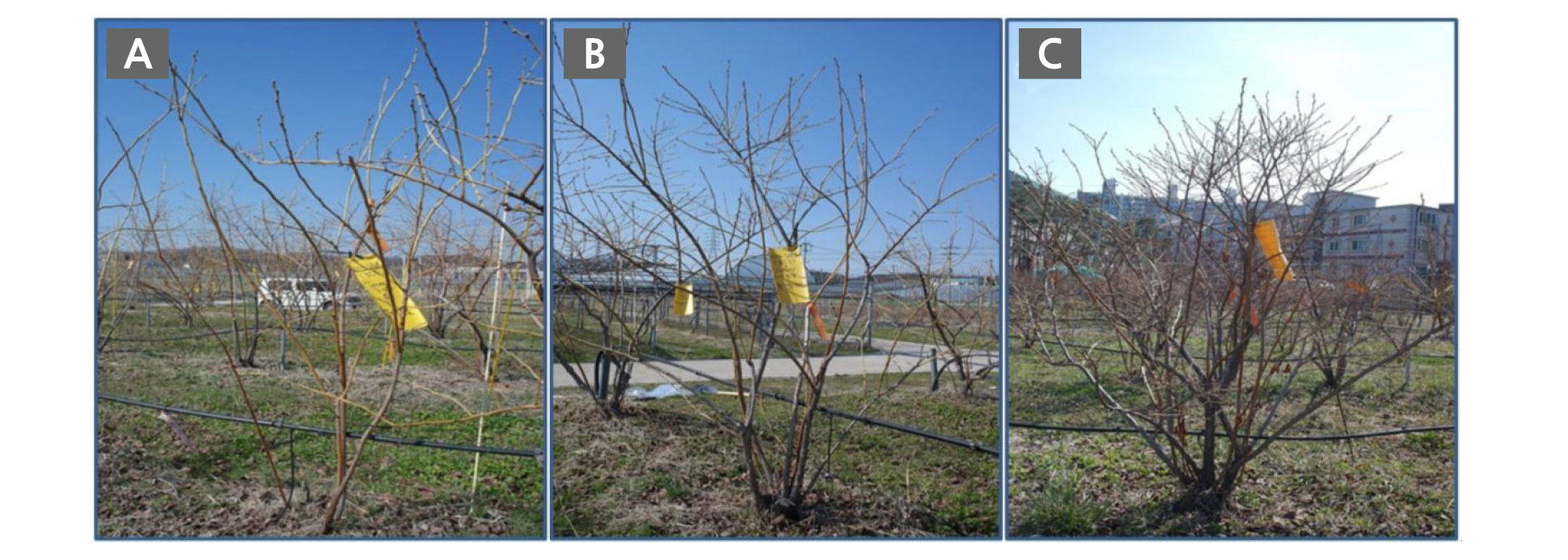
Blueberries with similar crown size were selected and subjected to three different types of pruning methods on March 5th, 2013: i) heavy thinning (HT), ii) light thinning (LT), or iii) heading-back pruning (HP). HT is usually performed on the branches of plants that are more than five years old or show disease-like symptoms. For HT, plants were pruned by approximately 50-60%, with the branches that had the thickest canes (gray in color with peeling bark) with weak shoots removed by cutting from the base (soil surface). LT was performed in a same manner as HT, such that 20-30% of the branches were removed. HP was performed by the conventional shoot pruning method, in which four or five main branches near the center of the bush are cut back to 5-7 cm stubs. Briefly, 3-5 one-year-old shoots per plant were cut 50-60 cm above the ground (Fig. 1). In 2014, pruning was not performed, but the effects of the pruning methods were evaluated.
Fertilization
Commercial horticultural compound fertilizer (Won-ye 1-Ho Gold, 11-8-9 + Magnesium 3 + boron 0.6, KG Chemical Co., Ltd., Ulsan, Korea) was used. Three different amounts of fertilizer were tested for each plant-group that was subjected to different pruning methods (HT, LT, and HP): i) recommended fertilization (RF), ii) half fertilization (HF), and iii) no fertilization (NF). For RF, 53.4 g of fertilizer was used for 1 m2 on March 10th, 2013; the same amount of fertilizer was applied again two weeks later. For HF, the second fertilization was omitted.
Analysis on Shoot Growth
All blueberry plants were subjected to shoot growth analysis on September 15th, 2013. To analyze the growth of the plants in each treatment, we measured i) the number and length of suckers, ii) the number and average length of newly grown shoots that formed on the branches more than 2 yr old, iii) total length of shoots, and iv) the mother shoots bearing formations (or bearing shoots) rate, which was determined by the length of the shoot (≥ 20 cm).
Quality and Yield of Fruits
Blueberry fruits that had full surface coloration were harvested on July 23, 2013 and June 27, 2018. The average of three different replicates, with each replicate containing of 10 fruits, was calculated to measure the characteristics: i) fruit weight, ii) fruit shape index, which was calculated by the ratio of highest fruit height to widest width, and iii) surface color of the fruit, which was measured with a CR-300 colorimeter (Minolita Co., Tokyo, Japan). The soluble solids content was measured from the juice extracted from fruit using a digital refractometer (PAL-1, Satato, Tokyo, Japan). Acid content was measured with a titrator (TitroLinen easy, Scott, Germany). Briefly, 5 mL fruit extract was mixed with 20 mL distilled water and the pH adjusted to 8.2 by adding 0.1 N NaOH. Then, it was converted to the citric acid concentration. To assess yield, fruits were harvested four times between July 23, 2013 and August 16, 2013, and five times between June 27, 2014 and August 14, 2014. All experimental treatments were performed in a randomized design with three experimental replicates. One representative replication of the data was obtained after three weeks.
Statistics
To analyze the data, statistical analysis was performed using Duncan’s multiple range tests, and correlation analysis was performed with the SAS program (Release 9.2, SAS Institute Inc., Cary, NC, USA).
Result and Discussion
Analysis of Shoot Growth
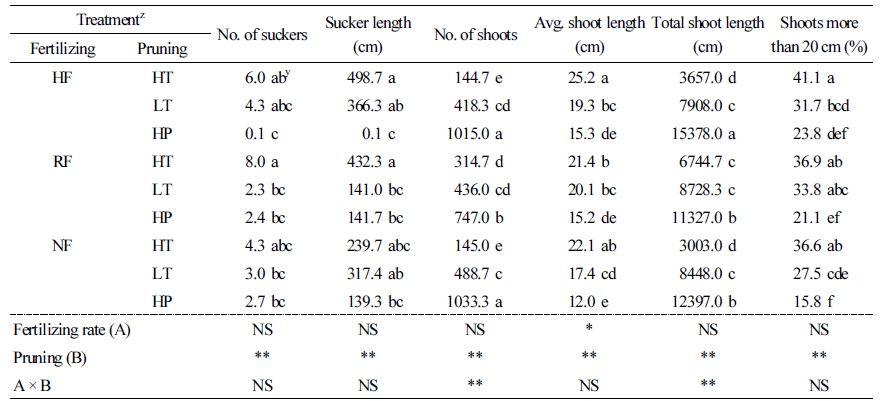
Effects of the different pruning and fertilization methods tested (Table 2), the combination of recommended fertilization (RF) with heavy thinning (HT) resulted in the greatest number of suckers (8.0) compared to other treatments (0.1-6.0 suckers). The number of suckers decreased when fertilization decreased, even with HT. This finding suggests that proper fertilization is critical for the formation of suckers. Plants subjected heading-back pruning (HP) showed the greatest number of new shoot formations (747.0-1033.3), which was higher than that of plants treated with the thinning methods (144.7-488.7). However, regardless of the number of shoots, the average shoot length was longer in plants subjected to HT (21.4-25.2 cm) than those subjected to LT (17.4-20.1 cm) or HP (12.0-15.3 cm). Formation of bearing mother shoots (or bearing shoots) longer than 20 cm was also significantly induced by HT (36.6-41.1%) compared to LT (27.5-33.8%) or HP (15.8-23.8%) pruning methods. This is consistent with previous studies that HT greatly induces the formation of new shoots from the base (Strik et al., 2003). However, HP reduced the yield due to reduced formation of suckers and age of branches. Therefore, a combination of proper fertilization and thinning that removes old branches from the base of the bush were the most effective way to manage ‘Jersey’ blueberry bush cultivation.
Fruit Qualities and Yield
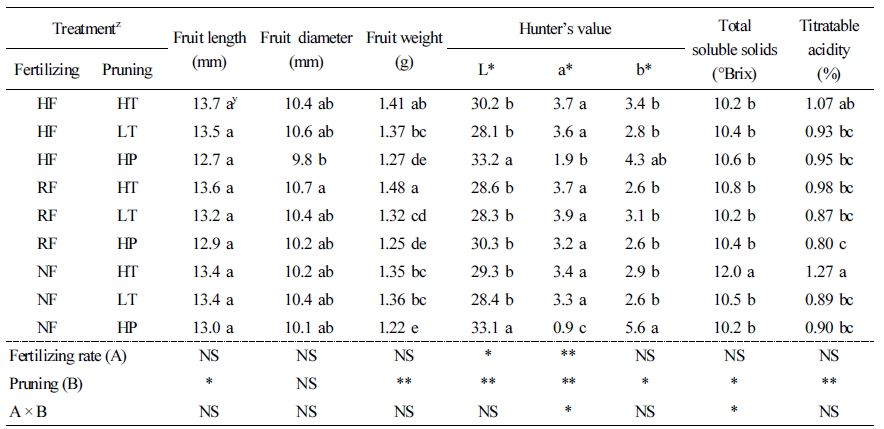
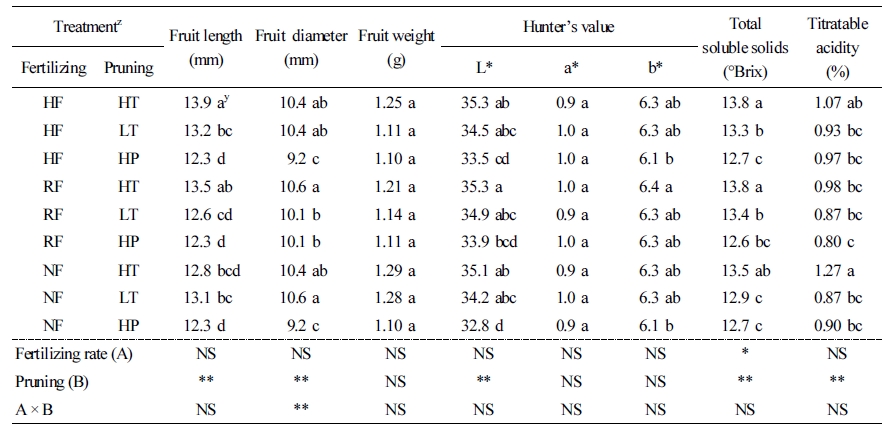
There was no significant difference between the treatments and most of the fruit qualities in blueberries harvested in 2013, including the fruit shape index, surface coloration, soluble solids content, and titratable acidity (Table 3). However, the average fruit weight distinctly increased in the plants that received HT (1.35-1.48 g) compared to the fruits harvested from the plants that received LT (1.32-1.37 g) or HP (1.22-1.27 g), suggesting the degree of pruning is positively correlated with the weight of the fruit. These results are consistent with a previous study that found that pruning increased fruit weight up to 19-27% in the other highbush blueberry ‘Bluecrop’. Strik et al. (2003) reported that K and P content was higher but that N content was lower in the leaves of ‘Bluecrop’ trees subjected to pruning; thereby indicating that the fruit weight might have increased due to enhanced N movement from the shoots to the fruits. In the second year of cultivation (2014), fruits from plants that received different pruning treatments did not show a significant difference in fruit weight, surface coloration, or acid content (Table 4). However, HT-treated plants produced fruits with the highest soluble solids content (13.5-13.8°Brix) compared to LT- or HP-treated plants (12.9-13.4 and 12.6-12.7°Brix, respectively). This increase may be because HT enhanced the photosynthetic rate by improving the efficiency of ventilation and light transmission within the plant, and reduced unnecessary energy consumption in non-photosynthetic organs. In combination, these methods could improve movement of photosynthetic products to the fruit (Sagong et al., 2014).
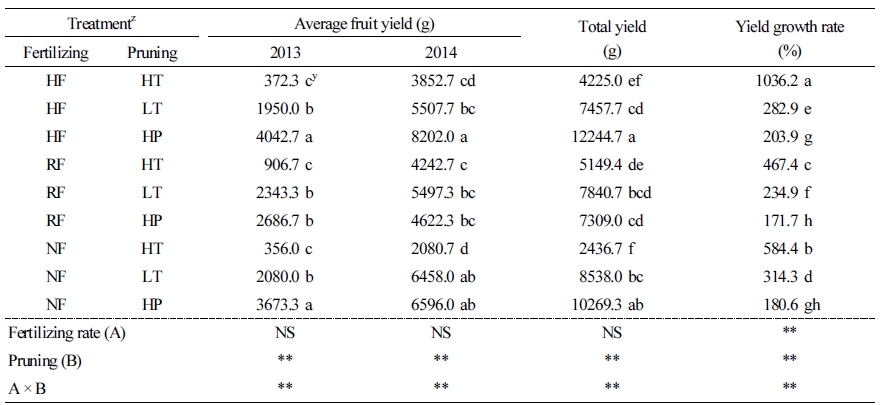
Total fruit yield of pruned plants in descending order was HP (7309.0-12244.7 g), LT (7457.7-8538.0 g), and HT (2436.7-5149.4 g) (Table 5). However, the average rate of increase of yield increase in descending order was HT (467.4-1036.2%), LT (239.9-314.3%), and HP (171.7-203.9%). In the first year, stronger pruning resulted a larger reduction in fruit yields than the other pruning methods, but the differences between treatments were greatly reduced in the second year of cultivation. The HT-treated plants with RF showed had the smallest difference in yield compared to the HT-treated plants with HF or NF. The fruit yield of different cultivars of blueberries is strongly influenced by the number of branches per shrub and the number of fruit per branch, rather than by the total number of fruits per shrub. Thus, the yield decreased when the productivity of old branches was reduced.
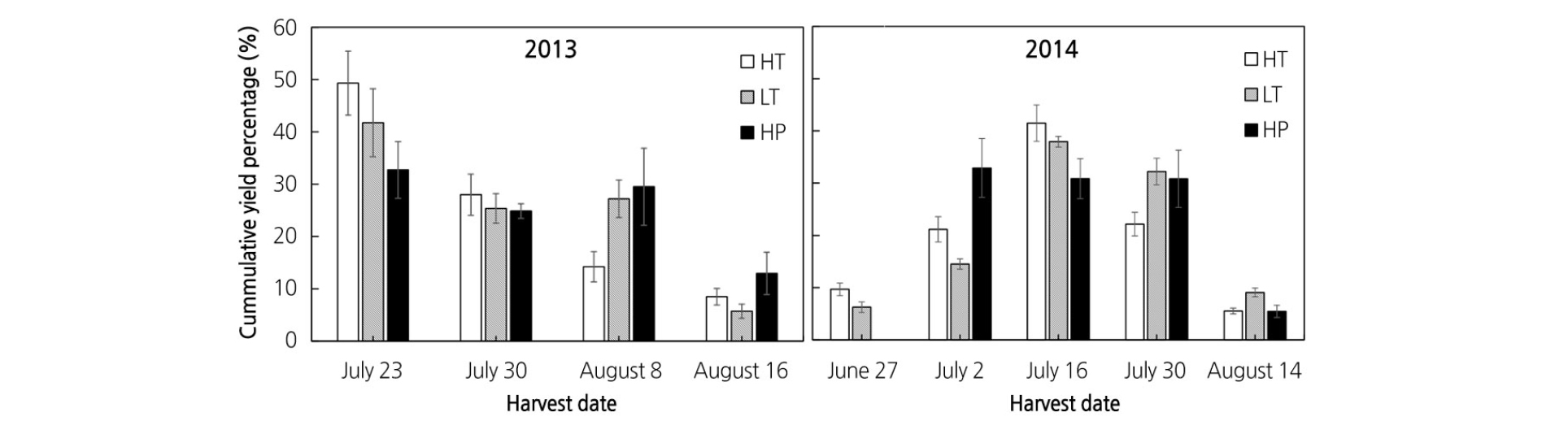
Harvest in the second year was 26 days earlier for in plants subjected that received to pruning, and it was faster in the order of HT-, LT-, and HP-treated plants. Additionally, the flowering time was about 10 days earlier in 2014 than 2013, and the first harvest date was different between these two years (July 23th in 2013 and June 27th in 2014) (Fig. 2). It was reported that strong pruning could advance the harvest time for in the highbush blueberry ‘Rubel’ and ‘Pioneer’ (Brightwell and Johnson, 1944). In addition, Strik et al. (2003) reported that pruning the highbush blueberry ‘Bluecrop’ could advance the harvest time by 3-5 days. Consistent with previous reports, we show that pruning, especially HT, of the highbush blueberry ‘Jersey’ also advanced harvest time, and we observed a greater difference in harvest time in the year after pruning.
The degree of pruning and fertilization showed a distinct correlation with fruit yield and growth of highbush blueberry ‘Jersey’ (Fig. 3). HT-treated plants, regardless of fertilization, had a strong positive correlation between i) the average fruit yield in 2013 and 2014, ii) the average fruit yield in 2013 and total yield, and iii) the average fruit yield in 2014 and total yield. These results are consistent with findings that propose the yields are strongly influenced by the degree of pruning in most blueberry cultivars (Seifker and Hancock, 1986). In conclusion, it is important to perform thinning on old suckers and use the recommended amount of fertilizer in order to maintain growth and yield in blueberry cultivars (Souri et al., 2017). HT should be considered for very old plants that need to be renewed, and LT should be considered when a sustainable yield is required.
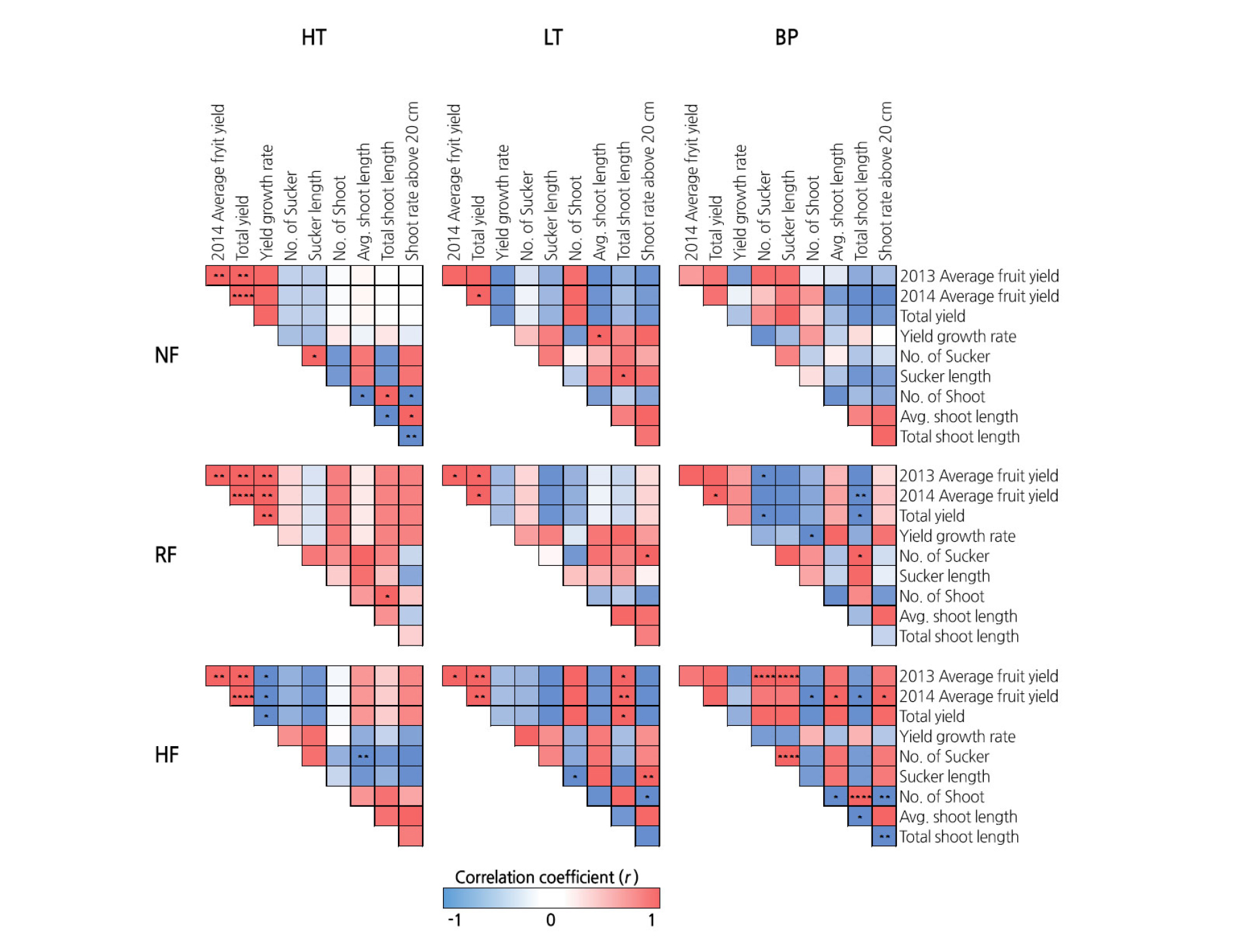
Fig. 3. Correlation coefficients (r) between fruit yield and plant performance of ‘Jersey’ highbush blueberries that were treated with different pruning and fertilization methods. Red and blue colors indicate positive and negative correlations between fruit-quality attributes, respectively. NF: No fertilizing, RF: Recommended fertilizing, HF: Half fertilizing, HT: Heavy thinning, LT: Light thinning, HP: heading-back pruning. Asterisks (*, ** or ****) indicate statistically significant correlation at p < 0.05, 0.01, or 0.0001, respectively.
